Leave your message to get our quick response
edoxi automated message icon

Web Design Course

Developer coding on multiple monitors in a modern office.
Edoxi’s 40-hour Online Web Design Course builds front-end development skills for digital-first businesses. Gain skills in HTML, CSS, JavaScript, responsive web design, and modern UI/UX principles. Learn to create interactive, mobile-friendly websites, optimise performance, and deploy live projects using industry best practices. Work on website and portfolio development projects while getting introduced to React-based single-page applications. Enrol now to advance your career in web design.
Course Duration
40 hours
Corporate Days
5 days
Learners Enrolled
100+
Modules
4
star-rating-icon1
star-rating-icon2
star-rating-icon3
Course Rating
4.9
star-rating-4.9
Mode of Delivery
Online
Certification by

What Do You Learn from Edoxi's Web Design Training

JavaScript Programming
Develop interactive web features using JavaScript, including DOM manipulation and ES6+ features for enhanced functionality.
Responsive Web Development
Build websites that adapt seamlessly across devices using media queries, flexbox, and grid layout systems.
HTML and CSS Fundamentals
Master modern HTML5 elements and CSS3 styling techniques to create structured, visually appealing web pages from scratch.
Web Hosting and Deployment
Learn professional deployment practices, including how to host and maintain live websites with proper version control.
Industry Best Practices
Understand web accessibility guidelines and basic SEO principles while implementing current web development standards.
Frontend Framework Integration
Get introduced to React and Angular frameworks, learning to create dynamic single-page applications with modern development tools.

About Our Online Web Design Course

Edoxi’s 40-hour Web Design Course is designed to build strong front-end development skills for a digital-first business environment. This programme equips learners with practical expertise in HTML, CSS, JavaScript, and modern front-end frameworks to design responsive, user-friendly, and visually engaging websites. The Web Design course is suitable for individuals at any career stage who want to build or enhance practical skills in web design and front-end development.

Our Web Design course curriculum covers HTML5 structure, CSS3 styling, responsive design techniques, JavaScript programming, frontend framework fundamentals, and professional web hosting practices. Learners gain hands-on experience through real-world website development projects, portfolio creation, responsive layout implementation, and interactive web component development. The Web Design training also emphasises accessibility standards, basic SEO practices, and industry-aligned development workflows.

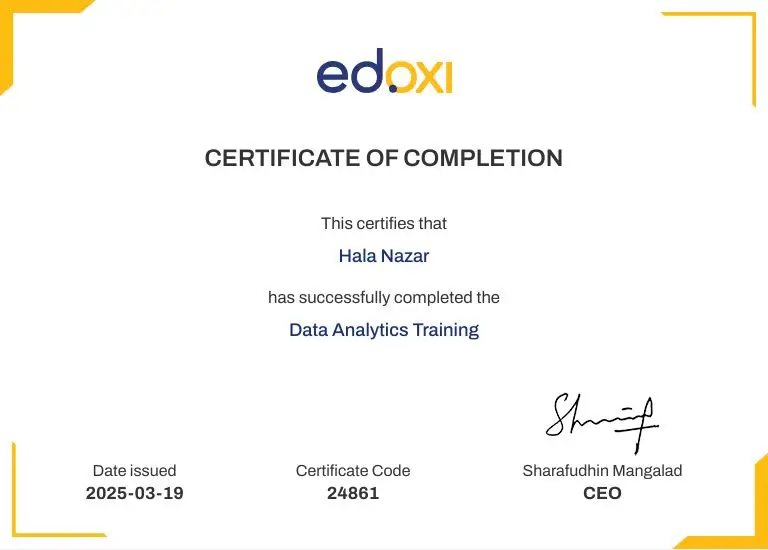
Upon successful completion of the website design course, learners receive a Web Design course completion certificate from Edoxi. This credential improves employability across IT companies, digital agencies, startups, and organisations expanding their digital and technology capabilities.

For more details on Web Design course fees, syllabus, and customised corporate or online training schedules, contact the Edoxi team today.

Enrol now to build professional web design skills and launch a successful career in front-end development.

Key Features of Edoxi's Web Design Training

Portfolio-Based Project

Create a professional portfolio website that showcases your real-world web design and development skills.

Practical, Hands-On Training

Develop industry-focused skills through live projects, coding exercises, and guided practice sessions.

Website Performance Optimisation

Understand techniques to improve page load speed, optimise assets, and enhance overall website performance.

Industry-Standard Tools

Gain hands-on experience using widely adopted technologies such as HTML, CSS, JavaScript, and Bootstrap throughout the course.

Who Can Join Our Web Design Course

School Graduates

Fresh graduates with basic computer literacy can begin their journey in web development, with no prior technical experience needed.

Graphic Designers

Design professionals looking to expand their skillset into web design and development, adding valuable digital capabilities to their portfolio.

Business Owners & Entrepreneurs

Individuals managing their businesses who want to understand website creation and maintenance for their digital presence.

Marketing Professionals

Marketing specialists interested in understanding web content development to enhance their digital marketing capabilities.

Web Design Course Modules

Module 1: Introduction to Web Development and HTML
  • Chapter 1.1: Overview of Web Design and Development

    • Lesson 1.1.1 Understanding the role of web designers and developers
    • Lesson 1.1.2 Key components of websites and web applications
  • Chapter 1.2: Understanding the Structure of a Web Page

    • Lesson 1.2.1 Anatomy of an HTML document
    • Lesson 1.2.2 File paths and naming conventions
  • Chapter 1.3: Introduction to HTML5

    • Lesson 1.3.1 Evolution of HTML to HTML5
    • Lesson 1.3.2 Benefits and New Features in HTML5
  • Chapter 1.4: Basic HTML Elements

    • Lesson 1.4.1 Headings, paragraphs, and text formatting
    • Lesson 1.4.2 Lists: ordered, unordered, and description lists
  • Chapter 1.5: Working with Links, Images, and Media

    • Lesson 1.5.1 Anchor tags and hyperlinks
    • Lesson 1.5.2 Embedding images and media content
  • Chapter 1.6: Forms and Input Elements

    • Lesson 1.6.1 Creating input fields, checkboxes, and radio buttons
    • Lesson 1.6.2 Submit buttons and form attributes
  • Chapter 1.7: HTML Tables

    • Lesson 1.7.1 Creating tables with rows and columns
    • Lesson 1.7.2 Table headers, captions, and cell alignment
  • Chapter 1.8: Semantic HTML and Accessibility

    • Lesson 1.8.1 HTML5 Semantic elements (header, nav, article, footer)
    • Lesson 1.8.2 Accessibility best practices and ARIA roles
  • Chapter 1.9: SEO-Friendly HTML

    • Lesson 1.9.1 Importance of Semantic Tags for SEO
    • Lesson 1.9.2 Optimizing content for search engines
Module 2: Styling with CSS
  • Chapter 2.1: Introduction to CSS3

    • Lesson 2.1.1 What is CSS and how it works with HTML
    • Lesson 2.1.2 Inline, internal, and external CSS
  • Chapter 2.2: CSS Syntax and Selectors

    • Lesson 2.2.1 Basic syntax and selector types
    • Lesson 2.2.2 Grouping and combining selectors
  • Chapter 2.3: Styling Text and Fonts

    • Lesson 2.3.1 Changing font size, style, and color
    • Lesson 2.3.2 Text spacing, alignment, and decoration
  • Chapter 2.4: CSS Box Model

    • Lesson 2.4.1 Understanding padding, margin, and borders
    • Lesson 2.4.2 Box Sizing and border-box Model
  • Chapter 2.5: Layouts with Flexbox

    • Lesson 2.5.1 Basics of Flexbox containers and items
    • Lesson 2.5.2 Creating Flexible Page Layouts
  • Chapter 2.6: Advanced CSS Techniques

    • Lesson 2.6.1 CSS Grid layout for complex designs
    • Lesson 2.6.2 Media queries for responsive design
  • Chapter 2.7: CSS Transitions and Animations

    • Lesson 2.7.1 Smooth transitions using CSS
    • Lesson 2.7.2 Keyframes and Animation Timing
  • Chapter 2.8: CSS Best Practices

    • Lesson 2.8.1 Organizing CSS for Maintainability
    • Lesson 2.8.2 Naming conventions and commenting
Module 3: JavaScript Fundamentals
  • Chapter 3.1: Introduction to JavaScript

    • Lesson 3.1.1 What is JavaScript and its role in web development
    • Lesson 3.1.2 Embedding and executing JavaScript code
  • Chapter 3.2: Variables, Data Types, and Operators

    • Lesson 3.2.1 Declaring variables (var, let, const)
    • Lesson 3.2.2 JavaScript data types and operators
  • Chapter 3.3: Functions, Conditions, and Loops

    • Lesson 3.3.1 Writing functions and invoking them
    • Lesson 3.3.2 Using if/else, switch statements and loops
  • Chapter 3.4: Working with the DOM

    • Lesson 3.4.1 Understanding the Document Object Model
    • Lesson 3.4.2 Selecting and modifying DOM elements
  • Chapter 3.5: Event Handling

    • Lesson 3.5.1 Handling click and mouse events
    • Lesson 3.5.2 Event listeners and event delegation
  • Chapter 3.6: Advanced JavaScript Concepts

    • Lesson 3.6.1 ES6+ features (arrow functions, template literals)
    • Lesson 3.6.2 JavaScript arrays and object manipulation
  • Chapter 3.7: Promises and Async Programming

    • Lesson 3.7.1 Understanding asynchronous JavaScript
    • Lesson 3.7.2 Using Promises and async/await
  • Chapter 3.8: Debugging and JSON

    • Lesson 3.8.1 Debugging techniques and tools
    • Lesson 3.8.2 Working with JSON Data Structures
Module 4: React.js
  • Chapter 4.1: Introduction to React.js

    • Lesson 4.1.1 What is React and its benefits
    • Lesson 4.1.2 Setting up a React development environment
  • Chapter 4.2: Components in React

    • Lesson 4.2.1 Creating a class and functional components
    • Lesson 4.2.2 Using JSX (JavaScript XML)
  • Chapter 4.3: Props, State, and Lifecycle

    • Lesson 4.3.1 Passing data with props
    • Lesson 4.3.2 Managing state in components
    • Lesson 4.3.3 Understanding Component Lifecycle Methods
  • Chapter 4.4: React Hooks and Routing

    • Lesson 4.4.1 Using useState and useEffect hooks
    • Lesson 4.4.2 Implementing Navigation with React Router
  • Chapter 4.5: Building a Simple SPA

    • Lesson 4.5.1 Structuring a single-page application
    • Lesson 4.5.2 Integrating JavaScript with React Components

Download Web Design Course Brochure

Real-World Projects in our Web Design Training

Our Web Design Course provides real-world projects and case studies that are necessary for developing your skills. The following are some of the projects that you will be involved in:

Projects

  • Personal Website Development

    Build a complete website from the ground up using HTML for structure, CSS for styling, and JavaScript for functionality. Apply responsive design principles and follow modern web development standards throughout the project.

  • Professional Portfolio Creation

    Design and develop a portfolio website that highlights your web design capabilities. This project brings together responsive layouts, interactive elements, and professional deployment practices.

  • Responsive Design Implementation

    Complete hands-on exercises focused on mobile-friendly design using media queries, Flexbox, and CSS Grid to ensure seamless performance across all devices.

  • Interactive Web Elements

    Develop dynamic website components through JavaScript and DOM manipulation, gaining practical experience in creating engaging and interactive user experiences.

Web Design Training Course Outcome and Career Opportunities

Pursuing Edoxi's Web design training courses aims to equip you with the necessary skills to create and manage websites, often culminating in the ability to develop a professional portfolio. Here are some of the major course outcomes and career opportunities you will have after completing our Web Design Training section:

Course Outcome Image
Master graphic and web design principles to present information effectively on modern websites.
Gain proficiency in essential web design tools and technologies such as HTML, CSS, JavaScript, and Photoshop for professional website creation.
Develop interactive and responsive websites that function seamlessly across multiple devices and screen sizes.
Apply core programming fundamentals in HTML, CSS, and JavaScript to build structured, dynamic, and user-friendly web pages.
Create a professional web portfolio that showcases diverse design, development, and accessibility skills.
Manage web design projects effectively while enhancing employability through job-ready technical and career skills.

Career Opportunities After Completing the Web Design Course

  • Web Designer
  • Junior Front-End Developer
  • Back-End Developer
  • Web Developer
  • WordPress Developer
  • Senior Web Developer
  • Project Manager
  • Applications Developer
  • UX Designer

Web Design Training Options

Live Online Training

  • 40 hours of Personalized Virtual Sessions

  • Convenient Remote Access

  • Real-Time Interaction

  • Flexible Timing

  • Weekday and weekend batches

Corporate Training

  • 5 Days Customized program

  • Flexible scheduling options

  • Group training solutions

  • Tailored curriculum delivery

  • Professional instructor support

Do You Want a Customised Training for Web Design?

Get expert assistance in getting your Web Design Course customised!

How to Get Web Design Training Certification?

Here’s a four-step guide to becoming a certified Web Design professional.
Do You Want to be a Certified Professional in Web Design?

Join Edoxi’s Web Design Course

Why Choose Edoxi for an Online Web Design Course?

Among the many training options available, Edoxi stands out as a leading Web Design training institute with a strong global presence. The following are a few reasons why Edoxi's Web Design course is the best choice for you

Expert-Led Training with Industry Experience

Learn from seasoned professionals with extensive development expertise and a proven track record of training thousands of learners.

Personalised Learning Experience

Opt for one-to-one instruction or small group sessions (maximum five learners), with flexible weekday and weekend schedules to suit your learning needs.

Course Completion Certification

Earn a recognised course completion certificate from Edoxi Training Institute, strengthening your professional profile with an internationally valued credential.

Career-Focused Curriculum

Build in-demand skills in HTML, CSS, JavaScript, and responsive web design to prepare for roles such as Web Designer, Front-End Developer, and UI/UX Developer.

students-image

Edoxi is Recommended by 95% of our Students

Meet Our Mentor

Our mentors are leaders and experts in their fields. They can challenge and guide you on your road to success!

mentor-image

Tausifali Saiyed

Tausifali Sayed is an experienced full-stack developer and corporate trainer with over a decade of expertise in the field. He specialises in both the education and development of cutting-edge mobile and web applications. He is proficient in technologies including Core Java, Advanced Java, Android Mobile applications, and Cross-Platform Applications. Tausifali is adept at delivering comprehensive training in full-stack Web App Development, utilising a variety of frameworks and languages such as Java, PHP, MERN, and Python.

Tausifali holds a Master of Science (M.Sc.) in Computer Science from the University of Greenwich in London and a Bachelor of Engineering in Computer Engineering from Sardar Patel University in Vallabh Vidyanagar, India. Tausifali possesses a diverse skill set that includes expertise in Python, Flutter Framework, Java, Android, Spring MVC, PHP, JSON, RESTful Web Services, Node, AngularJS, ReactJS, HTML, CSS, JavaScript, jQuery, and C/C++. Fluent in English and Hindi, Tausifali is a versatile professional capable of delivering high-quality training and development in the IT industry.

Locations Where Edoxi Offers Web Design Course

Here is the list of other major locations where Edoxi offers Web Design Course

FAQ

Will I get a job after finishing the Web Design course?

Yes, after completing the Web Design course, you'll be equipped with skills for entry-level positions.

Do I need any prior experience to join this Web Design course?

To join the course, you require only basic computer literacy and an interest in web design. No prior coding experience is necessary, as the program is specifically designed to be beginner-friendly.

What certification will I receive after Web Design training?

Upon completion of our Web Design course, learners receive a Web Design course completion certificate from Edoxi.

Can I create a real website by the end of this Web Design course?

Yes, you'll develop both a personal website and a professional portfolio site during the course, applying all the skills learned using industry-standard tools.

What career paths can I pursue after this Web Design course?

After the Web Design course, graduates can pursue roles such as Web Designer, Junior Front-End Developer, progressing to Web Developer and Senior Web Developer positions across various industries.

Is Web Design corporate training available for teams?

Yes, we offer customised corporate training programs with flexible web design course duration and scheduling to meet organisational requirements.

Is web design a high-growth career option?

Yes. Web design is a high-growth career as businesses continue to prioritise digital presence. With 69% of companies investing in website design and development, demand for skilled web designers remains strong across industries.

What salary can a web designer expect?

The median annual salary for web designers is $98,090. Experienced professionals and top performers can earn over $192,180 annually, depending on skills and industry.

Are web design skills relevant across industries?

Absolutely. Web design skills are valued across technology firms, digital agencies, e-commerce, healthcare, education, and corporate organisations, offering flexibility, remote work opportunities, and long-term career stability.

What does a web design course typically cover?

Web design courses provide comprehensive training in HTML, CSS, JavaScript, UI/UX design principles, and modern design tools such as Figma, WordPress, and Adobe Creative Cloud to build functional and visually engaging websites.

Are web design courses suitable for beginners?

Yes. the web design course is beginner-friendly and start with foundational concepts before progressing to advanced topics, making them suitable for learners with little or no prior technical experience.

Will I build a portfolio during a web design course?

Most professional web design courses focus on hands-on learning and include portfolio-building projects that allow learners to showcase real-world web design and development skills to employers or clients.

Which tools and platforms are commonly used in web design training?

Learners typically work with industry-standard tools such as Figma for UI/UX design, WordPress for content management, Adobe Creative Cloud for visual design, and code editors for front-end development.

How do web design courses support career readiness?

By combining technical skills, design principles, and practical projects, web design courses prepare learners for entry-level and intermediate roles such as Web Designer, Front-End Developer, and UI/UX Designer across multiple industries.

Why is web design important for businesses?

Web design shapes a brand’s first impression by creating visually appealing, user-friendly, and accessible websites that build trust, enhance user experience, and drive engagement and conversions.