
Leave your message to get our quick response
edoxi automated message icon

Anti-Money Laundering Course in Dubai

Hand holding dollar bills controlled by strings, symbolizing financial manipulation
Edoxi’s 40-hour Anti-Money Laundering Course in Dubai builds skills needed to detect, prevent, and report money laundering and terrorist financing. Learn UAE AML laws, FATF standards, KYC, Customer Due Diligence, risk assessment, red flags, and compliance requirements. Get hands-on experience in AI-driven monitoring, sanctions screening, and PEP risk management and prepare for the CAMS Exam. Enrol now to receive a KHDA-approved Certification and prepare for roles like AML Analyst and Compliance Officer.
Course Duration
40-hours
Corporate Days
6 Days
Learners Enrolled
150+
Modules
12
star-rating-icon1
star-rating-icon2
Course Rating
4.9
star-rating-4.9
Mode of Delivery
Online
Classroom
Certification by
edoxi-accreditation-logo

What Do You Learn from Edoxi's AML Training

Money Laundering and Financial Crime Prevention
Identify laundering typologies, predicate offences, and suspicious transactions using risk-based strategies and RegTech solutions.
Counter-Terrorist Financing and Proliferation Risks
Analyse terrorist financing models, proliferation networks, and implement countermeasures to disrupt illicit financial flows.
Sanctions Compliance and Enforcement
Develop sanctions frameworks aligned with FATF, OFAC, and UAE regulations. Implement automated screening and monitoring.
PEP Risk Management and Due Diligence
Assess and monitor PEP risks with enhanced due diligence (EDD) and continuous risk-based compliance strategies.
AML-CFT Compliance Program Development
Design AML-CFT programs with KYC, customer risk profiling, and transaction monitoring for financial crime prevention.
Regulatory Compliance and Reporting
Understand UAE and global AML-CFT regulations, FATF guidelines, and enforcement actions for non-compliance.

About the Anti-Money Laundering Certification Course in Dubai

The AML Certification Course in Dubai equips professionals with in-depth knowledge and practical skills in anti-money laundering (AML), counter-terrorist financing (CFT), and sanctions compliance. Edoxi’s 40-hour KHDA-approved program is designed for individuals working in the financial, regulatory, and corporate governance sectors. The course provides comprehensive training on AML frameworks, UAE regulatory obligations (including requirements from the Central Bank, DIFC, and ADGM), and risk-based compliance strategies.

Our Anti-Money Laundering training in Dubai combines theoretical knowledge with real-world case studies, simulations, and practical exercises. Participants explore key topics such as financial crime prevention, identifying suspicious transactions, terrorist financing models, global sanctions, advanced screening tools, AI-powered transaction monitoring, managing high-risk customers, and Politically Exposed Persons (PEPs). 

We also provide customised AML Corporate Training programs tailored for banks, financial institutions, DNFBPs, and corporate teams. These group sessions can be delivered in-house or at our facility with flexible scheduling and company-specific case studies. Upon completion of the course, you will receive a KHDA-approved AML Certification from Edoxi. 

CAMS Exam Format and Structure

Edoxi’s expert trainers will prepare you for the Certified Anti-Money Laundering Specialist (CAMS) Exam. The CAMS certification is an internationally recognised distinction that demonstrates expertise in investigating and preventing money laundering cases. The following table showcases the details and format of the CAMS exam

Exam Criteria Details
Exam Name Certified Anti-Money Laundering Specialist (CAMS) Exam
Duration 3.5 hours
Number of Questions 120, Multiple-Choice and Multiple-Select
Passing Score 75 minimum score
Fees $2,000 (including membership, exam fees and study materials)
Certification Validity 3 Years
Recertification Required every 3 years through continuing education credits
Exam Administration Authority Association of Certified Anti-Money Laundering Specialists (ACAMS)

Enrol now in our AML Course in Dubai and enhance your knowledge of financial crime laws and boost your career prospects in the fast-evolving compliance landscape. 

Unlike generic compliance courses, this program is built specifically around UAE Central Bank, DIFC, and ADGM requirements not just global FATF theory.

To know more about the Anti-Money Laundering Course fee or schedule a training, contact our team at Edoxi. Exact pricing may vary based on batch, mode (classroom/online), and current offers.


Key Features of Edoxi's AML Training

Financial Crime Case Study Analysis

Examine real-world money laundering and fraud cases to develop forensic investigation skills and risk-based compliance strategies.

Advanced Sanctions Screening and Risk Filtering

Utilise industry-grade screening solutions to identify high-risk entities, sanctioned individuals, and embargoed jurisdictions in financial transactions.

Enterprise-Wide Risk Assessment Methodologies

Develop institution-specific risk assessment frameworks integrating customer due diligence (CDD), enhanced due diligence (EDD), and transaction risk profiling.

Regulatory Compliance and Enforcement Workshops

Engage in expert-led sessions focused on interpreting UAE Central Bank directives, FATF recommendations, and global AML enforcement actions.

AI-Driven Transaction Monitoring and Red Flag Identification

Gain hands-on experience with AI-powered surveillance systems to detect anomalous transaction patterns and suspicious financial behaviours.

Compliance Simulation and High-Risk Customer Management

Participate in role-based exercises managing complex compliance scenarios involving PEPs, correspondent banking risks, and potential financial crime threats.

Who Can Join Our Anti-Money Laundering Course in Dubai?

AML and Compliance Professionals

Compliance officers, AML analysts, and sanctions specialists are looking to enhance their expertise in AML-CFT.

Banking and Financial Services Practitioners

Relationship managers, front-line banking staff, and financial advisors who require in-depth knowledge of KYC.

Financial Crime and Risk Management Experts

Fraud analysts, risk officers, and financial crime investigators responsible for detecting money laundering.

Legal, Audit, and Regulatory Consultants

Regulatory lawyers, forensic auditors, and compliance consultants advising on AML/CFT legislation.

Law Enforcement and Regulatory Authorities

Financial intelligence officers, government regulators, and investigative authorities.

Corporate Governance and Regulatory Affairs Executives

Chief compliance officers (CCOs), governance professionals, and senior executives.

Anti-Money Laundering Course Modules

Module 1: The Elements of an AML/CFT Program
  • Chapter 1.1: Understanding AML/CFT Framework

    • Lesson 1.1.1: Introduction to Anti-Money Laundering (AML) and Counter Financing of Terrorism (CFT)
    • Lesson 1.1.2: Key Components of an Effective AML/CFT Program
    • Lesson 1.1.3: Regulatory Requirements and Compliance Standards
Module 2: Know Your Customer (KYC)
  • Chapter 2.1: Fundamentals of KYC

    • Lesson 2.1.1: Importance of KYC in Financial Institutions
    • Lesson 2.1.2: KYC Process and Documentation Requirements
    • Lesson 2.1.3: Risk-Based Approach to KYC
Module 3: Customer Due Diligence (CDD)
  • Chapter 3.1: Elements of a Customer Due Diligence Program

    • Lesson 3.1.1: Definition and Importance of CDD
    • Lesson 3.1.2: Steps in Conducting CDD
    • Lesson 3.1.3: Ongoing Monitoring and Periodic Reviews
Module 4: Enhanced Due Diligence (EDD) for High-Risk Customers
  • Chapter 4.1: Identifying High-Risk Customers

    • Lesson 4.1.1: Factors That Contribute to High-Risk Customers
    • Lesson 4.1.2: Enhanced Due Diligence (EDD) Measures
    • Lesson 4.1.3: Documentation and Record-Keeping for EDD
Module 5: Account Opening, Customer Identification & Verification
  • Chapter 5.1: Establishing Customer Identity

    • Lesson 5.1.1: Customer Identification Program (CIP) Requirements
    • Lesson 5.1.2: Verification Methods and Documentation Standards
    • Lesson 5.1.3: Challenges in Customer Verification and How to Overcome Them
Module 6: Tipping Off & Confidentiality
  • Chapter 6.1: Handling Sensitive Information

    • Lesson 6.1.1: Definition of Tipping Off and Its Legal Consequences
    • Lesson 6.1.2: Confidentiality in AML Investigations
    • Lesson 6.1.3: Best Practices for Information Handling
Module 7: Consequences of Willful Blindness or Purposeful Indifference
  • Chapter 7.1: Legal and Ethical Implications

    • Lesson 7.1.1: Understanding Willful Blindness in AML Compliance
    • Lesson 7.1.2: Case Studies of Willful Blindness in Financial Crimes
    • Lesson 7.1.3: Legal Consequences and Penalties
Module 8: Politically Exposed Persons (PEPs) Screening
  • Chapter 8.1: Identifying and Managing PEPs

    • Lesson 8.1.1: Definition and Classification of PEPs
    • Lesson 8.1.2: Risks Associated with PEPs
    • Lesson 8.1.3: Compliance Requirements for PEP Screening
Module 9: Transaction Monitoring
  • Chapter 9.1: Detecting Suspicious Transactions

    • Lesson 9.1.1: Purpose and Importance of Transaction Monitoring
    • Lesson 9.1.2: Automated vs. Manual Monitoring Techniques
    • Lesson 9.1.3: Setting Effective Transaction Monitoring Rules
Module 10: Suspicious Activity Reporting (SAR)
  • Chapter 10.1: Identifying and Reporting Suspicious Activities

    • Lesson 10.1.1: Recognising Suspicious Transactions
    • Lesson 10.1.2: Process of Filing Suspicious Activity Reports (SARs)
    • Lesson 10.1.3: Legal Obligations and Reporting Timelines
Module 11: Money Laundering (ML) & Terrorist Financing (TF) Red Flags
  • Chapter 11.1: Identifying ML & TF Indicators

    • Lesson 11.1.1: Common Money Laundering Red Flags
    • Lesson 11.1.2: Indicators of Terrorist Financing
    • Lesson 11.1.3: Role of Financial Institutions in Detecting Red Flags
Module 12: Case Studies
  • Chapter 12.1: Real-World Examples of AML/CFT Failures and Successes

    • Lesson 12.1.1: High-Profile Money Laundering Cases
    • Lesson 12.1.2: Effective AML Programs and Lessons Learned
    • Lesson 12.1.3: Interactive Case Study Discussions

Download Anti-Money Laundering Course Brochure

Real-World Projects and Case Studies in Anti-Money Laundering Course in Dubai

Edoxi’s Anti-Money Laundering Course in Dubai blends regulatory theory with real-world application through interactive case studies and advanced compliance simulations. Learners will engage in hands-on exercises using industry-standard AML/CFT frameworks and investigative tools. Some activities include;

Projects

  • Enterprise-Wide AML Risk Assessment

    Develop a comprehensive AML risk assessment framework for a financial institution, identifying high-risk exposure points and implementing risk-based controls in line with regulatory guidelines.

  • Global Sanctions Compliance & Transaction Screening Framework

    Design a sanctions compliance program for a multinational entity, incorporating real-time screening protocols, escalation mechanisms, and periodic regulatory reviews.

  • Politically Exposed Persons (PEP) Enhanced Due Diligence (EDD) Model

    Develop a risk-based PEP due diligence protocol, integrating KYC/CDD best practices, ongoing monitoring standards, and regulatory documentation requirements.

Case Studies

  • Cross-Border Money Laundering & Regulatory Breach Analysis

    Investigate a complex transnational money laundering operation across multiple jurisdictions. Identify red flags, regulatory lapses, and enforcement actions to mitigate compliance failures.

  • Terrorist Financing Network & Illicit Fund Flow Analysis

    Examine the financial infrastructure of a designated terrorist organisation. Assess funding channels, typologies, and compliance challenges in modern anti-financial crime frameworks.

Anti-Money Laundering Course Outcome and Career Opportunities in Dubai

Edoxi’s KHDA-approved AML certification unlocks high-growth opportunities in financial crime prevention, regulatory compliance, and risk management across banking, fintech, and corporate governance sectors across Dubai. Here are some of the outcomes you can expect after completing the training;

Course Outcome Image
Understand the fundamentals of money laundering and terrorist financing, with a focus on UAE laws and financial systems.
Identify the stages of money laundering (placement, layering, integration) and how they apply to UAE-based financial activities.
Prepare for AML-related job roles in the UAE's financial institutions, government agencies, and corporate compliance departments.
Master Know Your Customer (KYC) and Customer Due Diligence (CDD) procedures as mandated by the UAE authorities.
Explore UAE-specific AML compliance frameworks, including free zones like DIFC and ADGM regulations.
Gain insight into the UAE’s role and commitments in global AML initiatives, including FATF recommendations.

Career Opportunities After an Anti-Money Laundering Course in Dubai

  • KYC Analyst
  • AML Compliance Analyst
  • Compliance Assistant
  • Compliance Officer
  • AML Monitoring Specialist
  • Sanctions Compliance Analyst
  • Head of Compliance
  • AML Program Manager
  • Money Laundering Reporting Officer (MLRO)

Companies Hiring AML-CFT Professionals in Dubai:

  • Abu Dhabi Islamic Bank (ADIB)
  • First Abu Dhabi Bank (FAB)
  • Abu Dhabi Commercial Bank (ADCB)
  • Brevan Howard
  • J. Awan & Partners
  • Deloitte
  • KPMG
  • PwC
  • Stripe
  • Citibank

AML Training Options

Classroom Training

  • 40-hour Anti-Money Laundering Course in Dubai

  • Interactive Compliance Case Discussions

  • Hands-On Risk Assessment Exercises

  • Small Group Regulatory Analysis

  • Networking with Industry Peers

Live Online Training

  • 40-hour Online Anti-Money Laundering Course in Dubai

  • Virtual Case Study Sessions

  • Flexible Weekday Evening Schedule

  • Weekend Intensive Options Available

  • Recorded Sessions for Review

Corporate Training

  • Customised Industry-Specific Compliance Training

  • Training delivered at your premises, selected hotel or at Edoxi

  • Tailored Training Materials

  • Post-Training Implementation Support

  • Fly-me-over-a-trainer option

Do You Want a Customised Training for Anti-Money Laundering?

Get expert assistance in getting your Anti-Money Laundering Course customised!

Learn Now Pay Later with tabby-icon

Pay your course fees in four easy installments with Tabby.

How To Get an Anti-Money Laundering Certification in Dubai?

Here’s a four-step guide to becoming a certified AML professional.
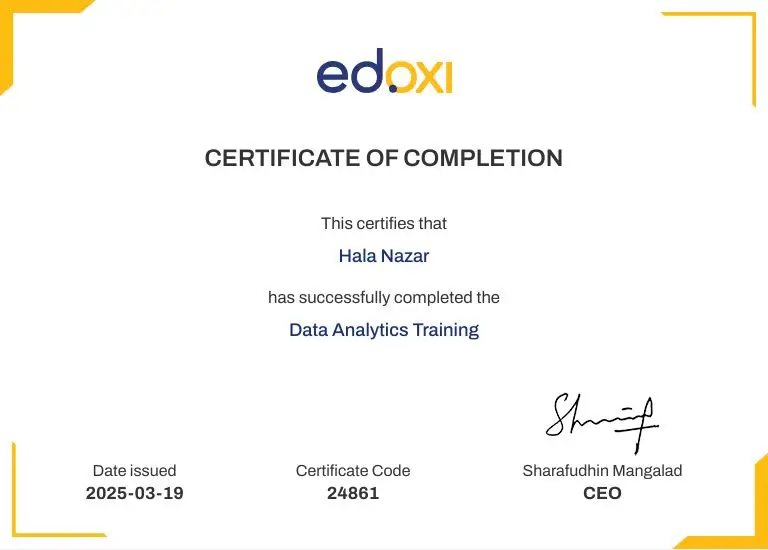
Do You Want to be a Certified Professional in Anti-Money Laundering?

Join Edoxi’s Anti-Money Laundering Course

Why Choose Edoxi for AML-CFT and Sanctions Compliance Training in Dubai?

Edoxi Training Institute is considered the best finance training institute, offering Quality expert-led Finance Courses in Dubai. Here are a few reasons why you should choose Edoxi for the Anti-money laundering course in Dubai;

Regulatory-Driven AML-CFT Curriculum

Edoxi’s AML course aligns with FATF guidelines, UAE Central Bank regulations, and global compliance frameworks, ensuring professionals master evolving AML-CFT challenges.

Risk-Based Case Study Learning

The course follows a scenario-driven approach using financial crime investigations and regulatory breaches to enhance skills in risk detection, compliance enforcement, and institutional control implementation.

Advanced Sanctions Compliance Training

Our comprehensive training on global and UAE-specific sanctions, including screening protocols, escalation procedures, and compliance program development for financial institutions.

UAE-Specific AML Compliance Expertise

Training focuses on UAE Federal AML laws, Central Bank directives, and DFSA regulations, ensuring professionals understand local compliance while maintaining global regulatory alignment.

Career-Focused Compliance Training

We provide career guidance and networking opportunities to help professionals advance within Dubai’s regulatory compliance and financial crime sectors.

CAMS Exam Preparation

Our CAMS (Certified Anti-Money Laundering Specialist) exam prep course will help you gain the knowledge and skills needed to pass the exam and become certified in anti-money laundering.

students-image

Edoxi is Recommended by 95% of our Students

Meet Our Mentor

Our mentors are leaders and experts in their fields. They can challenge and guide you on your road to success!

mentor-image

Nithin Kumar Reddy

Nithin Kumar Reddy is an Accounting and Finance Trainer with over 8 years of experience in finance and accounting training. His expertise includes IPSAS, IFRS Consultation, Implementation, Auditing, and Public Accounting. He is a qualified professional, holding credentials as a Chartered Accountant and a Public Accountant.

Nithin is a member of the Institute of Chartered Accountants of India (ICAI), the Chartered Institute of Public Finance and Accountancy (CIPFA), and the Association of Certified Fraud Examiners (ACFE). He has also earned diplomas in IFRS and Public Financial Management (PFM) certifications.

As a corporate trainer, Nithin Kumar has successfully conducted training sessions for clients in IFRS, IPSAS, and PFM implementations, corporate tax, auditing, financial systems, and cost management. His corporate training portfolio spans the Asia-Pacific, Middle East, and Africa. Nithin is renowned for his deep knowledge, engaging teaching style, and unique ability to simplify complex financial concepts. During his training career, Nithin has successfully trained over 1,000 finance professionals.

Locations Where Edoxi Offers AML Course in Dubai

Here is the list of other major locations where Edoxi offers KHDA-approved AML Course in Dubai

FAQ

Why is AML training important in Dubai in 2026?

With stricter UAE AML laws, increased FATF scrutiny, and higher regulatory inspections, proper AML training helps professionals and companies avoid heavy fines, maintain compliance, and protect their reputation.

Who should attend the AML Course?

It is ideal for compliance officers, AML analysts, risk managers, auditors, bankers, finance professionals, company directors, and employees working in DNFBPs (real estate, law firms, accounting, etc.).

What prerequisites are required for joining the AML-CFT and Sanctions Compliance course?
A basic understanding of financial regulations is beneficial but not mandatory. The course is designed to accommodate professionals from various backgrounds, including those new to compliance roles.
Does the course prepare for the CAMS Certification?

Yes. Edoxi’s AML course is specifically designed to prepare you for the Certified Anti-Money Laundering Specialist (CAMS) exam by ACAMS.

What is the duration and format of the AML course in Dubai?
  • Total duration: 40 hours
  • Available in Classroom, Online (Live Virtual), and Blended modes
  • Weekend batches are also available
Is the AML Course KHDA-approved?

Yes. Edoxi’s AML program is fully KHDA-approved, which means the certificate is internationally recognised and widely accepted across the UAE.

What is the AML course fee?

Individual AML Fee depending on batch and mode, while the Corporate Training is custom-priced with attractive group discounts for 5+ participants

Do you provide corporate AML training?

Yes. We offer customised in-house corporate training tailored to your company’s industry, risk profile, and specific compliance needs.

What certification will I receive upon completion?

You will receive a KHDA-approved certificate from Edoxi. Students who pass the CAMS exam will also receive the global CAMS certification from ACAMS.

What are the CAMS Exam details?
  • Duration: 3.5 hours
  • Questions: 120 (Multiple Choice + Multiple Select)
  • Passing Score: 75 (scaled)
  • Validity: 3 years
What practical skills will I develop during the Anti-Money Laundering training in Dubai?

You will develop practical skills in transaction monitoring, suspicious activity identification, risk assessment, sanctions screening, and designing compliance frameworks that meet regulatory requirements.

Is the Anti-Money Laundering course recognised by regulatory authorities?

The course aligns with FATF international standards and UAE Federal regulations, providing knowledge recognised by financial institutions and regulatory bodies operating in the region.

What tools and technologies will be covered in the Anti-Money Laundering course in Dubai?

The Anti-Money Laundering course in Dubai provides awareness of industry-standard compliance tools like World-Check, OFAC List, SAS AML, and transaction monitoring systems used by financial institutions for regulatory compliance.

What is the Average Monthly Salary for AML-CFT Professionals in Dubai?

The following table showcases the job roles and average monthly salary after the AML-CFT course in Dubai;


Role Average Monthly Salary (AED)
Compliance Officer (Entry-level) 6,661 - 8,000
Compliance Officer (Mid-level) 8,752 - 10,000
Compliance Officer (Senior-level) 12,000 - 16,000
AML Analyst 7,000 - 9,500
Head of Compliance 20,000 - 30,000
MLRO 25,000 - 35,000
What topics are covered in an AML course?
Edoxi’s 40-hour AML Course in Dubai covers 12 modules, including AML/CFT frameworks, KYC, CDD, EDD, PEP screening, transaction monitoring, SARs, sanctions, AML red flags, and practical case studies. The training also introduces AI-driven monitoring, sanctions screening, and risk-based compliance methods.
Is AML certification recognized in Dubai, UAE?
Edoxi’s AML program provides a KHDA-approved certificate and is designed around UAE AML/CFT requirements, FATF standards, and regulatory frameworks relevant to the UAE. The course also prepares learners for the internationally recognized CAMS certification, which is awarded separately by ACAMS after meeting its requirements and passing its exam
How long does an AML course take in Dubai?
Edoxi’s AML training in Dubai is structured as a 40-hour course, with classroom and live-online options available. Corporate delivery can be completed in 6 days, while online schedules include weekday evening and weekend formats for working professionals
What certification will I receive after an AML course?
After completing Edoxi’s AML program, learners receive a KHDA-approved Edoxi AML certificate. The course also provides preparation for the CAMS exam; the separate CAMS credential is awarded by ACAMS to candidates who meet its eligibility requirements and pass the examination.
How practical is AML training?
Edoxi combines classroom theory with real-world case studies, simulations, compliance exercises, and hands-on risk assessment activities. Learners work through areas such as suspicious transaction analysis, sanctions screening, PEP due diligence, transaction monitoring, and enterprise-wide AML risk assessment.
How much does AML certification cost?
The Edoxi AML course fee is not published as one fixed amount because pricing can vary by batch, delivery mode, and current offers. For the separate CAMS pathway, Edoxi currently lists $2,000, including membership, exam fees, and study materials; verify the latest fee before enrollment.
What are the core areas covered in an AML course?
The core curriculum at Edoxi is organized into 12 modules, moving from AML/CFT fundamentals and KYC to CDD, EDD, PEP screening, transaction monitoring, SARs, sanctions, red flags, and case studies. This structure combines regulatory knowledge with practical financial-crime investigation and compliance skills.
How many modules are included in Edoxi’s AML course?
Edoxi’s AML Course in Dubai includes 12 structured modules within 40 hours of training. The syllabus progresses from AML/CFT and KYC fundamentals to transaction monitoring, sanctions, PEPs, SARs, and practical case studies
How many learners have enrolled in Edoxi’s AML course?
Edoxi currently reports 150+ learners enrolled in its AML training and a 4.9 course rating on its Dubai course page. These figures indicate the current course-level information displayed by Edoxi and may change over time.
Does Edoxi offer online AML training?
Yes. Edoxi offers its 40-hour AML training online, with live virtual sessions, weekday evening schedules, weekend intensive options, and recorded sessions for review. Classroom and corporate training options are also available for the Dubai program
Does Edoxi AML training prepare students for CAMS?
Yes. Edoxi’s AML curriculum is designed to build knowledge relevant to the CAMS examination, including financial crime risks, compliance programs, international standards, and investigation techniques. The CAMS certification itself is awarded by ACAMS after the candidate fulfills its requirements and passes the exam.
What are the CAMS exam duration and question details?
Edoxi currently lists the CAMS examination as 3.5 hours with 120 questions, combining multiple-choice and multiple-select formats, with a listed minimum passing score of 75. Edoxi also states a 3-year certification validity with recertification through continuing education
What practical tools are discussed in Edoxi’s AML training?
The course introduces learners to compliance technologies and screening concepts involving tools such as World-Check, OFAC lists, SAS AML, and transaction-monitoring systems. It also covers AI-powered monitoring and automated sanctions screening as part of the practical learning approach.
How many career roles can AML training prepare you for?
Edoxi identifies 9 AML-related career paths, including KYC Analyst, AML Compliance Analyst, Compliance Officer, AML Monitoring Specialist, Sanctions Compliance Analyst, AML Program Manager, Head of Compliance, and MLRO. Actual career progression depends on qualifications, experience, employer requirements, and professional certification.
What are the benefits of an AML training course?
AML training improves professionals' ability to identify financial crime risks, conduct effective KYC and due diligence, and recognize suspicious transactions. It can also strengthen compliance awareness and support career development in AML, risk, banking, and financial services.
Do companies need to provide AML training every year?
Companies should provide AML/CFT training regularly and ensure it remains appropriate to employees' roles and current risks. In practice, many organizations use annual refresher training alongside additional training when regulations, risks, or responsibilities change.
How long is AML training valid for professionals?
An AML course certificate may not have a universal expiry period, but AML knowledge must be kept current as regulations, risks, and compliance requirements change. Employers may therefore require periodic refresher or annual AML training.
Why is AML training important for companies?
AML training helps employees recognize money laundering and terrorist financing risks and follow the organization's compliance procedures. It also supports a stronger compliance culture and helps businesses meet applicable regulatory and risk-management expectations.
How difficult is the AML exam?
AML exam difficulty depends on the certification, syllabus, and your prior knowledge of compliance and financial crime concepts. Studying the official syllabus, practicing questions, and understanding real-world AML scenarios can improve exam preparation.
How do I become AML certified in Dubai?
Choose an AML training or professional certification aligned with your career goals and eligibility requirements. Complete the required training and assessment, then maintain your knowledge through continuing professional development and regulatory updates.
What are the best certification courses in compliance?
best compliance certification depends on your career role, industry, experience, and specialization. Popular pathways include AML/CFT, CAMS, KYC, sanctions compliance, risk management, and broader compliance certifications.
How does an AML Dubai UAE course prepare you for compliance success?
An AML course develops knowledge of AML/CFT requirements, KYC, customer due diligence, risk assessment, transaction monitoring, and suspicious transaction reporting. Practical examples can help professionals apply these concepts within compliance functions.
Is Anti-Money Laundering (AML) in Dubai, UAE, in demand today?
AML and financial crime compliance skills remain important in Dubai because regulated businesses must manage money laundering and terrorist financing risks. Demand is particularly relevant across banking, financial services, insurance, fintech, real estate, and other regulated sectors.
Do I need prior AML experience for AML training?
Prior AML experience is not always required for introductory AML training. However, professional certifications and advanced programs may have specific eligibility or experience requirements.
What career opportunities are available after AML course & certification?
AML course certification can support careers such as AML Analyst, KYC Analyst, Compliance Officer, Financial Crime Analyst, Transaction Monitoring Analyst, and AML Manager. Career opportunities depend on qualifications, experience, and employer requirements.
Can I take an AML course online or only in person?
Yes, AML training course can be delivered through both online and classroom formats, depending on the provider and course. Online learning can provide flexibility for working professionals, while classroom training offers direct interaction with trainers.
What are the AML-related courses?
AML-related training can include Anti-Money Laundering, AML/CFT Compliance, KYC, Customer Due Diligence, Transaction Monitoring, Sanctions Compliance, and Financial Crime Risk Management. Professional certifications such as CAMS provide a more specialized pathway.
Why learn an AML course?
Learning AML helps professionals understand how financial institutions identify, assess, and manage money laundering and financial crime risks. It can also strengthen practical compliance skills and support career development in banking, finance, risk, and compliance.
Why choose Edoxi for an AML Course in Dubai?
Edoxi provides AML training designed to help professionals understand AML/CFT compliance, KYC, customer due diligence, and financial crime prevention. Course suitability, delivery format, and certification options depend on the specific AML program.
Who can take an AML course?
AML Course are designed for professionals working in or entering areas such as AML, compliance, risk management, financial crime prevention, and investigations. Eligibility and certification requirements can vary by the specific ACAMS program.
What are the consequences of non-compliance with AML requirements?
AML non-compliance can result in regulatory penalties, enforcement action, reputational damage, financial losses, and increased regulatory scrutiny. The specific consequences depend on the nature and severity of the violation under applicable UAE regulations.
Who should take an AML & CFT, CAMS Compliance Certificate?
AML/CFT training is suitable for compliance officers, banking professionals, financial crime analysts, auditors, risk professionals, and other employees involved in financial crime controls. CAMS is particularly relevant to professionals seeking a specialized AML career.
Why is an AML & CFT, CAMS Compliance Certificate important?
AML/CFT training demonstrates knowledge of financial crime prevention and compliance practices. A recognized professional certification can also help professionals demonstrate specialized AML knowledge to employers.
What is an AML & CFT, CAMS Compliance Certificate?
An AML/CFT certificate demonstrates completion of training in anti-money laundering and counter-terrorist financing compliance principles. CAMS is a professional certification offered by Association of Certified Anti-Money Laundering Specialists and is separate from general AML training certificates.
How to become an AML & CFT, CAMS compliance expert?
Build knowledge of AML/CFT regulations, KYC, customer due diligence, sanctions, transaction monitoring, and suspicious transaction reporting. Relevant professional training and certifications such as CAMS can further develop specialized compliance expertise.
How often should employees in banking and financial institutions undergo AML training?
AML training should be provided regularly and updated when regulations, risks, or business activities change. Many organizations conduct AML training annually, with additional role-specific or refresher training when required.
Is an AML course mandatory in Dubai?
AML training requirements in the UAE depend on the organization, role, and applicable regulatory requirements. Businesses subject to UAE AML/CFT obligations must provide appropriate training to relevant employees and maintain effective compliance programs.
Why are AML & KYC courses important?
AML & KYC courses help professionals understand how to identify financial crime risks and comply with applicable regulations. They also strengthen customer due diligence, risk assessment, transaction monitoring, and regulatory compliance practices.
What is the best AML course in Dubai?
Edoxi Training Institute offers one of the top-rated Anti-Money Laundering (AML) courses in Dubai, designed for finance professionals, compliance officers, and legal experts. Our comprehensive AML certification training in Dubai covers international regulatory frameworks, UAE Central Bank compliance guidelines, risk assessment strategies, and practical transaction monitoring techniques.
Where is your AML training institute located in Dubai?
Edoxi Training Institute is centrally located in Dubai at Office 504, Bank Street Building, Next to Burjuman Metro Station Exit 3, Khalid Bin Al Waleed Rd, Dubai. Our training center is easily accessible via the Dubai Metro and major highways, making it convenient for professionals across Bur Dubai, Deira, Downtown, and the wider UAE.
Who should take an Anti-Money Laundering (AML) course in Dubai?
An AML course in Dubai is essential for compliance officers, internal auditors, risk managers, bankers, legal professionals, and designated non-financial businesses and professions (DNFBPs) operating in the UAE who need to meet local regulatory compliance standards.
How long does it take to complete an AML course in Dubai?
Most professional AML training courses in Dubai take between 2 days to 4 weeks to complete, depending on whether you choose intensive weekend workshops, evening weekday batches, or self-paced modules tailored for working professionals.
Does the AML course cover UAE Central Bank and regulatory requirements?
Yes, our Anti-Money Laundering course in Dubai thoroughly covers UAE regulatory requirements, including guidelines set by the UAE Central Bank, the Financial Intelligence Unit (FIU), and international standards to help organizations prevent financial crimes and avoid regulatory penalties.
What is the AML Course in Dubai?

The AML course in Dubai is a 40-hour, KHDA-approved training program that prepares professionals to detect, prevent, and report money laundering and terrorist financing under UAE Central Bank and FATF regulations.

Is AML training mandatory in the UAE?
Yes. UAE Central Bank and DNFBP regulations require regulated entities to provide AML/CFT training to relevant staff, with most companies conducting it annually.
What is the AML course fee in Dubai?
AML course fees in Dubai can vary depending on the training provider, course level, certification, and delivery format. However, standard AML certification and CAMS preparation programs in the UAE typically range from AED 3,000 to AED 6,000. The exact fee may vary based on the course package and training mode offered by Edoxi.
What's the difference between the AML course and CAMS certification?
The AML course builds job-ready compliance skills for your current role, while CAMS is a separate global certification exam administered by ACAMS with its own eligibility, fees, and exam registration.
Can I do the AML course online in Dubai?
Yes, Edoxi offers the 40-hour AML course in classroom, live online, and blended formats, with weekday and weekend batches.
Do UAE free zones like DIFC and ADGM have separate AML rules?
Yes. DIFC and ADGM have their own AML/CFT regulatory frameworks alongside UAE Central Bank requirements, and this course covers all three.