Request a Callback

+971 43801666
 Jul 31, 2026
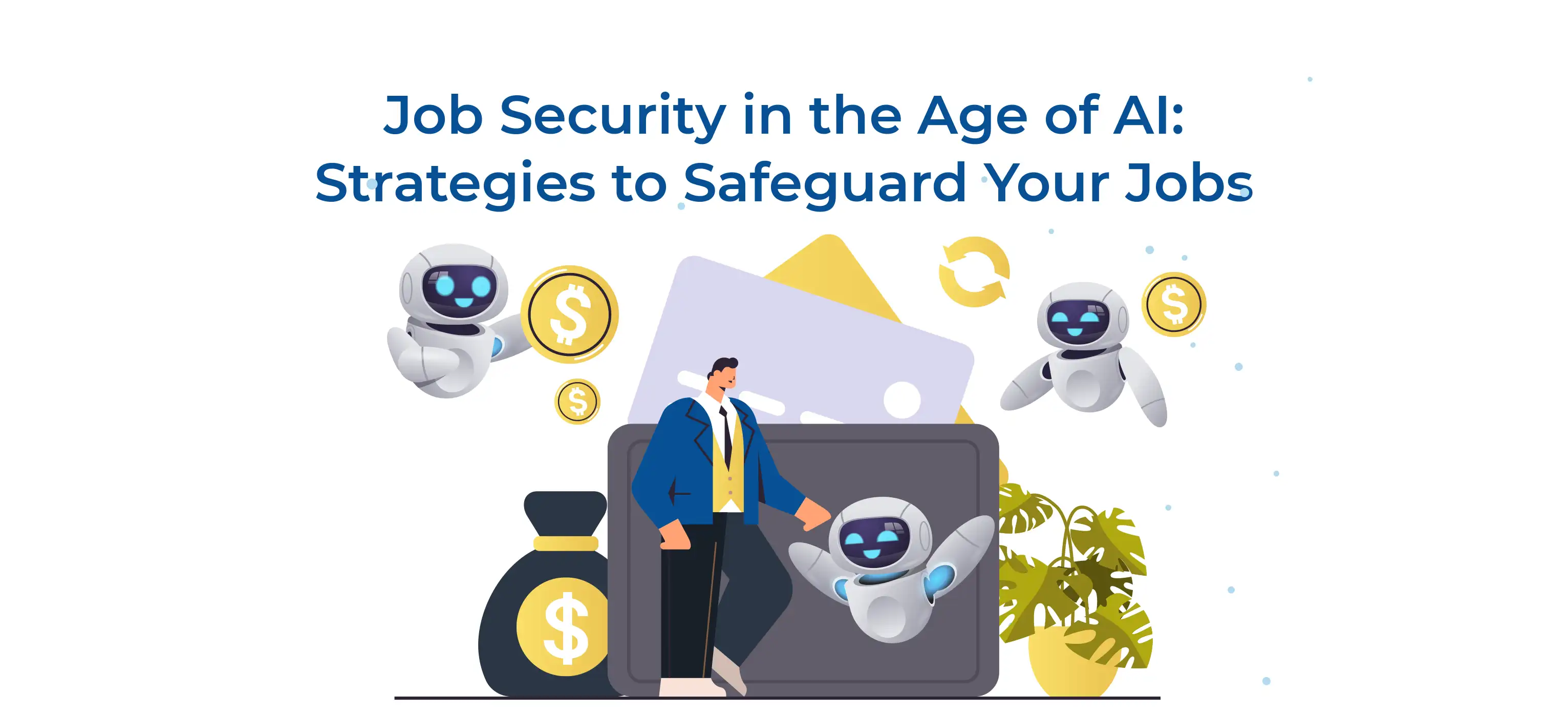
AI taking over jobs is a growing concern in today's rapidly advancing technological landscape. This blog will explore 13 effective ways to protect your job from AI's impact. By implementing these strategies, individuals can proactively adapt, acquire new skills, and cultivate human qualities that can help them thrive in a world augmented by AI.
Let's delve into these practical solutions to secure our professional future.
Artificial Intelligence (AI) has become significant in everyone's lives, revolutionising industries. AI has been around for a while. However, ChatGPT transformed it and suddenly made it popular. While its transformative potential is undeniable, concerns arise about the possibility of AI taking over jobs. The impact of AI on industries is profound, with automation and intelligent algorithms replacing certain tasks traditionally performed by humans. This rapid shift has increased the importance of AI training programs and initiatives that help professionals adapt to changing workplace demands.
However, it is essential to approach this concern with a balanced perspective. While AI does bring changes to job roles, it also creates new opportunities and augments human capabilities. Understanding the specific effects of AI in different industries is crucial for navigating the evolving job market and proactively preparing for the future.
Check out: The Jobs Most at Risk of Being Replaced by AI
Artificial intelligence (AI) is transforming workplaces across every industry. While concerns about AI replacing jobs are understandable, the reality is that professionals who invest in Artificial Intelligence Training and AI skills development are better positioned to thrive in the evolving job market. Rather than competing against AI, the key is learning how to work alongside it. Here are 13 practical ways to future-proof your career.
Keeping up with the latest AI trends, emerging technologies, and industry developments is essential. Enrolling in an AI training program or Artificial Intelligence certification helps you build relevant skills and stay competitive. Continuous learning ensures you can adapt as AI reshapes workplaces.
Check out: Why Python is best for Artificial Intelligence?
While AI excels at automating tasks, it still lacks certain human skills. Focus on developing skills that differentiate you from AI, such as creativity, critical thinking, and emotional intelligence. These abilities are highly valued in problem-solving, innovation, and complex decision-making processes, making you indispensable in the workforce.
Check out: Why Upskill for the Age of Artificial Intelligence?
AI may excel at processing data, but it struggles with building relationships. Cultivate strong interpersonal relationships by networking, collaborating, and fostering meaningful connections. Building a robust professional network enhances your job security based on trust, collaboration, and the human element that AI cannot replicate.
To protect your job from AI, consider specialising in niche areas. While AI can handle general tasks, expertise in specific fields or industries provides job security. Become an expert in a niche area by acquiring specialized knowledge and skills not easily replaceable by AI systems.
Check out: How to get started as an AI Developer?
Rather than seeing AI as a threat, embrace collaboration with it. Understand how AI can enhance your productivity and job performance. You can automate mundane tasks, gather valuable insights, and optimize your workflow by leveraging AI tools and technologies. This collaboration allows you to focus on higher-level tasks that require human judgment and creativity.
Instead of fearing AI, identify job roles that complement its capabilities. Look for opportunities to work alongside AI systems, where you can leverage its strengths while contributing your uniquely human skills. By understanding the symbiotic relationship between humans and AI, you can secure job roles likely to withstand automation.
Check out: How to build a career in Artificial Intelligence?
The skills employers demand today may differ significantly in the coming years. Stay flexible by learning new technologies, earning relevant certifications, and upgrading your expertise through AI upskilling and AI reskilling programs.
To stay ahead of AI, prioritise continuous skill development. Identify the skills in demand in your industry and invest in acquiring or enhancing them. Whether learning programming languages, data analysis, or project management, continuous skill development ensures you remain competitive and worthy in the job market.
Check Out: What is Generative AI And How Does it Work
As AI becomes increasingly integrated into various domains, ethical considerations are paramount. Advocate for responsible AI practices and ensure that the use of AI aligns with ethical standards. By prioritizing ethical considerations in your work, you protect your job and contribute to the responsible and sustainable development of AI technologies.
Protecting your job from AI requires lifelong career planning. Set long-term career goals, regularly reassess them, and adapt your strategies accordingly. Stay proactive in identifying emerging trends and industries, and align your career trajectory accordingly. Lifelong career planning helps you stay resilient and agile in the face of AI's impact on the job market.
Check out: Top Artificial Intelligence Applications
A growth mindset is crucial in protecting your job from AI. Adopt a mindset that perceives challenges as chances for personal growth and learning. Be open to new ideas, embrace change, and continuously seek ways to improve your skills and knowledge. A growth mindset enables you to adapt to AI advancements and seize new possibilities for professional growth.
To protect jobs and ensure responsible AI adoption, advocate for AI regulation and transparency. Support initiatives that promote ethical AI practices, data privacy, and accountability. By actively engaging in discussions about AI regulations, you contribute to creating an environment where AI is harnessed for the benefit of society while safeguarding job security.
Check out: Will Artificial Intelligence Take Over Human Jobs by 2030?
AI is creating entirely new business opportunities. Entrepreneurs can leverage Generative AI, automation tools, and Artificial Intelligence Training to launch AI-powered products, consulting services, digital businesses, or innovative startups. Developing AI skills opens new career paths beyond traditional employment.
Check out: Jobs Lost To Automation Statistics
In conclusion, while concerns about AI taking over jobs are valid, there are effective ways to protect your career. Individuals can navigate the evolving job landscape and secure their professional future by staying informed, developing uniquely human skills, and embracing collaboration with AI. With proactive measures, individuals can thrive alongside AI and shape a successful career in the AI era.
Here is the list of other major locations where Edoxi offers Artificial Intelligence Courses
Artificial Intelligence Course in Dubai | Artificial Intelligence Course in Qatar |