Request a Callback

+971 43801666
 Aug 13, 2026
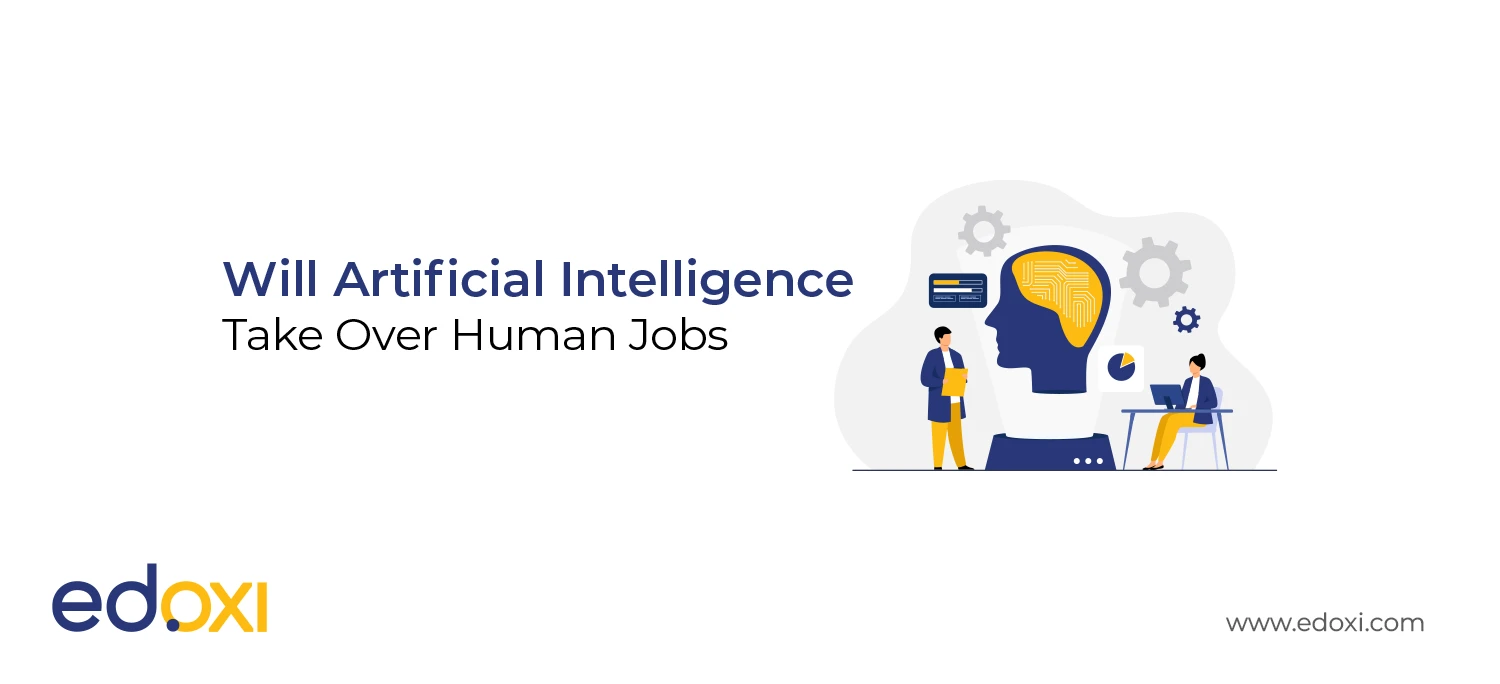
Quick AnswerAI is not on track to eliminate work in general; it is on track to eliminate specific tasks, mostly the repetitive, rule-based kind. The World Economic Forum's Future of Jobs Report 2025 projects that 92 million existing roles will be displaced by 2030, while 170 million new roles will be created over the same period, for a net gain of 78 million jobs globally. The honest picture is one of transformation rather than disappearance: some jobs will shrink or vanish, new ones will emerge, and almost every role in between will change shape as AI tools become part of daily work. |
Artificial intelligence is improving the world in countless ways, but alongside the convenience it brings, it has also created real anxiety about job security. Tools built on large language models such as ChatGPT, Claude, Gemini, and others are now setting the pace in marketing, advertising, customer service, and healthcare, and AI agents that can carry out multi-step tasks on their own are moving from research demos into everyday business software.
As AI adoption grows, many ask, “Will artificial intelligence take over human jobs by 2030?” In reality, AI is transforming work and creating new opportunities. Learning AI can make you irreplaceable.
This guide explores the impact of AI on employment, the jobs most likely to be affected, the careers expected to grow, and the skills professionals need to thrive in an AI-driven future. This guide covers the complete Will Artificial Intelligence Take Over Human Jobs by 2030
The AI-and-jobs debate is often framed as a future problem, but several well-known companies have already restructured work around Artificial Intelligence. These examples show both the displacement and the limits of it:
Klarna reported that its AI customer-service assistant was handling the workload equivalent of roughly 700 full-time support agents, resolving most routine queries in minutes. The company publicly acknowledged that leaning too hard on AI hurt service quality for complex cases and began rebalancing toward human agents, a useful reminder that “AI replacement” is rarely one-directional.
IBM announced it would pause or slow hiring for back-office roles it believed AI could handle within a few years, an estimated 7,800 positions, largely in Human Resource Management and administrative functions. Rather than mass layoffs, IBM chose attrition and non-replacement, which is how much AI displacement is actually likely to look in practice.
Shopify's CEO told teams that before requesting new headcount, they must demonstrate why the work could not be done with AI, effectively making AI-first workflows a hiring gate rather than an optional tool.
The language-learning company shifted to an “AI-first” content model, reducing its reliance on contract translators and content creators as generative AI took over much of lesson drafting, with humans moving into review and quality-control roles.
Microsoft Copilot assistants are now embedded across Word, Excel, Outlook, and Teams in thousands of enterprises. Early adopter studies report meaningful time savings on drafting, summarising, and email triage, which changes the shape of office jobs (fewer hours on routine output, more on judgment and review) even where no one is laid off.
The pattern across these cases matches the research: AI is absorbing tasks first, headcount second and companies that over-rotate on replacement often course-correct.
Many businesses now rely on AI Tools powered by Large Language Models (LLMs). Professionals with Generative AI Training, ChatGPT Training, and AI Training are better equipped to work alongside these technologies rather than compete against them.
The most cited, current projection comes from the World Economic Forum's Future of Jobs Report 2025, which surveyed over 1,000 major employers representing more than 14 million workers across 55 economies.
Key statistics at a glance
|
Separately, the International Monetary Fund has estimated that around 40% of jobs worldwide have meaningful exposure to AI capabilities, rising to closer to 60% in high-income, highly digitised economies.
Estimates vary by methodology: Goldman Sachs, for instance, has suggested AI could affect tasks within roughly 300 million full-time jobs globally, but the more conservative, employer-surveyed WEF figures are the most widely used benchmark for planning purposes.
As AI Automation continues to transform repetitive tasks, organizations are investing in AI Workforce Training, AI Upskilling, and AI Reskilling initiatives to prepare employees for evolving job roles.
Not all work is equally exposed. Roles built around repetitive, rule-based, or purely data-driven tasks face the steepest decline, while roles built around judgment, care, and hands-on skill are holding up far better.
|
Risk Level |
Example Roles |
Why They're Exposed |
|
High |
Telemarketers, data-entry clerks, basic bookkeeping |
Highly repetitive, rule-based, easy to script |
|
High |
Receptionists, basic customer support, couriers |
Predictable requests AI chat and routing tools now handle |
|
Medium |
Market research analysts, entry-level content writers |
AI can draft and summarize, though human review still adds value |
|
Medium |
Retail and advertising sales support |
Personalization engines automate parts of the workflow |
|
Role |
Why AI Struggles to Replace It |
|
Nurses & care workers |
Requires hands-on care, empathy, and split-second human judgment |
|
Electricians & skilled trades |
Physical, unpredictable environments are hard to automate |
|
Therapists & counselors |
Trust and emotional nuance are central to the work |
|
Teachers |
Mentorship, motivation, and classroom management resist automation |
|
AI/ML engineers & data scientists |
Someone still has to build, train, and audit the systems using data science |
|
Cybersecurity professionals |
Adversarial, fast-changing threats need human strategy |
The World Economic Forum's data reinforces this pattern: even as clerical and administrative roles decline, occupations tied to demographic and green-transition demand, including farmworkers, delivery drivers, construction workers, and care-economy roles, are among the fastest-growing in absolute numbers.
Professionals who combine domain expertise with Practical AI Skills and an understanding of Responsible AI will have stronger opportunities for long-term AI Career Development.
Job titles only tell half the story, it is the industry that you work shapes how quickly AI arrives at your desk. Here is a practical view of relative exposure:
|
Industry |
AI Impact |
What's Actually Changing |
|
Finance & Banking |
High |
Fraud detection, credit decisions, report drafting, and customer service are heavily automatable; advisory and relationship roles remain human |
|
Retail & E-commerce |
High |
Personalization, inventory forecasting, chat-based support, and checkout automation are reshaping frontline and back-office roles |
|
Manufacturing |
High |
Robotics plus AI quality-inspection and predictive maintenance continue a decades-long automation trend |
|
Technology & Software |
High (transformative) |
AI writes boilerplate code and tests, but demand for engineers who direct and validate AI keeps growing |
|
Healthcare |
Medium |
AI assists with imaging, triage, documentation, and admin, but hands-on care and clinical accountability stay human |
|
Legal |
Medium |
Document review, research, and contract drafting are increasingly AI-assisted; courtroom advocacy and negotiation are not |
|
Education |
Medium |
AI personalises practice and automates grading; teaching, mentorship, and classroom management resist automation |
|
Media & Digital Marketing |
Medium–High |
First-draft content, ad targeting, and A/B testing are automated; strategy, brand judgment, and original reporting remain human-led |
|
Construction |
Low–Medium |
Physical, unpredictable job sites are hard to automate, though planning, estimation, and design tools are AI-assisted |
|
Agriculture |
Low–Medium |
Precision-farming AI grows, but the sector is adding workers overall due to demographic and food-demand trends |
With AI adoption accelerating across sectors, employers now increasingly value AI Industry Skills supported by AI programs.
Read: 5 Industries That Will Be Most Affected By AI
Global averages hide sharp regional contrasts, and where you work matters almost as much as what you do.
|
Region / Country |
AI Exposure |
Biggest Challenge |
Biggest Opportunity |
|
United States |
High (~60% of jobs exposed, per IMF advanced-economy estimates) |
Cognitive and office-based work concentrated in services |
Leading creator of new AI roles like Machine Learning engineering, AI product, and AI safety jobs cluster here |
|
United Kingdom |
High |
Services-heavy economy with large clerical and financial-admin workforces |
Strong fintech, legal-tech, and AI research sectors absorbing displaced knowledge workers |
|
Europe (EU) |
High |
Balancing automation with the EU AI Act's compliance requirements |
AI governance, auditing, and compliance roles growing faster than almost anywhere else |
|
India |
Medium overall, high in IT/BPO |
Routine BPO, data-entry, and voice-support work is among the world's most automatable |
One of the fastest-growing AI talent pools; GCCs (global capability centers) are hiring for AI oversight, data engineering, and analytics |
|
UAE |
Medium–High |
Rapid government-led AI adoption compresses transition timelines |
National AI Strategy 2031 is creating public-sector and smart-city AI roles; strong demand for imported AI talent |
|
Middle East (broader) |
Medium |
Diversifying away from oil while building digital-skills pipelines |
Sovereign AI investments (Saudi Arabia, Qatar, UAE) are funding new data-center, AI-engineering, and Arabic-language-AI jobs |
|
Southeast Asia |
Medium, high in BPO hubs |
The Philippines' call-center industry, a major employer is directly exposed to voice and chat AI |
Manufacturing upgrades, e-commerce growth, and regional AI hubs (Singapore) creating higher-value roles |
Check out: How to Use AI to Boost Your Job Search?
Every major wave of automation has created jobs that didn't exist before, and this one is no different.
|
New AI-Driven Roles |
What They Do |
|
AI/ML Specialist |
Builds and fine-tunes the models businesses rely on |
|
Prompt Engineer / AI Trainer |
Designs and refines how people and AI systems interact |
|
AI Product Manager |
Shapes AI features from idea to launch |
|
AI Governance & Ethics Specialist |
Manages compliance, safety, and responsible-use policy |
|
AI Auditor / Data Curator |
Checks AI outputs and training data for quality and bias |
|
FinTech & Security Engineers |
Two of the WEF's fastest-growing technical roles through 2030 |
Emerging technology careers such as Prompt Engineering, AI governance, and AI product management often require an AI Certification, an industry-recognised AI Certification Course, or a practical AI Course to demonstrate job-ready expertise.
Read and Find out: How to Build a Career in Artificial Intelligence?
Before generative AI became mainstream, Robotic Process Automation (RPA) drove workplace automation. RPA uses software bots to perform repetitive, rule-based digital tasks, such as transferring data between systems, processing invoices, and updating records.
During the early 2020s, many organisations adopted RPA to reduce manual work, particularly in back-office operations and Business Process Outsourcing (BPO). As a result, companies automated many routine administrative roles. BPO-heavy markets such as India and the Philippines experienced some of the greatest impact because they relied heavily on these repetitive digital processes.
Generative AI has taken workplace automation a step further. Unlike traditional RPA, which follows predefined rules, generative AI can understand context, generate content, and make decisions within defined boundaries.
Today, AI-powered agents can:
Because generative AI automates both routine and knowledge-based tasks, it is transforming white-collar jobs much faster than RPA alone. Instead of simply replacing repetitive work, AI is changing how professionals perform cognitive and decision-making tasks, making it the primary force driving the next wave of workplace automation.
Check out: Top 10 Artificial Intelligence Applications
AI is changing jobs, but professionals who continuously learn and adapt will remain competitive. Here are five practical ways to prepare for the future of work.
Learn how to use generative AI and AI agents in your daily work. Treat AI as a productivity tool that helps you work faster and make better decisions, rather than as a technology to fear.
Develop skills that AI cannot easily replace, including critical thinking, adaptability, communication, creativity, and leadership. Employers consistently rank these as some of the most valuable workplace skills.
Build expertise in high-demand areas such as artificial intelligence, data analytics, cybersecurity, cloud computing, and networking. The World Economic Forum (WEF) identifies these as some of the fastest-growing skill areas through 2030. Foundational Python programming skills remain the most versatile entry point.
Treat learning as an ongoing process instead of a one-time achievement. Most employers now prefer to upskill existing employees rather than hire new talent, making continuous learning a key career advantage.
If you want to transition into AI or strengthen your career prospects, follow a structured learning path. An AI course or professional certification can help you build practical, job-ready skills and stay ahead of workplace changes.
Very unlikely by 2030. AI is becoming a powerful diagnostic assistant, particularly in radiology, pathology, and triage, but clinical accountability, hands-on examination, patient trust, and complex judgment keep doctors firmly in the loop. The realistic change is doctors spending less time on documentation and more on patients.
Parts of legal work, yes; lawyers, mostly no. Document review, legal research, and first-draft contracts are increasingly AI-assisted, which most affects paralegal and junior-associate tasks. Courtroom advocacy, negotiation, and strategic counsel remain human, and professional liability rules require a human lawyer to stand behind the work.