Request a Callback

+971 4380 1666
 Jul 28, 2026
The best finance certifications for a successful career in finance are CFA, ACCA, CMA, CPA, FRM, and FMVA. Today’s financial landscape demands a hybrid skillset. Between rapid digital transformation and the rise of data-driven decision-making, top firms are aggressively hunting for professionals who combine traditional degrees with certification. But with options like the CFA, ACCA, CPA, and FMVA all competing for your time and money, making the wrong choice can cost you years of wasted effort.
Whether you want to manage multi-million dollar portfolios, steer corporate strategy, or master financial modelling, the right certification is what gets your resume past the AI screening filters and onto a hiring manager's desk. In this comprehensive guide, we break down the top global finance certifications, comparing their difficulty and career outcomes so you can choose the exact path that fits your goals.
A university degree provides the theoretical foundation for a finance career, while professional certifications demonstrate practical knowledge and industry-ready skills. Many employers use certifications as evidence that candidates understand current financial practices, international standards, business analysis, and professional ethics.
Finance certifications also encourage continuous learning. As financial reporting standards, regulations, technology, and business practices change, certified professionals are expected to maintain and expand their knowledge throughout their careers.
Some of the key benefits include:
A finance course will provide you with a strong basis in financial modelling, valuation and risk assessment before you start your career. Many professionals start their career with a commerce or business degree, but specialised finance training helps them bridge the gap between what they have learnt at university and what employers are looking for in them.
A finance course can help you:
If you are a beginner in finance, take courses that will give you a strong foundation before you go for the advanced certifications. These programmes introduce key concepts and develop practical, on-the-job skills.
| Finance Course | Best For | Skills You Learn |
|---|---|---|
| Finance Fundamentals | Beginners | Accounting, budgeting, financial statements |
| Accounting Courses | Commerce graduates | Accounting, reporting, taxation basics |
| Finance Courses | FinanceProfessionals, Students, Graduates, Analysts, Managers | Finance, Budgeting, Forecasting, Analysis, Valuation, Planning |
| Financial Analysis Course | Aspiring analysts | Ratio analysis, forecasting, valuation |
| Corporate Finance Course | Corporate professionals | Capital budgeting, investment decisions |
| Financial Modelling Course | Finance professionals | Excel modelling, forecasting, valuation |
| Investment Banking Course | Investment banking aspirants | M&A, valuation, capital markets |
| Certified Management Accountant CMA Course | Accountants,Analysts,Managers,Controllers, Executives | Management,Budgeting,Forecasting,Costing, Planning, Strategy |
| Anti Money Laundering AML Course | Compliance,Bankers,Auditors,Investigators,Regulators | Investigation,Monitoring, Detection,Screening, RiskAssessment,Reporting |
This course explores accounting principles, cash flow, financial statements and budgeting. It's great for beginners with little or no finance experience.
Accounting course helps learners understand financial reporting, business performance, and accounting principles used across industries.
This course equips learners with the abilities to analyse financial statements, recognise business trends, and use financial data to make strategic decisions.
Corporate Finance course deals with funding decisions, capital structure, investments and financial planning.
Financial modelling courses teach students how to develop practical Excel models for valuation, forecasting, budgeting and investment analysis.
Investment banking courses teach valuation techniques, mergers and acquisitions, and capital market concepts to work in investment banking or equity research.
CMA course is designed to develop expertise in management accounting, financial planning, cost management, and strategic decision making
Anti Money Laundering AML course is designed to develop expertise in detecting, preventing, and reporting money laundering and financial crimes while ensuring regulatory compliance.
The best finance learning roadmap is based on your current knowledge level, career goals, and area of specialisation preference.
| Career Stage | Recommended Learning |
|---|---|
| Beginner | Finance Fundamentals + Accounting and Finance Course |
| Early Career | Financial Analysis Course + Excel |
| Intermediate | Corporate Finance or Financial Modelling Course |
| Advanced | CFA, ACCA, CMA, CPA, FRM or FMVA |
| Leadership | Executive Finance Programmes |
Learn about business analysis and financial reporting. Pick a certification that corresponds to your career goals. As you continue to build your digital finance, analytics and financial modelling skills, you’ll remain competitive throughout your career.
Employers value certifications that align with your career direction. Select a certification that corresponds to your long-term career goals, not the most popular one.
| Certification | Best For | Career Path |
|---|---|---|
| CFA | Investment professionals | Portfolio Management, Investment Banking |
| ACCA | Accountants | Accounting, Audit, Finance Management |
| CMA | Corporate finance professionals | Management Accounting, Corporate Finance |
| CPA | Public accountants | Accounting, Audit, Taxation |
| FRM | Risk professionals | Banking, Financial Risk Management |
| FMVA | Financial analysts | Financial Analysis, Valuation, Financial Modelling |
The certifications have different focuses in finance. CFA is well-respected in investment management, whilst ACCA and CPA are internationally recognised in accounting. CMA is for leaders in corporate finance, FRM is for financial risk management, and FMVA is for practical financial modelling and valuation skills.
The technical skills required for finance jobs are different by job. Choose a course that aligns with your long-term goal. You will be able to learn fast and your employability will increase.
| Career Goal | Recommended Course | Suggested Certification |
|---|---|---|
| Financial Analyst | Financial Analysis Course | FMVA |
| Accountant | Accounting and Finance Course | ACCA or CPA |
| Corporate Finance Executive | Corporate Finance Course | CMA |
| Investment Banking Analyst | Investment Banking Course | CFA |
| Risk Analyst | Risk Management Training | FRM |
| Finance Manager | Corporate Finance + Leadership Training | CMA or CPA |
Yes. Flexible online finance courses have practical and theoretical components which let you choose the finance certification that best fits your career aspirations. The most popular, flexible and innovative way to train is online finance courses. They are a highly effective way for students and working professionals to update their skills and knowledge without losing time for other commitments.
Other benefits of online finance certification are:
Finance professionals work in banking, accounting, consulting, insurance, manufacturing, health care, retail, and fintech. With companies increasingly relying on data, demand for people who can interpret financial data and make strategic decisions is on the rise.
| Job Roles | Recommended Qualification |
|---|---|
| Financial Analyst | Financial Analysis Course + FMVA |
| Accountant | ACCA or CPA |
| Corporate Finance Executive | CMA |
| Investment Banking Analyst | CFA |
| Risk Analyst | FRM |
| Finance Manager | CMA or CPA |
Salaries differ by country, experience and employer, but finance remains one of the strongest career choices for long-term earning potential. Here is the updated table replacing growth potential with the national average base salary in USD
| Career | Average Salary (USD / Year) |
|---|---|
| Financial Analyst | $84,707 |
| Accountant | $68,078 |
| Corporate Finance Professional | $100,000+ |
| Investment Banker | $132,396 (Base pay only; total comp with bonuses ranges $160k-$220k+) |
| Risk Manager | $101,386 |
| Finance Manager | $120,410 |
Finance is changing at a rapid pace as organisations adopt new technologies and business models. Professionals who are up-to-date are more competitive in the job market.
Some important trends include:
Organisations are increasingly employing automation, cloud accounting and AI-powered tools to improve efficiency.
Excel, Power BI and financial modelling skills are increasingly in demand.
Digital banking, payment technologies, blockchain, and financial technology are creating new opportunities for finance jobs around the globe.
ESG (Environmental, Social and Governance) reporting for finance teams that support corporate governance and long term business strategy.
A successful career in finance begins with a blend of structured learning, recognised finance certifications, practical projects, and continuous skill enhancement. Whichever your career goal, you will acquire the right skills and increase your employability by choosing a course that matches it, whether you are interested in financial analysis, accounting, investment banking, corporate finance or risk management.
Key Takeaways
There is no single certification that is best for everyone. The right choice depends on your career aspirations and professional background.
If your goal is management accounting and business strategy, a certification focused on cost management, budgeting, and financial planning may be suitable.
Professionals interested in investment management and equity research often pursue qualifications centered on capital markets and portfolio management.
Individuals planning careers in auditing, taxation, or financial reporting may benefit from certifications that emphasize accounting standards and assurance practices.
Those interested in financial technology and business intelligence may find value in learning enterprise resource planning systems, data visualization, and financial analytics tools.
Selecting a certification that matches your long-term career direction usually provides the greatest return on your investment of time and effort.
The Certified Management Accountant CMA certification focuses on management accounting, strategic financial planning, budgeting, performance management, and business decision-making. It is widely recognized among organizations seeking professionals who can combine accounting knowledge with business strategy.
Professionals who work in financial planning and analysis, management accounting, corporate finance, or financial leadership often consider the CMA certification because it develops analytical and decision-support skills.
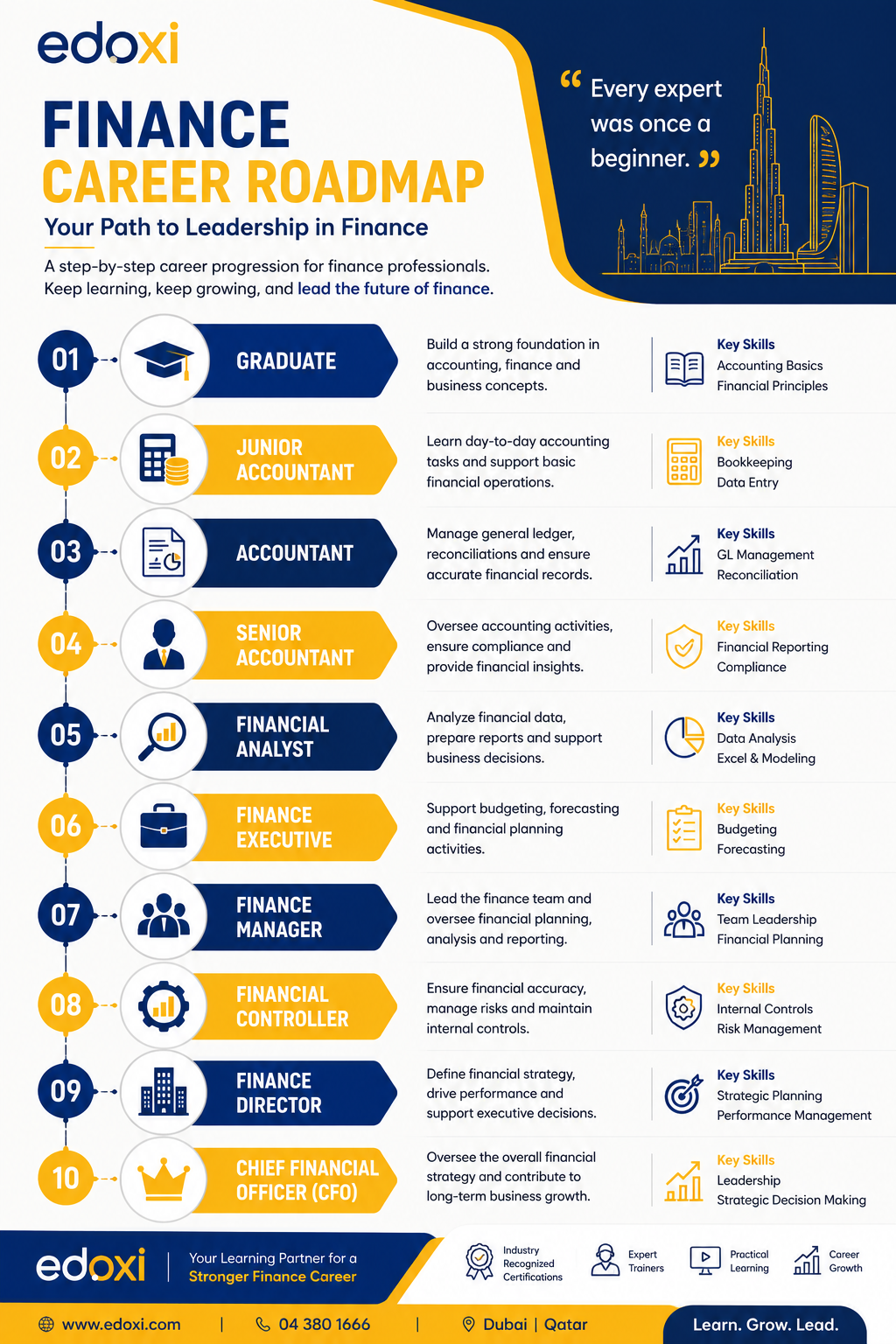
Typical career opportunities include management accountant, finance manager, cost accountant, financial controller, and chief financial officer.
The Chartered Financial Analyst (CFA) program is internationally recognized for investment management and financial analysis. It emphasizes portfolio management, investment valuation, economics, equity research, ethics, and capital markets.
The certification is commonly pursued by professionals interested in investment banking, wealth management, asset management, and research.
Career opportunities include investment analyst, equity research analyst, portfolio manager, and investment consultant.
The ACCA qualification provides comprehensive knowledge of accounting, auditing, taxation, financial reporting, business law, and financial management.
It is suitable for professionals planning careers in accounting firms, corporate finance departments, and multinational organizations that follow international accounting standards.
The CPA qualification is recognized for expertise in accounting, auditing, taxation, compliance, and financial reporting.
Many organizations value CPA professionals for roles involving regulatory compliance, financial auditing, and corporate accounting.
Financial modeling has become one of the most practical skills in modern finance. Organizations rely on financial models to evaluate investments, forecast revenue, estimate business performance, and support strategic planning.
Learning financial modeling helps professionals improve Excel skills, business valuation techniques, forecasting methods, and financial analysis capabilities.
Risk management has become increasingly important for financial institutions and multinational organizations.
The FRM certification focuses on market risk, credit risk, operational risk, liquidity risk, and enterprise risk management. Professionals working in banking, insurance, treasury, and investment management frequently pursue this specialization.
Enterprise Resource Planning (ERP) systems play a significant role in managing business finance.
SAP FICO Course provides practical knowledge of financial accounting, cost center accounting, asset accounting, profitability analysis, accounts payable, accounts receivable, and financial reporting within SAP environments.
Organizations implementing SAP solutions often seek finance professionals with ERP knowledge alongside accounting expertise.
Data has become an essential part of financial decision-making. Power BI enables finance teams to transform large volumes of financial information into interactive dashboards and meaningful business insights.
Finance professionals use Power BI for budgeting, forecasting, variance analysis, management reporting, financial dashboards, and performance monitoring.
Financial institutions continue to strengthen compliance programs to combat financial crime and meet regulatory requirements.
AML course helps professionals understand customer due diligence, Know Your Customer (KYC) procedures, transaction monitoring, sanctions compliance, suspicious activity reporting, and financial crime prevention.
This specialization is valuable for professionals working in banking, compliance, financial services, and regulatory roles.
Modern finance careers require a combination of technical knowledge, analytical thinking, and digital skills.
Employers commonly seek professionals who can demonstrate expertise in:
Finance professionals work in almost every industry because organizations depend on accurate financial information to support business decisions.
Common industries include:
Dubai is home to a fast-growing financial sector, creating strong demand for skilled professionals in accounting, banking, investment, corporate finance, and compliance. Earning a globally recognized finance certification can help you build practical expertise, enhance your professional credibility, and improve career opportunities across the UAE and beyond. This guide explores the top finance certifications in Dubai for 2026, highlighting their key benefits, ideal career paths, and how to choose the right qualification based on your experience and long-term career goals.
The best finance certifications in Dubai for 2026 include CMA, CFA, ACCA, CPA, FMVA, FRM, IFRS, SAP FICO, Power BI, and AML. Each certification supports different career paths, including management accounting, financial analysis, investment banking, auditing, risk management, compliance, and corporate finance. The right certification depends on your education, experience, career goals, and the industry you want to work in.
| Career Goal | Recommended Certification |
|---|---|
| Management Accounting | CMA |
| Investment Banking | CFA |
| Accounting & Auditing | ACCA or CPA |
| Corporate Finance | CMA + FMVA |
| Financial Analysis | FMVA + Power BI |
| Risk Management | FRM |
| Banking & Compliance | AML |
| ERP Finance | SAP FICO |
| Business Intelligence | Power BI |
| Financial Reporting | IFRS |
The best finance course depends on your career goals. CFA is ideal for investment careers, CMA for management accounting, ACCA for accounting, CPA for public accounting, and FMVA/CFI for financial modeling.
The UAE offers many reputable institutes and universities in Dubai, Abu Dhabi, and Sharjah that provide finance certifications, diplomas, bachelor's degrees, and professional training with flexible learning options.
The five main types of finance are personal finance, corporate finance, public finance, investment finance, and international finance. Each focuses on managing money, investments, budgets, and financial planning.
You can study finance through diploma programs, bachelor's degrees, professional certifications, online courses, or short-term training. Choose a learning path that matches your experience and career objectives.
A finance syllabus typically covers financial accounting, corporate finance, financial management, investment analysis, budgeting, taxation, risk management, financial reporting, and business analytics.
Popular finance courses in the UAE include CFA, CMA, ACCA, CPA, FMVA, IFRS, Financial Modeling, Investment Banking, Risk Management, and Corporate Finance programs.
Short-term finance courses in Dubai include Financial Modeling, IFRS Certification, Corporate Finance, CMA preparation, Excel for Finance, Power BI for Finance, and Financial Analysis programs.
CFA is globally recognized for investment and portfolio management careers, while CFI certifications focus on practical financial modeling and corporate finance skills. Your choice depends on your career path.
Some of the highest-paying finance careers include Chief Financial Officer (CFO), Investment Banker, Portfolio Manager, Private Equity Manager, Hedge Fund Manager, and Financial Director.
CMA, CFA, ACCA, CPA, Financial Modeling, IFRS, and Risk Management courses remain among the most in-demand finance certifications across Dubai's banking, corporate, and consulting sectors.
After completing CFA, professionals often pursue FRM, CAIA, CFP, MBA Finance, Financial Modeling (FMVA), or Data Analytics certifications to expand their expertise and career opportunities.
Flexible certifications such as CMA, CFA, ACCA, FMVA, IFRS, Financial Modeling, Corporate Finance, and Power BI for Finance are ideal for working professionals because they offer part-time learning options.
Globally recognized certifications like CFA, CMA, ACCA, CPA, FMVA, Financial Modeling, IFRS, and Bloomberg Market Concepts (BMC) can significantly strengthen a finance professional's CV.
Strong options include CFA for investments, CMA for corporate finance, ACCA for accounting, CPA for auditing, FMVA for financial modeling, and IFRS for international financial reporting.
Top online finance courses include CFA preparation, CMA, Financial Modeling (FMVA), Corporate Finance, Investment Analysis, Financial Planning, IFRS, Excel for Finance, and Business Valuation.
Globally respected finance certifications include CFA, CMA, ACCA, CPA, FRM, CAIA, CFP, FMVA, and MBA Finance programs offered by leading institutions and certification bodies.
Beginners can start with Fundamentals of Finance, Financial Accounting, Corporate Finance Basics, Excel for Finance, Financial Modeling Fundamentals, or an introductory diploma in finance.
Popular short-term certifications include IFRS, Financial Modeling, Corporate Finance, Excel for Finance, Investment Analysis, Budgeting & Forecasting, Risk Management, and Business Valuation.
Finance professionals on Reddit frequently recommend CFA, CMA, ACCA, FMVA, CPA, FRM, and practical financial modeling courses because of their industry recognition and career value.
Finance courses include Corporate Finance, Investment Banking, Financial Accounting, Financial Analysis, Treasury Management, Financial Modeling, Risk Management, Banking, Taxation, and Wealth Management.
Edoxi offers industry-focused finance training including CMA, CFA preparation, Financial Modeling, Corporate Finance, IFRS, Finance for Non-Finance Professionals, and Accounting certification programs.
Students after 12th can choose B.Com Finance, BBA Finance, Bachelor of Finance, Diploma in Finance, ACCA, CMA Foundation, or introductory finance certification programs.
Commerce students commonly choose B.Com Finance, ACCA, CMA, Bachelor of Business Administration, Financial Accounting, Banking, or Investment Management programs.
Working professionals often prefer CMA, CFA, ACCA, CPA, IFRS, Financial Modeling, Business Analytics, Power BI, and Executive Finance certifications that support career growth.
Some of the most respected finance certifications include CFA, CMA, ACCA, CPA, FRM, CAIA, CFP, FMVA, and Certified Treasury Professional (CTP).
The best finance courses combine global recognition with practical skills. CFA, CMA, ACCA, CPA, FMVA, IFRS, Financial Modeling, and Corporate Finance consistently rank among the top choices.
Leading universities for finance include institutions known for strong business schools, experienced faculty, industry partnerships, and excellent graduate employability across global financial markets.
Several UAE universities offer internationally recognized finance degrees with modern curricula, industry collaborations, internship opportunities, and professional certification pathways.
The best finance schools provide practical learning, experienced faculty, industry exposure, internships, research opportunities, and globally recognized finance qualifications.
A good finance academy in Dubai should offer accredited programs, experienced trainers, practical case studies, flexible schedules, and globally recognized certifications such as CFA, CMA, ACCA, and CPA.
Popular finance podcasts cover investing, corporate finance, personal finance, financial markets, economics, leadership, and global business trends, making them valuable resources for continuous learning.
Classic finance books include The Intelligent Investor, Security Analysis, Common Stocks and Uncommon Profits, Rich Dad Poor Dad, The Psychology of Money, and Principles.
A finance diploma teaches practical skills in accounting, corporate finance, budgeting, financial reporting, taxation, investment fundamentals, and business finance, making it suitable for students and professionals seeking career advancement.