
Leave your message to get our quick response
edoxi automated message icon

Juniper Security Associate (JNCIA‑SEC) Course

A professional cybersecurity analyst working on multiple monitors displaying digital security systems, encryption interfaces, and network protection dashboards in a high-tech environment.
Edoxi’s 5-day online Juniper Security Associate (JNCIA‑SEC) Course equips teams with practical SRX firewall and network security skills. Learn to configure security policies, NAT, VPNs, and monitor threats through hands-on labs and real-world scenarios. Flexible live online sessions make it ideal for network engineers, IT security teams, and system administrators. Enrol now!
Course Duration
40 Hours
Corporate Days
5 Days
Learners Enrolled
25+
Modules
8
star-rating-icon1
star-rating-icon2
star-rating-icon3
Course Rating
4.9
star-rating-4.9
Mode of Delivery
Online
Certification by

What Do You Learn From Edoxi’s Juniper Security Associate Training

Security Fundamentals & Threat Landscape
Learn the CIA triad, key threat types, attack paths, and security zone practices to reduce network risk.
Junos Security Architecture on SRX
Understand SRX control and data planes and how flow-based and packet-based processing inspect firewall traffic.
Initial SRX Setup, Interfaces & Zones
Perform base SRX setup, configure management access, and establish secure connectivity using interfaces, services, and security zones.
Security Policies & Application Awareness
Create from-zone and to-zone policies while understanding permit and deny actions, logging, and application identification.
Network Address Translation (NAT) on SRX
Configure source, destination, and static NAT rules while verifying translations and proxy ARP behaviour.
IPsec VPN Fundamentals
Learn IPsec and IKE Phase 1 and Phase 2 concepts and configure secure site-to-site VPN tunnels.

About Our Juniper Security Associate (JNCIA‑SEC) Course

Edoxi’s 5-day online Juniper Security Associate (JNCIA-SEC) Corporate Training is designed for network and security teams who want practical experience with Juniper SRX firewalls and Junos security features. The program helps organisations strengthen their network security capabilities using industry-relevant Juniper technologies.

Your team will explore Junos' security architecture on SRX devices. They understand how the control and data planes function, as well as how flow-based and packet-based processing manage firewall traffic.

Participants will gain practical experience configuring interfaces, routing, services, and security zones. They create zone-based security policies, enable logging, and implement application awareness to improve network visibility.

The program also covers NAT configuration, IPsec VPN deployment, basic threat management, security screens, and DoS protection, reinforced through realistic CLI-based lab exercises.

Edoxi offers customised corporate training formats, including on-site, classroom, and live online sessions, tailored to match your organisation’s network infrastructure and security requirements.

The corporate training program follows the official JNCIA-SEC certification exam objectives, focusing on the key security concepts and SRX firewall features required for enterprise network protection.

JNCIA-SEC Certification Exam Details

Exam Criteria Details
Exam Code JN0-231
Exam Name Security, Associate (JNCIA-SEC)
Duration 90 minutes
Number of Questions 65 multiple-choice questions
Passing Score Variable, typically around 60–70%
Fees
200 USD (standard Juniper associate-level exam price)
Certification Validity 3 years
Recertification
By passing the same exam again or a higher-level Juniper Security exam
Exam Administration Authority Pearson VUE
 

The training begins with core security concepts, including the CIA triad, common network threats, attack vectors, and the security zones model used to segment and protect enterprise networks.

To know more about the course fee schedule for JNCIA-SEC corporate training for your team, contact our experts at Edoxi.

Key Features of Our Juniper Security Associate (JNCIA‑SEC) Training

Network Engineers Transitioning to Security

Engineers who want to develop firewall and network security skills using Juniper SRX.

Security Administrators (Junior Level)

Administrators responsible for managing daily firewall configurations and VPN operations.

Firewall Engineers & SOC Analysts (Entry Level)

Professionals involved in security monitoring, incident analysis, and firewall management.

IT Infrastructure Engineers

Engineers managing enterprise servers, networks, and security infrastructure.

Professionals Pursuing Juniper Security Certification

Candidates preparing for the JNCIA-SEC certification and entry-level Juniper security roles.

Technical Support Engineers

Professionals supporting network and security systems who want to gain Juniper SRX firewall expertise.

Who Can Join Our Juniper Security Associate (JNCIA‑SEC) Course?

Network Engineers Transitioning to Security

Engineers who want to develop firewall and network security skills using Juniper SRX.

Security Administrators (Junior Level)

Administrators responsible for managing daily firewall configurations and VPN operations.

Firewall Engineers & SOC Analysts (Entry Level)

Professionals involved in security monitoring, incident analysis, and firewall management.

IT Infrastructure Engineers

Engineers managing enterprise servers, networks, and security infrastructure.

Professionals Pursuing Juniper Security Certification

Candidates preparing for the JNCIA-SEC certification and entry-level Juniper security roles.

Technical Support Engineers

Professionals supporting network and security systems who want to gain Juniper SRX firewall expertise.

Juniper Security Associate (JNCIA‑SEC) Course Modules

Module 1: Security Concepts
  • Chapter 1.1: Core Security Principles

    • Lesson 1.1.1: Confidentiality, Integrity, and Availability (CIA)
    • Lesson 1.1.2: Threat Types and Examples
    • Lesson 1.1.3: Common Attack Vectors and Exploitation Paths
  • Chapter 1.2: Network Security Foundations

    • Lesson 1.2.1: Stateful vs Stateless Firewall Behaviour
    • Lesson 1.2.2: Security Zones and Trust Boundaries
    • Lesson 1.2.3: Security Devices Overview (Firewalls, IPS, UTM)
    • Lesson 1.2.4: Basic Security Best Practices and Hardening Techniques
Module 2: Junos Security Architecture
  • Chapter 2.1: SRX Series Architecture

    • Lesson 2.1.1: SRX Series Overview
    • Lesson 2.1.2: Control Plane vs Data Plane on SRX
    • Lesson 2.1.3: Flow-Based Security Processing
    • Lesson 2.1.4: Packet-Based Processing
  • Chapter 2.2: Zones, Interfaces & Host-Inbound Traffic

    • Lesson 2.2.1: Security Zones and Interface Binding
    • Lesson 2.2.2: Host-Inbound Traffic and Permitted Services
Module 3: Initial SRX Configuration
  • Chapter 3.1: Base Device Setup

    • Lesson 3.1.1: Initial SRX Setup and Management Access
    • Lesson 3.1.2: Interface Configuration and Addressing
    • Lesson 3.1.3: System Services and Management Protocols
  • Chapter 3.2: Routing and Zones

    • Lesson 3.2.1: Routing Basics on SRX
    • Lesson 3.2.2: Security Zones Configuration
    • Lesson 3.2.3: Static Routing for SRX-Based Networks
Module 4: Security Policies
  • Chapter 4.1: Policy Fundamentals

    • Lesson 4.1.1: Policy Structure and Elements
    • Lesson 4.1.2: From-Zone / To-Zone Logic
    • Lesson 4.1.3: Permit vs Deny Policies and Default Policies
    • Lesson 4.1.4: Policy Ordering and Evaluation Sequence
  • Chapter 4.2: Logging & Application Awareness

    • Lesson 4.2.1: Policy Logging and Log Categories
    • Lesson 4.2.2: Application Identification Basics and Use in Policies
Module 5: Network Address Translation (NAT)
  • Chapter 5.1: NAT Types and Use Cases

    • Lesson 5.1.1: Source NAT Concepts and Internet Access
    • Lesson 5.1.2: Destination NAT and Port Forwarding
    • Lesson 5.1.3: Static NAT and One-to-One Mapping
    • Lesson 5.1.4: Proxy ARP and Address Ownership
  • Chapter 5.2: NAT Configuration & Troubleshooting

    • Lesson 5.2.1: NAT Rule Configuration Workflow
    • Lesson 5.2.2: NAT Order of Operation
    • Lesson 5.2.3: Basic NAT Troubleshooting Methods
Module 6: VPN Fundamentals
  • Chapter 6.1: IPsec & IKE Concepts

    • Lesson 6.1.1: IPsec Fundamentals and Components
    • Lesson 6.1.2: IKE Phase 1 and Phase 2 Negotiation
    • Lesson 6.1.3: Security Associations and Lifetimes
  • Chapter 6.2: Site-to-Site VPNs on SRX

    • Lesson 6.2.1: Basic Site-to-Site VPN Configuration Steps
    • Lesson 6.2.2: VPN Verification Commands and Status Checks
Module 7: Basic Threat Management
  • Chapter 7.1: UTM & Threat Prevention

    • Lesson 7.1.1: UTM Concepts and Capabilities
    • Lesson 7.1.2: Antivirus Overview on SRX
    • Lesson 7.1.3: Web Filtering Basics
  • Chapter 7.2: IPS, Screens & DoS Protection

    • Lesson 7.2.1: IPS Basics and Positioning
    • Lesson 7.2.2: Security Screens Configuration
    • Lesson 7.2.3: DoS Protection Fundamentals
Module 8: Monitoring & Troubleshooting
  • Chapter 8.1: Monitoring Security Operations

    • Lesson 8.1.1: Flow Session Monitoring and Show Security Flow
    • Lesson 8.1.2: Security Policy Hit Counts and Verification
    • Lesson 8.1.3: NAT and VPN Status Checks
  • Chapter 8.2: Logs, Traceoptions & Packet Capture

    • Lesson 8.2.1: Working with Security Logs
    • Lesson 8.2.2: Using Traceoptions for Deeper Analysis
    • Lesson 8.2.3: Packet Capture Basics for SRX Troubleshooting

Download Juniper Security Associate (JNCIA‑SEC) Course Brochure

Hands-On Activities & Real-World Projects in JNCIA‑SEC Training Course

Edoxi’s online JNCIA-SEC Training Course features practical labs that simulate real-world Juniper SRX firewall and network security operations. Throughout the training, participants complete the following hands-on exercises:

SRX Initial Setup Lab

Access the SRX device, configure interfaces and IP addresses, define security zones, enable basic services, and verify connectivity.

Security Policy Configuration Lab

Create zone-based security policies between trust and untrust zones, allow HTTP/HTTPS traffic, deny other flows, and enable logging to monitor policy matches.

NAT Configuration Exercise

Configure source NAT for outbound users and destination NAT for internal services while verifying translation behaviour with test traffic.

Site-to-Site IPsec VPN Lab

Build a site-to-site IPsec VPN by configuring IKE proposals, IPsec policies, and VPN tunnels, then verify tunnel status and security associations.

UTM & Security Screen Implementation Lab

Configure security screens and enable a basic UTM feature, such as web or content filtering, to observe threat mitigation.

Security Troubleshooting Workshop

Diagnose common SRX issues such as misordered policies, incorrect NAT rules, VPN parameter mismatches, and zone configuration errors.

Juniper Security Associate (JNCIA‑SEC) Course Outcomes and Career Opportunities

Edoxi’s online JNCIA-SEC Training equips teams with practical Juniper SRX security skills to strengthen enterprise network protection and firewall management. Here are some of the key outcomes:

Course Outcome Image
Develop in-house capability to manage SRX firewall configuration, VPNs, and security operations.
Reduce configuration errors through standardised security policy and NAT practices.
Improve incident response speed using structured troubleshooting techniques.
Gain better visibility into network activity through logs and session monitoring.
Strengthen compliance with clearly defined security policies and controls.
Build a stronger security posture across Juniper SRX firewall environments.

Job Roles After Our Juniper Security Associate (JNCIA‑SEC) Course

  • Juniper Network Security Engineer
  • Network Security Engineer
  • Firewall Engineer
  • SOC Analyst (Security Operations Center Analyst)
  • Network Administrator
  • Security Administrator
  • IT Infrastructure Engineer
  • Cybersecurity Analyst
  • Technical Support Engineer (Network Security)
  • Junior Network Security Engineer

Juniper Security Associate (JNCIA‑SEC) Training Options

Corporate Online Training

  • 5-days of virtual live classes on the Juniper Security Associate course

  • Live virtual sessions with remote SRX/vSRX lab access

  • Real‑time CLI demonstrations and guided configuration exercises

  • Access to digital lab guides, configuration templates and exam revision notes

  • Flexible weekday or weekend schedules for busy network and security teams

Do You Want a Customised Training for Juniper Security Associate (JNCIA‑SEC)?

Get expert assistance in getting your Juniper Security Associate (JNCIA‑SEC) Course Customised!

How to Get a Juniper Security Associate Course Certification?

Here’s a four-step guide to becoming a certified Juniper Security Associate (JNCIA-SEC) professional.
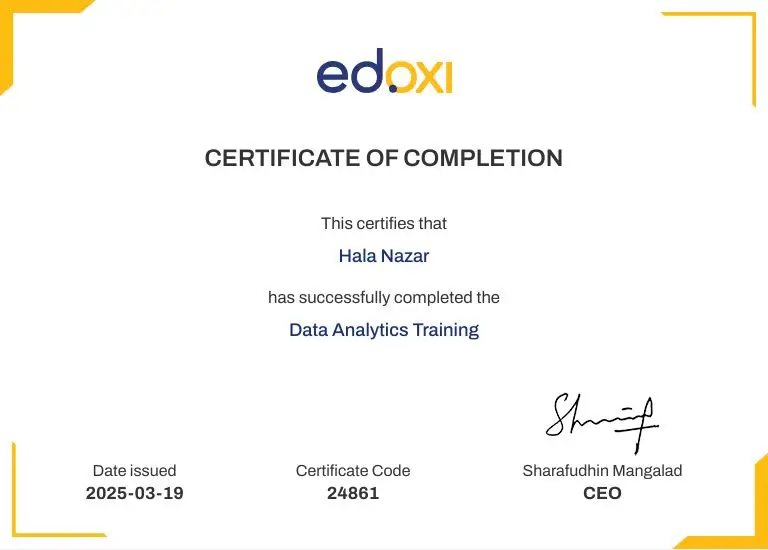
Do You Want to be a Certified Professional in Juniper Security Associate (JNCIA‑SEC)?

Join Edoxi’s Juniper Security Associate (JNCIA‑SEC) Course

Why Choose Edoxi for your Juniper Security Associate Training?

Edoxi is a trusted provider of Juniper Security Associate (JNCIA-SEC) Corporate Training. Here are the key reasons why organisations choose Edoxi for team training:

JNCIA-SEC Exam-Focused Curriculum

Our training content is aligned with official JNCIA-SEC exam domains, covering security concepts, SRX architecture, policies, NAT, VPNs, and basic threat management.

Trainers with Practical SRX Security Experience

Teams learn from instructors who actively deploy, configure, and support Juniper SRX firewalls, VPNs, and UTM features in real production environments.

Flexible Training Schedules for Security Teams

Edoxi offers weekday, weekend, and customised corporate batches designed to suit SOC teams and IT infrastructure departments.

Enterprise-Focused Security Training Solutions

Corporate programmes can be tailored to match organisational network environments, SRX deployments, and enterprise security requirements.

students-image

Edoxi is Recommended by 95% of our Students

Meet Our Mentor

Our mentors are leaders and experts in their fields. They can challenge and guide you on your road to success!

mentor-image

Sid Ahmed

Sid Ahmed is an IT network infrastructure and security trainer with over 12 years of experience at Edoxi Training Institute, Dubai. He is a certified CCNA/CCNP instructor and NSE 4 trainer and possesses advanced expertise in Cisco networking His portfolio includes prestigious Cisco certifications and hands-on knowledge of global security frameworks, making him a leader in delivering industry-relevant training.

Sid’s knowledge also extends to industry standards such as ISO 27001, NIST, SOC2, and PCI DSS, further strengthening his cybersecurity prowess.Sid Ahmed focuses on developing practical skills through hands-on training with enterprise-grade equipment. As an experienced Network and Security Architect, Sid Ahmed's expertise spans WAN/LAN, IP-MPLS, BGP, Wireless, IP Telephony, and Cybersecurity.He is skilled in HLD/LLD design, audits, pentesting, IT risk assessments, and security frameworks His specialisations include SD-WAN, VPN, VLAN, SSL, SIEM, cloud tech, and routing protocols (OSPF, BGP, STP) Sid is also proficient in Python, MySQL, JavaScript, APIs, and tools like SolarWinds, FortiSIEM, and U2000.

Locations Where Edoxi Offers Juniper Security Associate (JNCIA‑SEC) Course

Here are the major international locations where Edoxi offers Juniper Security Associate (JNCIA‑SEC) Course

FAQ

Are there any prerequisites for joining Edoxi’s online Juniper Security Associate (JNCIA-SEC) Course?

Basic knowledge of IP networking concepts such as TCP/IP, subnets, and routing is recommended for the Juniper Security Associate (JNCIA-SEC) Course.

Is the Juniper Security Associate (JNCIA-SEC) Course suitable for beginners in security?
Yes. The Juniper Security Associate (JNCIA-SEC) Training starts with core security concepts and gradually progresses to SRX firewall configuration, policies, NAT, and VPNs.
Do I need prior Juniper firewall experience before attending the training?

No. Prior Juniper experience is not required for the Juniper Security Associate (JNCIA-SEC) Training. The course begins with Junos and SRX fundamentals.

What core skills will I gain from the Juniper Security Associate (JNCIA-SEC) Course?

The Juniper Security Associate (JNCIA-SEC) Course develops skills in firewall configuration, security policies, NAT, VPN setup, and SRX monitoring.

Does the Juniper Security Associate (JNCIA-SEC) Training include hands-on labs?

Yes. The Juniper Security Associate (JNCIA-SEC) Training includes practical labs using vSRX or SRX devices for configuration and troubleshooting.

Will I learn how to configure security policies during the training?

Yes. The Juniper Security Associate (JNCIA-SEC) Course teaches how to create and manage zone-based security policies and logging.

Does the course cover NAT configuration on Juniper SRX?
Yes. The Juniper Security Associate (JNCIA-SEC) Training covers source NAT, destination NAT, and static NAT configuration.
Will I learn how to configure VPNs in this training?

Yes. The Juniper Security Associate (JNCIA-SEC) Course includes IPsec VPN configuration and verification using Junos CLI.

Does the training include threat management features?

Yes. The Juniper Security Associate (JNCIA-SEC) Training introduces UTM concepts, security screens, and basic DoS protection.

Is this training aligned with the JNCIA-SEC certification exam?

Yes. The Juniper Security Associate (JNCIA-SEC) Course follows the official exam domains and prepares learners for the certification exam.

Is the Juniper Security Associate (JNCIA-SEC) Certification valuable in the job market?
Yes. The Juniper Security Associate (JNCIA-SEC) Certification validates entry-level SRX security skills required in enterprise, ISP, and SOC environments.
Can organisations customise the Juniper Security Associate (JNCIA-SEC) Training for their teams?
Yes. The Juniper Security Associate (JNCIA-SEC) Training can be customised for corporate teams based on SRX deployments and operational needs.
What career opportunities are available after completing Edoxi’s online Juniper Security Associate (JNCIA-SEC) Certification?

After completing the Juniper Security Associate (JNCIA-SEC) Certification, professionals can pursue roles such as network security engineer, firewall administrator, or SOC analyst.

What salary can I expect after completing Edoxi’s online Juniper Security Associate (JNCIA-SEC) Certification?
Professionals with Juniper Security Associate (JNCIA-SEC) Certification skills typically earn between USD 55,000 and USD 85,000 per year, depending on experience and role.
What is the next step after completing Edoxi’s online Juniper Security Associate (JNCIA-SEC) Course?
After completing the Juniper Security Associate (JNCIA-SEC) Course, professionals usually progress to JNCIS-SEC (Security Specialist) to gain advanced Juniper security expertise.