Leave your message to get our quick response
edoxi automated message icon

Apache Kafka Course

Professionals working on laptops in a modern office, with a digital AI interface displayed on a screen.
Edoxi’s 40-hour online Apache Kafka Training delivers hands-on, project-oriented learning to help you design and build scalable event-driven architectures. The course focuses on real-world data streaming use cases and develops multi-language Kafka implementation skills for enterprise applications. Enrol now!
Course Duration
40 Hours
Corporate Training
5 Days
Level
Basic to Advanced
Modules
8
star-rating-icon1
star-rating-icon2
star-rating-icon3
Course Rating
5
star-rating-5
Mode of Delivery
Online
Certification by

What Do You Learn from Edoxi's Apache Kafka Training

Kafka Core Concepts & Architecture
You understand the fundamentals of distributed messaging and build a solid foundation for enterprise-level Kafka deployments. You also learn how producers, consumers, topics, partitions, and brokers work together.
Multi-Language Implementation Skills
You gain hands-on experience in Kafka programming with Python (Kafka-Python), Node.js (KafkaJS), and Java (Kafka API). You also develop the skills to work across multiple technology stacks.
Kafka Streams API for Real-Time Transformations
You learn to use the Kafka Streams API to build real-time data pipelines. You also learn to perform live transformations and aggregations for event-driven applications.
Integration with External Systems
You learn to implement Kafka Connect and Schema Registry for smooth integration. You also learn to connect Kafka with databases, cloud services, and analytics platforms to enable end-to-end data workflows.
Advanced Kafka Operations
You learn how to scale Kafka clusters efficiently. You also learn to explore partitioning strategies and performance tuning techniques for production-ready environments.
Security Implementation & Best Practices
You learn to set up secure authentication using SSL, SASL, and ACL. You also follow best practices to control access and ensure secure communication within Kafka deployments.

About Our Online Apache Kafka Course

Edoxi’s 30-hour online Apache Kafka course is designed for professionals and organisations seeking practical expertise in distributed event streaming and messaging systems. This Apache Kafka training is suitable for beginners with basic programming knowledge in Python, Java, or Node.js, as well as experienced professionals familiar with distributed systems. The course structure accommodates all skill levels while focusing on building scalable, real-time data pipelines and event-driven architectures used across industries worldwide.

Throughout the Apache Kafka certification course, you gain hands-on experience through practical labs and real-world projects. You can work with multi-language implementations using Python, Node.js, and Java, and apply Kafka to real-time use cases such as activity tracking, fraud detection, IoT sensor data processing, and playback analytics. Training mirrors real enterprise environments, helping you understand Kafka’s flexibility and cross-industry relevance.

By the end of the Apache Kafka certification, you can develop the ability to design and implement high-throughput, fault-tolerant streaming solutions. Corporate-focused Apache Kafka training paths address specific business needs while covering Kafka architecture, security configurations, and deployment strategies. These skills prepare you to build reliable real-time data pipelines and streaming applications relied upon by global organisations across technology, finance, e-commerce, media, and IoT sectors.

Key Features of Edoxi's Apache Kafka Training

Multi-Language Implementation Labs

You can build Kafka producers and consumers using Python (Kafka-Python), Node.js (KafkaJS), and Java (Kafka API). You can also strengthen your data pipeline skills across different technology stacks through hands-on practice.

Docker-Based Deployment Environment

You can set up Kafka clusters in containerised environments using Docker. You can also simulate real-world distributed systems with multiple brokers for seamless local development and testing.

Cloud Platform Integration Exercises

You can deploy Kafka workflows on major cloud platforms, including AWS, Azure, and GCP. You can also gain practical skills in building cloud-native streaming applications using managed Kafka services.

Interactive Debugging Sessions

You can join live troubleshooting sessions for Kafka producer-consumer workflows. You can also solve common issues in distributed messaging systems and sharpen your debugging abilities.

Simulated System Design Challenges

You can work on real-world scenarios to design fault-tolerant Kafka clusters. You can also determine optimal partitioning strategies and plan disaster recovery setups through collaborative exercises.

Comprehensive Capstone Project

You can apply everything you’ve learned in a complete, end-to-end Kafka implementation. You can also build streaming data pipelines, real-time analytics, and microservices communication and deliver a production-ready solution that reflects real enterprise needs.

Who Can Join Our Online Apache Kafka Course?

Backend Developers & Software Engineers

If you are a professional with programming experience in Python, Java, or Node.js, and are looking to implement event-driven architectures and microservices in your organisation.

Data Engineers & Big Data Specialists

If you are a technical staff member working with data pipelines, ETL processes, or analytics systems, and are seeking to enhance your skillset with real-time streaming capabilities.

DevOps & SRE Professionals

If you are an engineer responsible for maintaining high-availability systems who needs to design, deploy, and monitor resilient Kafka clusters in production environments.

IT Architects & Technical Leads

If you are a decision-maker evaluating distributed messaging solutions for enterprise applications, and require a hands-on understanding of Kafka architecture.

Corporate Technical Teams

If you are a cross-functional department implementing data streaming solutions for business intelligence, customer analytics, or operational monitoring.

Programming Enthusiasts

If you are an individual with basic programming knowledge, interested in learning distributed systems concepts and real-time data processing frameworks.

Apache Kafka Course Modules

Module 1: Introduction to Kafka and Distributed Messaging
  • Chapter 1.1: Understanding Apache Kafka

    • Lesson 1.1.1: What is Apache Kafka?
    • Lesson 1.1.2: Kafka’s core components – Brokers, Topics, Partitions, Producers, Consumers
    • Lesson 1.1.3: Kafka vs traditional messaging systems (RabbitMQ, ActiveMQ)
    • Lesson 1.1.4: Real-world use cases in IoT, e-commerce, and banking
  • Chapter 1.2: Getting Started with Kafka

    • Lesson 1.2.1: Setting up Kafka locally (Linux/Windows/Mac & Docker)
    • Lesson 1.2.2: Writing your first producer and consumer in Node.js, Python, and Java
    • Lesson 1.2.3: Building a basic event streaming app for login tracking
Module 2: Kafka Architecture Fundamentals
  • Chapter 2.1: Core Architecture Concepts

    • Lesson 2.1.1: Kafka replication for fault tolerance and durability
    • Lesson 2.1.2: Offsets, partition strategies, and consumer group rebalancing
    • Lesson 2.1.3: Kafka ZooKeeper vs KRaft mode
    • Lesson 2.1.4: Scaling Kafka – adding brokers and load balancing
  • Chapter 2.2: Cluster Configuration and Management

    • Lesson 2.2.1: Deploying a multi-node Kafka cluster with Docker Compose
    • Lesson 2.2.2: Simulating partition-based load distribution
    • Lesson 2.2.3: Configuring retention policies and log compaction
    • Lesson 2.2.4: Real-time transaction streaming across geo-distributed clusters
Module 3: Producers and Consumers – Multi-Language Implementation
  • Chapter 3.1: Kafka Producer Essentials

    • Lesson 3.1.1: Producing records with the Kafka Producer API
    • Lesson 3.1.2: Implementing producers in Python, Node.js, and Java
  • Chapter 3.2: Kafka Consumer Essentials

    • Lesson 3.2.1: Understanding the Consumer API and group coordination
    • Lesson 3.2.2: Delivery semantics – At-Least-Once, At-Most-Once, Exactly-Once
    • Lesson 3.2.3: Error handling, message retries, and dead-letter queues
    • Lesson 3.2.4: Real-time order-tracking pipeline implementation
Module 4: Kafka Streams API and Advanced Stream Processing
  • Chapter 4.1: Stream Processing Basics

    • Lesson 4.1.1: Introduction to Kafka Streams API
    • Lesson 4.1.2: Filtering, mapping, grouping, and aggregating streams
    • Lesson 4.1.3: Stateless vs stateful processing and KTables
    • Lesson 4.1.4: Working with sliding and tumbling windows
  • Chapter 4.2: Advanced Stream Workflows

    • Lesson 4.2.1: Building Kafka Streams applications in Java
    • Lesson 4.2.2: Removing duplicate events using state-based logic
    • Lesson 4.2.3: Stream-table joins for fraud detection
    • Lesson 4.2.4: Real-time sales performance dashboard
Module 5: Kafka Connect for System Integration
  • Chapter 5.1: Kafka Connect Framework

    • Lesson 5.1.1: Source and sink connectors overview
    • Lesson 5.1.2: Common connectors – JDBC, Elasticsearch, MongoDB, S3
    • Lesson 5.1.3: Serialisation with Avro and JSON
    • Lesson 5.1.4: Using Schema Registry for pipeline reliability
  • Chapter 5.2: Integration Projects

    • Lesson 5.2.1: Ingesting Kafka topic data into MySQL
    • Lesson 5.2.2: Streaming IoT data from MongoDB to Kafka
    • Lesson 5.2.3: Visualising Kafka data in Kibana via Elasticsearch
    • Lesson 5.2.4: IoT sensor monitoring system design
Module 6: Securing Kafka and Monitoring Pipelines
  • Chapter 6.1: Kafka Security

    • Lesson 6.1.1: SSL/TLS encryption and SASL authentication
    • Lesson 6.1.2: Role-based access control with ACLs
  • Chapter 6.2: Monitoring and Observability

    • Lesson 6.2.1: Monitoring Kafka with Prometheus
    • Lesson 6.2.2: Building custom Grafana dashboards
    • Lesson 6.2.3: Monitoring consumer lag and throughput
    • Lesson 6.2.4: Simulating secured streaming workflows
Module 7: Kubernetes Deployment and Disaster Recovery
  • Chapter 7.1: Kafka on Kubernetes

    • Lesson 7.1.1: Deploying Kafka on Kubernetes using Helm
    • Lesson 7.1.2: Scaling brokers and pods for high availability
  • Chapter 7.2: Disaster Recovery Mechanisms

    • Lesson 7.2.1: Cross-cluster replication with MirrorMaker 2
    • Lesson 7.2.2: Multi-region data replication strategies
    • Lesson 7.2.3: Automating failover and recovery simulations
    • Lesson 7.2.4: Disaster recovery plan for financial data
Module 8: Capstone Projects

Download Apache Kafka Course Brochure

Real-World Projects Involved in Our Apache Kafka Training

Edoxi’s 40-hour Apache Kafka training offers hands-on, real-world projects to build practical streaming and event-driven application skills. The projects include the following

Projects

  • Fraud Detection System

    In this project, you can stream financial data in real-time to detect anomalies using Python and Node.js.

  • IoT Sensor Data Pipeline

    In this project, you can use Java Streams API to process and monitor real-time data collected from IoT devices.

  • Real-Time Analytics Dashboard

    In this project, you can stream stock market data using Node.js, KafkaJS and build a live data visualisation dashboard.

  • Event-Driven Ecommerce Workflow

    In this project, you can use Node.js and Java for tracking customer orders, inventory updates, and generating real-time analytics reports.

Apache Kafka Course Outcomes and Career Opportunities

Completing Edoxi’s 40-hour Apache Kafka Training empowers your technical teams with the hands-on skills required to build scalable, real-time data pipelines effectively. Here are the Major Course Outcomes

Course Outcome Image
Gain the ability to modernise data pipelines by shifting from batch processing to real-time event streaming for faster data processing.
Build highly scalable Kafka infrastructures that handle high-throughput data with reliable horizontal scaling.
Integrate multiple data sources and applications using a unified event-driven architecture instead of complex point-to-point systems.
Design fault-tolerant and highly available Kafka pipelines with built-in recovery and data durability.
Enable real-time analytics and faster business decisions through continuous stream processing.
Improve developer and team productivity by using reusable Kafka patterns, multi-language implementations, and automated monitoring tools.

Career Roles After the Online Apache Kafka Course

  • Kafka Developer
  • Junior Data Engineer
  • Backend Microservices Developer
  • Data Engineer (Kafka Ecosystem)
  • Stream Processing Specialist
  • Big Data Developer
  • Kafka Solutions Architect
  • Distributed Systems Lead
  • Site Reliability Engineer (SRE)
  • Event Streaming Consultant

Apache Kafka Training Options

Online Training

  • 40 hours of online training

  • Flexible Scheduling for Working Professionals

  • Interactive Demonstrations in the preferred programming language

  • One-on-One Mentoring Sessions

  • Live hands-on activities

Corporate Training

  • Flexible 5-Day Scheduling

  • Customised Delivery Option

  • Infrastructure-Specific Configuration Training

  • Classroom/online/hotel/on-site delivery

  • Logistics and food are arranged

  • Fly Me a Trainer Option available.

Do You Want a Customised Training for Apache Kafka?

Get expert assistance in getting you Apache Kafka Course customised!

How To Get Certified in The Apache Kafka Course?

Here’s a four-step guide to becoming a certified Apache Kafka professional.
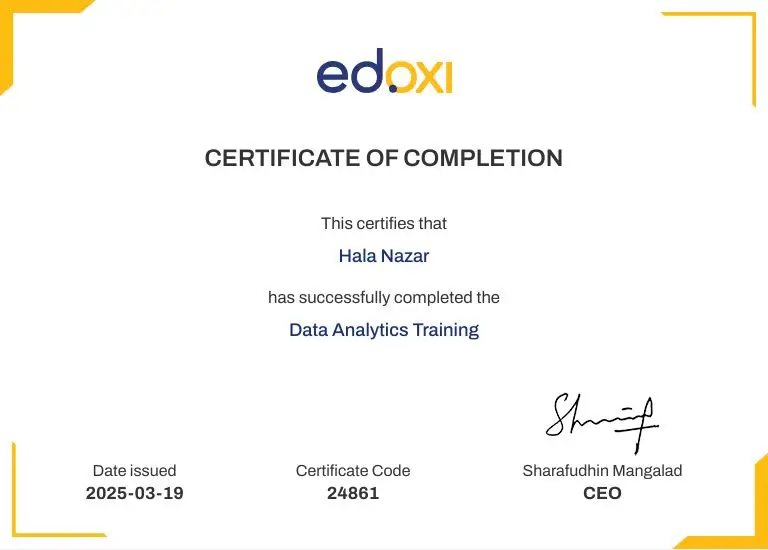
Do You Want to be a Certified Professional in Apache Kafka?

Join Edoxi’s Apache Kafka Course

Why Choose Edoxi for Apache Kafka Course?

Edoxi’s 40-hour online Apache Kafka training equips your team with the skills to build real-time data pipelines and event-driven architectures, with personalised guidance from industry experts. Here are reasons why organisations choose Edoxi

Global Training Presence and Expertise

Edoxi operates from Dubai, Doha, and London, delivering Kafka training internationally. This global exposure brings diverse real-world implementation examples into the classroom from technology ecosystems worldwide.

Prestigious Corporate and Government Clientele

Our Kafka training serves top-tier clients, including government entities and multinational enterprises. This experience ensures your team learns solutions that address real-world enterprise challenges and integration scenarios.

Comprehensive Web Development Course Portfolio

At Edoxi, you can complement your Kafka skills with related courses in Node.js, React.js, Python Django, and MongoDB. You can also build a full-stack technical skill portfolio rather than isolated knowledge.

Multi-Language Implementation Expertise

Edoxi’s Apache Kafka course provides hands-on experience with Python, Node.js, and Java implementations. This multi-language approach ensures professionals can integrate Kafka seamlessly into their existing technology stack.

Environment Setup Assistance

Edoxi helps configure development environments tailored to your team’s specific project requirements, so you can start implementing Kafka workflows immediately.

Post-Training Support and Career Guidance

We offer ongoing support after course completion, including doubt resolution, career advice, and guidance on real-world project implementation to help your team confidently apply Kafka skills in professional settings.

students-image

Edoxi is Recommended by 95% of our Students

Meet Our Mentor

Our mentors are leaders and experts in their fields. They can challenge and guide you on your road to success!

mentor-image

Athar Ahmed

Athar Ahmed is a skilled technical trainer with more than 15 years of experience in both educational institutions and the software development business. Athar specialises in technology stacks including Advanced Excel, Python, Power BI, SQL, .NET, Java, PHP, Full Stack Web Development, Agile, Data Science, Artificial Intelligence, Data Analytics, and DevOps.

He holds several certifications and licenses that underscore his expertise in the field. These include MCTS (Microsoft Certified Technology Specialist), MCP (Microsoft Certified Professional), and a Certificate in Artificial Intelligence and Machine Learning for Business. He also completed a Certificate Course in Unix, C++, and C# from CMC Academy, among other qualifications.

Athar also holds a Bachelor of Computer Applications (BCA) and a Master of Computer Applications (MCA). Additionally, he earned a Master of Technology (M. Tech) in Machine Learning and Artificial Intelligence, as well as a Doctorate of Philosophy (PhD) in Computer Applications.

Locations Where Edoxi Offers Apache Kafka Course

Here are the major international locations where Edoxi offers Apache Kafka Course

FAQ

What are the prerequisites for joining Edoxi’s Apache Kafka course?
 For beginners: You should have basic programming skills in Python, Java, or Node.js, a general understanding of asynchronous workflows (like Promises or Async/Await), and familiarity with Linux/command-line tools (optional tutorial links are provided).
 For experienced professionals: Knowledge of distributed systems or basic messaging queues like RabbitMQ can help, but it’s not mandatory.
How is the Edoxi Apache Kafka training structured for corporate teams?
 You receive customised content that focuses on your industry-specific use cases. The Apache Kafka training can be delivered online or on-site, with hands-on team exercises simulating real business scenarios to ensure your team can immediately apply the skills.
Will Edoxi’s Apache Kafka certification course prepare me for production deployments?
Yes. You can learn essential production topics, including security, monitoring, performance optimisation, and disaster recovery strategies, giving you the confidence to implement Apache Kafka in enterprise environments.
How does Apache Kafka compare to traditional message brokers?
 You can discover that Kafka offers higher throughput, built-in partitioning, replication, and fault-tolerance compared to traditional brokers like RabbitMQ. The Apache Kafka course covers these differences in detail to help you understand why Kafka is ideal for real-time data pipelines.
Can I implement what I learn immediately in my organisation?
 Absolutely. Edoxi’s Apache Kafka training includes hands-on projects and exercises designed around real-world enterprise use cases, allowing you to apply your new skills right away.
Can the training be customised for my industry?
 Yes. Edoxi tailors the training content to your sector, whether you work in banking, retail, telecommunications, or technology, ensuring you gain the most relevant skills for your business.
Which Kafka version does the Edoxi Apache Kafka course cover?
 You learn the latest stable release of Apache Kafka, including new features like KRaft (replacing ZooKeeper) and exactly-once semantics improvements.
Does this Apache Kafka certification course cover cloud integration?
 Yes. Edoxi’s Apache Kafka course covers integration with major cloud platforms, including AWS, Azure, and GCP, addressing both self-managed Kafka clusters and managed services like Amazon MSK and Confluent Cloud.
How does learning Kafka in multiple programming languages benefit me?
 By gaining hands-on experience in Python, Node.js, and Java, you can implement Apache Kafka across different systems in your organisation, giving you maximum flexibility regardless of your technology stack.
What is the global salary range after completing Edoxi’s Apache Kafka course?
 After completing the Apache Kafka training and certification course, global salaries for Kafka roles typically range from $60,000 to $160,000 per year, depending on your experience, role, and location.