
Leave your message to get our quick response
edoxi automated message icon

Container Orchestration with Docker Course

A professional container orchestration concept image showing a business professional interacting with a virtual container ship model above a laptop, representing Docker training, container management, and modern DevOps infrastructure.
Edoxi’s 5-day Online Container Orchestration with Docker training focuses on scalable and efficient application deployment. Equip your technical team with Docker techniques and Kubernetes orchestration skills. Develop your organisation’s containerisation expertise to speed up digital transformation and stay competitive in cloud-native environments. Enrol now to earn your team’s Container Orchestration with Docker Certification.
Course Duration
35 Hours
Corporate Days
5 Days
Learners Enrolled
50+
Modules
12
star-rating-icon1
star-rating-icon2
star-rating-icon3
Course Rating
4.9
star-rating-4.9
Mode of Delivery
Online
Certification by

What Do You Learn from Edoxi's Container Orchestration with Docker Training

Docker Fundamentals & Administration
Your team learn to manage the complete container lifecycle and perform runtime operations effectively. Your team also learn to implement standardised environments that maintain consistency across development and production systems.
Container Orchestration Concepts & Tools
Your team learn to deploy applications at scale using Docker Swarm and Kubernetes clusters. Your team also learn to reduce operational overhead while improving service reliability and availability.
Operational Best Practices
Your team learn to apply industry-standard workflows for container deployment and management. Your team also learn to optimise resource allocation and configuration for maximum efficiency.
Image Management
Your team learn to create standardised base images and develop efficient Dockerfiles for applications. Your team also learn to establish secure registry practices and governance for organisational image distribution.
Security
Your team learn to implement RBAC, network policies, and vulnerability scanning for containerised workloads. Your team also learn to protect sensitive data using secrets management and secure configuration practices.
Troubleshooting
Your team learn to diagnose and resolve common container and orchestration issues efficiently. Your team also learn to implement logging and monitoring solutions that accurately pinpoint problems in complex environments.
Backup & Disaster Recovery
Your team learn to design resilient container storage solutions with effective data persistence strategies. Your team also learn to implement automated backup procedures and rapid recovery plans for containerised applications.
CI/CD Integration
Your team learn to build automated deployment pipelines for containerised applications with integrated testing. Your team also learn to implement zero-downtime deployment strategies that maintain continuous service availability.

About Our Online Container Orchestration with Docker Course

Edoxi’s 5-day Online Container Orchestration with Docker course offers intermediate to advanced, industry-focused training designed specifically for technical teams. Our Container Orchestration with Docker training strengthens your IT staff’s expertise in modern application deployment and infrastructure management, while directly supporting your organisation’s digital transformation initiatives. Edoxi’s Container Orchestration with Docker training equips your team with practical orchestration skills that improve deployment consistency, scalability, and operational efficiency across enterprise environments.

Our Container Orchestration with Docker training focuses on hands-on learning using Docker and Kubernetes in real-world enterprise scenarios. Your team gains practical experience with industry-standard tools such as Docker Engine, Docker Swarm, and Kubernetes while working on collaborative orchestration challenges aligned with actual organisational deployment requirements. Your team learn to manage containerised applications effectively, optimise infrastructure utilisation, and implement scalable deployment strategies.

Edoxi’s Container Orchestration with Docker certification is ideal for IT teams, system administrators, DevOps engineers, and infrastructure professionals seeking to enhance their containerization capabilities. The Container Orchestration with Docker course addresses key business challenges, including faster software delivery, efficient infrastructure usage, and reliable application scaling. By completing Edoxi’s Container Orchestration with Docker certification, your organisation benefits from improved release cycles, stronger operational performance, and a more competitive position in today’s technology-driven industry.

Key Features of Edoxi's Container Orchestration with Docker Training

Enterprise-Ready Training Environment

Your team can work within fully configured Docker and Kubernetes environments that replicate real organisational infrastructure challenges. Your team also learn to practise container orchestration and deployment strategies in settings that mirror actual enterprise use cases.

Customised Reference Materials

Your team understands how to use tailored lab manuals, YAML templates, and technical documentation aligned with your organisation’s technology stack. Your team understand how to apply these resources to real deployment scenarios for consistent and repeatable implementations.

Team-Based Orchestration Exercises

Your team develop skills to participate in collaborative container orchestration exercises that simulate production environments. Your team also learn to solve deployment and scaling challenges through team-based problem-solving aligned with business requirements.

Cross-Functional Implementation Strategies

Your team learn integration approaches that connect development, operations, and security teams. Your team understand how to break down operational silos and improve collaboration to accelerate delivery timelines.

Infrastructure-as-Code Methodology

Your team can implement declarative container configurations using version-controlled definitions. Your team understand how to manage infrastructure consistently and reliably through Infrastructure-as-Code practices.

Enterprise CI/CD Pipeline Development

Your team can build complete continuous integration and deployment pipelines aligned with organisational release processes. Your team also learn to integrate container orchestration into automated workflows that support reliable, enterprise-scale application delivery.

Who Can Join Our Container Orchestration with Docker Course in Dubai?

DevOps & Cloud Engineering Teams

Staff managing infrastructure and deployment pipelines across your organisation.

Development Team Leaders

Engineering managers seeking standardised environments for consistent application delivery.

System Administration Groups

Operations professionals need improved resource utilisation and application scaling.

IT Architecture Teams

Technical architects incorporate modern infrastructure into organisational strategy.

Release Management Staff

Teams implementing efficient, reliable software delivery methodologies.

Technical Project Leaders

Cross-functional coordinators align containerisation with business objectives.

Container Orchestration with Docker Course Modules

Module 1: Installation of Docker
  • Chapter 1.1: Introduction to Docker

    • Lesson 1.1.1: Overview and history of Docker
    • Lesson 1.1.2: Benefits and use cases of containerisation
  • Chapter 1.2: Docker Architecture

    • Lesson 1.2.1: High-level architecture overview
    • Lesson 1.2.2: Interaction between Docker components
  • Chapter 1.3: Docker Components

    • Lesson 1.3.1: Docker client
    • Lesson 1.3.2: Docker host
    • Lesson 1.3.3: Docker registry
  • Chapter 1.4: Installation of Docker

    • Lesson 1.4.1: System requirements for Docker
    • Lesson 1.4.2: Installing Docker on Linux
    • Lesson 1.4.3: Installing Docker on Windows and macOS
Module 2: Docker Client Operations
  • Chapter 2.1: Running a Container

    • Lesson 2.1.1: Using the Docker run command
    • Lesson 2.1.2: Interactive versus detached mode
  • Chapter 2.2: Container Lifecycle

    • Lesson 2.2.1: Creating, starting, stopping, and removing containers
    • Lesson 2.2.2: Restart policies
  • Chapter 2.3: Managing Containers

    • Lesson 2.3.1: Listing and inspecting containers
    • Lesson 2.3.2: Renaming and exporting containers
  • Chapter 2.4: Executing Commands in Running Containers

    • Lesson 2.4.1: Using Docker exec and Docker attach
    • Lesson 2.4.2: Best practices for command execution
Module 3: Building Custom Images and Docker Registry
  • Chapter 3.1: Creating Docker Images Using Docker Commit

    • Lesson 3.1.1: Modifying container state into an image
    • Lesson 3.1.2: Image naming and versioning
  • Chapter 3.2: Building a Dockerfile

    • Lesson 3.2.1: Dockerfile syntax and instructions
    • Lesson 3.2.2: Building images from a Dockerfile
  • Chapter 3.3: Tagging an Image

    • Lesson 3.3.1: Understanding tags and versions
    • Lesson 3.3.2: Tagging images using Docker tag
  • Chapter 3.4: Pulling and Pushing Images

    • Lesson 3.4.1: Pulling images from Docker Hub
    • Lesson 3.4.2: Pushing images to a registry
  • Chapter 3.5: Creating Private Registries

    • Lesson 3.5.1: Setting up a private registry
    • Lesson 3.5.2: Configuring authentication
Module 4: Container Deep Dive
  • Chapter 4.1: Control Groups (Cgroups)

    • Lesson 4.1.1: Introduction to control groups
    • Lesson 4.1.2: Managing CPU and memory usage
  • Chapter 4.2: Namespaces

    • Lesson 4.2.1: Process isolation with namespaces
    • Lesson 4.2.2: Types of namespaces in Docker
  • Chapter 4.3: Container Resource Limits

    • Lesson 4.3.1: Setting resource limits
    • Lesson 4.3.2: Best practices for resource management
Module 5: Storage and Container Networking
  • Chapter 5.1: Storage Overview

    • Lesson 5.1.1: Types of Docker storage
    • Lesson 5.1.2: Use cases for persistent storage
  • Chapter 5.2: Creating and Managing Volumes

    • Lesson 5.2.1: Creating named volumes
    • Lesson 5.2.2: Volume lifecycle management
  • Chapter 5.3: Using Bind Mounts

    • Lesson 5.3.1: Mounting host directories
    • Lesson 5.3.2: Use cases and security considerations
  • Chapter 5.4: Using tmpfs

    • Lesson 5.4.1: In-memory storage with tmpfs
    • Lesson 5.4.2: Benefits and limitations
  • Chapter 5.5: Overview of Container Networking

    • Lesson 5.5.1: Networking modes in Docker
    • Lesson 5.5.2: Default bridge network
  • Chapter 5.6: Managing Network Bridges

    • Lesson 5.6.1: Creating custom bridge networks
    • Lesson 5.6.2: Connecting and disconnecting containers
Module 6: Docker Compose
  • Chapter 6.1: Understanding YAML

    • Lesson 6.1.1: YAML syntax basics
    • Lesson 6.1.2: Key–value pairs and indentation
  • Chapter 6.2: Creating Docker Compose Files

    • Lesson 6.2.1: Defining services and networks
    • Lesson 6.2.2: Environment variables in Docker Compose
  • Chapter 6.3: Deploying and Configuring Applications

    • Lesson 6.3.1: Starting and stopping multi-container applications
    • Lesson 6.3.2: Updating and scaling services
  • Chapter 6.4: Building Images with Docker Compose

    • Lesson 6.4.1: Integrating Dockerfile builds in Compose
    • Lesson 6.4.2: Using build context
Module 7: Docker Swarm
  • Chapter 7.1: Container Orchestration

    • Lesson 7.1.1: Overview of orchestration tools
    • Lesson 7.1.2: Swarm mode versus Kubernetes
  • Chapter 7.2: Creating a Swarm Cluster

    • Lesson 7.2.1: Initialising swarm mode
    • Lesson 7.2.2: Adding worker and manager nodes
  • Chapter 7.3: Managing Nodes in a Swarm Cluster

    • Lesson 7.3.1: Viewing node status
    • Lesson 7.3.2: Promoting and demoting nodes
  • Chapter 7.4: Managing Services

    • Lesson 7.4.1: Creating and scaling services
    • Lesson 7.4.2: Updating and rolling back services
  • Chapter 7.5: Secrets Management

    • Lesson 7.5.1: Creating and managing secrets
    • Lesson 7.5.2: Securely using secrets in services
  • Chapter 7.6: Rolling Service Updates

    • Lesson 7.6.1: Configuring rolling updates
    • Lesson 7.6.2: Monitoring update progress
  • Chapter 7.7: Monitoring

    • Lesson 7.7.1: Monitoring Swarm using Docker CLI
    • Lesson 7.7.2: Integrating external monitoring tools
  • Chapter 7.8: Scaling

    • Lesson 7.8.1: Horizontal scaling strategies
    • Lesson 7.8.2: Scaling services in Docker Swarm
Module 8: Core Concepts of Kubernetes
  • Chapter 8.1: Kubernetes Cluster Architecture

    • Lesson 8.1.1: Control plane components overview
    • Lesson 8.1.2: Node components overview
  • Chapter 8.2: Master and Node Components

    • Lesson 8.2.1: Roles and responsibilities
    • Lesson 8.2.2: Communication between control plane and nodes
  • Chapter 8.3: Kubectl

    • Lesson 8.3.1: Installing and configuring kubectl
    • Lesson 8.3.2: Common kubectl commands
  • Chapter 8.4: Kubelet

    • Lesson 8.4.1: Role of kubelet in node management
    • Lesson 8.4.2: Monitoring kubelet logs
  • Chapter 8.5: Kube-Proxy

    • Lesson 8.5.1: Networking responsibilities
    • Lesson 8.5.2: Load balancing in Kubernetes
  • Chapter 8.6: Etcd

    • Lesson 8.6.1: Overview of the etcd key–value store
    • Lesson 8.6.2: Backup and restore of etcd data
  • Chapter 8.7: Controllers

    • Lesson 8.7.1: Role of controllers in Kubernetes
    • Lesson 8.7.2: Types of controllers
Module 9: Installation of Kubernetes Cluster
  • Chapter 9.1: Designing a Kubernetes Cluster

    • Lesson 9.1.1: Capacity planning
    • Lesson 9.1.2: Choosing deployment methods
  • Chapter 9.2: Installing Kubernetes Masters and Nodes

    • Lesson 9.2.1: Installing control plane components
    • Lesson 9.2.2: Installing worker nodes
    • Lesson 9.2.3: Using TLS bootstrapping
  • Chapter 9.3: Configuring Network Solutions

    • Lesson 9.3.1: Choosing a CNI plugin
    • Lesson 9.3.2: Configuring network policies
  • Chapter 9.4: Analysing End-to-End Test Results

    • Lesson 9.4.1: Running conformance tests
    • Lesson 9.4.2: Troubleshooting failed tests
Module 10: Using Kubernetes Features
  • Chapter 10.1: Kubectl Advanced Usage

    • Lesson 10.1.1: Advanced kubectl commands
    • Lesson 10.1.2: Kubectl plugins
  • Chapter 10.2: Understanding YAML for Kubernetes

    • Lesson 10.2.1: Writing Kubernetes manifests
    • Lesson 10.2.2: Organising YAML files
  • Chapter 10.3: Creating and Managing Pods

    • Lesson 10.3.1: Pod lifecycle and management
    • Lesson 10.3.2: Multi-container pods
  • Chapter 10.4: Managing Labels

    • Lesson 10.4.1: Creating and using labels
    • Lesson 10.4.2: Label selectors in deployments
  • Chapter 10.5: Managing Services

    • Lesson 10.5.1: Service types: ClusterIP, NodePort, and LoadBalancer
    • Lesson 10.5.2: Service discovery
  • Chapter 10.6: Managing ReplicaSets and Replication Controllers

    • Lesson 10.6.1: Differences between ReplicaSet and ReplicationController
    • Lesson 10.6.2: Scaling and updating replicas
  • Chapter 10.7: Resource Quotas

    • Lesson 10.7.1: Setting resource quotas in namespaces
    • Lesson 10.7.2: Monitoring quota usage
Module 11: Networking in Kubernetes
  • Chapter 11.1: Kubernetes Networking Fundamentals

    • Lesson 11.1.1: Networking model and requirements
    • Lesson 11.1.2: Pod-to-pod communication
  • Chapter 11.2: Understanding CNI

    • Lesson 11.2.1: CNI architecture
    • Lesson 11.2.2: Popular CNI plugins
  • Chapter 11.3: Pod Networking Concepts

    • Lesson 11.3.1: IP addressing in Kubernetes
    • Lesson 11.3.2: DNS resolution in pods
  • Chapter 11.4: Configuring DNS

    • Lesson 11.4.1: CoreDNS configuration
    • Lesson 11.4.2: Custom DNS entries
  • Chapter 11.5: Configuring and Managing Ingress Rules

    • Lesson 11.5.1: Creating ingress resources
    • Lesson 11.5.2: Configuring TLS for ingress
  • Chapter 11.6: Namespaces

    • Lesson 11.6.1: Creating and managing namespaces
    • Lesson 11.6.2: Resource isolation using namespaces
Module 12: Security in Kubernetes
  • Chapter 12.1: Managing RBAC

    • Lesson 12.1.1: Understanding roles and role bindings
    • Lesson 12.1.2: Cluster roles and cluster role bindings
  • Chapter 12.2: Security Context

    • Lesson 12.2.1: Defining security contexts in pods and containers
    • Lesson 12.2.2: Applying the principle of least privilege
  • Chapter 12.3: Secrets Management

    • Lesson 12.3.1: Creating and using secrets
    • Lesson 12.3.2: Encrypting secrets at rest
  • Chapter 12.4: Working with Images Securely

    • Lesson 12.4.1: Scanning images for vulnerabilities
    • Lesson 12.4.2: Using signed images
  • Chapter 12.5: Configuring Network Policies

    • Lesson 12.5.1: Creating network policies
    • Lesson 12.5.2: Testing and validating network policies

Download Container Orchestration with Docker Course Brochure

Hands-on Lab Activities Involved in the Container Orchestration with Docker Training

Edoxi’s 5-day Online Container Orchestration with Docker training includes intensive lab sessions designed to address your organisation’s real-world containerisation and your team’s deployment challenges. Here are the major lab sessions included in the Container Orchestration with Docker course:

Building Your First Docker Image from a Dockerfile

Your team learn to create custom application images using Dockerfiles, including multi-stage builds that optimise image size, security, and deployment efficiency. Your team also learn best practices for structuring Dockerfiles for production-ready container images.

Managing Containers: Start, Stop, Restart, and Remove

Your team learn to perform complete container lifecycle operations using Docker commands and automation techniques. Your team also learn to maintain consistent and repeatable environments across development and testing teams.

Docker Networking: Bridge, Host, and Overlay Modes

Your team learn to configure and manage different Docker networking models based on application requirements. Your team also learn to ensure proper service isolation, communication, and connectivity across containerised applications.

Scanning Images for Vulnerabilities

Your team learn to integrate container image security scanning into your workflow to identify vulnerabilities early. Your team also learn to remediate security risks before images are promoted to staging or production environments.

Deploying Services in Docker Swarm

Your team learn to create and deploy fault-tolerant services in Docker Swarm with appropriate replicas, constraints, and rolling update configurations. Your team also learn to manage service availability in production-like environments.

Configuring Overlay Networks in Docker Swarm

Your team learn to establish secure, multi-host overlay networks for containerised services. Your team also learn to configure traffic encryption and network isolation to support enterprise-grade deployments.

Installing Kubernetes Using Minikube or Kind

Your team learn to set up local Kubernetes environments for development and testing that closely mirror production cluster behaviour. Your team also learn to validate cluster configuration and readiness.

Deploying Your First Pod and Service in Kubernetes

Your team learn to create Kubernetes manifest files for pods and services with defined resource requests and limits. Your team also learn to expose applications and manage basic service discovery.

Logging and Monitoring Containers

Your team learn to implement comprehensive observability using tools such as Prometheus and Grafana. Your team also learn to collect metrics, logs, and performance data to monitor container health and application behaviour.

CI/CD Pipeline with Docker Using GitHub Actions or GitLab CI

Your team learn to build automated CI/CD workflows that test, build, and deploy containerised applications. Your team also learn to implement security checks and deployment gates to support reliable and secure continuous delivery.

Container Orchestration with Docker Course Outcome and Career Opportunities

Implementing Edoxi's 5-day Online Container orchestration with Docker certification delivers significant strategic and operational benefits for organisations adopting modern application deployment practices. Here are the key outcomes organisations achieve through the Container Orchestration with Docker course:

Course Outcome Image
Your team improve server and resource utilisation by optimising workload distribution and reducing infrastructure overhead across environments.
Your team significantly reduce environment inconsistency issues by standardising application runtime configurations from development through production.
Your team accelerate the application development lifecycle by enabling faster builds, testing, and deployments through containerised workflows.
Your team enhance disaster recovery capabilities by enabling rapid redeployment. You also recover containerised applications across different infrastructures.
Your team improve cross-team collaboration by providing consistent, portable environments. You also enable streamlined handovers between development, testing, and operations teams.
Your team establish standardised development, staging, and production environments. You also ensure predictable application behaviour and improved operational stability.

Career Opportunities After Our Container Orchestration with Docker Course

  • Docker Administrator
  • Container Platform Engineer
  • DevOps Engineer
  • Site Reliability Engineer (SRE)
  • Cloud Engineer
  • Platform Operations Engineer
  • Release Engineer
  • Build and Automation Engineer
  • Infrastructure Engineer (Containers)
  • Application Support Engineer (Containerised Environments)

Container Orchestration with Docker Training Options

Corporate On-Site Training

  • 5 days of interactive instructor-led sessions.

  • Customised Hardware Setup

  • Hands-On Labs in Your Environment

  • Flexible Delivery Options (On-Site / Edoxi Office / Hotel)

  • Fly-Me-a-Trainer Option

  • Food and refreshments provided for corporate teams

Corporate Live Online Training

  • 5 days of Customised Interactive Breakout Sessions

  • Remote Lab Environment Access

  • Real-Time Collaboration Tools

  • Flexible Scheduling for Global Teams

Do You Want a Customised Training for Container Orchestration with Docker?

Get expert assistance in getting you Container Orchestration with Docker Course customised!

How to Get Container Orchestration with Docker Certified?

Here’s a four-step guide to becoming a certified Container Orchestration with Docker professional.
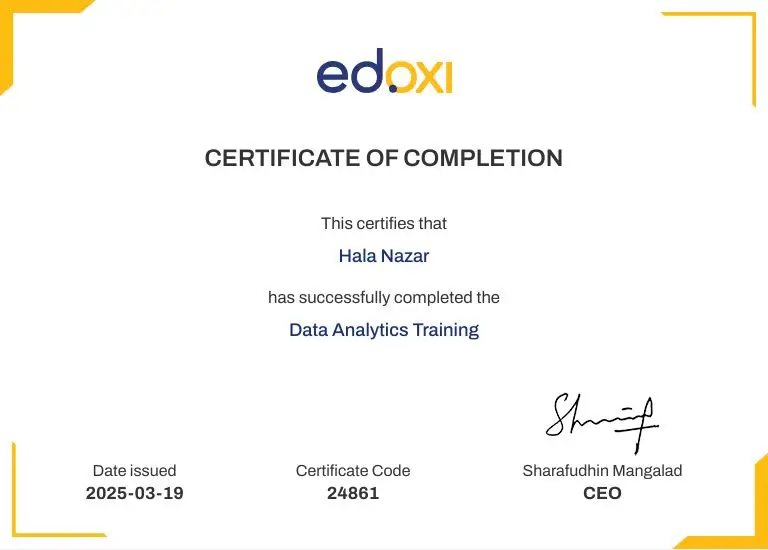
Do You Want to be a Certified Professional in Container Orchestration with Docker?

Join Edoxi’s Container Orchestration with Docker Course

Why Choose Edoxi for Container Orchestration with Dock Certification?

Edoxi’s 5-day Online Container Orchestration with Docker certification is designed to equip IT professionals and organisational teams with practical, job-ready containerisation and orchestration skills aligned with modern enterprise requirements. Here are the key reasons why learners and organisations choose Edoxi for Docker training:

Industry-Experienced Containerisation Specialists

Edoxi’s instructors possess extensive hands-on experience implementing Docker and container orchestration solutions across multiple UAE industry sectors. This real-world exposure enables learners to gain practical insights directly relevant to regional business and infrastructure challenges.

Proven Corporate Training Excellence

We have successfully delivered customised Docker and container orchestration training to technical teams from leading Dubai-based organisations. These engagements have resulted in measurable improvements in deployment efficiency, operational reliability, and infrastructure modernisation initiatives.

Personalised Learning Approach

Edoxi maintains a small student-to-trainer ratio, ensuring each participant receives individualised guidance. This approach allows learners to address organisation-specific containerisation challenges and gain targeted technical support throughout the training.

Advanced Technical Training Environment

Your team gain access to fully configured Docker and Kubernetes environments with all essential container tools pre-installed. This enables immediate hands-on engagement with orchestration exercises without the complexity of manual environment setup.

Established Regional and Global Reach

With training centres across the GCC, including the UAE, Qatar, and Saudi Arabia and an expanding presence in European markets, Edoxi delivers globally aligned container training with strong regional relevance.

Continuously Updated Curriculum

Edoxi’s Container Orchestration with Docker course curriculum is regularly updated to reflect the latest Docker features, orchestration best practices, and enterprise container standards, ensuring learners remain aligned with evolving global technology trends.

students-image

Edoxi is Recommended by 95% of our Students

Meet Our Mentor

Our mentors are leaders and experts in their fields. They can challenge and guide you on your road to success!

mentor-image

Manish Rajpal

Manish is a passionate Corporate Trainer, AI Consultant, and Cloud Solutions Architect. He empowers clients across the globe to build and maintain highly available, resilient, scalable, and secure solutions, now with a growing emphasis on AI-powered architectures. With over 15,000 professionals trained, Manish specialises in technologies including Amazon Web Services, Microsoft Azure, Microsoft Copilot and GitHub Copilot and increasingly, AI and Machine Learning.

Manish has led research and workshops focused on integrating AI into cloud environments, exploring use cases like intelligent automation, natural language processing, and responsible AI practices.

Locations Where Edoxi Offers Container Orchestration with Docker Course

Here is the list of other major locations where Edoxi offers Container Orchestration with Docker Course

FAQ

What prerequisites are required for Edoxi’s Container Orchestration with Docker course?

Your team should have a basic understanding of Linux commands, networking fundamentals, and application deployment concepts. Prior exposure to Docker or DevOps practices is helpful but not mandatory, as the course bridges foundational knowledge to advanced orchestration skills.

Is Edoxi’s Container Orchestration with Docker training suitable for organisations new to containers?

Yes. Edoxi’s Container Orchestration with Docker training is designed for organisations at any stage of container adoption. Content depth is adjusted based on your team’s existing skill levels, ensuring beginners gain core concepts while experienced teams advance into orchestration, scaling, and production readiness.

How can Edoxi’s Container Orchestration with Docker certification benefit our specific business objectives?

Edoxi’s Container Orchestration with Docker typically delivers 60–80% faster deployment cycles, 40–70% improved infrastructure utilisation, and measurable operational cost reductions. During training, these benefits are mapped directly to your organisation’s business objectives and operational priorities.

How quickly can our team implement container technologies after Edoxi’s Container Orchestration with Docker training?

Most organisations begin implementing containerisation strategies immediately after the course. Our Container Orchestration with training includes developing practical implementation plans tailored to your environment, enabling rapid adoption and minimal post-training delays.

How should we select team members for Edoxi’s Container Orchestration with Docker training?

We recommend including you from the development, operations, infrastructure, and architecture teams. Involving both technical implementers and decision-makers ensures cross-functional adoption and alignment between technical capabilities and business goals.

Can Edoxi’s Container Orchestration with Docker training be customised to our organisation’s technology stack?

Yes. Edoxi customises Container Orchestration with Docker course based on your existing infrastructure, cloud platforms, CI/CD tools, and deployment workflows. A pre-training assessment is conducted to ensure the content directly addresses your organisation’s containerisation challenges.

How does Edoxi’s Container Orchestration with Docker course integrate with our existing DevOps practices?

Edoxi’s Container Orchestration with Docker training enhances your team’s current DevOps workflows rather than replacing them. Your team learn how container orchestration complements CI/CD pipelines, monitoring tools, automation frameworks, and release management processes already in place.

How does container orchestration support security and compliance requirements?

Edoxi’s Container Orchestration with Docker course addresses enterprise security and compliance needs by covering RBAC, network policies, vulnerability scanning, secrets management, and audit controls. These practices help align container environments with industry and regulatory standards globally.

How do organisations measure ROI from Edoxi’s Container Orchestration with Docker training?
ROI is measured using key performance indicators such as deployment frequency, infrastructure utilisation, incident reduction, and mean time to recovery (MTTR). The training helps define and track these metrics based on your business objectives.
What career benefits can professionals expect after Edoxi’s Container Orchestration with Docker course?

Globally, professionals skilled in Docker and container orchestration can pursue career benefits such as DevOps Engineer, Container Platform Engineer, Cloud Engineer, Site Reliability Engineer (SRE), and Platform Engineer.