Leave your message to get our quick response
edoxi automated message icon

Mastering DevOps Course

A professional Mastering DevOps course visual showing a woman working on a laptop with futuristic digital dashboards, representing DevOps tools, automation, CI/CD pipelines, and cloud infrastructure expertise.
Edoxi’s 40-hour Online Mastering DevOps Training covers DevOps foundations, containerization, orchestration, and end-to-end CI/CD pipeline implementation. Master version control workflows and branch management strategies. Your organisation benefit from enhanced operational efficiency, reduced time-to-market, and improved collaboration between development and operations teams. Join now to boost your team’s performance.
Course Duration
40 Hours
Corporate Days
5 Days
Learners Enrolled
50+
Modules
10
star-rating-icon1
star-rating-icon2
star-rating-icon3
Course Rating
4.9
star-rating-4.9
Mode of Delivery
Online
Certification by

What Do You Learn from Edoxi's Mastering DevOps Training

DevOps Foundations
You learn to understand core DevOps principles and methodologies. You also learn how these practices improve organisational efficiency, collaboration, and delivery speed.
Git & Source Code Management
You learn to master version control workflows and branch management strategies. You also learn effective collaboration techniques to support distributed development teams.
Build & Dependency Management
You learn to configure automated build processes using industry-standard tools. You also learn to implement efficient dependency management to ensure consistent, reliable software delivery.
Continuous Integration
You learn to establish automated testing and integration pipelines. You also learn to detect issues early through systematic code verification and continuous feedback mechanisms.
Containerization
You learn to create and manage application containers for consistent deployments. You also learn to implement isolation practices that enhance application security and scalability.
Orchestration & Deployment
You learn to automate application deployment across diverse environments. You also learn to manage containerised applications at scale using advanced orchestration techniques.

About Our Online Mastering DevOps Course

Edoxi's 40-hour (5-day) Online Mastering DevOps course offers industry-aligned, practical training in modern software development and delivery practices. Our DevOps training focuses on developing hands-on skills in version control, containerisation, automation, orchestration, and CI/CD pipeline development. Using leading tools such as Git, Docker, Jenkins, Kubernetes, and Ansible. You learn to build efficient delivery workflows that enhance consistency, reliability, and scalability across software environments.

Edoxi’s DevOps certification course is ideal for IT professionals, system administrators, cloud engineers, and software development teams who want to strengthen their practical DevOps capabilities. Whether you aim to streamline your organisation’s development processes or advance into specialised DevOps and cloud engineering roles. Then our Mastering DevOps course equips you with job-ready skills applicable across diverse industries such as IT, finance, healthcare, logistics, and telecom.

Edoxi’s DevOps course emphasises hands-on learning through real-world labs, guided exercises, and live project simulations. You gain experience in building complete CI/CD pipelines, containerising applications, implementing automation, and managing deployments in cloud-native environments. You also learn to reduce deployment errors, improve release cycles, and enhance collaboration across development and operations teams, supporting faster delivery and greater organisational agility.

Key Features of Edoxi's Mastering DevOps Training

Virtual Machines for Practical Learning

You learn to work with fully configured virtual environments that include all essential DevOps tools pre-installed. You also learn to practise real-world DevOps workflows without requiring a complex local setup.

Comprehensive DevOps Documentation

You understand how to use structured lab manuals, command cheat sheets, and configuration guides. You also learn to access and work with source code repositories to support guided practice and self-paced learning.

Live Demonstrations & Collaborative Sessions

You learn through interactive demonstrations and collaborative scripting activities. You also learn to participate in configuration simulations that enhance teamwork and problem-solving skills.

End-to-End CI/CD Pipeline Project

You design to build a complete DevOps pipeline covering source code management, automated testing, containerisation, and deployment to Kubernetes. You also learn to integrate all DevOps stages into a unified workflow.

Real-World Configuration Scenarios

You learn to work through industry-standard configuration challenges in simulated enterprise environments. You also learn to apply DevOps tools to solve real-world automation and deployment problems.

Troubleshooting Workshops

You understand how to identify and resolve common DevOps issues through guided troubleshooting sessions. You also learn to develop practical problem-solving skills essential for maintaining efficient DevOps pipelines.

Who Can Join Our Mastering DevOps Course?

System Administrators and IT Support Staff

Technical professionals seeking to transition from traditional operations to automated DevOps practices.

Software Developers Seeking Operational Skills

Developers want to extend their expertise beyond coding to include deployment and infrastructure capabilities.

Cloud Engineers and Platform Specialists

Cloud professionals aiming to enhance their knowledge of containerization and automated deployment workflows.

Release Managers and Build Engineers

Professionals responsible for software delivery are seeking to implement efficient automation and release processes.

DevOps Engineers Requiring Formal Training

Practitioners with some experience are looking to formalise their knowledge and fill technical skills gaps.

IT Leaders and Technical Managers

Decision-makers want to understand DevOps principles to lead organisational transformation and implementation strategies.

Mastering DevOps Course Modules

Module 1: Introduction to DevOps
  • Chapter 1.1: Understanding DevOps

    • Lesson 1.1.1: What is DevOps?
    • Lesson 1.1.2: History of DevOps
    • Lesson 1.1.3: Different Teams Involved
    • Lesson 1.1.4: DevOps Definitions
  • Chapter 1.2: DevOps in the Software Development Life Cycle

    • Lesson 1.2.1: Overview of SDLC
    • Lesson 1.2.2: Waterfall Model
    • Lesson 1.2.3: Agile Model
    • Lesson 1.2.4: DevOps Main Objectives
  • Chapter 1.3: Prerequisites for DevOps

    • Lesson 1.3.1: Continuous Testing and Integration
    • Lesson 1.3.2: Continuous Release and Deployment
    • Lesson 1.3.3: Continuous Application Monitoring
    • Lesson 1.3.4: Configuration Management
  • Chapter 1.4: Introduction to Cloud Computing

    • Lesson 1.4.1: What is Cloud?
    • Lesson 1.4.2: History and Evolution of Cloud
    • Lesson 1.4.3: Public, Private, Hybrid Clouds
    • Lesson 1.4.4: IaaS, SaaS, PaaS Cloud Models
  • Chapter 1.5: Public Cloud Platforms

    • Lesson 1.5.1: Amazon Web Services (AWS)
    • Lesson 1.5.2: Microsoft Azure
    • Lesson 1.5.3: Oracle Cloud
    • Lesson 1.5.4: IBM Cloud
Module 2: Version Control with Git
  • Chapter 2.1: Introduction to Version Control

    • Lesson 2.1.1: Version Control System
    • Lesson 2.1.2: Centralised & Distributed Version Control
  • Chapter 2.2: Working with Git

    • Lesson 2.2.1: Anatomy of Git
    • Lesson 2.2.2: Git Features
    • Lesson 2.2.3: 3-Tree Architecture
    • Lesson 2.2.4: GitHub Projects & Management
    • Lesson 2.2.5: Git Clone / Commit / Push / Merge
    • Lesson 2.2.6: Advantages of Git
Module 3: Build Tools – Maven
  • Chapter 3.1: Maven Essentials

    • Lesson 3.1.1: Java Compiler Overview
    • Lesson 3.1.2: Maven Life Cycle
    • Lesson 3.1.3: Maven Installation
    • Lesson 3.1.4: Maven Build Requirements
    • Lesson 3.1.5: Maven POM XML File
Module 4: Continuous Integration and Delivery with Jenkins
  • Chapter 4.1: Getting Started with Jenkins

    • Lesson 4.1.1: Course Overview
    • Lesson 4.1.2: How to Take this Course and Get Support
    • Lesson 4.1.3: Introduction to Continuous Integration
    • Lesson 4.1.4: Introduction to Jenkins and its History
    • Lesson 4.1.5: Installing Java and Jenkins
    • Lesson 4.1.6: Jenkins Architecture and Terminology
    • Lesson 4.1.7: Overview of Jenkins UI: Dashboard and Menus
    • Lesson 4.1.8: Creating and Running Our First Jenkins Job
    • Lesson 4.1.9: Email Configuration and Global Security
    • Lesson 4.1.10: Master–Slave Architecture
  • Chapter 4.2: Continuous Integration (CI) with Jenkins

    • Lesson 4.2.1: Installing Git and GitHub Plugin
    • Lesson 4.2.2: Installing Maven Locally
    • Lesson 4.2.3: Configuring Jenkins with Java, Git, and Maven
    • Lesson 4.2.4: Creating Maven-Based Jenkins Projects
    • Lesson 4.2.5: Running Jenkins Builds and Troubleshooting
    • Lesson 4.2.6: Jenkins Workspace and Source Control Polling
  • Chapter 4.3: Continuous Delivery with Jenkins

    • Lesson 4.3.1: Archiving Build Artefacts
    • Lesson 4.3.2: Installing and Configuring Tomcat
    • Lesson 4.3.3: Deploying to Staging Environment
    • Lesson 4.3.4: Using Deploy to Container Plugin
    • Lesson 4.3.5: Troubleshooting Deployment Issues
    • Lesson 4.3.6: Jenkins Build Pipelines
    • Lesson 4.3.7: Parallel Builds and Production Deployment
Module 5: Containers with Docker
  • Chapter 5.1: Docker Overview and Setup

    • Lesson 5.1.1: What is Docker and Why Use It?
    • Lesson 5.1.2: Docker Editions and Version Format
    • Lesson 5.1.3: OS Support for Docker
    • Lesson 5.1.4: Docker for Linux Setup
    • Lesson 5.1.5: Installing Docker Compose
  • Chapter 5.2: Introduction to Docker Components

    • Lesson 5.2.1: Docker Hub
    • Lesson 5.2.2: Docker Engine
    • Lesson 5.2.3: Docker Containers
    • Lesson 5.2.4: Docker Images
  • Chapter 5.3: Docker Containers Deep Dive

    • Lesson 5.3.1: Container vs Virtual Machine
    • Lesson 5.3.2: Running an Nginx Web Server Container
    • Lesson 5.3.3: Container Lifecycle and Process Monitoring
    • Lesson 5.3.4: Accessing Applications Inside Containers
    • Lesson 5.3.5: Persistent Data with Volumes
    • Lesson 5.3.6: Docker Networking
  • Chapter 5.4: Docker Images – Build and Manage

    • Lesson 5.4.1: Understanding Docker Images
    • Lesson 5.4.2: Official Image Specifications
    • Lesson 5.4.3: Docker Hub and Image Management
    • Lesson 5.4.4: Dockerfile Basics
    • Lesson 5.4.5: Building and Running Custom Docker Images
Module 6: Orchestration with Kubernetes
  • Chapter 6.1: Introduction to Kubernetes

    • Lesson 6.1.1: What and Why is Kubernetes
    • Lesson 6.1.2: Kubernetes vs Docker Swarm
    • Lesson 6.1.3: Kubernetes Installation
  • Chapter 6.2: Kubernetes Architecture and Components

    • Lesson 6.2.1: Terminology and Concepts
    • Lesson 6.2.2: Master and Worker Node Components
    • Lesson 6.2.3: Namespaces in Kubernetes
  • Chapter 6.3: Kubernetes Resources and Manifest Files

    • Lesson 6.3.1: Pods (Single and Multi-Container)
    • Lesson 6.3.2: ReplicaSets
    • Lesson 6.3.3: Services (ClusterIP, NodePort)
    • Lesson 6.3.4: Deployments – Rolling Update & Rollback
Module 7: Configuration Management with Ansible
  • Chapter 7.1: Introduction to Ansible

    • Lesson 7.1.1: Ansible Server and Controller Overview
    • Lesson 7.1.2: Infrastructure Management with Ansible
    • Lesson 7.1.3: Configuration File and Parameters
  • Chapter 7.2: Ansible Inventory and Connections

    • Lesson 7.2.1: Inventory Types
    • Lesson 7.2.2: SSH Key and Username/Password Authentication
  • Chapter 7.3: Playbooks and Automation

    • Lesson 7.3.1: Structure of Ansible Playbooks
    • Lesson 7.3.2: Hosts, Become, Gather_facts, Tasks
    • Lesson 7.3.3: Variables and Facts
    • Lesson 7.3.4: Task Output Handling and Reuse
    • Lesson 7.3.5: Introduction to Ansible Roles and Demo
Module 8: Infrastructure as Code with Terraform
  • Chapter 8.1: Terraform Fundamentals

    • Lesson 8.1.1: What is Infrastructure as Code (IaC)?
    • Lesson 8.1.2: Importance of IaC and Use Cases
    • Lesson 8.1.3: Terraform Installation and Architecture
    • Lesson 8.1.4: Terraform Workflow and Resources
  • Chapter 8.2: AWS Infrastructure Deployment with Terraform

    • Lesson 8.2.1: Provider Setup and Configuration
    • Lesson 8.2.2: Create EC2, S3, EBS, VPC on AWS
    • Lesson 8.2.3: Terraform State Management
Module 9: Infrastructure Monitoring with Prometheus and Grafana
  • Chapter 9.1: Introduction to Monitoring Tools

    • Lesson 9.1.1: Why Infrastructure Monitoring Matters
    • Lesson 9.1.2: Prometheus Architecture and Setup
    • Lesson 9.1.3: Grafana Overview and Server Setup
  • Chapter 9.2: Visualisation and Alerts

    • Lesson 9.2.1: Creating Dashboards in Grafana
    • Lesson 9.2.2: Alerts and Email Notifications
Module 10: DevOps End-to-End Demo
  • Chapter 10.1: CI/CD Pipeline Implementation

    • Lesson 10.1.1: CI/CD Flow Using Jenkins, Docker, Kubernetes & Ansible

Download Mastering DevOps Course Brochure

Hands-on Lab Activities Involved in the Mastering DevOps Training

Edoxi’s 40-hour DevOps training course features intensive hands-on lab sessions that allow learners to practise real-world CI/CD, automation, and containerization tasks in simulated enterprise environments. Here are the major practical labs involved in the DevOps course:

Implementing GitFlow Workflow for a Sample Project

You learn to establish a structured branching strategy using GitFlow to manage feature development, releases, and hotfixes effectively during this lab session. You also learn to streamline collaboration and maintain clean version control practices.

Building a Java Project with Maven

You learn to configure a complete Maven build process with dependencies, plugins, and test execution. In this activity, you also learn to build and package Java applications efficiently.

Creating Your First Freestyle Job in Jenkins

You learn to set up a Jenkins freestyle job to automate build processes with customised build steps and post-build actions in this lab session. You also learn to integrate build triggers for continuous automation.

Writing a Jenkinsfile for Declarative Pipelines

You learn to develop a Jenkinsfile using declarative syntax to define a reproducible, multi-stage delivery pipeline. During this lab session, you can also learn to implement version-controlled automation for CI/CD.

Building and Running Your First Docker Container

You learn to create, build, and run Docker containers using essential commands in this lab activity. You also learn containerization fundamentals and image management.

Using Docker Compose to Run Multi-Container Applications

You learn to implement Docker Compose to define and manage multi-container applications with configured networks and service dependencies during this lab session. You also learn to orchestrate and troubleshoot multi-service environments.

Creating and Scaling Deployments in Kubernetes

You learn to deploy applications to Kubernetes clusters and implement scaling strategies to handle varying workloads in this lab session. You also learn to work with deployments, services, and replicas.

Building a CI/CD Pipeline: Git → Jenkins → Maven → Docker → Kubernetes

You learn to construct an end-to-end automated pipeline that builds, tests, containerises, and deploys an application to Kubernetes. In this lab activity, you also learn to integrate all major DevOps tools into a unified delivery workflow.

Mastering DevOps Course Outcome and Career Opportunities

Completing Edoxi's 40-hour Online Mastering DevOps training enables your organisation to build strong in-house capabilities for managing modern software delivery workflows. Technical teams gain practical, hands-on skills that can be immediately applied within real organisational environments. Here are the major course outcomes:

Course Outcome Image
You learn to design, automate, and manage end-to-end CI/CD pipelines using globally adopted tools such as Git, Jenkins, GitLab CI, GitHub Actions, and Azure DevOps.
You gain practical experience deploying and managing applications on major international cloud platforms like AWS, Azure, and Google Cloud.
You develop industry-standard competency in Docker, Kubernetes, Helm, and container-based application delivery used by organisations worldwide.
You become capable of provisioning and managing global-scale infrastructure using Terraform, Ansible, and other IaC tools.
You acquire the ability to automate builds, tests, deployments, monitoring, and configuration management to enhance operational reliability.
You strengthen with cross-team collaboration practices aligned with international DevOps maturity models.

Career Opportunities After Our Mastering DevOps Certification

  • DevOps Engineer
  • Site Reliability Engineer (SRE)
  • Cloud Engineer
  • Platform Engineer
  • Build & Release Engineer
  • Infrastructure Engineer
  • Automation Engineer
  • Kubernetes Administrator
  • Cloud DevOps Architect
  • Security DevOps Engineer (DevSecOps Engineer)

Mastering DevOps Training Options

Corporate Online Training

  • 40 hours of Real-Time Instructor Guidance.

  • Remote Access to Lab Environments.

  • Flexible Scheduling Options.

  • Recorded Sessions for Review.

Corporate Offline Training

  • 5 days of Customised Content for Business Needs.

  • Team-Based Learning Activities.

  • Industry-Specific Implementation Strategies.

  • Flexible Delivery Options (On-Site / Edoxi Office / Hotel).

  • Fly-Me-a-Trainer Option.

  • Food and refreshments provided for corporate teams.

Do You Want a Customised Training for Mastering DevOps?

Get expert assistance in getting you Mastering DevOps Course customised!

How to Get the Mastering DevOps Certified?

Here’s a four-step guide to becoming a certified Mastering DevOps professional.
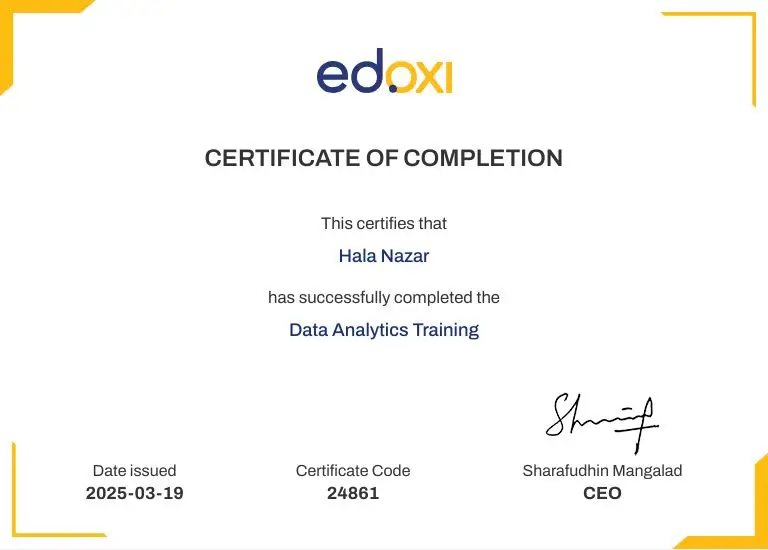
Do You Want to be a Certified Professional in Mastering DevOps?

Join Edoxi’s Mastering DevOps Course

Why Choose Edoxi for Mastering DevOps Training?

Edoxi’s 40-hour(5 days) Mastering DevOps training course is designed to equip IT teams with practical, job-ready skills for modern software delivery and automation. Here are the major reasons why learners and organisations choose Edoxi for DevOps training:

Industry-Experienced DevOps Specialists

Edoxi’s instructors possess extensive real-world DevOps implementation experience across the UAE’s finance, telecommunications, and e-commerce sectors, providing practical insights that help learners bridge the gap between tools and industry application.

Proven Corporate Training Excellence

Our DevOps training has successfully empowered technical teams from leading Dubai organisations, enabling measurable improvements in automation, CI/CD efficiency, and overall delivery performance.

Personalised Learning Approach

Edoxi’s small student-to-trainer ratio ensures every participant receives dedicated support, enabling them to address specific DevOps challenges and implementation needs relevant to their organisation.

Comprehensive Technical Environment

We provide fully configured virtual machine environments with pre-installed DevOps tools, allowing learners to engage immediately in hands-on practice instead of dealing with complex initial setup processes.

Established Regional and Global Reach

Edoxi maintains a strong presence across the GCC, including the UAE and Saudi Arabia, and continues to expand into European markets, ensuring globally aligned training with region-specific industry relevance.

Continuous Curriculum Updates

Edoxi’s DevOps curriculum is regularly updated to include the latest tools, automation practices, and industry standards, ensuring learners stay aligned with evolving global DevOps trends and enterprise technology requirements.

students-image

Edoxi is Recommended by 95% of our Students

Meet Our Mentor

Our mentors are leaders and experts in their fields. They can challenge and guide you on your road to success!

mentor-image

Manish Rajpal

Manish is a passionate Corporate Trainer, AI Consultant, and Cloud Solutions Architect. He empowers clients across the globe to build and maintain highly available, resilient, scalable, and secure solutions, now with a growing emphasis on AI-powered architectures. With over 15,000 professionals trained, Manish specialises in technologies including Amazon Web Services, Microsoft Azure, Microsoft Copilot and GitHub Copilot and increasingly, AI and Machine Learning.

Manish has led research and workshops focused on integrating AI into cloud environments, exploring use cases like intelligent automation, natural language processing, and responsible AI practices.

Locations Where Edoxi Offers Mastering DevOps Course

Here is the list of other major locations where Edoxi offers Mastering DevOps Course

FAQ

What are the prerequisites for enrolling in Edoxi’s Online Mastering DevOps course?

You are expected to have basic knowledge of Linux commands, software development life cycles, and general IT concepts. Prior exposure to coding or cloud platforms is helpful but not mandatory.

Who is best suited for Edoxi’s Mastering DevOps training?

Edoxi’s Mastering DevOps training is ideal for software developers, system administrators, QA engineers, cloud practitioners, IT operations teams, and professionals transitioning into automation or CI/CD-focused roles.

What tools and technologies will I learn during Edoxi’s Mastering DevOps certification course?
You gain hands-on experience with globally used tools such as Git, Docker, Jenkins, Kubernetes, Ansible, Terraform, Prometheus, and cloud services like AWS or Azure (depending on the training track).
How is Edoxi’s Mastering DevOps training delivered, and does it include hands-on labs?

Yes. You receive pre-configured virtual machines and work on real-world labs, CI/CD pipelines, containerization tasks, configuration management exercises, and cloud deployment workflows.

Does the course include project-based learning or real-world case studies?

Absolutely. Edoxi’s Mastering DevOps course features end-to-end project implementation from source code integration and automated builds to container deployment and Kubernetes orchestration, mirroring enterprise DevOps environments.

Will I receive a certification after completing Edoxi’s Mastering DevOps course?
Yes. Upon successful completion, participants receive Edoxi’s globally recognised DevOps certification, validating their applied skills in automation, CI/CD pipelines, and cloud-native deployment practices.
How does Edoxi’s Mastering DevOps training benefit my career in a global job market?
DevOps is one of the most in-demand IT skill sets worldwide. Our Mastering DevOps course equips you with practical implementation expertise, making you eligible for high-demand roles across the US, Europe, GCC, and Asia-Pacific regions.
Can beginners or non-developers transition into DevOps roles after Edoxi’s Mastering DevOps certification?

Yes. You can successfully transition from system administration, networking, QA, and IT support backgrounds successfully transition into DevOps. The course focuses on foundational concepts before advancing into automation and cloud-native tools.

What job roles can I pursue after completing Edoxi’s Mastering DevOps certification?

You can pursue roles such as DevOps Engineer, Cloud Engineer, SRE (Site Reliability Engineer), Release Engineer, Automation Engineer, Platform Engineer, Build Engineer, CI/CD Specialist, or Infrastructure-as-Code Engineer.

What is the global salary range for certified DevOps professionals?

Salaries may vary by country and experience. On average, DevOps professionals earn in different locations:

  •  
    • US: USD 90,000 – 1,60,000 per year
    • Europe: Euro 60,000 – 1,20,000 per year
    • GCC: USD 40,000 – 95,000 per year
    • Asia-Pacific: USD 25,000 – 70,000 per year

Experienced DevOps specialists and cloud-native engineers can earn significantly higher salaries worldwide.