Leave your message to get our quick response
edoxi automated message icon

CCIE Enterprise Infrastructure Course

Two IT professionals analyzing data on a laptop inside a modern server room with network racks and glowing equipment.
Edoxi’s 70-hour Online CCIE Enterprise Infrastructure Lab Training helps you master advanced routing, switching, SD-Access, SD-WAN, network security, automation, and expert-level troubleshooting through intensive hands-on labs. Train on real Cisco hardware and enterprise-scale environments, prepare for success in the CCIE lab, and advance into senior networking roles. Enrol now.
Course Duration
70 Hours
Corporate Days
6 Days
Learners Enrolled
100+
Modules
5
star-rating-icon1
star-rating-icon2
star-rating-icon3
Course Rating
5
star-rating-5
Mode of Delivery
Online
Certification by

What Do You Learn from Edoxi's Online CCIE Enterprise Infrastructure Lab Training

Advanced Campus Switching & Layer 2 Technologies
Gain hands-on experience configuring VLANs, trunks, EtherChannel, and spanning-tree setups, and learn to troubleshoot switch-level issues effectively.
Enterprise Routing Protocol Mastery
Master EIGRP, OSPF, and BGP routing strategies, including route optimisation, filtering, and ensuring fast network convergence.
Cisco SD-Access Fabric Implementation
Learn to build scalable SD-Access fabrics, including underlay and overlay configurations, leveraging DNA Center workflows for automation.
SD-WAN Architecture & Orchestration
Learn to deploy and manage SD-WAN environments, configure routing policies, and ensure secure and efficient network connectivity across sites.
Network Automation & Programmability
Understand how to automate enterprise networks using Python with IOS XE and controller APIs. This allows you to implement NETCONF, RESTCONF, and model-driven telemetry.
Infrastructure Security & Advanced Services
Learn to secure networks with control plane protection and IEEE 802.1X authentication. This allows you to implement TrustSec, QoS, MPLS Layer 3 VPN, and DMVPN.

About Our Online CCIE Enterprise Infrastructure Lab Certification Course

Edoxi’s 70-hour online CCIE Enterprise Infrastructure course is for experienced network professionals targeting expert-level enterprise networking roles. We also deliver corporate training for CCIE Enterprise Infrastructure programs aligned with enterprise technologies, live projects, and team skill requirements. Our training focuses exclusively on CCIE Enterprise Infrastructure lab training, aligned with Cisco’s expert-level certification pathway.
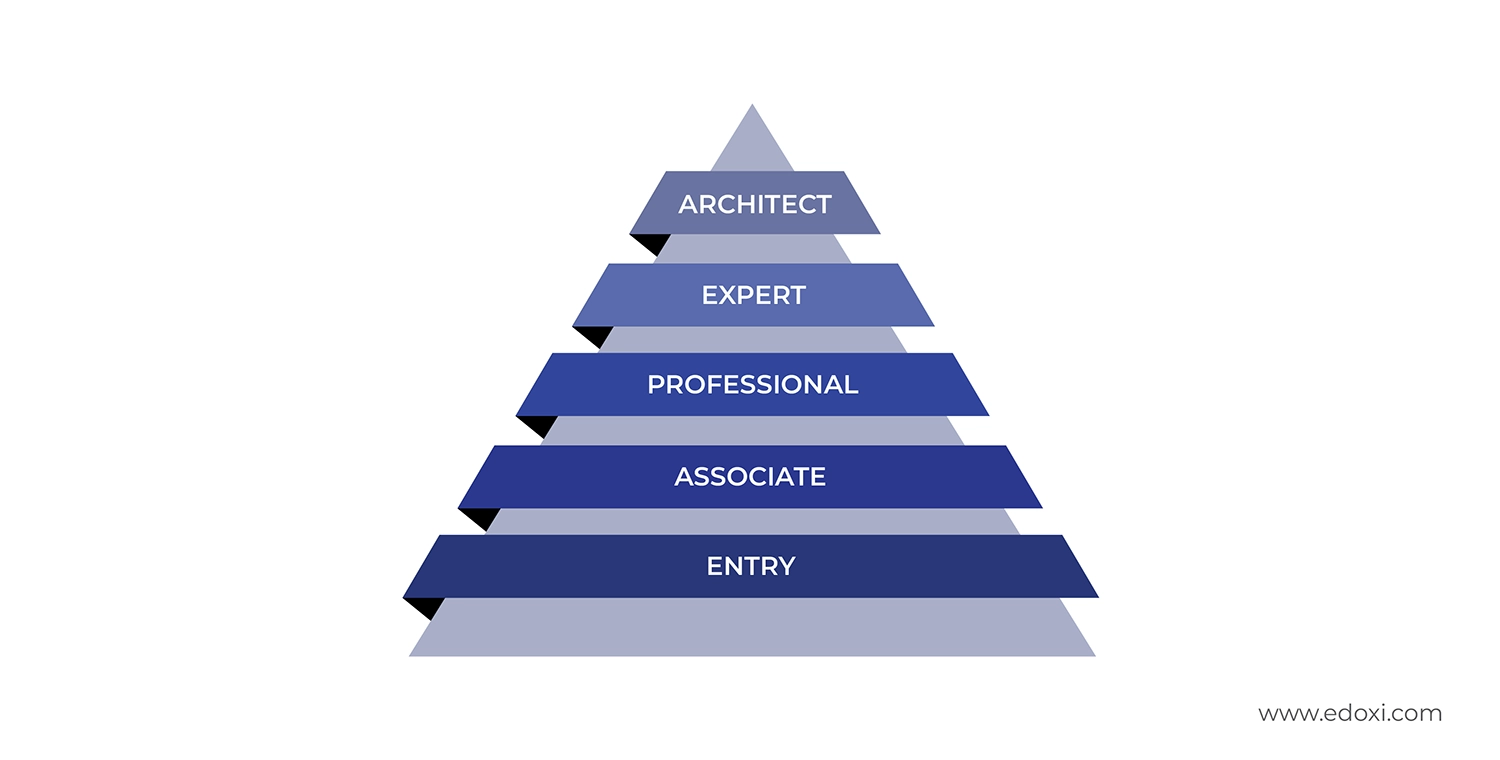
cisco’s-certification-pathway

As per Cisco requirements, 350-401 ENCOR serves as the qualifying exam for progressing to the CCIE Enterprise Infrastructure lab, while this course concentrates entirely on the hands-on lab component. Candidates who have not yet completed 350-401 ENCOR may first enrol in Edoxi’s dedicated ENCOR training before advancing to the CCIE infrastructure lab phase.

Here are the Cisco 350-401 ENCOR Exam details. 

Details ENCOR 350-401 CCIE Enterprise Infrastructure Lab
Exam Code 350-401 CCIE Enterprise Infrastructure Lab (v1.x)
Exam Name Cisco Enterprise Network Core Technologies (ENCOR) v1.1 CCIE Enterprise Infrastructure Lab
Duration 120 minutes 8 hours (3h design + 5h deploy/operate/optimise)
Number of Questions 90–110 (multiple-choice, drag-drop, simulations) Not fixed; multi-step design scenarios + config/troubleshooting tasks
Passing Score 825/1000 Not publicly available; module-based pass/fail
Exam Fees USD 400 USD 1,600–2,000 (varies by region)
Certification Validity 3 years 3 years
Recertification Every 3 years: exam or 120 CE credits Every 3 years: CCIE lab/exam or 120 CE credits
Administered By Pearson VUE Cisco CCIE labs (in-person/remote)


Our training focuses on intensive hands-on CCIE Enterprise Infrastructure lab practice, where you learn to configure, troubleshoot, and optimise enterprise-scale network topologies using physical rack infrastructure, cloud-based labs, and EVE-NG environments that reflect real CCIE lab exam scenarios. The curriculum covers advanced routing and switching, SD-Access, SD-WAN, security, and automation, fully aligned with the CCIE Enterprise Infrastructure v1.1 blueprint. To learn more about CCIE Enterprise Infrastructure Lab Course fees, training location, and delivery format, contact Edoxi.

Key Features of Edoxi's CCIE Enterprise Infrastructure Lab Training

Physical Rack Lab Experience

Hands-on practice with Cisco Catalyst 9300 switches running IOS XE 17.9 allows you to work directly on enterprise-grade hardware in real network environments.

Cloud-Based Virtual Lab Access

Practice anytime with our cloud-based virtual labs featuring Cisco Catalyst 8000V routers, SD-WAN controllers, and DNA Center 2.3 across real enterprise environments.

EVE-NG Advanced Network Simulations

Build complex multi-site networks using Edoxi’s advanced EVE-NG simulations that mirror actual CCIE Enterprise lab exam scenarios.

Full CCIE Lab Mock Examinations

Test your readiness with Edoxi’s full-length eight-hour CCIE lab mock exams covering design, deployment, and troubleshooting.

Automation & Programmability Modules

Master modern network automation through Edoxi’s hands-on Python scripting, NETCONF/YANG, RESTCONF APIs, and telemetry modules.

Enterprise-Scale Troubleshooting Labs

Strengthen expert-level troubleshooting skills with Edoxi’s enterprise-scale fault labs across routing, SD-Access, and SD-WAN architectures.

Who Can Join Our CCIE Enterprise Infrastructure Lab Course?

CCNP Enterprise Certified Professionals

Engineers pursuing expert-level CCIE Enterprise Infrastructure lab certification.

Senior Network Engineers

Professionals managing complex enterprise routing and switching environments.

Network Architects

Designers responsible for large-scale, multi-site enterprise network architectures.

Infrastructure Consultants

Specialists delivering advanced enterprise networking and transformation projects.

Data Centre and Enterprise Engineers

Engineers working across hybrid enterprise and data centre infrastructures.

Network Operations Leads

Technical leads overseeing enterprise network deployment and optimisation.

CCIE Enterprise Infrastructure Course Modules

Module 1: Network Infrastructure
  • Chapter 1.1: Switched Campus Technologies

    • Lesson 1.1.1: Switch administration and MAC address table management
    • Lesson 1.1.2: Layer 2 protocols including CDP, LLDP, and UDLD
    • Lesson 1.1.3: VLAN technologies and trunk port configurations
    • Lesson 1.1.4: EtherChannel with LACP and load balancing
  • Chapter 1.2: Spanning Tree Protocol Implementation

    • Lesson 1.2.1: PVST+, Rapid PVST+, and MST configurations
    • Lesson 1.2.2: STP optimisation with timers and priority settings
    • Lesson 1.2.3: PortFast, BPDU Guard, Loop Guard, and Root Guard
  • Chapter 1.3: Enterprise Routing Concepts

    • Lesson 1.3.1: Administrative distance, VRF-lite, and static routing
    • Lesson 1.3.2: Policy-Based Routing and Route Filtering Techniques
    • Lesson 1.3.3: Redistribution between routing protocols and authentication
  • Chapter 1.4: EIGRP Advanced Operations

    • Lesson 1.4.1: EIGRP adjacencies and best path selection algorithms
    • Lesson 1.4.2: Classic metrics, wide metrics, and load balancing
    • Lesson 1.4.3: EIGRP Named Mode and Optimisation Techniques
    • Lesson 1.4.4: Fast convergence and IP FRR implementations
  • Chapter 1.5: OSPF Version 2 and Version 3

    • Lesson 1.5.1: OSPF adjacencies, network types, and area types
    • Lesson 1.5.2: LSA throttling, SPF tuning, and fast hello timers
    • Lesson 1.5.3: Stub router, loop-free alternate, and prefix suppression
  • Chapter 1.6: BGP for Enterprise Networks

    • Lesson 1.6.1: IBGP and EBGP peer relationships with templates
    • Lesson 1.6.2: Path selection attributes and best path algorithm
    • Lesson 1.6.3: Routing policies and attribute manipulation
    • Lesson 1.6.4: Route reflector, aggregation, and scalability features
  • Chapter 1.7: Enterprise Multicast Technologies

    • Lesson 1.7.1: IGMPv2, IGMPv3, IGMP Snooping, and filtering
    • Lesson 1.7.2: PIM Sparse Mode with RP configurations
    • Lesson 1.7.3: Bidirectional PIM and Source-Specific Multicast
Module 2: Software-Defined Infrastructure
  • Chapter 2.1: Cisco SD-Access Architecture and Design

    • Lesson 2.1.1: Underlay network design with IS-IS routing
    • Lesson 2.1.2: Overlay fabric using LISP, VXLAN, and TrustSec
    • Lesson 2.1.3: Single-site and multi-site fabric domains
  • Chapter 2.2: SD-Access Deployment with DNA Center

    • Lesson 2.2.1: DNA Center device discovery and management
    • Lesson 2.2.2: Adding fabric node devices and host onboarding
    • Lesson 2.2.3: Fabric border handoff configurations
  • Chapter 2.3: Segmentation and Policy Implementation

    • Lesson 2.3.1: Macro-level segmentation using Virtual Networks
    • Lesson 2.3.2: Micro-level segmentation with Security Group Tags
    • Lesson 2.3.3: Network and client health monitoring
  • Chapter 2.4: Cisco SD-WAN Solution Design

    • Lesson 2.4.1: Orchestration plane with vBond and NAT
    • Lesson 2.4.2: Management plane using vManage controllers
    • Lesson 2.4.3: Control plane with vSmart and OMP
    • Lesson 2.4.4: Data plane with vEdge and cEdge routers
  • Chapter 2.5: SD-WAN Edge Deployment and Operations

    • Lesson 2.5.1: Onboarding edge routers with zero-touch provisioning
    • Lesson 2.5.2: OMP routing and TLOC configurations
    • Lesson 2.5.3: Configuration templates and policy management
  • Chapter 2.6: SD-WAN Policy Implementation

    • Lesson 2.6.1: Localised QoS policies
    • Lesson 2.6.2: Application Aware Routing centralised policies
    • Lesson 2.6.3: Topology and traffic engineering policies
Module 3: Transport Technologies and Solutions
  • Chapter 3.1: MPLS Operations and Layer 3 VPN

    • Lesson 3.1.1: Label stack, LSR, LSP, and LDP operations
    • Lesson 3.1.2: MPLS ping and traceroute troubleshooting
    • Lesson 3.1.3: PE-CE routing and MP-BGP VPNv4/VPNv6
    • Lesson 3.1.4: Extranet route leaking configurations
  • Chapter 3.2: DMVPN and FlexVPN Solutions

    • Lesson 3.2.1: DMVPN Phase 3 with dual-hub architecture
    • Lesson 3.2.2: NHRP and IPsec/IKEv2 with pre-shared keys
    • Lesson 3.2.3: Per-Tunnel QoS implementations
    • Lesson 3.2.4: FlexVPN site-to-site and spoke-to-spoke scenarios
Module 4: Infrastructure Security and Services
  • Chapter 4.1: Device Security on Cisco IOS XE

    • Lesson 4.1.1: Control plane policing and protection mechanisms
    • Lesson 4.1.2: AAA authentication, authorisation, and accounting
  • Chapter 4.2: Switch and Router Security Features

    • Lesson 4.2.1: VACL, PACL, and storm control
    • Lesson 4.2.2: DHCP Snooping with option 82 and IP Source Guard
    • Lesson 4.2.3: Dynamic ARP Inspection and Port Security
    • Lesson 4.2.4: IPv4 ACLs and Unicast Reverse Path Forwarding
  • Chapter 4.3: IPv6 Infrastructure Security

    • Lesson 4.3.1: RA Guard and DHCP Guard implementations
    • Lesson 4.3.2: Binding table and device tracking
    • Lesson 4.3.3: ND Inspection, Snooping, and Source Guard
  • Chapter 4.4: IEEE 802.1X Port-Based Authentication

    • Lesson 4.4.1: Device roles, port states, and authentication process
    • Lesson 4.4.2: Host modes and deployment scenarios
  • Chapter 4.5: System Management and Monitoring

    • Lesson 4.5.1: Device management via console, SSH, and RESTCONF
    • Lesson 4.5.2: SNMPv2c and SNMPv3 configurations
    • Lesson 4.5.3: Logging with syslog and conditional debugs
  • Chapter 4.6: Quality of Service with MQC

    • Lesson 4.6.1: DiffServ, CoS, and DSCP mapping
    • Lesson 4.6.2: Classification with NBAR and marking techniques
    • Lesson 4.6.3: Policing, shaping, and congestion management
    • Lesson 4.6.4: HQoS and sub-rate Ethernet link configurations
  • Chapter 4.7: Network Services Implementation

    • Lesson 4.7.1: HSRP, GLBP, and VRRP redundancy protocols
    • Lesson 4.7.2: Network Time Protocol with authentication
    • Lesson 4.7.3: DHCP client, server, relay, and DHCPv6 operations
    • Lesson 4.7.4: IPv4 NAT and PAT variants including VRF-aware implementations
  • Chapter 4.8: Network Optimisation and Operations

    • Lesson 4.8.1: IP SLA with ICMP, UDP, and TCP probes
    • Lesson 4.8.2: Tracking objects and Flexible NetFlow
    • Lesson 4.8.3: Traffic capture with SPAN, RSPAN, and ERSPAN
    • Lesson 4.8.4: IOS-XE troubleshooting tools and packet trace
Module 5: Infrastructure Automation and Programmability
  • Chapter 5.1: Data Encoding Formats

    • Lesson 5.1.1: JSON data structures and parsing
    • Lesson 5.1.2: XML syntax and manipulation
  • Chapter 5.2: Automation and Scripting Tools

    • Lesson 5.2.1: EEM applets for event-driven automation
    • Lesson 5.2.2: Guest shell Linux environment configurations
    • Lesson 5.2.3: CLI Python module and EEM Python module
  • Chapter 5.3: Programmability with APIs

    • Lesson 5.3.1: vManage API interaction with Python requests library
    • Lesson 5.3.2: Cisco DNA Center API with HTTP methods
    • Lesson 5.3.3: IOS XE API via NETCONF/YANG and RESTCONF/YANG
    • Lesson 5.3.4: Model-driven telemetry deployment with gRPC subscriptions

Download CCIE Enterprise Infrastructure Lab Course Brochure

Practical Sessions in CCIE Enterprise Infrastructure Training

Edoxi’s CCIE Enterprise Infrastructure training offers hands-on labs to practice real-world enterprise networking and automation skills.

Cisco Catalyst 8000V Routers (IOS XE 17.9)

Used for enterprise routing, SD-WAN edge deployment, and CCIE lab scenarios.

Cisco IOSv Routers (IOS 15.8)

Support routing protocol configuration and advanced enterprise routing labs.

Cisco IOSv-L2 Switches (IOS 15.2)

Enable Layer 2 switching, VLAN, and Spanning Tree protocol simulations.

Cisco SD-WAN Controllers (vManage, vBond, vSmart, cEdge)

Provide centralised SD-WAN orchestration, control, and policy implementation labs.

Cisco DNA Center (Release 2.3)

Used for SD-Access fabric deployment, automation, and network assurance labs.

Cisco Catalyst 9300 Switches (IOS XE 17.9)

Deliver real hardware experience for enterprise campus switching configurations.

Cisco Identity Services Engine (ISE 3.1)

Supports authentication, authorisation, and segmentation security lab exercises.

Linux Desktop Environment

Used for automation scripting, API interaction, and troubleshooting tools.

Hands-On Lab Activities in CCIE Enterprise Infrastructure Training

Advanced Campus Switching & STP Optimisation

Configure VLANs, EtherChannel, and STP variants while troubleshooting Layer 2 convergence and stability issues.

Enterprise Routing & Convergence Engineering

Implement EIGRP, OSPF, and BGP with redistribution, filtering, and fast convergence tuning.

Multi-Protocol Routing Policy & VRF Design

Design VRF-lite and VRF-aware routing with policy-based routing and controlled route leaking.

Cisco SD-Access Fabric Deployment

Deploy SD-Access underlay and overlay fabrics with macro and micro segmentation using DNA Center and ISE.

Cisco SD-WAN Multi-Branch Implementation

Build SD-WAN architectures with controller orchestration, centralised policies, and application-aware routing.

MPLS Layer 3 VPN & DMVPN Solutions

Configure MPLS L3VPN and DMVPN Phase 3 with end-to-end troubleshooting scenarios.

Infrastructure Security Hardening

Implement 802.1X, control plane protection, DHCP security, IPv6 security, and TrustSec segmentation.

Network Automation & Programmability

Automate enterprise infrastructure using Python, NETCONF/RESTCONF, APIs, and model-driven telemetry.

CCIE Enterprise Infrastructure Lab Course Outcomes and Career Opportunities

Edoxi’s CCIE Enterprise Infrastructure Training equips experienced network professionals with hands-on skills for complex enterprise networks. By the end of our training, here are the major course outcomes you can achieve

Course Outcome Image
Gain advanced expertise in campus switching, Layer 2 technologies, and enterprise routing protocols, including EIGRP, OSPF, BGP, and multicast for large-scale network environments.
Design and deploy Cisco SD-Access fabrics using IS-IS underlay, VXLAN overlays, DNA Center automation, and segmentation policies.
Build and operate enterprise SD-WAN architectures with centralised orchestration, application-aware routing, and advanced traffic engineering policies.
Implement secure enterprise infrastructure using control plane protection, 802.1X authentication, TrustSec segmentation, IPv4/IPv6 security, and advanced access controls.
Configure and troubleshoot MPLS Layer 3 VPNs, DMVPN, redundancy protocols, QoS frameworks, and high-availability enterprise services.
Automate and monitor enterprise networks using Python, NETCONF/RESTCONF, Cisco DNA Center APIs, SD-WAN APIs, and model-driven telemetry.

Career Opportunities After the CCIE Enterprise Infrastructure Lab Certification

  • Senior Network Engineer
  • Lead Enterprise Network Architect
  • Principal Infrastructure Engineer
  • Network Automation Engineer
  • SD-WAN & SD-Access Implementation Specialist
  • Enterprise Network Consultant
  • Network Security Infrastructure Engineer
  • Technical Lead – Network Operations
  • Cloud & Hybrid Network Architect
  • Infrastructure Solutions Architect

CCIE Enterprise Infrastructure Lab Course Training Options

Live Online Training

  • 70 hours of online CCIE Enterprise Infrastructure training

  • Flexible Scheduling for Professionals

  • Remote Access to CCIE Lab Environments

  • Real-Time Instructor-Led Sessions

  • Guided Lab Configuration and Troubleshooting

Corporate Training

  • 6 days of CCIE Enterprise Infrastructure corporate training

  • Flexible Scheduling and Commercial Models

  • Flexible Delivery Options (On-Site / Edoxi / Hotel)

  • Fly-Me-a-Trainer Availability

  • Customised Lab Scenarios for Organisations

  • Team Progress and Skill Development Tracking

Do You Want a Customised Training for CCIE Enterprise Infrastructure Lab?

Get expert assistance in getting your CCIE Enterprise Infrastructure Lab Course Customised!

How to Get a CCIE Enterprise Infrastructure Lab Certification?

Here’s a four-step guide to becoming a certified CCIE Enterprise Infrastructure professional.
Do You Want to be a Certified Professional in CCIE Enterprise Infrastructure Lab?

Join Edoxi’s CCIE Enterprise Infrastructure Lab Course

Why Choose Edoxi for the Online CCIE Enterprise Infrastructure Course?

Edoxi, a best institute for CCIE Enterprise Infrastructure training, delivers comprehensive training for network professionals and organisations across global locations. Here are the reasons to choose Edoxi

CCIE Lab–Aligned Curriculum Structure

Edoxi’s training strictly follows the CCIE Enterprise Infrastructure v1.1 lab blueprint, ensuring complete alignment with Cisco’s expert-level certification requirements.

Pure Hands-On Lab Learning Approach

Learners can focus on intensive configuration, troubleshooting, and optimisation across real CCIE-scale enterprise network scenarios.

Expert CCIE-Level Trainers

Our instructors have extensive experience in designing, deploying, and managing large-scale enterprise infrastructures.

Enterprise-Grade Lab Infrastructure

You can be trained using our physical Cisco racks, cloud-based enterprise labs, and advanced EVE-NG environments that replicate real CCIE lab exam conditions.

Proven High Success Outcomes

Our structured lab practice, mock exams, and expert mentoring consistently deliver strong certification success rates.

Trusted Global Training Provider

We deliver expert networking training across the UAE, Qatar, London, and Kuwait with globally aligned standards.

students-image

Edoxi is Recommended by 95% of our Students

Meet Our Mentor

Our mentors are leaders and experts in their fields. They can challenge and guide you on your road to success!

mentor-image

Sid Ahmed

Sid Ahmed is an IT network infrastructure and security trainer with over 12 years of experience at Edoxi Training Institute, Dubai. He is a certified CCNA/CCNP instructor and NSE 4 trainer and possesses advanced expertise in Cisco networking His portfolio includes prestigious Cisco certifications and hands-on knowledge of global security frameworks, making him a leader in delivering industry-relevant training.

Sid’s knowledge also extends to industry standards such as ISO 27001, NIST, SOC2, and PCI DSS, further strengthening his cybersecurity prowess.Sid Ahmed focuses on developing practical skills through hands-on training with enterprise-grade equipment. As an experienced Network and Security Architect, Sid Ahmed's expertise spans WAN/LAN, IP-MPLS, BGP, Wireless, IP Telephony, and Cybersecurity.He is skilled in HLD/LLD design, audits, pentesting, IT risk assessments, and security frameworks His specialisations include SD-WAN, VPN, VLAN, SSL, SIEM, cloud tech, and routing protocols (OSPF, BGP, STP) Sid is also proficient in Python, MySQL, JavaScript, APIs, and tools like SolarWinds, FortiSIEM, and U2000.

Locations Where Edoxi Offers CCIE Enterprise Infrastructure Course

Here are the major international locations where Edoxi offers CCIE Enterprise Infrastructure Course

FAQ

What are the prerequisites for Edoxi’s CCIE Enterprise Infrastructure Lab Training?

Our CCIE Enterprise Infrastructure lab training requires:

  • 350-401 ENCOR Qualification
    Completion of 350-401 ENCOR is required before attempting CCIE labs.
  • Strong Enterprise Networking Experience
    Hands-on experience with enterprise routing, switching, and troubleshooting.
  • Cisco IOS XE Proficiency
    Practical familiarity with Cisco IOS XE configuration and operations.
  • Advanced Routing Knowledge
    Working knowledge of OSPF, EIGRP, BGP, and redistribution concepts.
How is hands-on learning delivered in the CCIE Enterprise Infrastructure Lab Course at Edoxi?

 Edoxi’s CCIE Enterprise Infrastructure Lab Training focuses on intensive real-world labs using Cisco Catalyst 9300 hardware, cloud-based virtual platforms, and EVE-NG simulations for full-spectrum practical exposure.

What automation and programmability skills form part of the CCIE Enterprise Infrastructure Training?

CCIE Enterprise Infrastructure Training covers Python automation, DNA Center APIs, vManage APIs, NETCONF/YANG, RESTCONF, model-driven telemetry, and guest shell scripting aligned with CCIE Enterprise Infrastructure Lab Certification requirements.

Does Edoxi include SD-Access and SD-WAN modules in this CCIE Enterprise Infrastructure Lab Course?

 Yes. The CCIE Enterprise Infrastructure Training includes SD-Access fabric design, DNA Center integration, SD-WAN architecture, controller deployment, and enterprise policy configuration.

Is customised CCIE Enterprise Infrastructure Training available for corporate teams?

 Edoxi offers tailored CCIE Enterprise Infrastructure Lab Training programs with flexible schedules, technology-specific focus, and enterprise-aligned lab scenarios.

What devices and platforms are used during Edoxi’s CCIE Enterprise Infrastructure Lab Training?

 You can work with Cisco Catalyst 9300 switches, Catalyst 8000V routers, SD-WAN controllers, DNA Center, ISE, IOSv platforms, and multi-environment lab infrastructures.

How does Edoxi’s CCIE Enterprise Infrastructure Lab Course differ from standard Cisco training programs?

 Edoxi’s program concentrates on CCIE lab-level mastery through advanced troubleshooting labs, multi-domain enterprise architectures, and expert implementation scenarios.

What certification path follows Edoxi’s CCIE Enterprise Infrastructure Lab Training?

You can complete the 350-401 ENCOR exam followed by the 8-hour CCIE Enterprise Infrastructure Lab Certification exam to achieve the CCIE Enterprise Infrastructure credential.

Does Edoxi offer online CCIE Enterprise Infrastructure Training?

 Edoxi delivers instructor-led online sessions with cloud labs and hybrid learning models for corporate teams.

Can the CCIE Enterprise Infrastructure Lab Course align with real enterprise projects?

 Yes. Edoxi integrates enterprise infrastructure use cases, deployment challenges, and project-driven labs into the CCIE Enterprise Infrastructure Training framework.

What global salary range follows the CCIE Enterprise Infrastructure Lab Certification?

The salary of Professionals with CCIE Enterprise Infrastructure Certification ranges from USD 110,000 to USD 180,000 annually, depending on region, experience level, and enterprise network scale.

Who should enrol in Edoxi’s CCIE Enterprise Infrastructure Lab Course?

 Senior network engineers, infrastructure architects, enterprise network administrators, and professionals preparing for expert-level Cisco roles benefit most from this CCIE Enterprise Infrastructure Training.

How long does Edoxi’s CCIE Enterprise Infrastructure Lab Training program run?

The CCIE Enterprise Infrastructure course structure includes extended lab-intensive sessions, modular learning tracks, and flexible scheduling designed for deep technical mastery.

Does Edoxi provide mentorship and exam-focused guidance during the CCIE Enterprise Infrastructure Training?

 Edoxi delivers expert mentoring, real exam scenario simulations, structured troubleshooting drills, and performance feedback throughout the CCIE Enterprise Infrastructure Lab Course.

What career roles open after completing Edoxi’s CCIE Enterprise Infrastructure Lab Certification training?

Graduates commonly progress into roles such as Enterprise Network Architect, Senior Network Engineer, Infrastructure Consultant, Network Automation Engineer, and Technical Lead across global organisations.