Leave your message to get our quick response
edoxi automated message icon

Animation Course

Professional animator working on high-end animation software across multiple monitors in a modern studio environment.
Edoxi’s 45-hour Online Animation Course helps you learn 3D modelling, UV mapping, lighting, animation basics, and rendering for real-world production workflows. Gain practical experience through hands-on projects and build your first animation portfolio piece. Learn complete 3D workflows using industry tools and earn an Animation Certification that prepares you for advanced animation and multimedia career paths. Enrol now!
Course Duration
45 Hours
Corporate Days
5 Days
Learners Enrolled
50+
Modules
9
star-rating-icon1
star-rating-icon2
star-rating-icon3
Course Rating
4.9
star-rating-4.9
Mode of Delivery
Online
Certification by

What Do You Learn from Edoxi's Animation Training

3D Fundamentals and Spatial Understanding
Learn 3D basics, including objects, vertices, edges, and faces.
Clean Modelling for Animation Workflows
Master box modelling techniques using extrude, inset, and bevel tools.
UV Unwrapping and Material Application
Gain expertise in UV mapping and applying PBR materials for realistic textures.
Lighting Techniques for Visual Presentation
Build skills in studio lighting setups and HDRI lighting for premium visuals.
Core Animation Principles and Motion Control
Learn keyframes, timeline control, and the graph editor for smooth animations.
Basic Rigging for Mechanical Animation
Understand parenting rigs and constraints for mechanical object animation control.

About Our Online Animation Certification Course

Edoxi offers a 45-hour online Animation course designed to build a strong foundation in 3D modelling and animation. The program introduces essential animation concepts and production workflows, helping learners develop the core skills required at the start of their animation journey. This course is ideal for aspiring 3D artists, creative professionals, and animation enthusiasts seeking to establish the essential groundwork before moving into specialised areas. Animation corporate training is also available for organisations looking to enhance the skills of their creative teams.

Our course focuses on developing software-independent animation thinking and foundational skills applicable across industry-standard platforms. Training covers principles used in Blender, Autodesk Maya, and Cinema 4D, allowing participants to choose their preferred software. Students gain hands-on experience through structured projects and exercises that build real-world production workflow understanding. Learners also develop expertise in clean topology, proper scene organisation, and the complete 3D production pipeline from modelling through final rendering.

Upon completion of our Animation course, participants gain the fundamental competencies required to confidently progress into specialised training areas such as character animation, visual effects, technical artistry, and other advanced 3D disciplines. 

To learn more about the Animation course fee or explore how the training can support your creative career goals, you can contact us.

Key Features of Edoxi's Animation Training

Software Flexibility with Industry-Standard Platforms

Choose from Maya, Blender, or Cinema 4D based on your preference and career goals.

Hands-On Practice with Multiple Projects

Complete projects including sci-fi crates, low-poly robots, and mechanical objects for skill application.

UV Mapping and Material Exercises

Practice unwrapping models and applying three materials with decals or logos.

Studio Lighting Practice Sessions

Create soft product lighting and dramatic cinematic lighting for two distinct styles.

Animation Principle Exercises

Execute bouncing ball animations, product turntables, and mechanical motion, including hinges.

Basic Rigging Practice Activities

Rig door hinges, robot arms, and fan blades for mechanical animation control.

Who Can Join Our Online Animation Course?

Aspiring 3D Artists and Animators

Individuals seeking foundational skills in 3D modelling, animation, and rendering for creative career pathways.

Graphic Designers Expanding Skills

Designers looking to add 3D animation capabilities to their existing creative skillset and portfolio.

Students and Fresh Graduates

Recent graduates in multimedia, design, or related fields wanting practical 3D production training.

Content Creators and Digital Artists

Creators aiming to produce animated content for social media, marketing, or personal projects.

Career Transitioners to Creative Industries

Professionals from any background interested in entering the growing 3D animation and multimedia sector.

Corporate Teams Requiring Animation Skills

Organisations seeking to upskill teams in creating animated product presentations or marketing materials.

Animation Course Modules

Module 1: Workspace + 3D Basics
  • Chapter 1.1: Interface and Navigation

    • Lesson 1.1.1: UI overview, panels, and outliner/object manager
    • Lesson 1.1.2: Navigation techniques — orbit, pan, zoom, and view modes
  • Chapter 1.2: 3D Fundamentals

    • Lesson 1.2.1: Understanding objects, vertices, edges, and faces
    • Lesson 1.2.2: Scene setup — units, scale, FPS, and grids
    • Lesson 1.2.3: Saving versions and organising project folders
Module 2: Core Tools + Object Control
  • Chapter 2.1: Transformation Tools

    • Lesson 2.1.1: Move, rotate, scale with local and world modes
    • Lesson 2.1.2: Snapping — grid, vertex, and edge snapping
  • Chapter 2.2: Object Management

    • Lesson 2.2.1: Pivot and origin control techniques
    • Lesson 2.2.2: Creating duplicates, instances, and clones
    • Lesson 2.2.3: Parenting and hierarchy basics
    • Lesson 2.2.4: Grouping objects and clean naming conventions
Module 3: Modelling Fundamentals (Hard Surface)
  • Chapter 3.1: Box Modelling Workflow

    • Lesson 3.1.1: Primitive modelling approach and box modelling techniques
    • Lesson 3.1.2: Edit mode tools — extrude, inset, bevel, loop cuts
  • Chapter 3.2: Advanced Modelling Techniques

    • Lesson 3.2.1: Symmetry and mirror workflow for efficient modelling
    • Lesson 3.2.2: Smooth shading and subdivision basics
    • Lesson 3.2.3: Basic Booleans and cleanup for beginners
    • Lesson 3.2.4: Understanding normals and fixing shading issues
  • Chapter 3.3: Animation-Ready Modelling

    • Lesson 3.3.1: Modelling for animation and avoiding messy topology
    • Lesson 3.3.2: Practice project — Sci-fi crate, low-poly robot, desk fan, mobile phone with stand, or toy car
Module 4: UV + Materials
  • Chapter 4.1: UV Unwrapping Fundamentals

    • Lesson 4.1.1: Understanding UVs and their purpose
    • Lesson 4.1.2: Marking seams, unwrapping, and UV packing
    • Lesson 4.1.3: Texel density basics for consistent textures
  • Chapter 4.2: Material Application

    • Lesson 4.2.1: PBR materials — base colour, roughness, and metallic properties
    • Lesson 4.2.2: Procedural textures for quick results
    • Lesson 4.2.3: Adding logos and decals using simple methods
    • Lesson 4.2.4: Practice — unwrap and apply three materials with one decal or logo
Module 5: Lighting Fundamentals
  • Chapter 5.1: Light Types and Setup

    • Lesson 5.1.1: Understanding light types and shadows
    • Lesson 5.1.2: Three-point lighting setup for classic studio looks
  • Chapter 5.2: Advanced Lighting Techniques

    • Lesson 5.2.1: HDRI lighting workflow for realistic environments
    • Lesson 5.2.2: Creating reflections for premium object appearance
    • Lesson 5.2.3: Exposure control and basic colour balance
    • Lesson 5.2.4: Practice — studio lighting in soft product and dramatic cinematic styles
Module 6: Animation Fundamentals
  • Chapter 6.1: Keyframe Animation Basics

    • Lesson 6.1.1: Understanding keyframes and timeline basics
    • Lesson 6.1.2: Transform animation — move, rotate, and scale
  • Chapter 6.2: Animation Principles

    • Lesson 6.2.1: Timing, spacing, and arcs in animation
    • Lesson 6.2.2: Blocking, refining, and polishing workflow
    • Lesson 6.2.3: Graph editor basics for smooth motion and easing
  • Chapter 6.3: Camera and Advanced Animation

    • Lesson 6.3.1: Camera animation and composition basics
    • Lesson 6.3.2: Creating animation loops (optional)
    • Lesson 6.3.3: Practice — bouncing ball, spinning turntable, and simple mechanical motion
Module 7: Simple Rigging for Beginners
  • Chapter 7.1: Rigging Concepts

    • Lesson 7.1.1: Understanding rigging — control objects for clean animation
    • Lesson 7.1.2: Parenting rigs for mechanical objects
  • Chapter 7.2: Constraints and Testing

    • Lesson 7.2.1: Constraints basics — aim, parent, and copy transform.s
    • Lesson 7.2.2: Testing animation and fixing pivot points
    • Lesson 7.2.3: Practice — rig a door hinge, robot arm, or fan blades
Module 8: Rendering + Output
  • Chapter 8.1: Render Engine Fundamentals

    • Lesson 8.1.1: Understanding render engines — Arnold, Cycles, Corona, Redshift
    • Lesson 8.1.2: Render settings — samples, noise reduction, and resolution
  • Chapter 8.2: Output and Optimisation

    • Lesson 8.2.1: Output formats — image sequences versus MP4
    • Lesson 8.2.2: Basic passes and AOV concept introduction
    • Lesson 8.2.3: Exporting correctly for portfolio presentation
    • Lesson 8.2.4: Practice — render three camera angles and final sequence
Module 9: Capstone Project + Polish + Review
  • Chapter 9.1: Final Project Assembly

    • Lesson 9.1.1: Final shot assembly and clean scene organisation
    • Lesson 9.1.2: Lighting and camera polish for professional output
  • Chapter 9.2: Final Deliverables

    • Lesson 9.2.1: Final render and output optimisation
    • Lesson 9.2.2: Presentation tips for portfolio readiness
    • Lesson 9.2.3: Capstone deliverable — 10–15 second animated shot with turntable still

Download Animation Course Brochure

Hands-On Activities and Real–World Projects in our Animation Training

Edoxi’s Animation course offers dedicated practice sessions through the following hands-on activities and a capstone project.

Hard Surface Modelling Practice

Build a complete 3D model from primitives using box modelling techniques. Apply extrude, inset, and bevel tools while maintaining clean topology suitable for animation workflows.

UV Mapping and Material Application

Unwrap a 3D model and apply three distinct PBR materials with one decal or logo. Practice texel density consistency and proper seam placement for professional texture results.

Studio Lighting Setup

Create two distinct lighting styles for your 3D model: soft product lighting and dramatic cinematic lighting. Apply HDRI workflows and three-point lighting techniques for premium visual presentation.

Mechanical Animation Exercise

Animate simple mechanical motion,s including bouncing balls, spinning product turntables, and functional movements like hinges, doors, or fans. Apply core animation principles, including timing, spacing, and arcs.

Basic Rigging Implementation

Rig a mechanical object such as a door hinge, robot arm, or fan blades. Use parenting and constraints for clean animation control and test functionality through animated sequences.

Animated Shot with Turntable

Produce a polished 10-15 second animated shot demonstrating modelling, materials, lighting, animation, and rendering skills. Include turntable still renders from three camera angles for portfolio presentation.

Animation Course Outcome and Career Opportunities

Completing our online Animation course equips you with the essential 3D modelling and animation fundamentals required to start your journey in the animation and multimedia industry. By the end of the course, you can:

Course Outcome Image
Gain a solid understanding of 3D fundamentals, spatial awareness, and scene setup for building animation-ready projects.
Create clean hard-surface 3D models using professional box-modelling workflows suitable for real production environments.
Apply UV unwrapping techniques and PBR materials to produce realistic textures and visually polished assets.
Design professional lighting setups using studio lighting and HDRI workflows to enhance visual presentation quality.
Produce smooth animations using keyframes, timing principles, graph editor controls, and motion refinement techniques.
Implement basic rigging and mechanical animation controls using parenting, hierarchy, and constraints.

Job Roles After Animation Certification

  • Junior 3D Animator
  • 3D Modelling Artist
  • Motion Graphics Artist
  • Lighting Artist (Junior Level)
  • Texture & Material Artist
  • Product Visualisation Artist
  • 3D Generalist (Entry Level)
  • Animation Assistant
  • Game Asset Artist (Junior)
  • Multimedia Designer

Animation Training options

Live Online Training

  • 45 Hours of Online Animation Training

  • Flexible Scheduling for Working Professionals

  • Interactive Screen Sharing Demonstrations

  • Session Recordings for Later Review

Corporate Training

  • 5 Days of Animation Corporate Training

  • Customised Animation Curriculum

  • Training delivery: classroom, hybrid, client’s premises, and hotel

  • Food and refreshment are available

Do You Want a Customised Training for Animation?

Get expert assistance in getting your Animation Course Customised!

How to Get an Animation Certification?

Here’s a four-step guide to becoming a certified Animation professional.
Do You Want to be a Certified Professional in Animation?

Join Edoxi’s Animation Course

Why Choose Edoxi for the Animation Training?

Edoxi, the best Animation training institute, offers industry-focused 3d animation training programs worldwide. Here are the key reasons to choose Edoxi for animation training:

Experienced 3D Animation Professionals

Our expert trainers have proven expertise in 3D modelling, animation principles, and production workflow delivery.

Global Presence Across Five Key Locations

Edoxi offices in Dubai, Doha, London, Kuwait, and Sydney serve aspiring animators and organisations worldwide.

Extensive Creative and Technology Courses for Continuous Upskilling

Our diverse design and multimedia courses enable learners to expand their skills beyond the Animation for Beginners training.

Specialised Multimedia Lab for Practical Learning

Dedicated facilities equipped with 3D software and rendering tools for hands-on practice and collaboration.

students-image

Edoxi is Recommended by 95% of our Students

Meet Our Mentor

Our mentors are leaders and experts in their fields. They can challenge and guide you on your road to success!

mentor-image

Ghanashyambhai Bhagvanbhai Vaghani

Ghanashyambhai Bhagvanbhai Vaghani is a Graphic & 3D Visualization Trainer with over 15 years of training experience. His expertise spans multiple disciplines, including interior design, graphic design, 3Ds Max and UI/UX development. Ghanashyambhai is an Adobe Creative Suite Specialist with expertise in Photoshop, Illustrator, InDesign, Premiere Pro, After Effects, and Blender. He is also a highly sought-after corporate trainer with exceptional skills in digital content creation and architectural visualization. During his career, he has guided over 5,000 students through professional design education.

He holds a Diploma in Animation and Visual Effects from Frameboxx India and has served as faculty at prestigious institutions, including IIFT and IDT India. His experience with E Train India has further refined his ability to deliver effective technical training. Ghanashyambhai employs a practical, project-based teaching methodology. His approach combines technical training with real-world applications.

Locations Where Edoxi Offers Animation Course

Here are the major international locations where Edoxi offers Animation Course

FAQ

Is this Animation Course suitable if I’ve never used 3D software before?
Yes. Edoxi designs this Animation Training specifically for beginners with no prior experience. The learning journey starts from core 3D basics and gradually builds practical skills, helping learners confidently progress toward advanced animation learning.
Does this Animation Certification prepare me for advanced animation programs?
Yes. Edoxi’s Animation Course builds strong foundational competencies, including workflows, tools, and animation principles. Learners gain the required base knowledge needed before moving into specialisations such as character animation, VFX, or technical art.
Which software is included in the Animation Training?

The Animation Suite at Edoxi covers universal principles applicable across Blender, Autodesk Maya, and Cinema 4D. Learners can choose their preferred software while developing skills transferable across industry-standard platforms.

What can I learn after completing this Animation Certification?
After completing this Animation Course, learners typically advance into specialised areas such as character animation, rigging, visual effects, motion graphics, or technical artistry. Edoxi trainers guide participants in selecting a suitable career path based on interests and industry demand.
Does the Animation Course include a portfolio project?
Yes. The Animation Training at Edoxi includes a capstone project featuring a 10–15 second animated shot with turntable stills. This project becomes a strong first portfolio piece demonstrating practical production skills.
Is drawing skill required to join this Animation Course?

No traditional drawing background is required. Edoxi’s Animation Suite focuses on digital tools, spatial understanding, and motion principles rather than manual illustration skills.

Does this Animation Certification directly lead to a job?
This Animation Training builds essential foundations rather than immediate job readiness. Learners gain the core skills required before entering advanced specialisation programs that support entry-level animation careers.
What makes this beginner Animation Course different from advanced programs?
Edoxi’s beginner Animation Course focuses on universal 3D fundamentals across modelling, lighting, animation, and rendering. Advanced courses explore deeper specialisation areas such as character performance, facial rigging, simulations, and complex effects.
Can this Animation Training help me choose a specialisation?
Yes. Through hands-on projects included in the Animation Suite, learners experience multiple areas of 3D production, helping them identify strengths in modelling, animation, lighting, or technical workflows.
Is this Animation Course suitable for corporate marketing or advertising teams?

Yes. Edoxi customises Animation Training for organisations that require product visualisation, animated presentations, or marketing content creation aligned with business goals.

How much practice is recommended outside of class?
Edoxi recommends around 2–3 hours of weekly practice alongside the Animation Course sessions. Consistent practice strengthens workflow familiarity and improves skill development.
What is the average global salary after completing an Animation Certification?

Entry-level animation professionals globally earn approximately USD 35,000–60,000 annually, depending on role, portfolio strength, and region. Advanced expertise and studio experience significantly increase earning potential.

Is the Animation Course suitable for students from non-design backgrounds?
Yes. Edoxi welcomes learners from any academic or professional background. The Animation Training introduces concepts step-by-step, making it accessible even for complete career beginners.
Does Edoxi provide certification after completing the Animation Training?
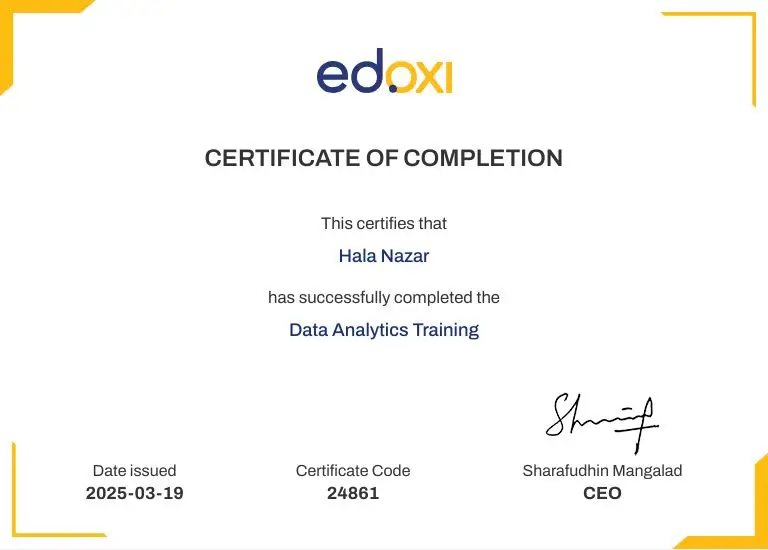
Yes. Participants receive an Animation Certification from Edoxi upon successful completion of course exercises, projects, and the final capstone submission.
Can learners attend the Animation Course online or in hybrid mode?
Yes. Edoxi offers flexible learning options, including classroom, live online, and hybrid Animation Training formats, allowing learners and working professionals to choose a convenient schedule.