
Leave your message to get our quick response
edoxi automated message icon

AWS DevOps Engineer Course

IT professional monitoring server performance and cloud operations
Edoxi’s 24-40 hour Online AWS DevOps Engineer training builds advanced skills in DevOps culture, AWS services, and infrastructure as code.​ Learn high-velocity delivery, operational strategies, and autonomous team practices. Build practical skills in AWS CloudFormation and DevOps tools through real projects like multi-tier deployments and CI/CD pipelines. Prepare for the DOP-C02 exam. Enrol now to validate your skills and lead cloud engineering roles in complex organisations.
Course Duration
40 Hours
Corporate Days
5 Days
Learners Enrolled
100+
Modules
7
star-rating-icon1
star-rating-icon2
star-rating-icon3
Course Rating
4.9
star-rating-4.9
Mode of Delivery
Online
Certification by

What Do You Learn from Edoxi's AWS DevOps Engineer Course

DevOps Best Practices on AWS
Implement methodologies for high-velocity application delivery. Develop operational strategies leveraging AWS-native services effectively.
Autonomous DevOps Team Structure
List the advantages and key responsibilities of small DevOps teams. Define clear roles that maximise efficiency in cloud-based environments.
AWS Infrastructure for DevOps Projects
Design and implement supporting infrastructure components. Create environments that facilitate seamless development and deployment workflows.
AWS Cloud9 Development Environment
Leverage AWS Cloud9 for efficient code writing capabilities. Debug applications directly in the cloud with integrated tools.
AWS CloudFormation for Environment Deployment
Deploy consistent environments using infrastructure as code. Manage resources across development, testing, and production stages.
AWS CodeCommit for Source Control
Host private Git repositories with enterprise-grade security. Scale your version control system to accommodate team expansion.

About Our Online AWS DevOps Engineer Course

Edoxi’s comprehensive 24-40 hour online AWS DevOps Engineer training cultivates expertise in DevOps culture, AWS services, and infrastructure as code for high-velocity application delivery.​ This customizable corporate training focuses on designing, implementing, and managing robust AWS environments. The AWS DevOps Engineer training aligns with industry best practices and the DOP-C02 certification exam objectives. 

Our AWS DevOps Engineer curriculum covers key areas such as DevOps best practices on AWS, autonomous team structures, and advanced deployment strategies like blue/green deployments. Participants gain proficiency in essential AWS services, including CloudFormation for infrastructure as code, CodeCommit for source control, CodeBuild for automated processing, and CodePipeline for CI/CD orchestration. The AWS DevOps Engineer training also delves into containerization with Docker, security integration within pipelines, and comprehensive monitoring using CloudWatch and X-Ray.
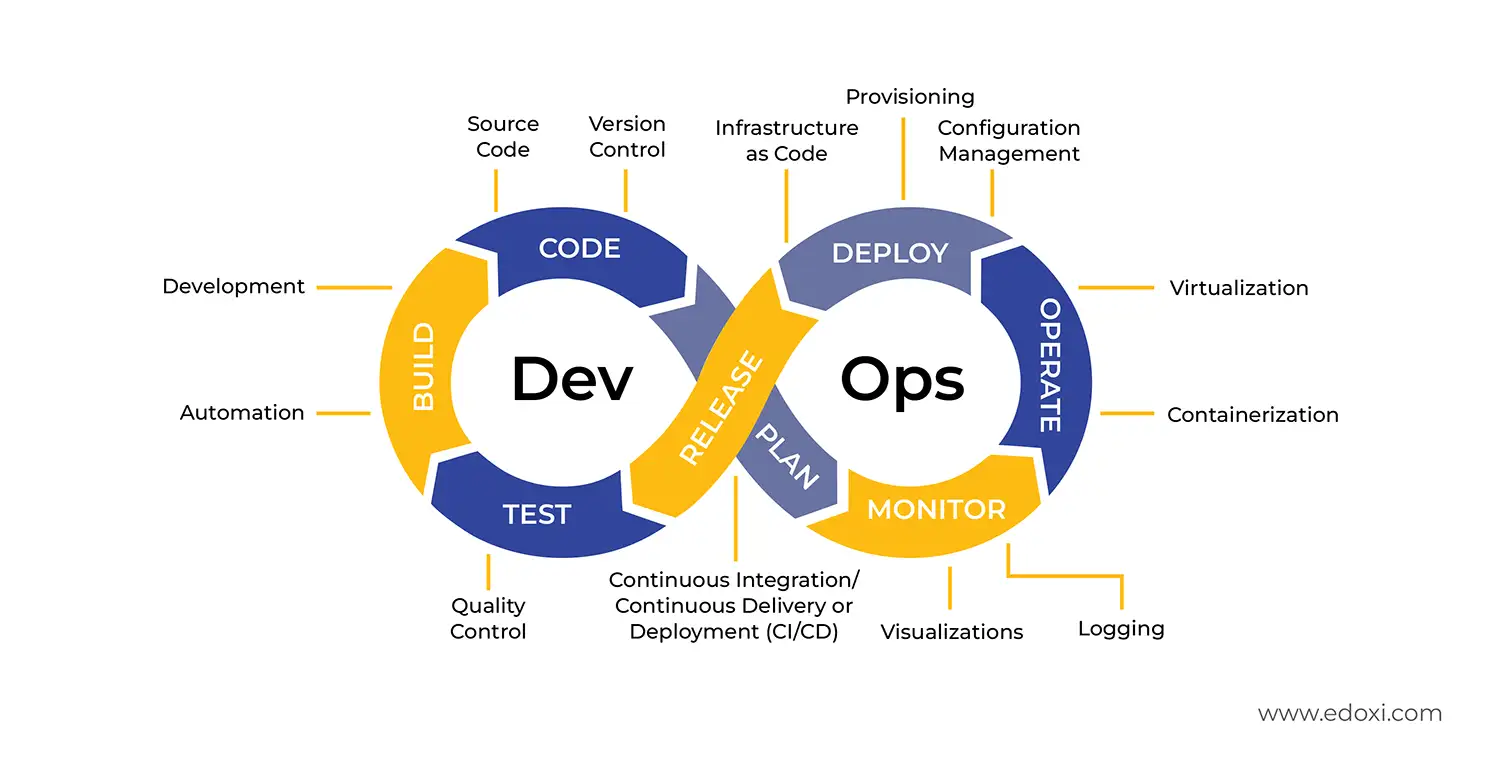
AWS Devops Engineer

The AWS DevOps Engineer course is designed for DevOps Engineers, Operations Engineers, System Administrators, Software Developers, and other IT professionals seeking to specialise in AWS DevOps. Upon successful completion, you will receive Edoxi’s AWS DevOps Engineer course certificate. This credential shows that you’re prepared for the DOP-C02 exam and have the skills needed for roles like DevOps Engineer, Site Reliability Engineer, and Cloud Infrastructure Manager.

AWS DevOps Engineer Professional Exam Details

The AWS DevOps Engineer Professional (DOP-C02) exam validates your advanced skills in provisioning, operating, and managing distributed systems on AWS. It also measures your ability to implement CI/CD pipelines, automate security and governance, and manage monitoring and logging. Below are the key exam details:

Exam Criteria Details
Exam Code DOP-C02
Exam Name AWS DevOps Engineer – Professional
Duration 180 minutes
Number of Questions 75, Multiple Choice and Multiple Response
Passing Score 750/1000
Fees USD 300 (approximately AED 1,100)
Certification Validity 3 Years
Exam Administration Authority Pearson VUE
 

Key Features of Edoxi's AWS DevOps Engineer Training

AWS Lab Environment

Access fully configured AWS labs to implement CI/CD pipelines, deploy infrastructure, and practice with CodeDeploy and CodePipeline in a real cloud environment.

Official AWS Courseware

Access comprehensive study materials, guides, and documentation directly from AWS to support the learning journey and serve as future reference materials.

Interactive Group Exercises

Participate in engaging presentations, collaborative group exercises, and instructor-led discussions that reinforce key DevOps concepts and methodologies.

Multi-Tier Infrastructure Projects

Deploy reliable infrastructure using CloudFormation and implement blue/green deployments with Elastic Beanstalk.

CI/CD Pipeline Implementation

Create and deploy applications using CodeDeploy and CodePipeline for automated workflows.

Serverless Application Development

Build serverless workflows with Step Functions and Lambda for modern cloud applications.

Who Can Join Edoxi’s Online AWS DevOps Engineer Course?

DevOps Engineers and Architects

Professionals responsible for implementing and managing CI/CD pipelines who want to leverage AWS services for DevOps practices.

Operations Engineers

IT operations staff looking to automate infrastructure provisioning and application deployment using AWS tools.

System Administrators

Sysadmins seeking to transition to cloud-based operations and implement Infrastructure as Code principles.

Software Developers

Coders interested in expanding their skills to include deployment automation and cloud service integration.

Cloud Practitioners

Individuals with basic AWS knowledge ready to specialise in DevOps methodologies and advanced AWS services.

IT Professionals

Technology workers aiming to enhance their career prospects with in-demand AWS DevOps engineering skills.

AWS DevOps Engineer Course Modules

Module 1: DevOps on AWS Introduction
  • Chapter 1.1: DevOps Culture and Principles

    • Lesson 1.1.1: DevOps Core Concepts
    • Lesson 1.1.2: Benefits of DevOps Adoption
  • Chapter 1.2: AWS DevOps Services Overview

    • Lesson 1.2.1: AWS Developer Tools Suite
    • Lesson 1.2.2: AWS Management and Governance Services
Module 2: Infrastructure as Code
  • Chapter 2.1: AWS CloudFormation

    • Lesson 2.1.1: Template Structure and Components
    • Lesson 2.1.2: Resource Creation and Management
    • Lesson 2.1.3: Parameters, Mappings, and Conditions
  • Chapter 2.2: Infrastructure Deployment Strategies

    • Lesson 2.2.1: Stack Updates and Change Sets
    • Lesson 2.2.2: Cross-Stack References
    • Lesson 2.2.3: Nested Stacks
Module 3: CI/CD Implementation
  • Chapter 3.1: Source Control with AWS CodeCommit

    • Lesson 3.1.1: Repository Setup and Management
    • Lesson 3.1.2: Branching Strategies
  • Chapter 3.2: Build Services with AWS CodeBuild

    • Lesson 3.2.1: Build Specification Files
    • Lesson 3.2.2: Build Environments and Projects
  • Chapter 3.3: Deployment Automation with AWS CodeDeploy

    • Lesson 3.3.1: Application and Deployment Group Configuration
    • Lesson 3.3.2: Deployment Strategies and Lifecycle Events
  • Chapter 3.4: Pipeline Orchestration with AWS CodePipeline

    • Lesson 3.4.1: Pipeline Structure and Stages
    • Lesson 3.4.2: Integration with AWS Services
Module 4: Containerization on AWS
  • Chapter 4.1: Docker Fundamentals

    • Lesson 4.1.1: Container Concepts
    • Lesson 4.1.2: Building and Managing Docker Images
  • Chapter 4.2: Container Orchestration

    • Lesson 4.2.1: Amazon ECS Architecture
    • Lesson 4.2.2: Amazon EKS Overview
    • Lesson 4.2.3: AWS Fargate for Serverless Containers
Module 5: Monitoring and Observability
  • Chapter 5.1: AWS CloudWatch

    • Lesson 5.1.1: Metrics, Alarms, and Dashboards
    • Lesson 5.1.2: Log Collection and Analysis
  • Chapter 5.2: Application Monitoring

    • Lesson 5.2.1: AWS X-Ray for Distributed Tracing
    • Lesson 5.2.2: Performance Monitoring and Troubleshooting
Module 6: Advanced DevOps Practices
  • Chapter 6.1: Serverless Applications

    • Lesson 6.1.1: AWS Lambda and Step Functions
    • Lesson 6.1.2: API Gateway Integration
  • Chapter 6.2: Security and Compliance in CI/CD

    • Lesson 6.2.1: Security Best Practices
    • Lesson 6.2.2: Compliance and Governance
Module 7: Certification Preparation
  • Chapter 7.1: Exam Domains and Concepts

    • Lesson 7.1.1: SDLC Automation
    • Lesson 7.1.2: Configuration Management and IaC
    • Lesson 7.1.3: Monitoring and Logging
    • Lesson 7.1.4: Policies and Standards Automation
  • Chapter 7.2: Practice Assessments

    • Lesson 7.2.1: Sample Questions and Scenarios
    • Lesson 7.2.2: Exam Strategies and Tips

Download AWS DevOps Engineer Course Brochure

Real-World Projects and Case Studies in Our Online AWS DevOps Engineer Course

​Our online AWS DevOps Engineer course blends expert-led sessions with hands-on projects based on real-world DevOps scenarios.​ Key projects include

Projects

  • Deploy a Multi-Tier Infrastructure using CloudFormation

    Create scalable infrastructure with CloudFormation templates, including networks, security groups, and application tiers for production environments.

  • Blue/Green Deployment with Elastic Beanstalk

    Implement zero-downtime deployments using Elastic Beanstalk to manage parallel environments and seamless traffic switching between versions.

  • Create and Deploy Applications using CodeDeploy and CodePipeline

    Configure automated deployment pipelines with CodeDeploy and CodePipeline to streamline application releases across development stages.

  • Create a Serverless Workflow with Step Functions and Lambda

    Build event-driven applications using Lambda functions orchestrated by Step Functions to create complex workflows without server management.

  • Implement Continuous Integration and Continuous Deployment

    Establish end-to-end automation for code integration, testing, and deployment using AWS developer tools for reliable software delivery.

AWS DevOps Engineer Course Outcome and Career Opportunities

By completing our AWS DevOps Engineer course, you will build advanced technical skills and master essential AWS DevOps tools. You will also gain the confidence to design, implement, and manage robust cloud environments. Key outcomes include

Course Outcome Image
Master DevOps best practices on AWS by learning high-velocity delivery methods, effective operational strategies, and the role of autonomous DevOps teams using AWS-native services.
Develop proficiency in Infrastructure as Code (IaC) by designing and deploying consistent multi-stage environments through AWS CloudFormation.
Build expertise in CI/CD pipeline implementation by managing source code with CodeCommit, automating builds and tests with CodeBuild, and creating deployment pipelines using CodeDeploy and CodePipeline.
Gain skill in containerization and advanced deployment by integrating Docker into CI/CD workflows and applying blue/green and canary deployment strategies for zero-downtime releases.
Achieve competence in AWS monitoring and observability by configuring CloudWatch, X-Ray, and other tools to ensure application performance, reliability, and operational visibility.
Strengthen your preparedness for the AWS DOP-C02 certification with a curriculum aligned to exam objectives, providing the knowledge and hands-on skills needed to succeed and grow in cloud engineering roles.

Job Roles After Completing the AWS DevOps Engineer Training

  • DevOps Engineer
  • Site Reliability Engineer
  • DevOps Architect
  • Cloud Infrastructure Manager
  • Cloud Solutions Architect

AWS DevOps Engineer Training Options

Online Training

  • AWS DevOps Engineer 24-40 hour online training

  • Flexible Scheduling for Professionals

  • Interactive Virtual Lab Access

  • Recorded Sessions Available

  • Real-Time Instructor Assistance

Corporate Training

  • Flexible 3-day or 5-day AWS DevOps Engineer Programs

  • Company-Specific Use Case Integration

  • Team-Based Learning Activities

  • Training delivered at a selected hotel, client premises, or Edoxi

  • Fly-Me-a-Trainer Option

Do You Want a Customised Course for AWS DevOps Engineer

Get expert assistance in getting your AWS DevOps Engineer Course customised!

How to Get an AWS DevOps Engineer Certification?

Here’s a four-step guide to becoming a AWS DevOps Engineer professional.
Do You Want to be a Certified Professional in AWS DevOps Engineer Course

Join Edoxi’s AWS DevOps Engineer Course

Why Choose Edoxi for an Online AWS DevOps Engineer Course?

Among many options available, Edoxi is the best choice. Here’s why Edoxi’s AWS DevOps Engineer training is the perfect fit for your needs

AWS Official Curriculum Delivery

Delivers AWS’s official DevOps Engineering curriculum with up-to-date, standardised content designed by AWS experts.

Hands-on Lab Experience

Provides extensive AWS labs using services like CodePipeline, CloudFormation, and ECS for practical learning.

Certification-Focused Training

Aligns fully with AWS DevOps Engineer – Professional exam - DOP-C02 - objectives and provides targeted practice questions.

Personalised Learning Environment

Offers 1:1 student-teacher interaction for individualised attention and tailored learning support.

Course Customisation

Choose between 3-day intensive or 5-day comprehensive training options to fit your needs.

Proven Corporate Training Excellence

Trusted by corporate clients across the Middle East and select African regions for Cloud training.

students-image

Edoxi is Recommended by 95% of our Students

Meet Our Mentor

Our mentors are leaders and experts in their fields. They can challenge and guide you on your road to success!

mentor-image

Manish Rajpal

Manish is a passionate Corporate Trainer, AI Consultant, and Cloud Solutions Architect. He empowers clients across the globe to build and maintain highly available, resilient, scalable, and secure solutions, now with a growing emphasis on AI-powered architectures. With over 15,000 professionals trained, Manish specialises in technologies including Amazon Web Services, Microsoft Azure, Microsoft Copilot and GitHub Copilot and increasingly, AI and Machine Learning.

Manish has led research and workshops focused on integrating AI into cloud environments, exploring use cases like intelligent automation, natural language processing, and responsible AI practices.

Locations Where Edoxi Offers AWS DevOps Engineer Course

Here are the major international locations where Edoxi offers AWS DevOps Engineer Course

FAQ

What job roles can I pursue after completing this AWS DevOps Engineer course?
Graduates can pursue roles such as DevOps Engineer, Site Reliability Engineer, Cloud Engineer, and DevOps Architect in organisations using AWS.
Can I join this AWS DevOps Engineer training course without prior AWS experience?
Yes. The 5-day course has no prerequisites and is suitable for beginners. However, the accelerated 3-day program requires prior AWS knowledge and preferably programming experience in languages like Python or Java. However, our expert trainers will support you regardless of your background.
Will this AWS DevOps Engineer course prepare me for AWS certification?
Yes, the curriculum specifically aligns with the AWS DevOps Engineer – Professional certification exam. The course covers all domains tested in the exam.
What AWS services will I learn in this AWS DevOps Engineer training course?
You'll work with CodePipeline, CodeBuild, CodeDeploy, CloudFormation, Lambda, ECS, EKS, CloudWatch, X-Ray, and other DevOps-related AWS services.
Can you customise this AWS DevOps Engineer training for our company's needs?
Yes, we offer tailored corporate training that can be adjusted to your organisation's specific AWS environment and DevOps requirements.
What makes DevOps skills valuable in today's job market?
DevOps engineers are in high demand as organisations adopt cloud technologies. These skills command premium salaries due to their impact on deployment efficiency and application reliability.