Leave your message to get our quick response
edoxi automated message icon

Prompt Engineering Course in Dubai

AI-powered digital technology interface with business professional using virtual touchscreen and data analytics display.
Edoxi’s 16-hour Prompt Engineering course in Dubai helps you develop structured AI workflow skills that create measurable workplace impact across ChatGPT, Claude, Gemini, Perplexity, and other LLMs. No coding skills required. The course is available in classroom, online and corporate training formats. Learn to develop structured prompting skills, redesign workflows, and generate measurable productivity gains. Enrol now and transform how your organisation works with AI!
Course Duration
16 Hours
Corporate Days
2 Days
Learners Enrolled
100+
Modules
11
star-rating-icon1
star-rating-icon2
star-rating-icon3
Course Rating
4.9
star-rating-4.9
Mode of Delivery
Online
Classroom
Certification by

What Do You Learn from Edoxi's Prompt Engineering Training

LLM Technology and AI Model Awareness
Gain practical understanding of how large language models work, including tokens, context windows, and why AI sometimes produces inaccurate outputs. Explore ChatGPT, Claude, Gemini, and Perplexity with confidence.
Structured Prompt Design Techniques
Craft precise, role-based, and step-by-step prompts that consistently produce high-quality AI outputs. The programme introduces zero-shot, few-shot, and chain-of-thought techniques for varied professional tasks.
Output Formatting and Tone Control
Shape AI responses using Markdown syntax, output format instructions, and persona-based prompting. Learners develop the ability to control tone, formality, and structure to match specific professional contexts.
AI Tools for Workplace Productivity
Professionals gain hands-on experience with Perplexity for research, NotebookLM for document analysis, and Gamma for presentation generation, streamlining daily work across all business functions.
AI Workflow Design and Automation Thinking
Identify repetitive tasks suitable for AI assistance and redesign workflows around structured prompting. Sessions focus on developing a practical automation mindset without requiring any coding skills whatsoever.
Responsible and Ethical AI Usage
Evaluate AI outputs critically, manage data privacy when using AI tools, and apply responsible usage principles aligned with organisational AI policies and compliance frameworks across the UAE.

About Our Prompt Engineering Course in Dubai

Prompt engineering is emerging as a core digital productivity skill comparable to spreadsheet literacy and business communication. Companies across the UAE are no longer simply experimenting with tools like ChatGPT, Claude, Gemini, and Perplexity; they are actively seeking professionals who can use AI systems productively, responsibly, and strategically. Edoxi's Prompt Engineering Course in Dubai is designed for professionals who want to move beyond casual AI usage and develop structured AI workflow skills that create measurable workplace impact.

The program focuses on practical prompt engineering, AI-assisted productivity, workflow redesign, research automation, content generation, and AI-supported decision-making across real business environments. Our training teaches transferable prompting principles that work across leading AI ecosystems. It includes hands-on exercises, multi-tool workflows, and a capstone productivity simulation. Participants learn how AI models interpret instructions, why outputs vary, how structured prompting improves response quality, and how AI can reduce repetitive work across daily operations. 

Enrol now to build practical, real-world proof of AI-driven efficiency improvements ready to implement in your organisation from day one. We also offer corporate training tailored for teams and organisations. Contact us for course fees and Prompt Engineering corporate training enquiries.

Productivity Improvements by Industry

Prompt engineering is valued across marketing, operations, HR, consulting, business analysis, customer support, administration, and entrepreneurship. Here’s how learning prompting improves productivity across different industries

Marketing & Content 30–50% faster content production; improved campaign ideation
Education 40% reduction in materials preparation time; personalised content creation
Customer Support 25–35% quicker response drafting; more consistent service quality
Business Analysis 30% faster data interpretation; improved reporting efficiency
IT & Development 20–40% reduction in documentation time; streamlined troubleshooting
Administration 25% decrease in email and communication tasks; better process documentation


Key Features of Edoxi's Prompt Engineering Training

Real-Time Prompt Testing Environment

Practise crafting and refining prompts live during sessions, with immediate instructor feedback to sharpen prompt design skills across multiple AI platforms in a structured hands-on environment.

Comprehensive Resource Materials

Participants receive PDF notes, reusable prompt templates, practice datasets, and case studies designed for continued learning and immediate application well beyond the training sessions.

Capstone Productivity Simulation

Complete a real workplace task manually and then again using AI tools, generating measurable, documented evidence of time savings and quality improvement ready to present within your organisation.

Cross-Platform Prompting Skills

The course explores prompt engineering principles that transfer across ChatGPT, Claude, Gemini, Perplexity, and other leading AI tools, ensuring skills remain relevant as the AI landscape evolves.

Workflow Redesign Exercises

Identify repetitive work tasks and systematically redesign them using AI-assisted workflows through guided group and individual exercises. Participants produce a before-and-after workflow comparison.

AI Tools Ecosystem Hands-On Sessions

Gain practical exposure to specialised AI tools, including Perplexity for research, NotebookLM for document analysis, and Gamma for presentation generation, applied to real professional scenarios.

Who Can Join Our Prompt Engineering Course?

Business Professionals and Analysts

Professionals in operations, finance, consulting, or administration seeking to reduce time spent on routine tasks and improve output quality through AI-assisted workflows.

Managers and Team Leaders

Leaders responsible for team productivity who want to identify AI integration opportunities, lead AI adoption initiatives, and implement structured prompting across their departments.

Marketing and Communications Professionals

Individuals involved in content creation, campaign planning, or communications who want to accelerate production cycles and maintain brand consistency with AI tools.

HR and Operations Professionals

HR practitioners, operations coordinators, and process owners are seeking to automate documentation, SOP creation, and routine correspondence tasks.

Educators and Trainers

Teachers, instructional designers, and corporate trainers are looking to create personalised learning materials, assessments, and training content more efficiently.

Entrepreneurs and Business Owners

Business owners and startup founders who want to leverage AI for research, reporting, content, and client communication without needing a dedicated technical team.

Prompt Engineering Course Modules

Module 1: Introduction to Generative AI in the Workplace
  • Chapter 1.1: What Is Generative AI?

    • Lesson 1.1.1: Definition and scope of generative AI
    • Lesson 1.1.2: Large language models and multimodal AI explained
  • Chapter 1.2: Real Business Use Cases Across Departments

    • Lesson 1.2.1: AI applications in marketing, HR, operations, and finance
    • Lesson 1.2.2: Productivity examples from real organisations
  • Chapter 1.3: AI Limitations and Risks

    • Lesson 1.3.1: AI hallucination, bias, and misinformation
    • Lesson 1.3.2: Data privacy concerns when using AI tools
Module 2: How AI Thinks — Practical Understanding of AI Models
  • Chapter 2.1: Tokens and Context Windows

    • Lesson 2.1.1: Simplified explanation of how AI processes text
    • Lesson 2.1.2: Managing context window limitations in practice
  • Chapter 2.2: Prompt Sensitivity and Response Variation

    • Lesson 2.2.1: Why small prompt changes produce different results
    • Lesson 2.2.2: Trust versus verification when using AI outputs
Module 3: Prompt Engineering for Professionals
  • Chapter 3.1: Basic vs Structured Prompts

    • Lesson 3.1.1: Anatomy of an effective prompt
    • Lesson 3.1.2: Clarity, specificity, and context in prompt design
  • Chapter 3.2: Advanced Prompting Techniques

    • Lesson 3.2.1: Role-based prompting: “Act as...”
    • Lesson 3.2.2: Step-by-step and chain-of-thought prompting
    • Lesson 3.2.3: Zero-shot and few-shot learning approaches
  • Chapter 3.3: Output Formatting and Reusable Templates

    • Lesson 3.3.1: Structuring outputs: tables, bullet lists, and JSON formats
    • Lesson 3.3.2: Building reusable prompt templates for recurring work tasks
Module 4: AI Tools and Ecosystem
  • Chapter 4.1: Content Creation and Reasoning Tools

    • Lesson 4.1.1: ChatGPT and Claude: strengths and use cases
    • Lesson 4.1.2: Selecting the right tool for each task type
  • Chapter 4.2: Research and Document Analysis Tools

    • Lesson 4.2.1: Perplexity for AI-powered research tasks
    • Lesson 4.2.2: NotebookLM for document analysis and summarisation
  • Chapter 4.3: Presentation and Visual AI Tools

    • Lesson 4.3.1: Gamma and SlidesAI for AI-generated presentations
    • Lesson 4.3.2: Practical exercise: generating a presentation deck
Module 5: AI for Daily Work Tasks
  • Chapter 5.1: Written Communication and Reporting

    • Lesson 5.1.1: Professional email writing with AI assistance
    • Lesson 5.1.2: Report generation and executive summary drafting
  • Chapter 5.2: Research, Documentation, and SOPs

    • Lesson 5.2.1: Structuring research tasks using AI tools
    • Lesson 5.2.2: Developing SOPs and process documentation with AI
Module 6: AI Workflow Design and Automation Thinking
  • Chapter 6.1: Identifying Tasks Suitable for AI Support

    • Lesson 6.1.1: Mapping repetitive tasks in your weekly workflow
    • Lesson 6.1.2: Prioritising AI integration opportunities by impact
  • Chapter 6.2: Designing AI-Assisted Workflows

    • Lesson 6.2.1: Step-by-step workflow redesign strategies
    • Lesson 6.2.2: Conceptual overview of automation tools and API thinking
Module 7: Responsible AI Usage in Organisations
  • Chapter 7.1: Data Privacy and Ethical Considerations

    • Lesson 7.1.1: What information should never enter AI tools
    • Lesson 7.1.2: Organisational AI policies and compliance frameworks
  • Chapter 7.2: Evaluating and Verifying AI Outputs

    • Lesson 7.2.1: Techniques for fact-checking AI-generated content
    • Lesson 7.2.2: Bias detection and misinformation awareness
Module 8: Capstone Project — Real Workplace Simulation
  • Chapter 8.1: Baseline Task Completion (Manual)

    • Lesson 8.1.1: Complete a defined workplace task without AI assistance
    • Lesson 8.1.2: Record time taken and quality of output
  • Chapter 8.2: AI-Assisted Task Completion

    • Lesson 8.2.1: Repeat the same task using structured prompting and AI tools
    • Lesson 8.2.2: Compare outcomes: time, quality, and efficiency metrics
Module 9: AI for Content and Social Media
  • Chapter 9.1: Content Generation Workflows

    • Lesson 9.1.1: LinkedIn posts, blog articles, and marketing copy generation
    • Lesson 9.1.2: Short-form video script writing with AI
  • Chapter 9.2: Content Repurposing Strategies

    • Lesson 9.2.1: Converting long-form content into multiple formats
    • Lesson 9.2.2: Maintaining tone and brand consistency across outputs
Module 10: AI for Data and Excel Work
  • Chapter 10.1: Excel Assistance Through Prompting

    • Lesson 10.1.1: Generating and explaining formulas (VLOOKUP, SUMIF, etc.)
    • Lesson 10.1.2: Step-by-step instructions for pivot tables and charts
  • Chapter 10.2: Data Summarisation and Insight Extraction

    • Lesson 10.2.1: Using AI to clean, summarise, and interpret datasets
    • Lesson 10.2.2: Generating actionable insights through strategic prompting
Module 11: Building Simple AI Automations
  • Chapter 11.1: Introduction to Automation Concepts

    • Lesson 11.1.1: Overview of automation tools and their workplace applications
    • Lesson 11.1.2: API concepts explained for non-technical professionals
  • Chapter 11.2: Internal Task Automation Examples

    • Lesson 11.2.1: Basic workflow automation use cases
    • Lesson 11.2.2: Planning your first AI automation project

Download Prompt Engineering Course Brochure

Real-World Projects and Practical Activities in the Prompt Engineering Course

Every module concludes with an applied activity. The program is structured so participants practise, iterate, and build confidence with each new concept. Participants use multiple AI platforms, guided workflow redesign exercises, and tool-specific hands-on tasks using Perplexity, NotebookLM, Gamma, and ChatGPT. Real-world projects and practical activities include

Scenario-Based Prompt Development

Write and test structured prompts for professional scenarios such as email drafting, report generation, and customer support responses. Analyse output quality and iterate using role-based techniques.

Advanced Complex Task Prompting

Participants practise crafting sophisticated multi-step prompts for analytical reports, code documentation, and structured brainstorming sessions across different AI tools.

System Prompts and Markdown Formatting

Learners develop reusable system prompts and implement Markdown formatting to control AI response structure, tone, and presentation style for recurring workplace tasks.

AI Workflow Redesign Exercise

The course explores real weekly workflows, identifies the highest-impact tasks for AI integration, and sessions focus on redesigning these workflows with before-and-after peer comparison.

Multi-Tool Research and Documentation Task

An end-to-end task combining Perplexity for research, NotebookLM for document analysis, and a language model for synthesis, mirroring real professional research workflows.

Excel Data Analysis Through Prompting

Professionals gain experience generating and explaining complex Excel formulas, creating pivot table instructions, and developing data analysis frameworks through iterative prompting.

Real Workplace Productivity Simulation

Complete a defined workplace task manually, then repeat it using AI tools and structured prompts. Compare outcomes over time, in terms of quality and efficiency, generating measurable, documented evidence of productivity improvement that participants can present within their organisation.

Prompt Engineering Course Outcomes and Career Opportunities in Dubai

The Prompt Engineering program is designed around concrete, operational outcomes rather than theoretical competencies. These are the improvements participants deliver back to their organisations.

Course Outcome Image
Reduce content creation and documentation time through AI-powered automation
Create high-quality first drafts with consistent tone and brand messaging
Streamline research, reporting, and information synthesis workflows
Optimise team productivity by redesigning workflows and reducing repetitive tasks
Develop reusable AI prompt libraries and support AI adoption initiatives
Apply AI responsibly while maintaining data privacy and workplace compliance

Job Roles to Pursue After Completing the Prompt Engineering Course

  • Prompt Engineer
  • AI Engineer
  • Generative AI Engineer
  • LLM Specialist
  • Conversational AI Developer
  • AI Application Specialist
  • LLMOps Engineer
  • AI Product Analyst
  • AI Solutions Consultant
  • AI Content Strategist

Companies Hiring Prompt Engineers in Dubai

  • Joveo
  • Sure Global
  • NearSync Technologies
  • Net0
  • Digital Bricks
  • Division50 (D50 AI)
  • BlackStone eIT
  • Toptal
  • AcquX
  • Emirates Group

Prompt Engineering Options

Classroom Training

  • 16-hour Prompt engineering Course in Dubai

  • Live Prompt Testing with Immediate Instructor Feedback

  • Collaborative Group Workflow Redesign Exercises

  • Hands-On Multi-Tool Sessions in a Structured Lab Environment

  • Small Batch Format for Focused Interaction

Live Online Training

  • 16-hour online Prompt engineering Training

  • Interactive Virtual Sessions with Live AI Demonstrations

  • Flexible Scheduling for Working Professionals

  • Recorded Sessions Available for Review and Revision

  • One-on-One or Small Group Online Options

Corporate Training

  • Customised Industry-Specific Prompt Engineering Use Cases

  • Team-Based Workflow Redesign and AI Integration Projects

  • Flexible On-Site or Virtual Delivery Options

  • Fly-Me-a-Trainer Option Available

  • Tailored Programme Duration: 1–2 Days Based on Scope

Do You Want a Customised Training for Prompt Engineering?

Get expert assistance in getting you Prompt Engineering Course Customised!

Learn Now Pay Later with tabby-icon

Pay your course fees in four easy installments with Tabby.

How to get a Prompt Engineering Certification in Dubai?

Here’s a four-step guide to becoming a certified Prompt Engineering professional.
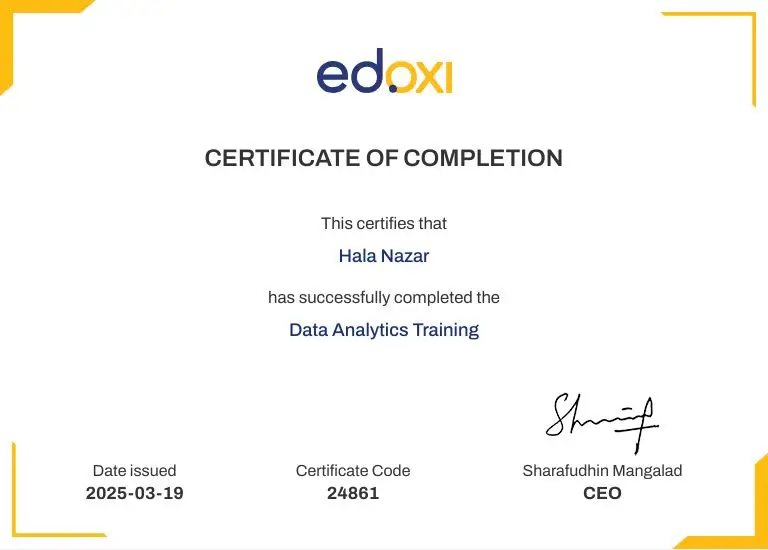
Do You Want to be a Certified Professional in Prompt Engineering?

Join Edoxi’s Prompt Engineering Course

Why Choose Edoxi for Prompt Engineering Training in Dubai?

Edoxi Training Institute is recognised as one of the leading AI training providers in Dubai. Here is why professionals across the UAE choose Edoxi for prompt engineering training.

Practical, Outcome-Focused Curriculum

Every module is built around measurable workplace outcomes rather than theoretical AI concepts. The capstone simulation generates direct evidence of productivity gains, ensuring participants demonstrate their new skills immediately.

Multi-Tool Training Across Leading AI Platforms

Our program covers ChatGPT, Claude, Gemini, Perplexity, NotebookLM, and Gamma. Participants develop transferable prompt engineering skills that remain relevant as the AI landscape continues to evolve.

Industry-Experienced Trainer with Applied AI Expertise

Our trainer brings hands-on experience across applied AI, automation, and workflow integration. Participants benefit from real implementation examples drawn from enterprise and SME environments.

Flexible Delivery for Busy Professionals

Training is available seven days a week, from 09

Ongoing Support and Reusable Learning Resources

Participants receive a resource pack including prompt templates, PDF notes, and practice datasets. Post-course guidance is available to support continued application of prompt engineering skills in real workplace contexts.

students-image

Edoxi is Recommended by 95% of our Students

Meet Our Mentor

Our mentors are leaders and experts in their fields. They can challenge and guide you on your road to success!

mentor-image

Tausifali Saiyed

Tausifali Sayed is an experienced full-stack developer and corporate trainer with over a decade of expertise in the field. He specialises in both the education and development of cutting-edge mobile and web applications. He is proficient in technologies including Core Java, Advanced Java, Android Mobile applications, and Cross-Platform Applications. Tausifali is adept at delivering comprehensive training in full-stack Web App Development, utilising a variety of frameworks and languages such as Java, PHP, MERN, and Python.

Tausifali holds a Master of Science (M.Sc.) in Computer Science from the University of Greenwich in London and a Bachelor of Engineering in Computer Engineering from Sardar Patel University in Vallabh Vidyanagar, India. Tausifali possesses a diverse skill set that includes expertise in Python, Flutter Framework, Java, Android, Spring MVC, PHP, JSON, RESTful Web Services, Node, AngularJS, ReactJS, HTML, CSS, JavaScript, jQuery, and C/C++. Fluent in English and Hindi, Tausifali is a versatile professional capable of delivering high-quality training and development in the IT industry.

FAQ

Is Prompt Engineering a valuable career skill in 2026?
Prompt engineering is rapidly emerging as a core professional competency across all industries, comparable to spreadsheet literacy or business writing. Organisations are actively seeking professionals who can use AI systems productively, and those with structured AI workflow skills command increasing value in the job market. As AI tools become embedded in everyday operations, this skill set is expected to become a baseline expectation rather than a differentiator.
Which industries benefit most from prompt engineering skills?
Prompt engineering creates measurable impact across marketing and content, HR and recruitment, business operations, customer support, data analysis, education, IT and development, and administration. Any role that involves written communication, research, documentation, or reporting stands to benefit substantially from structured AI workflow skills.
Can non-technical professionals learn prompt engineering effectively?
Absolutely. The course requires only basic English writing skills; no programming knowledge or technical background is necessary. The programme is specifically designed for non-technical professionals who want to apply AI tools strategically within their existing roles. Most participants see meaningful productivity improvements within the first few sessions.
Will Prompt Engineering skills remain relevant as AI evolves?
The course moves beyond any single tool, equipping participants with transferable prompting principles that work across all leading AI platforms. As new models and tools emerge, the underlying skill of communicating effectively with AI systems remains consistent. Edoxi also updates course content as the AI ecosystem evolves, ensuring participants gain principles rather than tool-specific knowledge that quickly becomes outdated.
How is Prompt Engineering used in Business operations day-to-day?
In practice, prompt engineering helps professionals automate recurring reports, generate consistent documentation, accelerate research workflows, improve email and communications drafting, create structured summaries and SOPs, and redesign team workflows to reduce time spent on low-value repetitive tasks. The capstone simulation in this programme produces documented evidence of these gains using real workplace tasks.
What Skills do I need for the course?
Only basic English writing skills are required. The course is fully accessible to non-technical professionals from any industry or function. No programming knowledge or prior AI experience is necessary.
Which AI tools does the course cover?
The programme covers ChatGPT and Claude for content and reasoning tasks, Gemini and Perplexity for research and analysis, NotebookLM for document analysis and summarisation, and Gamma for AI-generated presentations. Prompting principles are taught to be transferable across all major AI platforms.
Is the course relevant if my organisation has not yet adopted AI tools?
Yes, many participants use the capstone project to generate documented evidence of productivity improvements that support internal AI adoption decisions. The programme equips professionals to evaluate, introduce, and build the business case for AI tools within their workplace, making it particularly valuable for early AI adopters and AI champions.
Do you offer corporate training for teams?
Yes. Edoxi provides fully customised corporate prompt engineering training tailored to specific industries, internal tools, and organisational workflows. Delivery options include on-site classroom sessions, virtual instructor-led training, and a fly-me-a-trainer arrangement for international teams. Corporate programmes are delivered in 1–2 days based on scope and team size.
How quickly will I see results after completing the course?
Most participants apply prompt engineering skills immediately after each session. Full working proficiency in daily workflows typically develops within two to three weeks of regular practice after completing the 16-hour programme. The capstone simulation ensures learners leave with both the skills and documented evidence of AI-driven productivity improvement, ready to present within their organisation.
What is the average salary for a Prompt engineer in Dubai?
Prompt engineering is a relatively new professional designation in the UAE, and salaries vary significantly based on role title, industry, and level of AI integration responsibility. 
 
Role Monthly Salary (AED) Annual Salary (AED)
AI-enabled Business Professional 8,000 – 14,000 96,000 – 168,000
Prompt Engineer (Dedicated Role) 15,000 – 25,000 180,000 – 300,000
AI Workflow Specialist 12,000 – 20,000 144,000 – 240,000
AI Content Strategist 10,000 – 18,000 120,000 – 216,000
Senior AI Integration Consultant 22,000 – 40,000+ 264,000 – 480,000+
Does learning Prompt Engineering increase my salary in the UAE
Yes, but the salary impact is typically indirect rather than through a new job title. Professionals who demonstrate AI workflow skills are increasingly valued for their ability to reduce costs, accelerate output, and lead AI adoption within their teams. In the UAE's competitive job market, candidates who can show documented evidence of productivity improvement using AI  such as the capstone simulation in this course, stand out significantly from peers applying for the same roles. 
What job can I get after learning prompt engineering in Dubai?
Prompt engineering skills enhance your value across a wide range of existing roles and open doors to emerging AI-specific positions. Jobs that directly benefit from or increasingly require prompt engineering proficiency in Dubai include
 
  • AI Content Strategist and Content Operations Manager
  • AI Workflow Specialist and Productivity Consultant
  • Business Analyst with AI Integration Responsibilities
  • Marketing Automation Specialist
  • Digital Transformation Consultant
  • HR Technology Specialist and L&D Designer
  • Operations Manager with AI Productivity Focus
  • Freelance AI Consultant and Trainer
Is Prompt Engineering a long-term career or just a short-term trend?
Prompt engineering as a standalone job title may evolve as AI interfaces become more intuitive. However, the underlying skill, the ability to communicate effectively with AI systems, design reliable workflows, and integrate AI into business operations, is becoming a permanent core competency across all professional roles, particularly in the UAE's rapidly digitising economy.