
Leave your message to get our quick response
edoxi automated message icon

Container Orchestration with Docker Course in Dubai

A professional Docker container orchestration concept displayed as a holographic cargo ship above a laptop.
Edoxi’s 5-Day Container Orchestration with Docker Training Course in Dubai equips you with practical Docker and Kubernetes skills to manage and scale modern applications. Through our expert-led Docker training, you gain hands-on experience in container orchestration, deployment, and automation. Strengthen your IT team’s cloud-native capabilities and earn a recognised Docker certification. Enrol today to advance your career!
Course Duration
35 Hours
Corporate Days
5 Days
Learners Enrolled
50+
Modules
12
star-rating-icon1
star-rating-icon2
star-rating-icon3
Course Rating
4.9
star-rating-4.9
Mode of Delivery
Online
Classroom
Certification by

What Do You Learn from Edoxi's Container Orchestration with Docker Training

Docker Fundamentals & Administration
You learn to manage the complete container lifecycle and perform runtime operations. You also learn to create standardised environments that maintain consistency across development and production systems.
Container Orchestration Concepts & Tools
You learn to deploy and manage applications at scale using Docker Swarm and Kubernetes clusters. You also learn how to enhance service reliability and reduce operational complexity in multi-container environments.
Operational Best Practices
You learn to implement efficient workflows for container deployment and management. You also learn to optimise resource allocation and system configuration to achieve high performance and stability.
Image Management
You learn to build standardised base images and create efficient Dockerfiles for your applications. You also learn to establish secure registry practices to manage and distribute container images across your organisation.
Security
You learn to apply RBAC, network policies, and vulnerability scanning for container workloads. You also learn to secure sensitive data through secrets management and safe configuration techniques.
Troubleshooting
You learn to diagnose and fix common container and orchestration issues quickly. You also learn to implement logging and monitoring tools that help identify and resolve problems in real-time.
Backup & Disaster Recovery
You learn to design resilient storage strategies that ensure data persistence in containers. You also learn how to create automated backup routines and recovery plans to maintain business continuity.
CI/CD Integration
You learn to build automated deployment pipelines with integrated testing for your containerised applications. You also learn to implement zero-downtime deployment methods that support continuous service delivery.

About Our Container Orchestration with Docker Course in Dubai

Edoxi’s 5-day Container Orchestration with Docker Course in Dubai is designed to help you master containerisation, orchestration, and cloud-native deployment in modern IT environments. Whether you are a developer, system administrator, or DevOps professional, this Container Orchestration with Docker training equips you with the practical skills to build, deploy, and manage applications efficiently using Docker and Kubernetes. Through a blend of expert-led sessions and real-world projects, you learn how to streamline workflows, improve scalability, and enhance collaboration across your teams.

During this comprehensive Container Orchestration with Docker training in Dubai, you explore every aspect of container technology, from the basics of creating and managing containers to advanced topics like Docker Compose, Docker Swarm, and Kubernetes orchestration. You gain hands-on experience in automating builds, integrating with CI/CD pipelines, and deploying Dockerised applications on cloud platforms such as AWS, Azure, and Google Cloud. Our approach ensures you not only understand Docker’s architecture but also know how to apply it effectively in enterprise environments.

One of the major highlights of Edoxi’s Container Orchestration with Docker training course is the strong focus on practical implementation. You work through guided exercises, interactive simulations, and real-world deployment scenarios to build confidence in container management. You also gain insights into optimising infrastructure usage, improving system reliability, and applying best practices in microservices architecture. This makes your learning directly applicable to your current or future DevOps roles.

By completing Edoxi’s Docker certification course in Dubai, you gain a globally recognised skill set that accelerates your career growth. You also prepare for certifications such as the Docker Certified Associate (DCA), strengthening your credibility in cloud-native and DevOps domains. Whether you aim to advance your career or support your organisation’s digital transformation, this course gives you the expertise to lead modern application delivery efficiently and securely.

Key Features of Edoxi's Container Orchestration with Docker Training

Enterprise-Ready Training Environment

You have access to our fully configured Docker and Kubernetes environments that replicate real-world infrastructure challenges. You can practise in settings designed to match enterprise-level deployment scenarios.

Customised Learning Resources

You receive tailored lab manuals, YAML templates, and documentation designed to match your organisation’s technology stack. You gain references that make applying what you learn easier and more effective.

Collaborative Orchestration Exercises

You can take part in team-based orchestration challenges that mirror real production environments. You learn to solve deployment issues together and improve coordination within your technical teams.

Cross-Functional Integration Skills

You learn integration methods that connect development, operations, and security teams seamlessly. You learn to build collaboration strategies that improve workflow efficiency and delivery speed.

Infrastructure-as-Code (IaC) Practices

You learn to manage containers using declarative configurations and version-controlled definitions. You learn to maintain consistency and control over infrastructure with modern automation tools.

Enterprise CI/CD Pipeline Development

You learn to design and implement end-to-end continuous integration and deployment pipelines. You can create release processes that support faster, more reliable software delivery in your organisation.

Who Can Join Our Container Orchestration with Docker Course in Dubai?

DevOps & Cloud Engineering Teams

If you are managing infrastructure and deployment pipelines across your organisation, you can gain advanced containerisation and orchestration skills to streamline operations.

Development Team Leaders

If you are leading engineering teams, you can learn to create standardised environments that ensure consistent and reliable application delivery across multiple stages.

System Administration Groups

If you are part of an operations team, you can learn techniques to improve resource utilisation, optimise performance, and scale applications efficiently.

IT Architecture Teams

If you are designing your organisation’s technical infrastructure, you can gain the expertise to integrate container-based solutions into modern architectural strategies.

Release Management Staff

If you are responsible for software deployment, you can learn to implement efficient, automated, and reliable delivery pipelines using Docker and Kubernetes.

Technical Project Leaders

If you are coordinating cross-functional teams, you can learn to align containerisation strategies with your organisation’s key business and operational goals.

Container Orchestration with Docker Course Modules

Module 1: Installation of Docker
  • Chapter 1.1: Introduction to Docker

    • Lesson 1.1.1: Overview and history of Docker
    • Lesson 1.1.2: Benefits and use cases of containerisation
  • Chapter 1.2: Docker Architecture

    • Lesson 1.2.1: High-level architecture overview
    • Lesson 1.2.2: Interaction between components
  • Chapter 1.3: Docker Components

    • Lesson 1.3.1: Docker Client
    • Lesson 1.3.2: Docker Host
    • Lesson 1.3.3: Docker Registry
  • Chapter 1.4: Installation of Docker

    • Lesson 1.4.1: System requirements for Docker
    • Lesson 1.4.2: Installing Docker on Linux
    • Lesson 1.4.3: Installing Docker on Windows and macOS
Module 2: Docker Client Operations
  • Chapter 2.1: Running a Container

    • Lesson 2.1.1: Using docker run command
    • Lesson 2.1.2: Interactive vs detached mode
  • Chapter 2.2: Container Lifecycle

    • Lesson 2.2.1: Creating, starting, stopping, and removing containers
    • Lesson 2.2.2: Restart policies
  • Chapter 2.3: Managing Containers

    • Lesson 2.3.1: Listing and inspecting containers
    • Lesson 2.3.2: Renaming and exporting containers
  • Chapter 2.4: Executing Commands in Running Containers

    • Lesson 2.4.1: Using docker exec and docker attach
    • Lesson 2.4.2: Best practices for command execution
Module 3: Building Custom Images and Docker Registry
  • Chapter 3.1: Creating Docker Images Using Docker Commit

    • Lesson 3.1.1: Modifying container state into an image
    • Lesson 3.1.2: Image naming and versioning
  • Chapter 3.2: Building a Dockerfile

    • Lesson 3.2.1: Dockerfile syntax and instructions
    • Lesson 3.2.2: Building images from Dockerfile
  • Chapter 3.3: Tagging an Image

    • Lesson 3.3.1: Understanding tags and versions
    • Lesson 3.3.2: Tagging images using docker tag
  • Chapter 3.4: Pull and Push Images

    • Lesson 3.4.1: Pulling images from Docker Hub
    • Lesson 3.4.2: Pushing images to a registry
  • Chapter 3.5: Creating Private Registries

    • Lesson 3.5.1: Setting up a private registry
    • Lesson 3.5.2: Configuring authentication
Module 4: Container Deep Dive
  • Chapter 4.1: Cgroups

    • Lesson 4.1.1: Introduction to control groups
    • Lesson 4.1.2: Managing CPU and memory usage
  • Chapter 4.2: Namespaces

    • Lesson 4.2.1: Process isolation with namespaces
    • Lesson 4.2.2: Types of namespaces in Docker
  • Chapter 4.3: Container Resource Limits

    • Lesson 4.3.1: Setting resource limits
    • Lesson 4.3.2: Best practices for resource management
Module 5: Storage and Container Networking
  • Chapter 5.1: Storage Overview

    • Lesson 5.1.1: Types of Docker storage
    • Lesson 5.1.2: Use cases for persistent storage
  • Chapter 5.2: Creating and Managing Volumes

    • Lesson 5.2.1: Creating named volumes
    • Lesson 5.2.2: Volume lifecycle management
  • Chapter 5.3: Using Bind Mounts

    • Lesson 5.3.1: Mounting host directories
    • Lesson 5.3.2: Use cases and security considerations
  • Chapter 5.4: Using tmpfs

    • Lesson 5.4.1: In-memory storage with tmpfs
    • Lesson 5.4.2: Benefits and limitations
  • Chapter 5.5: Overview of Container Networking

    • Lesson 5.5.1: Networking modes in Docker
    • Lesson 5.5.2: Default bridge network
  • Chapter 5.6: Managing Network Bridges

    • Lesson 5.6.1: Creating custom bridge networks
    • Lesson 5.6.2: Connecting and disconnecting containers
Module 6: Docker Compose
  • Chapter 6.1: Understand YAML

    • Lesson 6.1.1: YAML syntax basics
    • Lesson 6.1.2: Key-value pairs and indentation
  • Chapter 6.2: Create Docker Compose Files

    • Lesson 6.2.1: Defining services and networks
    • Lesson 6.2.2: Environment variables in Compose
  • Chapter 6.3: Deploying and Configuring Applications

    • Lesson 6.3.1: Starting and stopping multi-container applications
    • Lesson 6.3.2: Updating and scaling services
  • Chapter 6.4: Build Images

    • Lesson 6.4.1: Integrating Dockerfile builds in Compose
    • Lesson 6.4.2: Using build context
Module 7: Docker Swarm
  • Chapter 7.1: Container Orchestration

    • Lesson 7.1.1: Overview of orchestration tools
    • Lesson 7.1.2: Swarm mode vs Kubernetes
  • Chapter 7.2: Creating Swarm Cluster

    • Lesson 7.2.1: Initialising swarm mode
    • Lesson 7.2.2: Adding worker and manager nodes
  • Chapter 7.3: Manage Nodes in Swarm Node Cluster

    • Lesson 7.3.1: Viewing node status
    • Lesson 7.3.2: Promoting and demoting nodes
  • Chapter 7.4: Manage Services

    • Lesson 7.4.1: Creating and scaling services
    • Lesson 7.4.2: Updating and rolling back services
  • Chapter 7.5: Secrets

    • Lesson 7.5.1: Creating and managing secrets
    • Lesson 7.5.2: Securely using secrets in services
  • Chapter 7.6: Rolling Service Updates

    • Lesson 7.6.1: Configuring rolling updates
    • Lesson 7.6.2: Monitoring update progress
  • Chapter 7.7: Monitoring

    • Lesson 7.7.1: Monitoring Swarm with Docker CLI
    • Lesson 7.7.2: Integrating external monitoring tools
  • Chapter 7.8: Scaling

    • Lesson 7.8.1: Horizontal scaling strategies
    • Lesson 7.8.2: Scaling services in Swarm
Module 8: Core Concepts of Kubernetes
  • Chapter 8.1: Understand the Kubernetes Cluster Architecture

    • Lesson 8.1.1: Master components overview
    • Lesson 8.1.2: Node components overview
  • Chapter 8.2: Master/Node

    • Lesson 8.2.1: Roles and responsibilities
    • Lesson 8.2.2: Communication between master and nodes
  • Chapter 8.3: Kubectl

    • Lesson 8.3.1: Installing and configuring kubectl
    • Lesson 8.3.2: Common kubectl commands
  • Chapter 8.4: Kubelet

    • Lesson 8.4.1: Role of kubelet in node management
    • Lesson 8.4.2: Monitoring kubelet logs
  • Chapter 8.5: Kube-Proxy

    • Lesson 8.5.1: Networking responsibilities
    • Lesson 8.5.2: Load balancing in Kubernetes
  • Chapter 8.6: Etcd

    • Lesson 8.6.1: Overview of etcd key-value store
    • Lesson 8.6.2: Backup and restore etcd data
  • Chapter 8.7: Controllers

    • Lesson 8.7.1: Role of controllers in Kubernetes
    • Lesson 8.7.2: Types of controllers
Module 9: Installation of Kubernetes Cluster
  • Chapter 9.1: Design a Kubernetes Cluster

    • Lesson 9.1.1: Capacity planning
    • Lesson 9.1.2: Choosing deployment methods
  • Chapter 9.2: Install Kubernetes Masters and Nodes

    • Lesson 9.2.1: Installing control plane components
    • Lesson 9.2.2: Installing worker nodes
    • Lesson 9.2.3: Using TLS bootstrapping
  • Chapter 9.3: Configure Network Solution

    • Lesson 9.3.1: Choosing a CNI plugin
    • Lesson 9.3.2: Configuring network policies
  • Chapter 9.4: Analyse End-to-End Test Results

    • Lesson 9.4.1: Running conformance tests
    • Lesson 9.4.2: Troubleshooting failed tests
Module 10: Using Kubernetes Features
  • Chapter 10.1: Kubectl

    • Lesson 10.1.1: Advanced kubectl commands
    • Lesson 10.1.2: Kubectl plugins
  • Chapter 10.2: Understand YAML

    • Lesson 10.2.1: Writing Kubernetes manifests
    • Lesson 10.2.2: Organising YAML files
  • Chapter 10.3: Creating and Managing Pods

    • Lesson 10.3.1: Pod lifecycle and management
    • Lesson 10.3.2: Multi-container pods
  • Chapter 10.4: Managing Labels

    • Lesson 10.4.1: Creating and using labels
    • Lesson 10.4.2: Label selectors in deployments
  • Chapter 10.5: Managing Services

    • Lesson 10.5.1: Service types: ClusterIP, NodePort, LoadBalancer
    • Lesson 10.5.2: Service discovery
  • Chapter 10.6: Managing Replica Set & Replication Controller

    • Lesson 10.6.1: Difference between ReplicaSet and ReplicationController
    • Lesson 10.6.2: Scaling and updating replicas
  • Chapter 10.7: Resource Quota

    • Lesson 10.7.1: Setting resource quotas in namespaces
    • Lesson 10.7.2: Monitoring quota usage
Module 11: Networking in Kubernetes
  • Chapter 11.1: Kubernetes Networking

    • Lesson 11.1.1: Networking model and requirements
    • Lesson 11.1.2: Pod-to-pod communication
  • Chapter 11.2: Understand CNI

    • Lesson 11.2.1: CNI architecture
    • Lesson 11.2.2: Popular CNI plugins
  • Chapter 11.3: Understand Pod Networking Concepts

    • Lesson 11.3.1: IP addressing in Kubernetes
    • Lesson 11.3.2: DNS resolution in pods
  • Chapter 11.4: Configure DNS

    • Lesson 11.4.1: CoreDNS configuration
    • Lesson 11.4.2: Custom DNS entries
  • Chapter 11.5: Configure and Manage Ingress Rule

    • Lesson 11.5.1: Creating ingress resources
    • Lesson 11.5.2: Configuring TLS for ingress
  • Chapter 11.6: Namespace

    • Lesson 11.6.1: Creating and managing namespaces
    • Lesson 11.6.2: Resource isolation with namespaces
Module 12: Security in Kubernetes
  • Chapter 12.1: Managing RBAC

    • Lesson 12.1.1: Understanding roles and role bindings
    • Lesson 12.1.2: Cluster roles and cluster role bindings
  • Chapter 12.2: Security Context

    • Lesson 12.2.1: Defining security context in pods and containers
    • Lesson 12.2.2: Applying least privilege principles
  • Chapter 12.3: Secrets

    • Lesson 12.3.1: Creating and using secrets
    • Lesson 12.3.2: Encrypting secrets at rest
  • Chapter 12.4: Work with Image Securely

    • Lesson 12.4.1: Scanning images for vulnerabilities
    • Lesson 12.4.2: Using signed images
  • Chapter 12.5: Configure Network Policies

    • Lesson 12.5.1: Creating network policies
    • Lesson 12.5.2: Testing and validating network policies

Download Container Orchestration with Docker Course Brochure

Lab Activities Involved in Our Container Orchestration with Docker Training in Dubai

Our Docker training in Dubai gives you hands-on experience with real-world containerisation challenges. Each lab is designed to strengthen your practical understanding and help you apply what you learn directly to your organisation’s infrastructure. Major lab activities include:

Building Your First Docker Image from a Dockerfile

In this lab session, you learn to create custom application images using multi-stage builds that enhance security, reduce image size, and boost deployment efficiency.

Managing Containers – Start, Stop, Restart, and Remove

In this session, you explore container lifecycle operations and automation techniques to maintain consistent environments across your development teams.

Docker Networking – Bridge, Host, and Overlay Modes

In this lab session, you configure different Docker network models, ensuring effective service communication and isolation based on your application needs.

Scanning Images for Vulnerabilities

During this lab session, you integrate security scanning into your image management workflow to detect and fix vulnerabilities before deployment.

Deploying Services in Docker Swarm

In this session, you create fault-tolerant service definitions with replicas, constraints, and update rules for stable and scalable production environments.

Configuring Overlay Networks in Swarm

In this lab session, you establish secure, multi-host communication channels for containerised services using encrypted and isolated overlay networks.

Installing Kubernetes with Minikube or Kind

In this session, you learn to set up lightweight Kubernetes clusters for testing and development that replicate production configurations and operations.

Deploying Your First Pod and Service

In this session, you create Kubernetes manifests for applications, defining resources, services, and deployments that run efficiently in container environments.

Logging and Monitoring Containers

In this lab session, you use tools such as Prometheus and Grafana to capture logs, track metrics, and gain insights into container performance and system health.

CI/CD Pipeline with Docker in GitHub Actions or GitLab CI

During this lab session, you build automated pipelines that test, build, and deploy containerised applications securely and consistently across your environments.

Container Orchestration with Docker Course Outcome and Career Opportunities in Dubai

By completing our Container Orchestration with Docker Course in Dubai, you gain the technical depth and practical experience needed to manage modern application deployments confidently. This course helps you strengthen your DevOps capabilities and empowers you to deliver scalable, secure, and efficient solutions in real-world environments.

Course Outcome Image
You learn to deploy, manage, and scale containerised applications efficiently using Docker and Kubernetes.
You improve your organisation’s resource efficiency by optimising server usage and reducing environmental inconsistencies.
You streamline software development cycles and enable faster, more reliable application releases.
You create standardised environments across development and production for seamless operations.
You design resilient container backup and disaster recovery processes to safeguard critical applications.
You bridge the gap between development, operations, and security teams for better coordination and outcomes.

Career Opportunities After the Container Orchestration with Docker Certification in Dubai

  • DevOps Engineer
  • Cloud Infrastructure Engineer
  • Site Reliability Engineer (SRE)
  • Systems Administrator
  • Application Deployment Specialist
  • IT Infrastructure Consultant
  • Kubernetes Administrator
  • Software Engineer (DevOps Focus)
  • Cloud Solutions Architect
  • Automation Engineer

Companies Hiring Container Orchestration with Docker-Certified Professionals in Dubai

  • Amazon Web Services (AWS)
  • Microsoft Azure
  • IBM Middle East
  • Etisalat Digital
  • Emirates Group
  • du Telecommunications
  • Oracle UAE
  • Injazat Data Systems
  • Accenture Middle East
  • Siemens Energy

Container Orchestration with Docker Training Options

Classroom Training

  • 5-day, 40-hour instructor-led training in Dubai.

  • Practice in a fully equipped Docker and Kubernetes lab.

  • Learn from certified trainers with real project experience.

  • Engage with peers through group activities and discussions.

Live Online Training

  • 40 hours of live interactive sessions.

  • Practise in a virtual lab environment from anywhere.

  • Get instant feedback from instructors during exercises.

  • Choose sessions that suit your time zone and work routine.

Corporate Training

  • 5-day tailored corporate programme.

  • Conduct hands-on labs within your company’s infrastructure.

  • Train at your office, hotel, or Edoxi’s facilities.

  • Enjoy collaborative learning with food and refreshments included.

Do You Want a Customised Training for Container Orchestration with Docker?

Get expert assistance in getting you Container Orchestration with Docker Course customised!

Learn Now Pay Later with tabby-icon

Pay your course fees in four easy installments with Tabby.

How To Get Container Orchestration with Docker Certified?

Here’s a four-step guide to becoming a certified Container Orchestration with Docker professional.
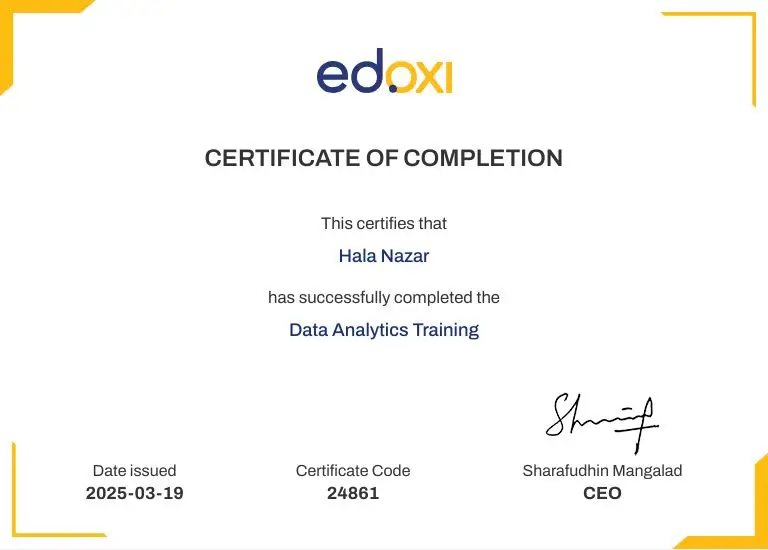
Do You Want to be a Certified Professional in Container Orchestration with Docker?

Join Edoxi’s Container Orchestration with Docker Course

Why Choose Edoxi for Container Orchestration with Docker Training in Dubai?

Edoxi’s Container Orchestration with Docker Course in Dubai is designed to help you master containerisation and orchestration using real-world tools and enterprise-grade environments. Here are the major reasons to choose us:

Industry-Experienced Specialists

You learn from trainers who have hands-on experience implementing Docker and Kubernetes across UAE industries, giving you insights that match Dubai’s fast-evolving tech landscape.

Proven Corporate Training Excellence

We deliver tailored Docker training to top Dubai organisations, helping technical teams enhance delivery speed, scalability, and infrastructure efficiency.

Personalised Learning Experience

You benefit from small group sessions where our instructors focus on your unique challenges, ensuring you gain practical skills that suit your professional goals.

Advanced Technical Environment

You train using pre-configured Docker and Kubernetes labs designed to replicate real enterprise scenarios, making every session interactive and impactful.

Regional and Global Recognition

Our Docker training in Dubai is trusted across the GCC and Europe, providing globally aligned learning that strengthens your professional credibility.

students-image

Edoxi is Recommended by 95% of our Students

Meet Our Mentor

Our mentors are leaders and experts in their fields. They can challenge and guide you on your road to success!

mentor-image

Manish Rajpal

Manish is a passionate Corporate Trainer, AI Consultant, and Cloud Solutions Architect. He empowers clients across the globe to build and maintain highly available, resilient, scalable, and secure solutions, now with a growing emphasis on AI-powered architectures. With over 15,000 professionals trained, Manish specialises in technologies including Amazon Web Services, Microsoft Azure, Microsoft Copilot and GitHub Copilot and increasingly, AI and Machine Learning.

Manish has led research and workshops focused on integrating AI into cloud environments, exploring use cases like intelligent automation, natural language processing, and responsible AI practices.

FAQ

What is the Container Orchestration with Docker Course at Edoxi Training Institute in Dubai about?

Edoxi’s Container Orchestration with Docker Course in Dubai helps you master containerisation and orchestration using Docker and Kubernetes. You learn how to build, deploy, and manage containerised applications efficiently while enhancing scalability, security, and collaboration across your DevOps teams.

What are the prerequisites to join Edoxi’s Container Orchestration with Docker Training in Dubai? You don’t need advanced exp
You don’t need advanced experience to start. However, basic knowledge of Linux, networking, or software development makes learning easier. If you’re a developer, system admin, or DevOps engineer looking to upskill, this Docker training course is ideal for you.
Is this Container Orchestration with Docker training in Dubai suitable for beginners?
Yes, absolutely. Edoxi’s Container Orchestration with Docker training course is designed for all experience levels. Whether you’re new to containerisation or already managing applications in the cloud, our trainers guide you through practical exercises that build confidence and expertise.
What is the average salary of Container Orchestration with Docker-certified professionals in Dubai?
After completing your Container Orchestration with Docker certification with Edoxi, you can explore roles such as DevOps Engineer, Cloud Engineer, or Container Specialist. On average, Container Orchestration with Docker-certified professionals in Dubai earn between AED 180,000 and AED 300,000 per year, depending on experience and industry.
Why should I choose Edoxi Training Institute for Container Orchestration with Docker training in Dubai?
At Edoxi, you gain practical, industry-aligned training delivered by certified experts. You benefit from real-world projects, personalised guidance, and hands-on labs that prepare you for global opportunities in DevOps and cloud-native environments.