

 Get Ready to Learn, Certify, and Grow

Edoxi’s 5-day FTTx Network training in Dubai equips corporate teams with critical skills to design, implement, and maintain advanced fibre infrastructure for telecommunications and smart city projects. It covers fiber optic technologies, network planning, deployment methodologies, and testing procedures. The course is available in online and classroom formats. Enrol now to gain critical skills for high-growth careers in fiber optic network planning, installation, and operations across the UAE


Edoxi Training Institute’s FTTx Network Training in Dubai is designed to meet the increasing demand for fiber optic and FTTx professionals in the UAE telecommunications industry. This industry-aligned FTTx Network course is ideal for corporate teams and technical professionals involved in FTTH, FTTP, broadband infrastructure, smart city projects, and enterprise fiber connectivity.
The FTTx Network certification course provides comprehensive training in fiber optic technologies, covering end-to-end FTTx network implementation, including planning, design, deployment, testing, and maintenance. Participants gain hands-on expertise in Passive Optical Networks (PON), fiber network design principles, and FTTx deployment strategies used by telecom operators and infrastructure companies in Dubai.
Edoxi’s FTTx Network course in Dubai features a hands-on experience. These exercises are structured around real-world FTTx deployment scenarios, enabling learners to apply industry best practices in fiber installation, fusion splicing, and optical testing. The training prepares participants to execute FTTx projects in compliance with ITU-T standards, UAE regulatory frameworks, and international telecommunications guidelines.
Upon completion, participants develop job-ready capabilities in network commissioning, optical performance testing, preventive maintenance planning, and service restoration procedures.
Enrol now to gain skills that support 5G fiber backhaul networks, smart city connectivity, and enterprise fiber deployments across government, commercial, and telecom sectors in Dubai and throughout the UAE.
Hands-on training in fiber handling, cleaving, and preparation techniques for splicing operations and connector installations.
Practical experience with professional fusion splicers. Learn alignment procedures, splice loss optimisation, and equipment maintenance protocols.
Training on Optical Time Domain Reflectometer usage. Interpret trace data for fault location and network verification.
Conduct optical power measurements for link budget validation. Verify signal levels and identify attenuation issues in deployed networks.
Apply GIS-based planning tools for route design. Create network architectures incorporating splitter configurations and distribution strategies.
Practice systematic troubleshooting procedures. Diagnose common fiber issues, including breaks, high-loss connections, and contamination problems.
Technical professionals responsible for designing fiber infrastructure, planning network expansions, and optimising FTTx architectures for service providers.
Field personnel conducting cable installation, splicing operations, testing procedures, and ongoing maintenance of deployed fiber networks.
Project leaders overseeing fiber deployments, managing installation teams, coordinating contractor activities, and ensuring compliance with project specifications.
Service provider staff managing fiber-to-premises connections, troubleshooting subscriber issues, and maintaining operational network performance.
Engineering groups implementing fiber networks for power grid communications, SCADA systems, municipal connectivity, and industrial monitoring applications.
Enterprise teams responsible for campus fiber infrastructure, inter-building connectivity, and integration of fiber systems with organisational networks.
This FTTx Network training includes extensive practical components featuring fibre optic cable preparation, fusion splicing machine operations, and optical testing equipment usage.
Design a complete FTTx architecture for a multi-building corporate campus. Include route planning, splitter placement calculations, loss budget analysis, and equipment specifications meeting enterprise connectivity requirements.
Develop a fiber-to-the-home network plan for a residential community. Address distribution architecture, subscriber connection strategies, and capacity planning for service provider deployment scenarios.
Conduct comprehensive testing procedures on deployed fiber infrastructure. Perform OTDR measurements, power level verification, and documentation of test results following telecommunications industry standards.
Troubleshoot simulated fiber network issues using diagnostic equipment. Identify break locations, high-loss connections, and contamination problems, then implement corrective procedures to restore network performance.
Edoxi’s FTTx Network course provides in-depth, practical training on Fiber-to-the-x (FTTx) network technologies. The training focuses on the planning, deployment, testing, and maintenance of modern fiber optic infrastructure. Upon successful completion of the course, participants will be able to:

Get expert assistance in getting you FTTx Network Course customised!
Here’s a four-step guide to becoming a certified FTTx Network professional.
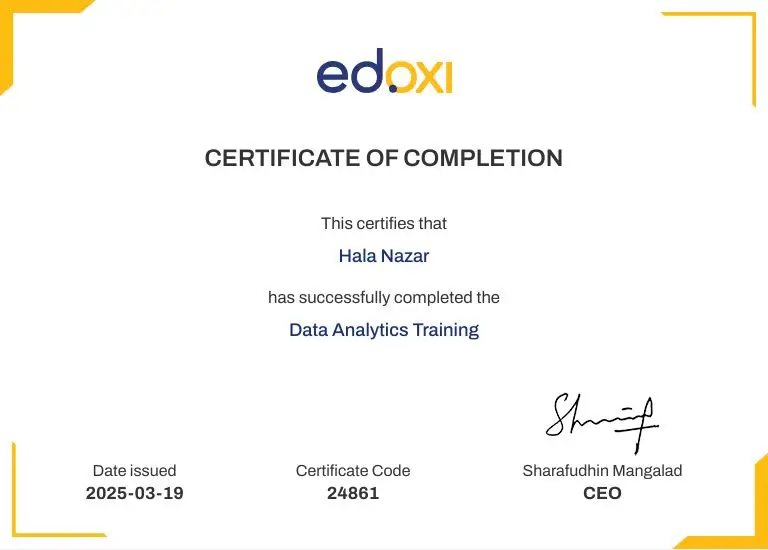

Join Edoxi’s FTTx Network Course
The following are some of the reasons why you should choose Edoxi for an FTTx Course in Dubai;
Participants engage directly with fusion splicing machines, OTDR equipment, and power meters. Sessions replicate actual deployment scenarios, including cable preparation, splice operations, and fault diagnostics.
Training incorporates ITU-T specifications and regional compliance frameworks essential for Dubai's telecommunications sector. Participants learn design methodologies and testing protocols, meeting professional infrastructure project standards.
Teams can attend training at our Dubai facility, or we deploy expert trainers to your preferred location. This approach eliminates travel disruption while maintaining training quality.
Training adapts to specific technical requirements, including telecommunications networks, smart city projects, or enterprise connectivity. Content emphasis adjusts to match team experience levels and organisational objectives.

Our mentors are leaders and experts in their fields. They can challenge and guide you on your road to success!

Sid Ahmed
Sid Ahmed is an IT network infrastructure and security trainer with over 12 years of experience at Edoxi Training Institute, Dubai. He is a certified CCNA/CCNP instructor and NSE 4 trainer and possesses advanced expertise in Cisco networking His portfolio includes prestigious Cisco certifications and hands-on knowledge of global security frameworks, making him a leader in delivering industry-relevant training.
Sid’s knowledge also extends to industry standards such as ISO 27001, NIST, SOC2, and PCI DSS, further strengthening his cybersecurity prowess.Sid Ahmed focuses on developing practical skills through hands-on training with enterprise-grade equipment. As an experienced Network and Security Architect, Sid Ahmed's expertise spans WAN/LAN, IP-MPLS, BGP, Wireless, IP Telephony, and Cybersecurity.He is skilled in HLD/LLD design, audits, pentesting, IT risk assessments, and security frameworks His specialisations include SD-WAN, VPN, VLAN, SSL, SIEM, cloud tech, and routing protocols (OSPF, BGP, STP) Sid is also proficient in Python, MySQL, JavaScript, APIs, and tools like SolarWinds, FortiSIEM, and U2000.
The course addresses FTTH, FTTB, FTTC, and FTTP implementations, including Passive Optical Networks, Active Optical Networks, and point-to-multipoint topologies used in modern fiber deployments.
FTTx Network Training covers OTDR analysis, power meter measurements, insertion loss testing, and return loss evaluation following ITU-T standards and telecommunications industry acceptance testing protocols.
Participants learn GIS-based route planning, loss budget calculations, splitter placement optimisation, and capacity planning methodologies essential for professional FTTx network architecture development.
Fault simulation exercises develop systematic diagnostic procedures using OTDR traces and power measurements. Participants practice identifying breaks, high-loss connections, contamination issues, and restoration techniques.


