Request a Callback

+971 4380 1666
 Nov 05, 2026
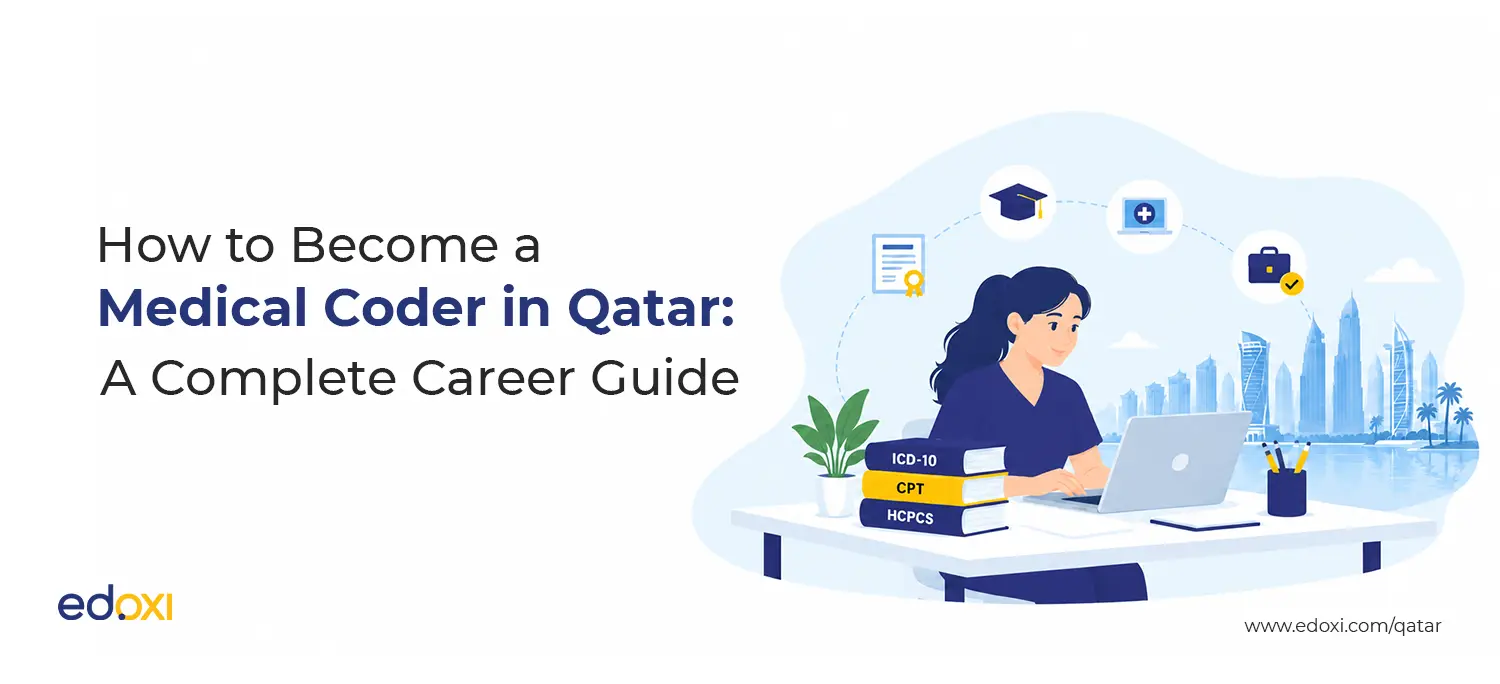
To become a medical coder in Qatar, you can start by confirming your eligibility and educational background, then build a strong foundation in medical terminology, anatomy, and pathophysiology. Next, enrol in a medical coding course, earn a recognised certification, and gain practical experience. Once qualified, update your professional profile, apply for medical coding jobs in Qatar, and continue developing your skills through ongoing professional education.
This guide walks you through eligibility, essential skills, certifications, training options, and career paths. It targets graduates, life-science professionals, and career switchers seeking stable healthcare jobs in Qatar.
Medical coding assigns alphanumeric codes to diagnoses, procedures, and services. Coders review clinical notes and apply systems such as ICD coding for diagnoses and procedure classifications for treatments. In Qatar, public hospitals and large facilities often use the Australian system: ICD-10-AM (Australian Modification), ACHI (Australian Classification of Health Interventions), and ACS (Australian Coding Standards). These support accurate AR-DRG grouping and clinical data.
Related Reading: Differences Between Medical Billing and Coding
A medical coder in Qatar translates complex healthcare documentation, such as physician notes, lab results, and surgical procedures, into standardised alphanumeric codes. These codes are used for medical claims processing, statistical tracking, and maintaining standard medical records management across healthcare facilities.
Related Reading: What are the Roles and Responsibilities of a Medical Coder?
Qatar’s National Health Strategy has fueled major infrastructure investments in healthcare facilities. With expanded health insurance mandates, structured medical claims processing is vital for hospitals and clinics. Major employers include Hamad Medical Corporation (HMC), Sidra Medicine, Primary Health Care Corporation, and private groups. These organisations need accurate coding for claims, quality reporting, and compliance.
Related Reading: The Future of Medical Coding: Trends and Career Opportunities
Advantages of Medical Coding Jobs in Qatar
Medical coding offers a non-patient-facing role with clear progression into auditing, revenue cycle management, or health information roles. It suits professionals who prefer detail-oriented, analytical work. Here are a few advantages of pursuing a Medical Coding Job in Qatar
Follow these practical steps to build a solid path into medical coding. Each stage focuses on real requirements used by employers in Qatar.
1. Confirm Basic Eligibility and Educational Background
2. Build Knowledge in Medical Terminology, Anatomy, and Pathophysiology
3. Enrol in a Medical Coding Course in Qatar
4. Prepare for and Pass a Recognised Certification Exam
5. Gain Practical Experience
6. Update Your CV and Professional Profile
7. Apply for Medical Coder Jobs in Qatar
8. Continue Professional Development
Most medical coding training programs in Qatar accept candidates with a high school diploma (12th grade or equivalent). Prior healthcare experience helps but is not mandatory for entry-level courses.
For competitive medical coder jobs, employers prefer stronger academic credentials. Target these qualifications:
Expatriates must secure work authorisation through an employer sponsor. Medical coding is treated as an administrative or health information role. It usually does not require a clinical practice license from the Department of Healthcare Professions (DHP).
Action tip: Gather your academic certificates and prepare official translations if needed. This step ensures you meet the baseline for both training enrollment and later job applications.
Strong foundational knowledge separates average candidates from strong ones. Employers expect coders to understand clinical language before assigning codes.
Focus on these core areas:
You can study through free online resources, short preparatory modules offered by training institutes, or self-paced textbooks recommended by AAPC or AHIMA. Many CPC-focused courses in Qatar include these topics in the first modules.
Action tip: Dedicate 2–4 weeks to this foundation before joining a full medical coding course. Practice reading sample medical reports to connect terminology with real documentation.
Choose a program based on your target job type. Medical Coding Courses in Doha and online options are widely available.
Typical Medical Coding course duration ranges from 50 to 80 hours. Formats include classroom, hybrid, and fully online options. Look for courses that offer hands-on coding practice, mock exams, study materials, and guidance toward official certification.
Action tip: Confirm the Medical Coding course that is aligned with current coding guidelines and includes practical case studies. Ask about success rates for the certification exam.
A Medical Coding Certification significantly improves your chances of landing medical coding jobs in Qatar.
Top Medical Coding Certification options:
Study systematically. Use official practice exams, timed coding exercises, and review of coding guidelines. Many local institutes provide exam preparation support and mock tests.
Action tip: Schedule the exam only after completing your course and scoring consistently well on practice tests. Budget for the exam fee (typically USD 399–430 for CPC first attempt).
A Medical Coding Certification alone is rarely enough for mid-level or senior roles. Practical exposure builds accuracy and speed. Ways to gain experience include;
Senior clinical coder roles at Hamad Medical Corporation often require 5–6 years of relevant experience. Start early to build your track record.
Action tip: Document every coding project or practice session. Accuracy rates and volume handled become valuable talking points in interviews.
Create a clear, targeted CV that highlights what Qatar employers look for. Include these elements:
Keep the CV concise (1–2 pages). Use keywords from job descriptions such as “clinical coding,” “medical claims processing,” and “healthcare documentation.” Update your LinkedIn profile with the same details and connect with healthcare professionals in Qatar.
Action tip: Tailor your CV for each application. Emphasise ICD-10-AM knowledge when applying to public hospitals.
Target the main employers and platforms:
Search on official career pages, Naukrigulf, Bayt, GulfTalent, LinkedIn, and specialised healthcare recruitment agencies. Prepare for technical assessments that test coding accuracy. Be ready to discuss how you apply coding guidelines and handle incomplete documentation.
Action tip: Apply consistently and follow up professionally. Keep a log of applications and responses.
Coding guidelines and classifications update regularly. Stay current to maintain certification and advance your career. Most credentials require:
Join professional groups, attend workshops, and track changes issued by relevant authorities. Advanced skills in auditing, revenue cycle management, or speciality coding can lead to higher roles and better pay.
Action tip: Set a yearly learning plan. Allocate time each quarter for CEUs and system updates.
Following these steps systematically positions you as a prepared candidate for medical coding career opportunities in Qatar. Consistency in learning, certification, and practical application makes the biggest difference.
Find Out: Top Medical Coding Certifications & Why It's a Smart Career Choice?
Salaries for medical coder jobs in Qatar vary based on experience, employer type, and professional certification. According to healthcare recruiter data from Naukrigulf, certified coders in Qatar earn competitive tax-free packages:
| Professional Level | Experience Range |
Average Monthly Salary (QAR)
|
| Entry-Level / Trainee | 0 – 2 Years |
QAR 3,500 – QAR 4,500
|
| Mid-Level Certified Coder | 3 – 5 Years |
QAR 4,500 – QAR 6,500
|
| Senior Coder / Auditor | 6+ Years |
QAR 7,000 – QAR 10,000+
|
Strong candidates should master the top medical coding skills, including the following;
Soft skills such as communication (English essential; Arabic is an advantage) and the ability to work under deadlines also matter.
Medical coding career opportunities exist across various sectors in the country, including;
Monitor career pages of Hamad Medical Corporation, Sidra Medicine, and Primary Health Care Corporation. Check platforms such as Naukrigulf, Bayt, GulfTalent, and LinkedIn. Recruitment agencies that work with Gulf healthcare employers also list openings. Prepare a clear CV, copies of degrees and certifications, and be ready for technical assessments on coding accuracy. Highlight any ICD-10-AM knowledge if targeting clinical coding roles.
Becoming a medical coder in Qatar is achievable with the right preparation. Focus on recognised certification, solid knowledge of relevant coding systems (especially ICD-10-AM for hospital roles), and practical skills in medical terminology and documentation. Qatar’s healthcare growth creates ongoing demand for accurate, detail-oriented professionals.
Start with a quality medical coding course, earn your credential, and target openings at major providers. Continuous learning will help you advance into specialised or leadership positions within healthcare documentation and medical claims processing.