Request a Callback

+971 4380 1666
 Jul 11, 2026
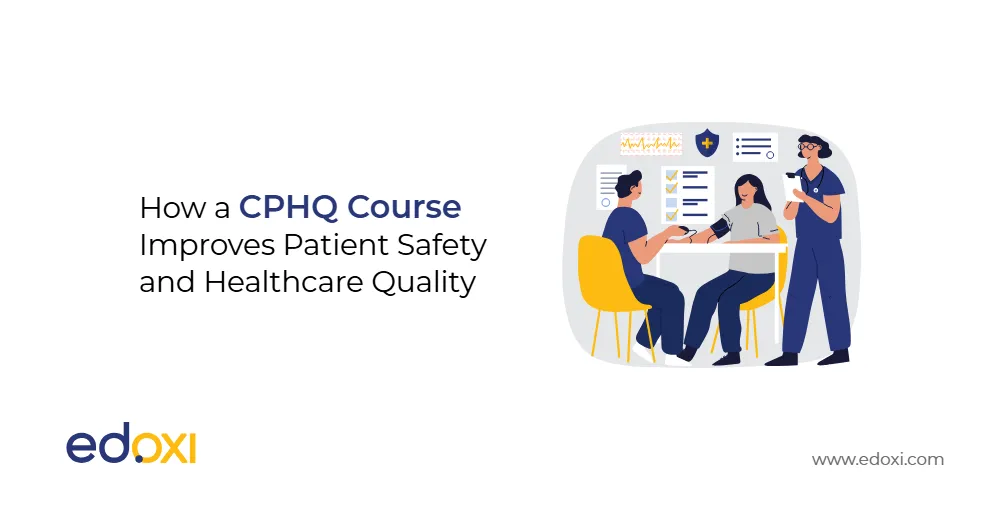
Patient safety is not a box ticking exercise. Get it wrong, and the consequences are measured in lives, not complaints. According to the WHO’s Patient Safety Fact File, the World Health Organisation estimates that hospitals experience 134 million adverse events annually, resulting in 2.6 million deaths. That’s a staggering number, and that’s why healthcare organisations are taking quality professionals more seriously.
The CPHQ (Certified Professional in Healthcare Quality) credential makes a difference in the way people do their jobs. It’s not merely a test to be passed. It changes the way professionals think about risk, data and patient outcomes.” This guide will share how a CPHQ course develops these skills, why it matters right now and what to expect if you’re thinking of CPHQ certification.
Healthcare organizations worldwide are placing greater emphasis on patient safety, quality improvement, and evidence-based care. As hospitals and healthcare providers adopt higher quality standards, professionals with specialized expertise are increasingly in demand. One of the most respected credentials in this field is the Certified Professional in Healthcare Quality (CPHQ) certification.
Whether you're a nurse, healthcare administrator, quality coordinator, pharmacist, physician, or allied healthcare professional, earning the CPHQ credential can strengthen your knowledge and demonstrate your commitment to improving healthcare quality.
CPHQ is awarded by the National Association for Healthcare Quality (NAHQ) in the United States. It's widely regarded as the benchmark credential in healthcare quality management, and it's the only fully accredited certification of its kind, recognised by the National Commission for Certifying Agencies, according to NAHQ.
The certification tests four core domains: organisational leadership, performance and process improvement, health data analytics, and patient safety. Each domain reflects a real responsibility that quality professionals carry daily, from designing safer clinical workflows to reading data that reveals where a hospital is falling short.
A good CPHQ course doesn't just prepare you for exam questions. It builds practical capabilities you'll use on the ward, in a boardroom, or in a compliance review. Here's how.
Students learn systematic methods to investigate why an adverse event happened instead of treating each incident as a one-off.” This is important because a study published in the Frontiers journal found that poor-quality care was experienced by between 10 and 12% of hospitalised patients in high-income countries as adverse events annually between 2015 and 2024, and many of these events were preventable.
These are the frameworks that industries like aviation and nuclear energy use to keep error rates low, and they're now central to modern patient safety training. WHO notes that the risk of death from a preventable medical accident is estimated at 1 in 300, compared with 1 in 3 million for air travel, which shows exactly why healthcare is borrowing these safety principles.
Health Data Analytics makes up around 25% of the CPHQ exam content, according to PTG's CPHQ Certification Guide, covering statistical analysis, benchmarking, and how to use clinical data to drive real decisions. Professionals leave the course able to spot patterns in incident data long before they become serious safety failures.
Sentinel events are the most serious safety incidents, the ones that cause death or permanent harm, and CPHQ training teaches structured review processes for these cases. Understanding this process properly means organisations can respond faster and prevent repeat incidents, rather than just documenting what went wrong after the fact.
Professionals with CPHQ knowledge can find several healthcare quality roles.
Manages quality improvement programmes and performance indicators. The role is to improve clinical outcomes and compliance.
Identifies risks and develops strategies to minimise patient harm. They also promote a strong safety culture in healthcare facilities.
Assists healthcare teams in the implementation of continuous improvement initiatives. The role will also involve analysing quality data and offering solutions
Evaluates risks within the organisation and develops strategies to mitigate them. That makes for safer healthcare environments
Assists hospitals in preparing for accreditation and maintaining quality standards. They ensure adherence to recognised healthcare frameworks
CPHQ training around the actual NAHQ body of knowledge, not a generic quality management overview.
CPHQ training provides five full-length practice tests so learners can gauge their readiness honestly before sitting the actual exam. The CPHQ pass rate sits around 65 to 70% on first attempts, so genuine preparation, not overconfidence, makes the difference.
Instead of memorising definitions, learners are guided through real-world healthcare scenarios in the areas of risk management, case management and utilisation management. This practical approach means that students are able to apply what they learn in class from day one in their roles rather than just for an exam
Trainers from reputed CPHQ training institutes come straight from the industry, so what is discussed in the classroom is not a textbook hypothetical but a real challenge that is faced in hospitals and clinics. This is particularly useful for professionals transitioning into roles such as Patient Safety Officer or Quality Improvement Coordinator
Since most CPHQ candidates are already working in healthcare, our course is delivered both offline and online with a structure that fits around clinical shifts and existing job commitments. Learners don't need to pause their careers to prepare properly for certification.
| Skill | How It Supports Healthcare Quality |
|---|---|
| Risk Management | Identifies and reduces patient safety risks |
| Quality Improvement | Improves healthcare processes continuously |
| Data Analysis | Supports evidence-based decisions |
| Patient Safety | Reduces preventable medical errors |
| Leadership | Promotes teamwork and quality culture |
| Performance Measurement | Tracks quality indicators effectively |
CPHQ suits a specific stage of career, and it's worth being clear about who benefits most.
CPHQ is particularly relevant for registered nurses looking to shift from bedside care into quality improvement, risk management, or patient safety leadership. It gives clinical staff the structured framework to formalise skills they may already be using informally
Anyone responsible for accreditation or regulatory compliance benefits from CPHQ's grounding in healthcare laws and standards. CPHQ provides a recognised credential that supports work often seen as technical and easily undervalued without formal certification
For those aiming at Director of Quality or Chief Quality Officer positions, CPHQ is close to a prerequisite in many organisations. It signals to hiring boards that a candidate understands both the clinical and strategic sides of healthcare quality
Always remember that quality improvement requires more than theoretical knowledge. Healthcare professionals need practical skills that can be implemented in real clinical environments
Online sessions must encourage discussions, case studies, and scenario-based learning. This interactive approach improves understanding and knowledge retention
Learners must be trained to improve patient safety while advancing their professional careers. Our training supports both certification goals and long-term healthcare leadership development
The Certified Professional in Healthcare Quality (CPHQ) is an internationally recognized certification that validates a professional's knowledge of healthcare quality, patient safety, performance improvement, risk management, and quality leadership. It is awarded by the National Association for Healthcare Quality (NAHQ) and is designed for professionals who want to improve healthcare outcomes through quality management.
Unlike certifications that focus on a specific clinical specialty, the CPHQ credential covers healthcare quality across the entire organization. It emphasizes continuous improvement, patient-centered care, performance measurement, leadership, and data-driven decision-making.
Professionals who earn the certification often work in roles such as:
Healthcare Quality and Patient Safety certifications help professionals develop the skills needed to improve clinical outcomes, reduce medical errors, enhance patient experiences, and support continuous quality improvement. The CPHQ is one of the most widely recognized certifications in this field.
Healthcare quality is no longer limited to meeting regulatory requirements. Modern healthcare organizations use quality improvement principles to enhance patient care, reduce risks, and measure organizational performance.
These certifications typically cover topics such as:
| Knowledge Area | Why It Matters |
|---|---|
| Patient Safety | Reduces preventable harm and improves clinical outcomes |
| Quality Improvement | Helps organizations enhance healthcare processes |
| Performance Measurement | Tracks quality indicators and organizational success |
| Risk Management | Identifies and minimizes healthcare risks |
| Data Analysis | Supports evidence-based decision-making |
| Leadership | Drives quality improvement initiatives across teams |
Professionals who understand these concepts are better equipped to contribute to accreditation projects, patient safety programs, and organizational excellence.
Yes. The CPHQ certification is worth considering for healthcare professionals who want to advance into quality improvement, patient safety, accreditation, compliance, or healthcare leadership roles. It demonstrates specialized knowledge that is recognized by employers in many countries.
Healthcare quality is no longer limited to meeting regulatory requirements. Modern healthcare organizations use quality improvement principles to enhance patient care, reduce risks, and measure organizational performance.
These certifications typically cover topics such as:
| Knowledge Area | Why It Matters |
|---|---|
| Patient Safety | Reduces preventable harm and improves clinical outcomes |
| Quality Improvement | Helps organizations enhance healthcare processes |
| Performance Measurement | Tracks quality indicators and organizational success |
| Risk Management | Identifies and minimizes healthcare risks |
| Data Analysis | Supports evidence-based decision-making |
| Leadership | Drives quality improvement initiatives across teams |
Professionals who understand these concepts are better equipped to contribute to accreditation projects, patient safety programs, and organizational excellence.
Yes. The CPHQ certification is worth considering for healthcare professionals who want to advance into quality improvement, patient safety, accreditation, compliance, or healthcare leadership roles. It demonstrates specialized knowledge that is recognized by employers in many countries.
Many professionals ask whether the time and financial investment are worthwhile. The answer depends on your career goals, but for individuals interested in healthcare quality, the certification offers several advantages.
There are no mandatory education or work experience requirements to take the CPHQ exam. However, candidates with practical experience in healthcare quality or patient safety often find the exam easier because many questions are based on real-world scenarios.
The exam is open to a wide range of healthcare professionals, including:
Some candidates believe they need several years of quality management experience before applying. In reality, many professionals prepare through structured study and training while building their practical knowledge.
The total cost of obtaining the CPHQ certification varies depending on NAHQ membership status, examination fees, study materials, and whether you choose to enroll in a preparation course.
Your total investment may include:
| Expense | Typical Cost Component |
|---|---|
| CPHQ Examination Fee | Paid to the certification body |
| Study Materials | Books, guides, practice questions |
| Training Course | Optional preparation program |
| Practice Exams | Mock tests and revision resources |
| Membership | Optional professional membership |
Rather than focusing only on the exam fee, consider the overall value of investing in proper preparation. A structured course, study plan, and practice exams can improve confidence and reduce the likelihood of needing to retake the exam.
There is no fixed salary for professionals with a CPHQ certification in the UAE. Compensation depends on factors such as job role, employer, years of experience, additional qualifications, and healthcare sector.
Healthcare professionals with expertise in quality management may work in:
| Job Roles | Primary Responsibilities |
|---|---|
| Quality Officer | Monitor healthcare quality indicators |
| Patient Safety Officer | Improve patient safety programs |
| Quality Coordinator | Support quality improvement initiatives |
| Clinical Governance Manager | Strengthen clinical governance processes |
| Healthcare Quality Manager |
Lead organizational quality strategies
|
In the UAE, healthcare providers continue to invest in patient safety and quality improvement, creating opportunities for professionals with relevant knowledge and certifications.
Employers generally evaluate candidates based on a combination of education, practical experience, communication skills, and professional certifications. The CPHQ credential can strengthen your profile but is most valuable when supported by real workplace experience.
To earn the CPHQ certification, candidates should understand the exam content, prepare with reliable study resources, complete practice questions, register for the examination, and successfully pass the exam.
A practical preparation roadmap includes:
Review the official content outline to understand the topics covered in the examination.
Create a weekly schedule that covers all major domains, rather than focusing only on familiar topics.
Focus on understanding healthcare quality principles instead of memorizing definitions.
Many exam questions assess how you would apply quality improvement concepts in workplace situations.
Use practice exams to identify topics that need additional revision.
Complete the exam after you feel confident across all content areas.
One of the most common reasons candidates struggle is that they rely only on reading textbooks. Successful candidates typically combine reading with practice questions, revision sessions, and discussions of real healthcare quality scenarios. This approach develops both knowledge and practical decision-making skills.
The CPHQ exam is generally considered moderately challenging because it evaluates how candidates apply healthcare quality and patient safety principles in real-world situations rather than simply testing memorization. Professionals with experience in quality improvement, accreditation, or patient safety often find the exam more manageable when combined with structured preparation and practice.
| Exam Area | Why It Can Be Challenging |
|---|---|
| Patient Safety | Financial Services |
| Quality Improvement | Retail |
| Performance Measurement | Manufacturing |
| Data Analysis | Government |
| Leadership | Tech Companies |
| Regulatory Standards | Media |
Many first-time candidates struggle because they:
Candidates who perform well typically:
The CPHQ test is an internationally recognized certification exam that evaluates a professional's knowledge of healthcare quality management, patient safety, leadership, performance improvement, and quality measurement. It assesses the ability to apply these concepts in healthcare settings rather than simply recalling theoretical information.
The CPHQ exam uses a scaled scoring system, meaning candidates are evaluated using a standardized score rather than a fixed percentage of correct answers. This approach helps ensure fairness across different versions of the examination.
Understanding the exam blueprint helps you focus on the topics most likely to appear in the examination.
Divide your preparation into manageable weekly goals instead of attempting to study everything at once.
Quality improvement concepts are easier to apply during the exam when you understand the reasoning behind them.
Realistic practice questions improve decision-making skills and build confidence.
Patient safety is a fundamental component of healthcare quality and deserves dedicated revision.
Every incorrect answer is an opportunity to improve your understanding before the actual examination.
Many candidates benefit from structured preparation courses that provide expert guidance, organized study materials, and instructor support.
Healthcare organizations today are expected to deliver safe, effective, patient-centered care while continuously improving performance. This has increased demand for professionals who understand quality measurement, patient safety, risk management, and performance improvement.
Developing these competencies not only supports certification success but also prepares professionals to contribute to long-term organizational improvement.
Whether your goal is career advancement, professional development, or improving patient outcomes, investing in healthcare quality knowledge can provide lasting value throughout your career.
If you're planning to earn the Certified Professional in Healthcare Quality (CPHQ) credential, choosing structured training can make your preparation more focused and organized.
A comprehensive CPHQ preparation course can help you:
If you're looking for CPHQ training in Dubai, consider a course that combines expert instruction, practical case studies, and exam-focused preparation to support your certification goals.
Patient safety failures cost lives, time, and money, and the data make that clear. A CPHQ course gives healthcare professionals the structured skills, from root cause analysis to data-driven decision-making, needed to genuinely reduce harm rather than just respond to it after the fact. It also carries real career value, with certified professionals earning measurably more and reaching senior-quality leadership roles faster than uncertified peers.
The Edoxi CPHQ course is designed around practical application, not just exam memorisation, because that's what actually improves outcomes in hospitals and clinics. If you're serious about building a career in healthcare quality or strengthening the safety culture at your organisation, CPHQ is one of the most credible ways to do it.