




| Start Date | Duration | Batch Type | Time | Mode | Price | Register |
|---|---|---|---|---|---|---|
| 25-October-2026 | 5 DAYS | Corporate Batch | 09:00 AM - 05:00 PM |
Classroom Qatar, Doha |
$4,000 USD | |
| 01-November-2026 | 5 DAYS | Corporate Batch | 09:00 AM - 05:00 PM |
Classroom Qatar,Doha |
$4,000 USD | |
| 08-November-2026 | 5 DAYS | Corporate Batch | 09:00 AM - 05:00 PM |
Classroom Kuwait,Kuwait City |
$4,000 USD | |
| 15-November-2026 | 5 DAYS | Corporate Batch | 09:00 AM - 05:00 PM |
Classroom Kuwait,Kuwait City |
$4,000 USD | |
| 22-November-2026 | 5 DAYS | Corporate Batch | 09:00 AM - 05:00 PM |
Classroom Bahrain,Manama |
$4,000 USD | |
| 22-November-2026 | 5 DAYS | Corporate Batch | 09:00 AM - 05:00 PM |
Classroom Qatar,Doha |
$4,000 USD | |
| 22-November-2026 | 5 DAYS | Corporate Batch | 09:00 AM - 05:00 PM |
Classroom Bahrain,Manama |
$4,000 USD | |
| 06-December-2026 | 5 DAYS | Corporate Batch | 09:00 AM - 05:00 PM |
Classroom Qatar, Doha |
$4,000 USD | |
| 06-December-2026 | 5 DAYS | Corporate Batch | 09:00 AM - 05:00 PM |
Classroom Kuwait, Kuwait City |
$4,000 USD | |
| 06-December-2026 | 5 DAYS | Corporate Batch | 09:00 AM - 05:00 PM |
Classroom Oman, Muscat |
$4,000 USD | |
| 13-December-2026 | 5 DAYS | Corporate Batch | 09:00 AM - 05:00 PM |
Classroom Qatar,Doha |
$4,000 USD | |
| 20-December-2026 | 5 DAYS | Corporate Batch | 09:00 AM - 05:00 PM |
Classroom Oman,Salalah |
$4,000 USD | |
| 20-December-2026 | 5 DAYS | Corporate Batch | 09:00 AM - 05:00 PM |
Classroom Kuwait,Kuwait City |
$4,000 USD |
Select your preferred location and schedule — customised training tailored to your goals.
The Certified Risk Modeler programme is a professionally structured course designed to equip quantitative analysts, risk managers, and financial modelling professionals with the advanced technical skills required to build, validate, and govern risk models across credit, market, and operational risk domains. This programme covers the full spectrum of risk modelling practice, from quantitative foundations and model development to stress testing, validation, and regulatory compliance.
Participants will engage with practical modelling exercises, regulatory framework case studies, and expert-led instruction that bridges risk modelling theory with professional application. Core topics include quantitative risk modelling fundamentals, credit risk model development, market risk quantification, operational risk modelling, model validation methodologies, stress testing frameworks, scenario analysis, and model risk governance. Each module is structured to develop both technical modelling proficiency and regulatory knowledge.
Edoxi's Certified Risk Modeler training is delivered by experienced risk modelling professionals with backgrounds in banking, financial services, and quantitative analysis. Whether you are a quantitative analyst building risk models or a risk manager seeking to deepen your modelling expertise, this programme provides the tools, frameworks, and certification needed to excel in risk modelling roles.
Enrol now to develop world-class risk modelling skills and become a certified, industry-ready risk modeller.
Learn from certified risk modelling professionals with extensive banking and quantitative finance experience delivering practical, current, and highly relevant course content.
Build real credit, market, and operational risk models during training, applying regulatory frameworks and statistical techniques to actual financial risk modelling scenarios.
Choose from online, classroom, or corporate training formats designed to accommodate diverse schedules and organisational risk modelling learning requirements.
Access structured study materials, model templates, and digital resources that support learning throughout and after the certified risk modeler training programme.
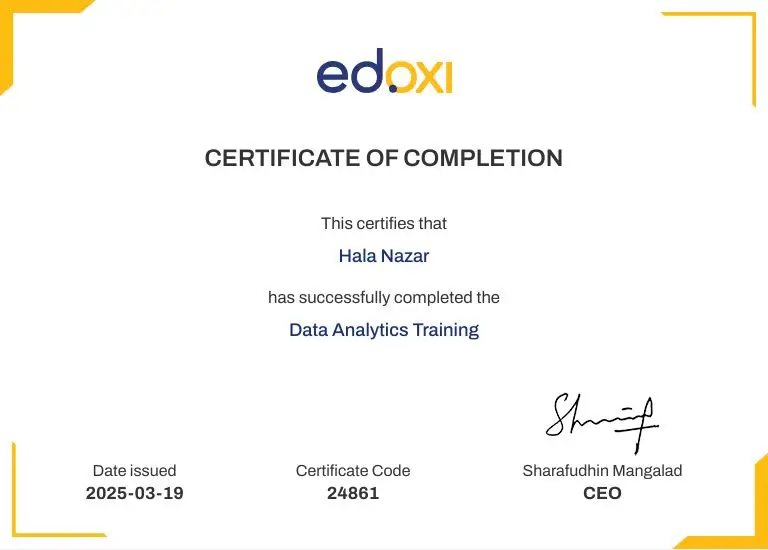
Earn an Edoxi Certificate of Completion that validates your risk modeller competencies and significantly enhances your professional profile and career prospects.
Benefit from tailored corporate training programmes aligned to your organisation's specific risk modelling framework, regulatory environment, and team development objectives.
Quantitative analysts and model developers seeking to formalise their risk modelling expertise, deepen their technical knowledge, and earn a recognised professional certification.
Risk managers and officers who want to develop quantitative modelling skills to complement their risk oversight responsibilities and improve model literacy at a management level.
Credit and market risk analysts working in banking or financial services who want to build advanced modelling capabilities across PD, LGD, VaR, and stress testing frameworks.
Model validation specialists and independent reviewers seeking structured knowledge of model development methodologies, backtesting, and governance standards for effective review practice.
Banking and financial services professionals involved in regulatory capital, IFRS 9, or Basel III compliance who need advanced risk modelling knowledge for their specialist roles.
Finance, statistics, and actuarial graduates targeting quantitative risk roles who need practical, employer-valued modelling skills to compete for analyst positions in risk functions.
By completing Edoxi's Certified Risk Modeler, you will build the skills to advance your career.

Here's a four-step guide to becoming a certified professional.

Join Edoxi's Certified Risk Modeler Course
Edoxi is the top choice for Certified Risk Modeler. Here's why:
Our trainers are seasoned quantitative risk modelling professionals with banking and financial services backgrounds who deliver practical, current, and highly engaging instruction throughout.
Edoxi offers online, classroom, and corporate training options, giving you the flexibility to learn in a format that best suits your schedule, goals, and organisational requirements.
Earn a certification from Edoxi that is recognised by employers across banking, insurance, and financial services, validating your risk modeller expertise and professional credibility.
We design tailored corporate training solutions aligned to your organisation's specific risk modelling framework, regulatory requirements, and quantitative team development objectives.
Participants receive access to detailed course materials, model templates, case studies, and reference guides that support deep learning and serve as valuable post-training resources.
Edoxi provides guidance on career pathways, certification leverage, and professional development to help you maximise the impact of your Certified Risk Modeler qualification.

The Certified Risk Modeler course is a professional training programme that equips quantitative analysts, risk managers, and finance professionals with advanced skills in credit risk modelling, market risk quantification, operational risk modelling, stress testing, model validation, and model risk governance for banking and financial services environments.
This course is ideal for quantitative analysts and model developers, risk managers and officers, credit and market risk analysts, model validation professionals, banking and financial services professionals, and finance and actuarial graduates. Anyone seeking to build or formalise quantitative risk modelling expertise for specialist or leadership roles in risk analytics will benefit greatly from this programme.
The Certified Risk Modeler training is a 40-hour programme available in online, classroom, and corporate formats. The corporate version is delivered as a 5-day intensive training, making it suitable for both individual quantitative professionals and organisational teams seeking structured risk modelling capability development.
Upon successful completion of the Certified Risk Modeler course, participants will receive an Edoxi Certificate of Completion. This certification validates your competency in quantitative risk modelling and is recognised by employers across banking, insurance, and financial services sectors, significantly enhancing your professional profile and career prospects.
Yes, Edoxi offers fully customisable corporate training for the Certified Risk Modeler programme. The content can be tailored to your organisation's risk modelling framework and regulatory environment and delivered at hotel venues, client premises, or Edoxi training centres. All logistics including venue, food, and refreshments are covered for corporate batches.
| Job Role | Average Annual Salary (USD) |
|---|---|
| Quantitative Risk Analyst | $90,000 |
| Credit Risk Model Developer | $95,000 |
| Market Risk Modeller | $98,000 |
| Model Validation Analyst | $88,000 |
| Risk Analytics Manager | $110,000 |
| Regulatory Capital Analyst | $85,000 |


