




| Start Date | Duration | Batch Type | Time | Mode | Price | Register |
|---|---|---|---|---|---|---|
| 25-October-2026 | 5 DAYS | Corporate Batch | 09:00 AM - 05:00 PM |
Classroom Qatar, Doha |
$4,000 USD | |
| 01-November-2026 | 5 DAYS | Corporate Batch | 09:00 AM - 05:00 PM |
Classroom Qatar,Doha |
$4,000 USD | |
| 08-November-2026 | 5 DAYS | Corporate Batch | 09:00 AM - 05:00 PM |
Classroom Kuwait,Kuwait City |
$4,000 USD | |
| 15-November-2026 | 5 DAYS | Corporate Batch | 09:00 AM - 05:00 PM |
Classroom Kuwait,Kuwait City |
$4,000 USD | |
| 22-November-2026 | 5 DAYS | Corporate Batch | 09:00 AM - 05:00 PM |
Classroom Bahrain,Manama |
$4,000 USD | |
| 22-November-2026 | 5 DAYS | Corporate Batch | 09:00 AM - 05:00 PM |
Classroom Qatar,Doha |
$4,000 USD | |
| 22-November-2026 | 5 DAYS | Corporate Batch | 09:00 AM - 05:00 PM |
Classroom Bahrain,Manama |
$4,000 USD | |
| 06-December-2026 | 5 DAYS | Corporate Batch | 09:00 AM - 05:00 PM |
Classroom Qatar, Doha |
$4,000 USD | |
| 06-December-2026 | 5 DAYS | Corporate Batch | 09:00 AM - 05:00 PM |
Classroom Kuwait, Kuwait City |
$4,000 USD | |
| 06-December-2026 | 5 DAYS | Corporate Batch | 09:00 AM - 05:00 PM |
Classroom Oman, Muscat |
$4,000 USD | |
| 13-December-2026 | 5 DAYS | Corporate Batch | 09:00 AM - 05:00 PM |
Classroom Qatar,Doha |
$4,000 USD | |
| 20-December-2026 | 5 DAYS | Corporate Batch | 09:00 AM - 05:00 PM |
Classroom Oman,Salalah |
$4,000 USD | |
| 20-December-2026 | 5 DAYS | Corporate Batch | 09:00 AM - 05:00 PM |
Classroom Kuwait,Kuwait City |
$4,000 USD |
Select your preferred location and schedule — customised training tailored to your goals.
The Training for Ethical Hacker programme is a comprehensive, advanced course designed for cybersecurity professionals and IT practitioners seeking to develop the practical skills, methodologies, and tools used by ethical hackers and penetration testers. This course equips participants with the knowledge needed to legally and systematically identify, exploit, and report security vulnerabilities within organisational systems and networks.
Throughout the programme, participants explore the complete ethical hacking lifecycle, including reconnaissance, scanning and enumeration, vulnerability analysis, exploitation, post-exploitation, and professional reporting. The curriculum covers network penetration testing, web application security, wireless security, social engineering, and the use of industry-standard tools including Metasploit, Nmap, Burp Suite, and Wireshark, ensuring participants are fully prepared for real-world engagements.
Delivered by experienced cybersecurity practitioners and certified ethical hackers, this course incorporates hands-on lab exercises, simulated attack scenarios, and practical penetration testing challenges that develop genuine offensive security competency. Participants emerge with the technical expertise, ethical grounding, and professional reporting skills required to conduct authorised security assessments and advance their cybersecurity careers.
Enrol now to master ethical hacking and position yourself as a trusted cybersecurity professional in your field.
Learn from experienced cybersecurity practitioners and certified ethical hackers who bring deep penetration testing expertise, current threat intelligence, and applied offensive security knowledge into every training session.
Cover the complete ethical hacking lifecycle including reconnaissance, scanning, exploitation, web application testing, wireless security, social engineering, and professional reporting through a structured, current curriculum.
Engage in practical hands-on lab exercises, simulated attack scenarios, and penetration testing challenges that develop genuine offensive security competency and real-world ethical hacking technical skills.
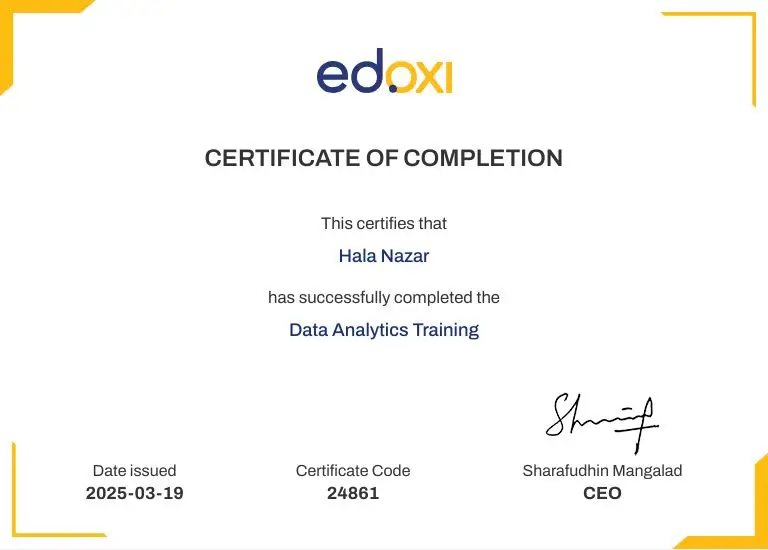
Receive an Edoxi Certificate of Completion recognised by employers internationally, formally validating your ethical hacking expertise and professional cybersecurity penetration testing capabilities.
Choose from online, classroom, or corporate training formats designed to accommodate diverse professional schedules, geographic locations, and organisational cybersecurity learning and development requirements.
Access tailored corporate training solutions that align ethical hacking content with your organisation's specific cybersecurity risk profile, technology environment, and security team capability development priorities.
Security analysts, SOC professionals, and cybersecurity practitioners seeking to develop offensive security skills, penetration testing competency, and ethical hacking expertise to strengthen their defensive security capabilities.
Network engineers and system administrators who wish to understand attacker methodologies, identify vulnerabilities in their own infrastructure, and develop the ethical hacking skills to proactively test and harden systems.
Security consultants and aspiring penetration testers seeking to formalise their ethical hacking knowledge, develop structured testing methodologies, and build the technical toolkit required for professional security assessment engagements.
IT managers and chief information security officers who need a comprehensive understanding of ethical hacking techniques, penetration testing outcomes, and vulnerability reporting to make informed cybersecurity investment and strategy decisions.
Developers and DevSecOps practitioners who wish to understand offensive security techniques, identify application-level vulnerabilities, and embed security-aware development practices into software design and deployment processes.
IT graduates and career changers seeking to enter the cybersecurity profession by building a strong ethical hacking foundation, developing hands-on penetration testing skills, and earning a recognised security training certification.
By completing Edoxi's Training for Ethical Hacker, you will build the skills to advance your career.

Here's a four-step guide to becoming a certified professional.

Join Edoxi's Training for Ethical Hacker Course
Edoxi is the top choice for Training for Ethical Hacker. Here's why:
Edoxi's programme is delivered by experienced cybersecurity practitioners and certified ethical hackers with deep penetration testing expertise, ensuring every participant gains technically rigorous and practically grounded offensive security knowledge.
Our curriculum covers the complete ethical hacking lifecycle including reconnaissance, exploitation, web application testing, wireless security, post-exploitation, and reporting, reflecting current penetration testing methodologies and threat landscapes.
Edoxi's training incorporates practical lab exercises, simulated attack scenarios, and real-world penetration testing challenges that develop genuine offensive security technical competency and the applied ethical hacking skills employers demand.
We design fully customised corporate ethical hacking programmes aligned to your organisation's specific cybersecurity risk profile, technology environment, and security team capability priorities, maximising training relevance and measurable security improvement.
Participants receive an Edoxi Certificate of Completion respected by employers globally, enhancing professional credibility and supporting career advancement in ethical hacking, penetration testing, cybersecurity consulting, and red team specialist roles.
From enrolment through to certification, Edoxi provides comprehensive support including pre-course orientation, direct trainer access throughout the programme, and post-training resources ensuring every participant fully achieves their ethical hacking professional development goals.

The Training for Ethical Hacker course is a comprehensive cybersecurity programme designed to equip IT and security professionals with the practical skills, methodologies, and tools used by ethical hackers and penetration testers. It is ideal for IT security professionals, network and systems administrators, penetration testers and security consultants, IT managers and CISOs, software developers and DevSecOps practitioners, and cybersecurity graduates seeking to build a strong ethical hacking foundation.
The course covers a comprehensive range of ethical hacking tools and techniques including Nmap for network scanning, Nessus and OpenVAS for vulnerability assessment, Metasploit for exploitation, Burp Suite for web application testing, Aircrack-ng and Wireshark for wireless security testing, OSINT and Google Dorking for reconnaissance, and password cracking tools. Penetration testing methodologies including PTES, OSSTMM, and OWASP Top 10 are also addressed throughout.
Yes. Edoxi delivers this course in online, classroom, and corporate training formats. The online programme spans 40 hours with flexible scheduling options, the classroom format is held at Edoxi training centres, and the corporate option is a 5-day programme that can be delivered at your organisation's premises or a designated venue of your choice.
Upon successful completion, participants receive an Edoxi Certificate of Completion in Training for Ethical Hacker. This certification is recognised by employers internationally and validates your competency in ethical hacking methodology, reconnaissance, network scanning, system exploitation, web application penetration testing, wireless security, post-exploitation techniques, and professional penetration testing reporting.
Yes. Edoxi provides fully customisable corporate training solutions for the Training for Ethical Hacker programme. Content can be tailored to reflect your organisation's specific cybersecurity risk profile, technology environment, and security team development priorities. All logistics including venue, catering, printed materials, and scheduling are comprehensively managed by Edoxi.
| Job Role | Average Annual Salary (USD) |
|---|---|
| Ethical Hacker and Penetration Tester | $95,000 |
| Cybersecurity Analyst | $85,000 |
| Information Security Consultant | $100,000 |
| SOC Analyst – Threat and Vulnerability | $80,000 |
| Red Team Specialist | $110,000 |
| Chief Information Security Officer | $175,000 |


