




| Start Date | Duration | Batch Type | Time | Mode | Price | Register |
|---|---|---|---|---|---|---|
| 25-October-2026 | 5 DAYS | Corporate Batch | 09:00 AM - 05:00 PM |
Classroom Kuwait,Kuwait City |
$4,000 USD | |
| 01-November-2026 | 5 DAYS | Corporate Batch | 09:00 AM - 05:00 PM |
Classroom Qatar, Doha |
$4,000 USD | |
| 08-November-2026 | 5 DAYS | Corporate Batch | 09:00 AM - 05:00 PM |
Classroom Kuwait,Kuwait City |
$4,000 USD | |
| 15-November-2026 | 5 DAYS | Corporate Batch | 09:00 AM - 05:00 PM |
Classroom Qatar, Doha |
$4,000 USD | |
| 22-November-2026 | 5 DAYS | Corporate Batch | 09:00 AM - 05:00 PM |
Classroom Kuwait,Kuwait City |
$4,000 USD | |
| 22-November-2026 | 5 DAYS | Corporate Batch | 09:00 AM - 05:00 PM |
Classroom Bahrain,Manama |
$4,000 USD | |
| 22-November-2026 | 5 DAYS | Corporate Batch | 09:00 AM - 05:00 PM |
Classroom Oman, Muscat |
$4,000 USD | |
| 22-November-2026 | 5 DAYS | Corporate Batch | 09:00 AM - 05:00 PM |
Classroom Bahrain,Manama |
$4,000 USD | |
| 06-December-2026 | 5 DAYS | Corporate Batch | 09:00 AM - 05:00 PM |
Classroom Qatar, Doha |
$4,000 USD | |
| 13-December-2026 | 5 DAYS | Corporate Batch | 09:00 AM - 05:00 PM |
Classroom Kuwait, Kuwait City |
$4,000 USD | |
| 13-December-2026 | 5 DAYS | Corporate Batch | 09:00 AM - 05:00 PM |
Classroom Oman, Muscat |
$4,000 USD | |
| 20-December-2026 | 5 DAYS | Corporate Batch | 09:00 AM - 05:00 PM |
Classroom Qatar,Doha |
$4,000 USD | |
| 20-December-2026 | 5 DAYS | Corporate Batch | 09:00 AM - 05:00 PM |
Classroom Oman,Salalah |
$4,000 USD | |
| 27-December-2026 | 5 DAYS | Corporate Batch | 09:00 AM - 05:00 PM |
Classroom Kuwait,Kuwait City |
$4,000 USD |
Select your preferred location and schedule — customised training tailored to your goals.
International Financial Reporting Standards (IFRS) are the globally recognised accounting standards used by organisations in over 140 countries to prepare and present financial statements. Professionals with a strong understanding of IFRS are in high demand across finance, audit, and accounting functions, as organisations increasingly require staff who can prepare, interpret, and communicate IFRS-compliant financial information with accuracy and confidence.
Edoxi's Certificate in International Financial Reporting provides participants with a comprehensive understanding of the IFRS framework, key accounting standards, and their practical application in financial reporting. The programme covers the IFRS conceptual framework, presentation of financial statements, asset and liability accounting, revenue recognition under IFRS 15, lease accounting under IFRS 16, financial instruments under IFRS 9, and consolidated financial statements and group reporting under IFRS 10 and IFRS 3.
This course is designed for accountants, finance managers, financial controllers, auditors, and investment professionals who need to apply, interpret, or report under IFRS. It is also suitable for professionals transitioning from local GAAP to IFRS, those preparing for ACCA, CPA, or CMA examinations, and anyone seeking to build a strong, practical understanding of international financial reporting standards and their real-world application.
Enrol now to earn your Certificate in International Financial Reporting and strengthen your IFRS expertise for a successful global finance career.
Learn from experienced IFRS practitioners and chartered accountants with deep expertise in applying international financial reporting standards across diverse industries and jurisdictions.
Cover all major IFRS standards in depth, from the conceptual framework and financial statement presentation to revenue recognition, leases, financial instruments, and group reporting.
Access online, classroom, or corporate training formats designed to suit finance professionals' schedules and organisational IFRS training and development programme requirements.
Engage with real-world IFRS case studies, journal entry exercises, and financial statement preparation activities that translate standards knowledge into immediate workplace application.
Benefit from structured assessments, practice questions, and trainer guidance that reinforce IFRS knowledge and support preparation for ACCA, CPA, or CMA professional examinations.
Earn an Edoxi Certificate of Completion that validates your international financial reporting expertise and enhances your professional credibility in global finance and accounting roles.
Practising accountants and finance professionals who prepare or review financial statements and want to deepen their working knowledge of IFRS standards and their practical application.
Finance managers and controllers responsible for IFRS-compliant financial reporting who want to strengthen their technical standards knowledge and improve financial reporting accuracy.
Audit professionals who audit IFRS financial statements or provide assurance over financial reporting processes and need a thorough understanding of applicable accounting standards.
Analysts who interpret and evaluate IFRS financial statements to support investment decisions and who want to build stronger financial statement analysis and reporting literacy.
Finance professionals currently working under local GAAP frameworks who are transitioning to IFRS reporting and require structured training in key standards and conversion principles.
Professional accounting examination candidates for whom IFRS features prominently in the syllabus, seeking structured and practical IFRS knowledge to strengthen examination performance.
By completing Edoxi's Certificate in International Financial Reporting, you will build the skills to advance your career.

Here's a four-step guide to becoming a certified professional.
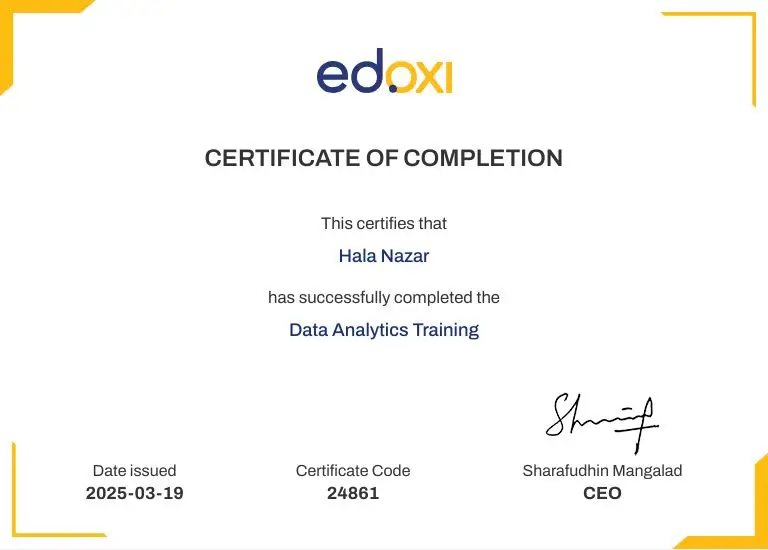

Join Edoxi's Certificate in International Financial Reporting Course
Edoxi is the top choice for Certificate in International Financial Reporting. Here's why:
Our trainers are chartered accountants and IFRS specialists with extensive experience applying international financial reporting standards across audit, finance, and corporate reporting functions globally.
The programme covers all major IFRS standards in depth across eight modules, ensuring participants gain complete, current, and practically applicable knowledge of international financial reporting.
Edoxi offers online, classroom, and corporate delivery modes, providing maximum scheduling flexibility for individual finance professionals and organisational IFRS training and development programmes.
Participants work through real-world IFRS case studies, journal entry exercises, and financial statement preparation activities that build immediately applicable technical reporting competencies.
Edoxi provides structured assessments, practice questions, and expert guidance that reinforce IFRS knowledge and support candidates preparing for ACCA, CPA, or CMA examinations.
Graduates receive an Edoxi Certificate of Completion that is valued by employers worldwide, supporting career advancement into senior financial reporting, audit, and group accounting roles.

The Certificate in International Financial Reporting is a professional development programme that provides a comprehensive understanding of IFRS and their practical application in financial reporting. It covers the IFRS conceptual framework, financial statement presentation, asset and liability accounting, revenue recognition under IFRS 15, lease accounting under IFRS 16, financial instruments under IFRS 9, and consolidated financial statements under IFRS 10 and IFRS 3.
This course is suitable for accountants, finance managers, financial controllers, external and internal auditors, investment analysts, and professionals transitioning from local GAAP to IFRS. It is also highly beneficial for candidates preparing for ACCA, CPA, or CMA examinations, and for any finance professional who needs to apply, interpret, or report under International Financial Reporting Standards in their professional role.
There are no formal prerequisites for the Certificate in International Financial Reporting. However, a basic understanding of accounting principles, financial statements, or bookkeeping is strongly recommended. Participants with prior experience in accounting, finance, or auditing will find the course content directly applicable and will progress through the IFRS material more efficiently than those with no accounting background.
Unlike general accounting courses that cover broad accounting principles across multiple frameworks, the Certificate in International Financial Reporting focuses specifically on IFRS — the globally recognised accounting standards used in over 140 countries. The programme provides in-depth, standards-specific technical knowledge and practical application skills across major IFRS pronouncements, making it particularly valuable for finance professionals working in or transitioning to IFRS-reporting environments.
Edoxi delivers the Certificate in International Financial Reporting across three flexible formats: a 40-hour online virtual programme, face-to-face classroom sessions at an Edoxi training centre, and a 5-day intensive corporate programme. All formats include expert-led instruction, practical IFRS case studies, financial statement preparation exercises, structured assessments, and trainer support to ensure participants develop strong and applicable IFRS competencies.
| Job Role | Average Annual Salary (USD) |
|---|---|
| Financial Reporting Manager | $95,000 |
| Financial Controller | $105,000 |
| External Auditor | $80,000 |
| Financial Analyst | $78,000 |
| Group Accountant | $88,000 |
| Finance Manager | $90,000 |


