


The Accounting for Non-Accountants course is designed to help managers, entrepreneurs, and non-finance professionals understand basic financial concepts. Participants learn to read key financial statements like the Balance Sheet, Income Statement, and Cash Flow Statement. Enrol now to gain the skills needed to make smarter business decisions!


| Start Date | Duration | Batch Type | Time | Mode | Price | Register |
|---|---|---|---|---|---|---|
| 01-November-2026 | 5 DAYS | Corporate Batch | 09:00 AM - 05:00 PM |
Classroom Qatar, Doha |
$4,000 USD | |
| 08-November-2026 | 5 DAYS | Corporate Batch | 09:00 AM - 05:00 PM |
Classroom Kuwait,Kuwait City |
$4,000 USD | |
| 15-November-2026 | 5 DAYS | Corporate Batch | 09:00 AM - 05:00 PM |
Classroom Qatar, Doha |
$4,000 USD | |
| 22-November-2026 | 5 DAYS | Corporate Batch | 09:00 AM - 05:00 PM |
Classroom Kuwait,Kuwait City |
$4,000 USD | |
| 22-November-2026 | 5 DAYS | Corporate Batch | 09:00 AM - 05:00 PM |
Classroom Bahrain,Manama |
$4,000 USD | |
| 22-November-2026 | 5 DAYS | Corporate Batch | 09:00 AM - 05:00 PM |
Classroom Oman, Muscat |
$4,000 USD | |
| 22-November-2026 | 5 DAYS | Corporate Batch | 09:00 AM - 05:00 PM |
Classroom Bahrain,Manama |
$4,000 USD | |
| 06-December-2026 | 5 DAYS | Corporate Batch | 09:00 AM - 05:00 PM |
Classroom Qatar, Doha |
$4,000 USD | |
| 13-December-2026 | 5 DAYS | Corporate Batch | 09:00 AM - 05:00 PM |
Classroom Kuwait, Kuwait City |
$4,000 USD | |
| 13-December-2026 | 5 DAYS | Corporate Batch | 09:00 AM - 05:00 PM |
Classroom Oman, Muscat |
$4,000 USD | |
| 20-December-2026 | 5 DAYS | Corporate Batch | 09:00 AM - 05:00 PM |
Classroom Qatar,Doha |
$4,000 USD | |
| 20-December-2026 | 5 DAYS | Corporate Batch | 09:00 AM - 05:00 PM |
Classroom Oman,Salalah |
$4,000 USD | |
| 27-December-2026 | 5 DAYS | Corporate Batch | 09:00 AM - 05:00 PM |
Classroom Kuwait,Kuwait City |
$4,000 USD |
Select your preferred location and schedule — customised training tailored to your goals.
Edoxi's Accounting for Non-Accountants program is designed to equip managers, executives, and non-financial professionals with the financial literacy they need to make informed business decisions. This course demystifies accounting concepts and presents them in a clear, practical, and accessible manner tailored for professionals without a formal accounting background.
Participants will develop a solid understanding of financial statements, budgeting, cost management, cash flow analysis, and financial performance measurement. The program integrates real-world business scenarios, practical exercises, and structured case studies that connect accounting theory to everyday professional decision-making, ensuring learning is immediately applicable in any organisational context.
Delivered by experienced finance professionals and educators, the course is structured to build financial confidence progressively, from foundational concepts through to applied financial analysis. Participants leave with the ability to read financial reports, engage meaningfully in budget discussions, and contribute to financially informed strategic decisions within their organisations.
Enrol now to develop the financial literacy that empowers smarter business decisions and career advancement.
Our syllabus is designed specifically for non-accountants, presenting accounting and finance concepts in a clear, jargon-free, and practically relevant manner throughout the programme.
Learn from qualified finance professionals and educators who excel at translating complex accounting concepts into straightforward, applicable knowledge for non-financial professionals effectively.
Engage in applied exercises, business case studies, and financial scenario workshops that connect accounting principles directly to real professional decision-making situations and challenges.
The program dedicates significant attention to reading and analysing financial statements, ensuring participants gain the confidence to engage with financial reports in their roles.
Choose from online, classroom, or corporate training formats designed to accommodate busy professionals and organisational teams with varying schedules and financial development requirements.
Receive a Course Completion Certificate that validates your accounting training and demonstrates your financial literacy capability to employers and professional stakeholders.
Managers responsible for budgets and business performance who want to build financial literacy and engage more confidently in financial discussions and decision-making processes.
Sales and marketing professionals seeking to understand financial statements, profit margins, cost structures, and the financial impact of commercial decisions within their organisations.
Operations and project management professionals who need to interpret financial reports, manage project budgets, and understand cost management within their operational responsibilities.
HR and administrative professionals who interact with financial data, budgets, and business reports and want to improve their financial understanding and organisational contribution.
Entrepreneurs and small business owners who want to understand their financial statements, manage cash flow effectively, and make better-informed decisions about their business finances.
Senior executives and leaders without formal accounting backgrounds who want to enhance their financial acumen and engage more effectively with finance teams and board reporting.
By completing Edoxi's Accounting for Non-Accountants, you will build the skills to advance your career.

Here's a four-step guide to becoming a certified professional.

Join Edoxi's Accounting for Non-Accountants Course
Edoxi is the top choice for Accounting for Non-Accountants. Here's why:
Edoxi's course is specifically designed for non-financial professionals, presenting accounting concepts in a clear, jargon-free, and immediately applicable manner throughout the entire programme.
Our instructors are qualified finance professionals who excel at translating complex accounting concepts into straightforward, practical knowledge accessible to professionals from all non-financial backgrounds.
Training incorporates business case studies, applied financial exercises, and real-world scenario workshops that ensure participants can immediately apply financial knowledge in their professional roles.
Edoxi dedicates significant course time to reading and analysing financial statements, giving participants the confidence to engage meaningfully with financial reports in their organisations.
Online, classroom, and corporate training modes are available, giving professionals and organisational teams the flexibility to complete the programme in the format that suits them best.
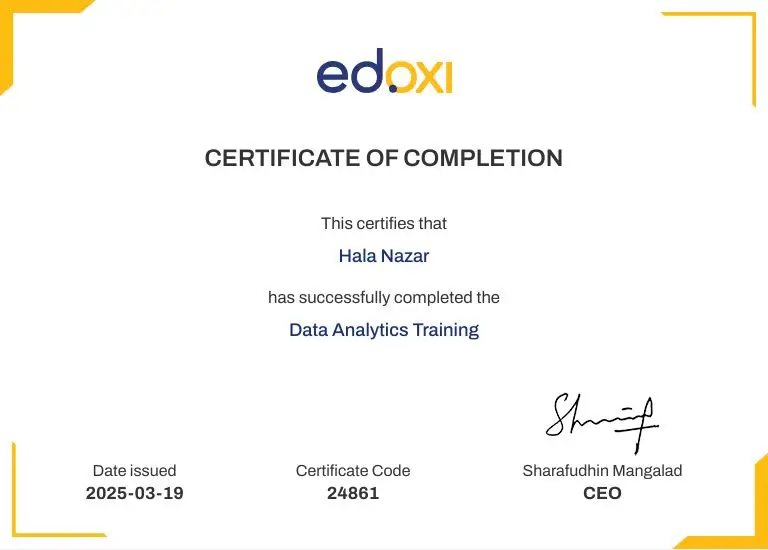
Participants receive an Edoxi Certificate of Completion that validates their financial literacy training and strengthens their professional credibility and career prospects across all business sectors and industries.

Edoxi's Accounting for Non-Accountants course is designed to equip managers, executives, and non-financial professionals with the financial literacy needed to make confident and informed business decisions. The programme covers accounting fundamentals, financial statement interpretation, budgeting, cost management, cash flow analysis, and financial performance measurement in a clear and accessible format.
No accounting or finance background is required. This course is specifically designed for professionals without formal accounting training. All concepts are introduced progressively and explained in plain, accessible language, making the programme suitable for managers, team leaders, sales professionals, HR practitioners, entrepreneurs, and senior executives from any professional background.
The course is most suitable for managers and team leaders, sales and marketing professionals, operations and project managers, HR and administrative professionals, entrepreneurs and business owners, and senior executives who interact with financial data and reports but lack formal accounting training. Anyone seeking to build practical financial literacy will benefit from this programme.
The course is structured across eight modules covering foundations of accounting, income statement analysis, balance sheet interpretation, cash flow and working capital management, budgeting and financial planning, cost accounting and management, financial ratio analysis and performance measurement, and financial decision making and business case development. Each module builds progressively on the previous one.
Yes. Upon successfully completing Edoxi's Accounting for Non-Accountants course and fulfilling all course requirements, participants will receive an Edoxi Certificate of Completion. This certificate validates your financial literacy training achievement and can be presented to employers and professional stakeholders as evidence of your accounting knowledge and business finance competency.
| Job Role | Average Annual Salary (USD) |
|---|---|
| Operations Manager | $90,000 |
| Project Manager | $95,000 |
| Business Development Manager | $98,000 |
| Department Head | $100,000 |
| Entrepreneur and Business Owner | $85,000 |
| Senior Executive and General Manager | $120,000 |


