Leave your message to get our quick response
edoxi automated message icon

Forex Trading Training Course

A professional forex trading expert in a suit analyzing market data on his smartphone, with green digital currency charts and upward-trending graphs displayed beside him in a modern office setting.
Edoxi’s 24-hour online Forex trading course equips you with knowledge of market hours, liquidity, margin trading, and the advantages of the forex market. Tailored for both novice and experienced traders, this online program includes live trading sessions and practical experience in actual market scenarios. With expert instruction, you learn technical and fundamental analysis, risk management, and gain the confidence to trade forex on your own. Get Started Now!
Course Duration
24 Hours
Corporate Days
3 Days
Learners Enrolled
50+
Modules
8
star-rating-icon1
star-rating-icon2
star-rating-icon3
Course Rating
4.9
star-rating-4.9
Mode of Delivery
Online
Classroom
Certification by

What Do You Learn from Edoxi's Forex Trading Training

Forex Market Structure and Trading
You learn how major currency pairs work, who the key players are, and how different trading sessions operate around the world.
Technical Analysis Techniques
You learn to interpret charts, recognize patterns, and use tools like moving averages, MACD, and RSI to spot trading opportunities.
Fundamental Analysis for Traders
You learn to analyse economic news, indicators, and central bank decisions to make smarter trading decisions based on market mood.
Risk Management Techniques
You discover how to size your trades, set stop losses, and control your emotions to protect your capital and trade confidently.
Trading Strategies Development
You develop and refine strategies like trend-following or breakouts so you can adapt to different market conditions.
Order Types and Execution
You master how to use market, limit, and pending orders to execute your trades efficiently in any situation.

About Our Online Forex Trading Course

Edoxi’s 24-hour Online Forex Trading Course is crafted to equip you with the essential knowledge and skills to thrive in the ever-changing currency markets. This comprehensive program is ideal for aspiring traders, financial analysts, and professionals aiming for financial independence.

The course covers the fundamentals of forex trading, including technical and fundamental analysis, risk management, and effective trading strategies. Edoxi provides you with structured lessons and live trading sessions through which you learn how to analyse market trends and make informed decisions.

Participating in this Forex Trading Training within a dynamic global market offers you unique advantages, including exposure to diverse industries, expanded market access, and the opportunity to leverage international trade dynamics. It immerses you in a worldwide economic landscape, allowing for diversification across different sectors, regions, and asset classes.

Whether you're new to global markets or an experienced investor, this course equips you not only for success in international investing but also for potential careers as a market analyst or strategist, providing insights into regional economic trends and cross-border opportunities. Get started today!

Key Features of Edoxi's Forex Trading Training

Live Trading Practice

You can get practical experience by applying your knowledge in real-time forex markets under the guidance of experienced traders. This hands-on approach helps you understand how strategies perform in live conditions.

Technical Analysis Skills

You can learn how to use widely adopted indicators such as Moving Averages, RSI, MACD, and Bollinger Bands. These tools enable you to analyse price charts effectively and make more informed trading decisions.

Candlestick Pattern Recognition

You can identify important candlestick patterns like Doji, Engulfing, and Hammer to improve your timing for entering and exiting trades.

Risk Management Strategies

You can develop personalized risk management methods to protect your capital. Proper risk management is essential for sustainable trading success over the long term.

Market Crash Case Studies

You can study historical market crashes to understand the causes of extreme volatility. Learn how to develop resilient strategies to navigate sudden market movements safely.

Practical Trading Exercises

You can participate in simulated trading challenges that allow you to practice executing trades in a supportive environment. This experience helps build confidence and hone your trading skills.

Who Can Join Our Online Forex Trading Course

Anyone interested in trading

Whether you're looking to learn forex for fun or to generate extra income, this course is for you.

Finance professionals

Bankers, analysts, fund managers, and financial experts seeking to deepen their understanding of currency markets.

Students and recent graduates

Business and finance students aiming to acquire practical trading skills to enhance their education.

Stock traders

Investors experienced in stock trading who want to diversify into currency trading.

Risk management professionals

Those responsible for managing financial risks who want to better understand currency risk dynamics.

Business owners and entrepreneurs

Individuals interested in currency markets for expansion, investments, or international trade opportunities.

Forex Trading Course Modules

Module 1: Introduction to Forex Trading
  • Chapter 1.1: Understanding Forex Trading

    • Lesson 1.1.1: The Need to Trade Forex
    • Lesson 1.1.2: Forex Market Regulators
    • Lesson 1.1.3: Financial Intermediaries in Forex
  • Chapter 1.2: Forex Market Essentials

    • Lesson 1.2.1: Currency Pairs and Exchange Rates
    • Lesson 1.2.2: Forex Market Structure
    • Lesson 1.2.3: Commonly Used Forex Jargons
Module 2: Technical Analysis for Forex
  • Chapter 2.1: Introduction to Technical Analysis

    • Lesson 2.1.1: The Chart Types
    • Lesson 2.1.2: Candlestick Anatomy
  • Chapter 2.2: Candlestick Patterns

    • Lesson 2.2.1: Candlestick Patterns Part 1
    • Lesson 2.2.2: Candlestick Patterns Part 2
    • Lesson 2.2.3: Candlestick Patterns Part 3
    • Lesson 2.2.4: Multiple Candlestick Patterns Part 1
    • Lesson 2.2.5: Multiple Candlestick Patterns Part 2
    • Lesson 2.2.6: Multiple Candlestick Patterns Part 3
  • Chapter 2.3: Key Technical Indicators

    • Lesson 2.3.1: The Support and Resistance in Forex
    • Lesson 2.3.2: Volume Analysis in Forex
    • Lesson 2.3.3: Moving Averages
    • Lesson 2.3.4: The Indicators Part 1
    • Lesson 2.3.5: The Indicators Part 2
    • Lesson 2.3.6: Fibonacci Retracement in Forex
  • Chapter 2.4: Advanced Technical Analysis

    • Lesson 2.4.1: Dow Theory Part 1
    • Lesson 2.4.2: Dow Theory Part 2
    • Lesson 2.4.3: Forex Charting Software
Module 3: Fundamental Analysis for Forex
  • Chapter 3.1: Basics of Fundamental Analysis

    • Lesson 3.1.1: Introduction to Fundamental Analysis
    • Lesson 3.1.2: The Mindset of a Forex Trader
  • Chapter 3.2: Macroeconomic Factors and Forex

    • Lesson 3.2.1: Macroeconomic Indicators and Their Impact
    • Lesson 3.2.2: Interest Rates and Central Bank Policies
    • Lesson 3.2.3: Inflation, GDP, and Employment Data
    • Lesson 3.2.4: Understanding Trade Balances & Capital Flows
  • Chapter 3.3: Market Influences and Currency Analysis

    • Lesson 3.3.1: The Impact of Geopolitical Events
    • Lesson 3.3.2: Currency Correlations
    • Lesson 3.3.3: Intermarket Analysis (Bonds, Commodities, and Forex)
    • Lesson 3.3.4: Evaluating Currency Strength
    • Lesson 3.3.5: Risk Sentiment and Market Dynamics
Module 4: Forex Futures and Derivatives Trading
  • Chapter 4.1: Understanding Forex Futures

    • Lesson 4.1.1: Background of Forward and Futures Markets
    • Lesson 4.1.2: Introducing Forex Futures Contracts
    • Lesson 4.1.3: Forex Futures Trading Mechanism
  • Chapter 4.2: Key Forex Futures Concepts

    • Lesson 4.2.1: Leverage & Payoff in Forex
    • Lesson 4.2.2: Margin & Mark-to-Market (M2M)
    • Lesson 4.2.3: Margin Calculation for Forex Trades
    • Lesson 4.2.4: Hedging Strategies Using Forex Futures
    • Lesson 4.2.5: Open Interest and Market Sentiment
Module 5: Forex Options Trading
  • Chapter 5.1: Introduction to Forex Options

    • Lesson 5.1.1: Introduction to Forex Options
    • Lesson 5.1.2: Call and Put Options Basics
    • Lesson 5.1.3: Forex Option Jargon
  • Chapter 5.2: Trading Forex Options

    • Lesson 5.2.1: Buying a Call Option on Currency Pairs
    • Lesson 5.2.2: Selling/Writing a Call Option
    • Lesson 5.2.3: Buying a Put Option on Currency Pairs
    • Lesson 5.2.4: Selling a Put Option
  • Chapter 5.3: Advanced Forex Options Concepts

    • Lesson 5.3.1: Understanding Option Moneyness in Forex
    • Lesson 5.3.2: The Greeks in Forex Options (Delta, Gamma, Theta, Vega)
    • Lesson 5.3.3: Volatility Concepts in Forex
    • Lesson 5.3.4: Volatility Calculation and Application
    • Lesson 5.3.5: Case Studies in Forex Options Trading
Module 6: Forex Trading Strategies
  • Chapter 6.1: Trading Strategies Overview

    • Lesson 6.1.1: Orientation
  • Chapter 6.2: Forex Trading Strategies

    • Lesson 6.2.1: Trend Following Strategies
    • Lesson 6.2.2: Range Trading Strategies
    • Lesson 6.2.3: Breakout Strategies
    • Lesson 6.2.4: Carry Trade Strategy
    • Lesson 6.2.5: Arbitrage Trading in Forex
    • Lesson 6.2.6: Momentum-Based Forex Trading
  • Chapter 6.3: Risk and Strategy Execution

    • Lesson 6.3.1: Risk-Adjusted Position Sizing
    • Lesson 6.3.2: Hedging Currency Exposure
    • Lesson 6.3.3: Algorithmic Trading in Forex
Module 7: Forex Market Instruments & Cross-Currency Pairs
  • Chapter 7.1: Understanding Forex Instruments

    • Lesson 7.1.1: Understanding Major, Minor, and Exotic Currency Pairs
    • Lesson 7.1.2: Reference Rates & Impact of Economic Events
  • Chapter 7.2: Trading Specific Currency Pairs

    • Lesson 7.2.1: The USD/INR Pair (Part 1)
    • Lesson 7.2.2: The USD/INR Pair (Part 2)
    • Lesson 7.2.3: EUR, GBP, and JPY Trading Dynamics
    • Lesson 7.2.4: Cross-Currency Pairs and Their Volatility
  • Chapter 7.3: Advanced Market Dynamics

    • Lesson 7.3.1: Carry Trade and Interest Rate Differentials
    • Lesson 7.3.2: Forex Market Correlations
Module 8: Risk Management & Trading Psychology
  • Chapter 8.1: Understanding Risk in Forex

    • Lesson 8.1.1: Orientation Note
    • Lesson 8.1.2: Risk in Forex Trading (Part 1)
    • Lesson 8.1.3: Risk (Part 2) - Variance & Covariance
    • Lesson 8.1.4: Risk (Part 3) - Variance & Covariance Matrix
    • Lesson 8.1.5: Risk (Part 4) - Correlation Matrix & Portfolio Variance
  • Chapter 8.2: Performance & Strategy Optimization

    • Lesson 8.2.1: Equity Curve and Forex Trading Performance
    • Lesson 8.2.2: Expected Returns in Forex
    • Lesson 8.2.3: Position Sizing for Forex Traders
    • Lesson 8.2.4: Kelly’s Criterion for Forex
  • Chapter 8.3: Trading Psychology and Behavioral Finance

    • Lesson 8.3.1: Common Trading Biases and How to Overcome Them

Download Forex Trading Course Brochure

Real-World Projects and Case Studies in the Forex Trading Training

Real-world projects and cases help you understand how currency markets operate in actual scenarios. By examining historical market crashes and analyzing current trends, you'll learn to identify warning signals and make more informed trading decisions. It’s an effective way to connect theory with practice and build your confidence.

Projects

  • Market Crash Analysis

    In this project, you study past currency market crashes to recognise early warning signs and understand how traders could have safeguarded their investments.

  • Simulated Trading Experiences

    In this project, you practice executing trades based on your strategies in a risk-free environment. You will learn to track your progress, learn from your results, and continuously improve your trading skills.

  • Trend Forecasting Project

    In this project, you analyse long-term market trends using technical indicators, price patterns, and economic data. You forecast potential market movements and build trading plans based on your predictions. This project strengthens your analytical thinking and helps you understand how long-term market cycles influence trading decisions.

Case Studies

  • Live Market Simulations

    In this case study, you are guided on how to analyse real-time market data using both technical and fundamental analysis. You are also guided to develop and test trading strategies and receive feedback from instructors to refine your approach.

Forex Trading Course Outcomes and Career Opportunities

Embarking on a forex trading course can set you on a path toward a rewarding career in the financial industry. Here's what you can expect to gain from the training:

Course Outcome Image
Understand the fundamentals of currency markets: how they operate and what influences currency values.
Learn to analyze charts, identify patterns, and interpret economic indicators for effective decision-making.
Develop strategies for risk management, choosing proper position sizes, and protecting your capital.
Gain hands-on experience with trading platforms, order types, and executing trades confidently.
Recognize the importance of discipline, emotional control, and patience in achieving consistent trading success.
Learn to create, backtest, and refine trading plans to improve performance over time.

Career Opportunities After Completing the Forex Trading Training

  • Full-Time Forex Trader
  • Independent Forex Trader
  • Forex Analyst
  • Forex Broker
  • Financial Advisor
  • Trading Educator or Coach
  • Hedging Specialist
  • Currency Researcher
  • Day Trader
  • Swing Trader
  • Algorithmic Trading Developer

Forex Trading Training Options

Online Training

  • 24 Hours Live Interactive Sessions

  • Real-Time Market Analysis

  • Flexible Scheduling for Professionals

  • One-on-One Training Choices

Do You Want a Customised Training for Forex Trading?

Get expert assistance in getting you Forex Trading Course customised!

How to Get Forex Trading Certified?

Here’s a four-step guide to becoming a certified Forex Trading professional.
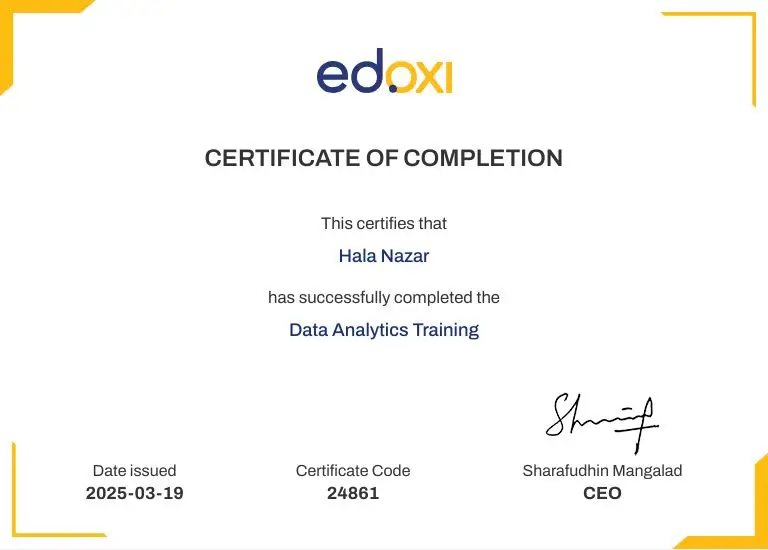
Do You Want to be a Certified Professional in Forex Trading?

Join Edoxi’s Forex Trading Course

Why Choose Edoxi for Forex Trading Training?

Looking to start your journey in forex or stock trading? Here’s why Edoxi is a top choice globally:

Experienced Instructors

You can choose to learn from our seasoned trading professionals with real-world experience.

Practical Learning

You can engage in live, hands-on sessions to practice trading in real market conditions.

Flexible Scheduling

Our evening classes are designed for working professionals and busy learners worldwide.

Focused on Financial Freedom

Our courses aim to empower you to achieve financial independence through trading.

students-image

Edoxi is Recommended by 95% of our Students

Meet Our Mentor

Our mentors are leaders and experts in their fields. They can challenge and guide you on your road to success!

mentor-image

Asim Nath Dubey

Asim Nath is an Accounting and Microsoft Office trainer at Edoxi Training Institute. He has over 13 years of training experience and has successfully trained more than 3000 professionals in Accounting and Microsoft Office applications. Asim’s specialisations include Financial Accounting, Tally, Zoho and Quickbooks. His background in financial accounting adds valuable insights to business presentation training.

Asim is an expert in MS Office, including PowerPoint, Excel, and Power BI, positioning him as a well-rounded specialist in the Microsoft Suite. Asim employs a practical, business-focused teaching methodology. His one-to-one training approach ensures each student receives personalized attention. He emphasizes real-world applications, helping professionals create impactful business presentations.

Locations Where Edoxi Offers Forex Trading Course

Here is the list of other major locations where Edoxi offers Forex Trading Course

FAQ

What will I learn in this Forex Trading Course?

You gain essential skills such as analyzing currency pairs, managing risks, and understanding market psychology. The course balances theoretical knowledge with practical trading techniques.

Are there any prerequisites for the Forex Trading Training?

A basic understanding of financial markets can be helpful but isn’t required. Out Forex Trading course covers all essential concepts so you can start learning from scratch.

What salary in the average can a forex trading professional can earn globally?

The average salary of a forex trading professional globally varies widely because income depends on experience, role, location, trading capital, and performance. Institutional forex traders working in banks, hedge funds, or proprietary trading firms typically earn between US $55,000 and US $80,000 at the entry level, rising to US $120,000–250,000+ with experience, and top performers can exceed US $500,000 annually with bonuses. In major financial hubs, total compensation often ranges from US $100,000 to $500,000+. Retail traders who trade their own capital have no fixed salary, as earnings fluctuate based on market conditions, capital size, and trading skill—some earn modest supplementary income, while a small percentage achieve high profitability. Overall, a realistic global range for a trained forex professional in institutional roles is roughly US $70,000–150,000 per year, while independent traders experience highly variable outcomes.

Is the Forex Trading Certification course aimed at helping me get a job in forex trading?

No, this is a skill-building course for independent traders. It’s designed to equip you with the knowledge to trade confidently on your own, not for employment purposes.

Which trading platforms will I learn to use?

You’ll learn about popular retail platforms used by individual traders, including how to navigate charts, execute trades, and analyze market data.