Request a Callback

+974 66 87 3399
 Jul 23, 2026
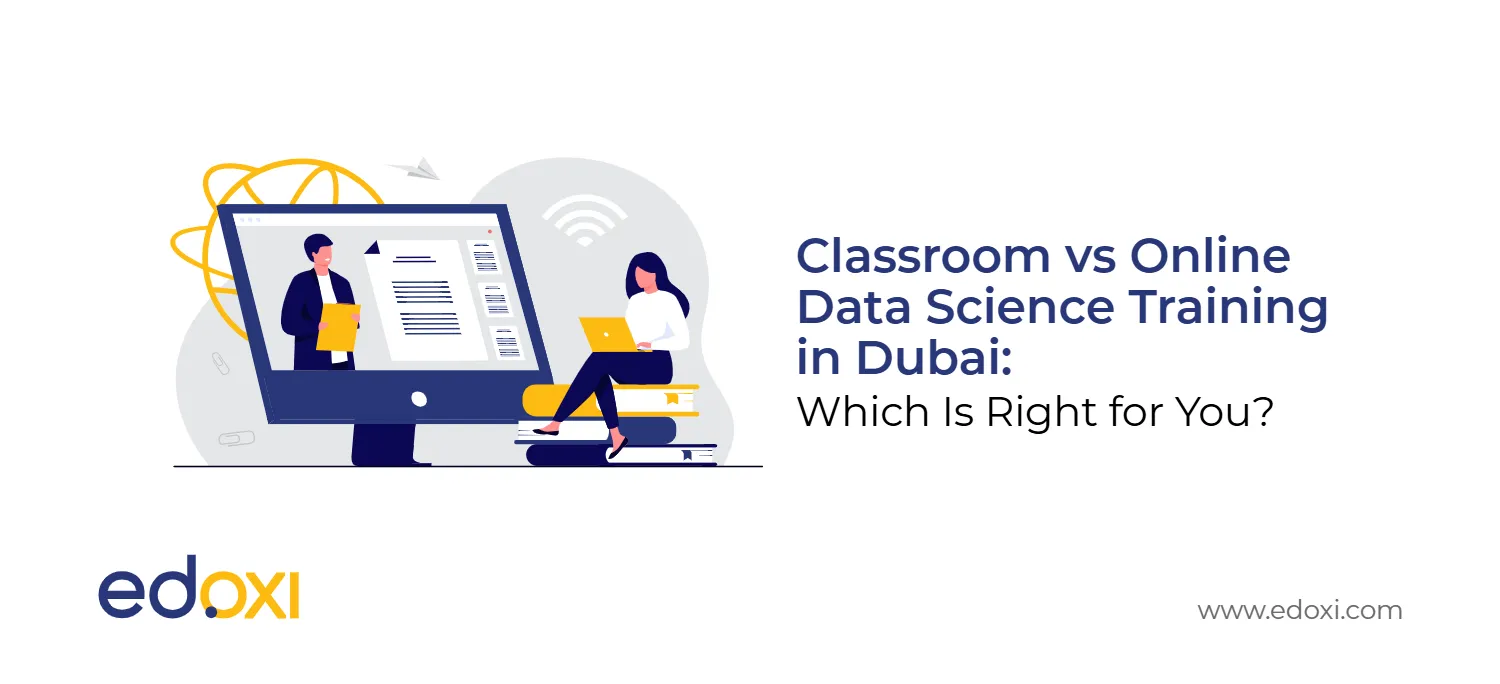
Classroom training suits learners who want structured schedules, face-to-face instructor support, and strong in-person networking, making it a good fit for students, fresh graduates, and career changers.
Online training suits working professionals who need flexible timings, live instructor-led sessions, and the ability to learn from anywhere.
In both formats, career outcomes depend far more on practical projects, programming skills (Python, SQL), machine learning knowledge, and a strong portfolio than on the delivery mode itself. Your decision should come down to your schedule, learning style, and career goals.
Both classroom and online Data Science training can prepare you for a successful career in Data Science in Dubai.
Classroom learning offers structured schedules, face-to-face interaction, networking, and immediate instructor support.
Online learning provides greater flexibility for working professionals and learners balancing multiple commitments.
Practical projects, Python, SQL, machine learning, and portfolio development matter more to employers than the learning format itself.
Industries such as finance, healthcare, retail, logistics, government, and AI-driven companies value practical Data Science skills and recognised certifications.
Global demand for Data Science professionals continues to rise sharply, making upskilling relevant regardless of which format you choose.
The best choice depends on your learning style, career goals, availability, and preferred level of instructor interaction.
Choosing between classroom and online Data Science training in Dubai isn't about finding the "better" option; it's about finding the format that fits how you learn, work, and live. Both paths can lead to the same destination: a job-ready skill set in Python, SQL, machine learning, and data visualisation, backed by real projects and industry-recognised certifications.
Dubai's economy is becoming increasingly data-driven. From banking and healthcare to retail, logistics, government, and AI-powered start-ups, organisations across the emirate are hiring professionals who can turn raw data into business decisions.
Whatever format you choose, success ultimately comes down to the same fundamentals: hands-on projects, strong programming skills, familiarity with industry tools, and a habit of continuous learning. This guide breaks down how classroom and online Data Science training in Dubai compare, so you can make a confident, informed decision.
The chart below puts a number on the shift toward online learning that's shaping how professionals in Dubai choose to build new skills, including in Data Science.
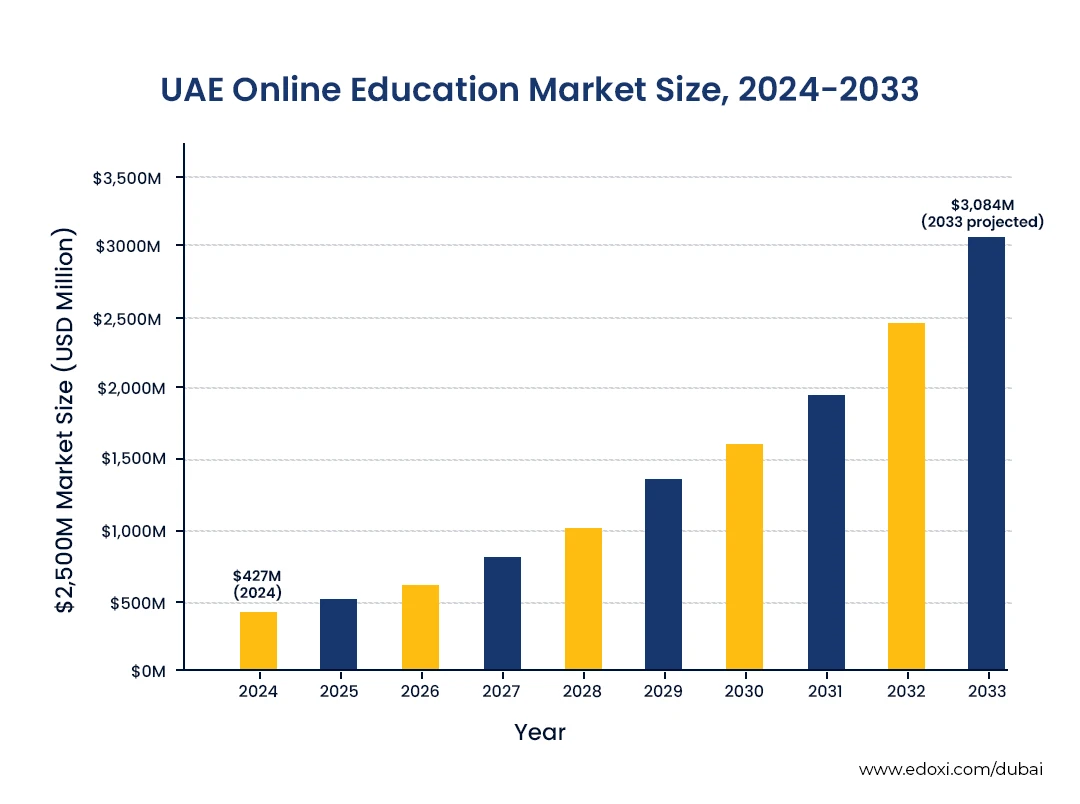 According to IMARC Group, the UAE's online education market was valued at roughly $427 million in 2024 and is projected to reach around $3.08 billion by 2033, a compound annual growth rate of about 24.6%. Growth on that scale reflects rising internet penetration, government-backed digital education initiatives, and demand from working professionals for flexible, skill-based courses that fit around a job.
Dubai and Abu Dhabi account for the largest share of this activity within the UAE, according to Research and Markets, thanks to stronger infrastructure, higher internet penetration, and a concentration of corporate training demand in both emirates. For learners in Dubai specifically, the online option is a maturing, well-supported delivery mode with the infrastructure and institutional backing to match classroom training in reliability and quality, while offering the flexibility that's driving its faster growth.
Data Science skills are in high demand in Dubai because the emirate's push toward becoming a global innovation hub, backed by the UAE's digital and AI strategies, is driving businesses across nearly every sector to invest in analytics, automation, and intelligent decision-making. This growing demand is part of a global trend; the market for Data Science and analytics talent is expanding rapidly as more industries adopt data-driven decision-making.
That demand isn't confined to tech companies alone. Global demand for Data Science professionals is projected to rise by 50% by 2031, and in the US alone, data science job postings have grown 36% year-on-year, according to the Bureau of Labor Statistics. This aligns with the UAE's broader Vision 2030 agenda, which is pushing government, finance, and engineering sectors to actively seek out certified data specialists as part of the country's smart-technology transformation.
It's showing up across a wide range of industries that are actively hiring for Data Science and analytics capability, including:
Across these industries, employers are consistently looking for the same core skill set, which is where any good Data Science training programme should focus. This rising demand is also reflected in compensation, with roles in this space regularly ranking among the highest-paying Data Science jobs in the region.
Globally, Data Scientist salaries range from ₹7–15 lakhs in India to $91K–$100K in the US, with AI Scientist roles reaching as high as $200K, based on Glassdoor compensation data.
Here are the skills that show up most often in Dubai job listings and employer expectations today:
Reports from organisations such as the World Economic Forum, LinkedIn, IBM, and Microsoft consistently point to data and AI-related roles as among the fastest-growing globally, and this trend is echoed strongly in the UAE's own digital economy ambitions. For a closer look at what employers expect, see our full breakdown of the top Data Scientist skills you need in 2026.
Here's a quick side-by-side comparison of how classroom and online Data Science training differ across the factors that matter most to learners.
| Feature | Classroom Training | Online Training |
|---|---|---|
| Learning Style | Face-to-face | Live instructor-led |
| Flexibility | Fixed schedule | Learn from anywhere |
| Networking | Excellent | Moderate |
| Instructor Access | Immediate, in-person | Live sessions & chat support |
| Practical Labs | In-person | Virtual labs |
| Group Activities | High | Moderate |
| Suitable For | Students & career changers | Working professionals |
| Commute | Required | Not required |
| Learning Pace | Structured | More flexible |
You'll learn the same core Data Science skill set in both classroom and online courses, including programming, data analytics, machine learning, statistics, and hands-on project work. Because a well-designed programme keeps its curriculum identical across delivery modes. The format changes how you learn; it doesn't change what you learn.
The table below breaks down the core skill areas covered in both classroom and online Data Science courses:
Data Science Curriculum: Skills You'll Learn in Classroom and Online Courses
| Skill Area | What You'll Learn |
| Programming Skills | Python, SQL, Jupyter Notebook |
| Data Analytics & Visualisation | Excel (Advanced), Power BI, Tableau |
| Machine Learning | Supervised learning, unsupervised learning, and model evaluation |
| Statistics for Data Science | Probability, hypothesis testing, regression, correlation |
| Security Auditor | Tech Companies |
Regardless of format, strong programmes centre learning around real-world projects such as:
The strongest programmes go a step further by partnering directly with industry, offering real-world data projects and mentorships with companies like Uber, PwC, and Microsoft, giving learners exposure that goes beyond simulated datasets.
| Skill | Classroom | Online |
| Python | ✓ | ✓ |
| SQL | ✓ | ✓ |
| Machine Learning | ✓ | ✓ |
| Tableau | ✓ | ✓ |
| Power BI | ✓ | ✓ |
| Statistics | ✓ | ✓ |
| Portfolio Projects | ✓ | ✓ |
Modern programmes are also increasingly weaving generative AI into core Data Science teaching, not as a separate module, but as a tool learners use throughout their projects to boost productivity and problem-solving.
Classroom training offers structure, direct instructor access, and strong networking, but it comes with trade-offs in flexibility that are worth weighing before you enrol.
Best for: fresh graduates, university students, career changers, and learners who thrive with structured, in-person study.
Online training offers flexibility and convenience that suit busy schedules, though it asks more of learners in terms of self-discipline and staying connected with peers.
Best for: working professionals, parents, freelancers, and remote or hybrid workers.
Beyond the curriculum, the day-to-day learning experience differs meaningfully between the two formats, as shown below.
| Factor | Classroom | Online |
| Instructor Interaction | Excellent | Excellent (live) |
| Peer Collaboration | High | Moderate |
| Flexibility | Low | High |
| Networking | Excellent | Moderate |
| Attendance | Fixed | Flexible |
| Learning Environment | Physical | Virtual |
| Discipline Required | Moderate | High |
Cost isn't just about course fees; travel time, schedule flexibility, and batch availability all factor into the real cost of learning, as this comparison shows.
| Factor | Classroom | Online |
| Travel Costs | Yes | No |
| Time Savings | Moderate | High |
| Schedule Flexibility | Limited | High |
| Weekend Options | Available | Available |
| Evening Batches | Limited | Common |
Many training providers now also offer blended formats, combining recorded content with weekend or evening live sessions, giving learners a middle ground between full classroom immersion and complete self-paced flexibility.
Practical projects build job-ready Data Science skills by giving you tangible proof that you can apply Python, SQL, and machine learning to real business problems, something a certificate alone can't demonstrate. Employers consistently value hands-on project experience over theoretical knowledge, which is why practical work sits at the centre of any strong training programme, whether classroom-based or online.
Common project types that build a compelling portfolio include:
Having the right projects is only half the picture; how you showcase them matters just as much.
Beyond the project itself, employers also look for how you present and back up that work. Here's what typically stands out on a Data Science portfolio:
Neither mode offers distinctly better career support; quality Data Science programmes in Dubai now provide comparable career services, from resume building to placement assistance, regardless of whether you choose classroom or online training. Career support has become a standard programme feature rather than a differentiator between formats.
Career Support Comparison: Classroom vs Online Data Science Training
| Career Support | Classroom | Online |
| Resume Building | ✓ | ✓ |
| Interview Preparation | ✓ | ✓ |
| Portfolio Guidance | ✓ | ✓ |
| Career Mentoring | ✓ | ✓ |
| Certification Support | ✓ | ✓ |
| Placement Assistance | ✓ | ✓ |
If you're weighing up which credential to pursue, our guide to the top Data Science certifications to advance your career can help you compare your options.
The right choice comes down to how you learn best and what your schedule allows. Use the pointers below to see which format aligns more closely with your situation.
| You Are... | Best Choice |
| University Student | Classroom |
| Working Professional | Online |
| Career Changer | Either |
| IT Professional | Online |
| Business Analyst | Either |
| Graduate | Classroom |
Whichever format you lean toward, use this checklist to evaluate any programme before enrolling:
In the UAE, KHDA approval is particularly important; it validates a certificate for career advancement and visa-related HR evaluations, so it's worth confirming before enrolling in either format.
If you'd like to compare providers more broadly before deciding, our roundup of the best Data Science training institutes in the UAE is a useful next step.
There's no universal answer to "classroom or online", and that's a good thing. Neither format is inherently better; each simply suits different learners, schedules, and career stages. What consistently matters more than the delivery mode is commitment, practical project experience, and a willingness to keep learning as tools and techniques evolve.
Before choosing, take an honest look at your schedule, your preferred learning style, and where you want your career to go. Whether you choose the structure of a classroom or the flexibility of online learning, the right training format is the one you'll actually stick with, through to certification, a strong portfolio, and a genuine career move into Data Science.
For a broader view of where that move can lead, see our complete guide to the Data Science career path.