Leave your message to get our quick response
edoxi automated message icon

HR Analytics Course in Qatar

Illustration representing HR analytics and workforce data management.
Edoxi’s 40-hour HR Analytics Course in Qatar helps professionals build practical skills in workforce analytics, HR data analysis, and data-driven decision-making. The training is offered in classroom, online, and corporate formats. Our course is ideal for HR professionals, managers, and aspiring analysts. Gain hands-on experience working with HR metrics, analysing employee data, and improving organisational performance. Enrol now and get started.
Course Duration
24 Hours
Corporate Days
3 Days
Learners Enrolled
200+
Modules
12
star-rating-icon1
star-rating-icon2
star-rating-icon3
Course Rating
4.9
star-rating-4.9
Mode of Delivery
Online
Classroom
Certification by
edoxi-accreditation-logo

What Do You Learn from Edoxi's HR Analytics Course in Qatar?

Workforce Data Analysis
Learn techniques to analyse workforce data and generate insights that support better decision-making and improve organisational productivity.
Predictive Hiring & Retention
Understand how to use predictive analytics to optimise recruitment processes and improve employee retention for a stable workforce.
Performance & Engagement Metrics
Learn to measure employee performance and engagement levels to develop strategies that reduce turnover and enhance productivity.
DEI & Learning Analytics
Gain insights into diversity, equity, and inclusion metrics along with training effectiveness to support workforce development.
HR Data Visualisation
Learn to create dashboards and reports using tools like Excel and Power BI to communicate HR insights effectively.
Data-Driven HR Operations
Understand how to apply analytics across HR functions such as recruitment, training, and workforce planning to improve overall efficiency.

About Our HR Analytics Training in Qatar

Edoxi’s 24-hour HR Analytics Course in Qatar equips professionals with the skills to leverage workforce data, improve HR decision-making, and drive organisational performance. The program is designed for HR professionals, managers, and aspiring analysts across industries, with no prior analytics experience required.

Our training is delivered in flexible formats, including classroom, online, and corporate sessions, making it suitable for both individuals and HR teams.

Participants begin by learning the core HR analytics concepts, such as workforce data analysis, HR metrics, and aligning people strategies with business goals. This foundation helps professionals interpret workforce trends and make data-driven decisions.

The HR Analytics course then explores advanced topics such as predictive analytics, employee performance analysis, retention strategies, and data visualisation using tools like Microsoft Power BI and Excel. Edoxi also offers customised HR Analytics corporate training programmes delivered on-site or online for organisations and HR teams.

Through hands-on projects, real-world case studies, and practical exercises, participants strengthen their analytical and problem-solving capabilities. By the end of the course, you will be able to analyse workforce data, build insightful dashboards, and improve HR outcomes effectively.

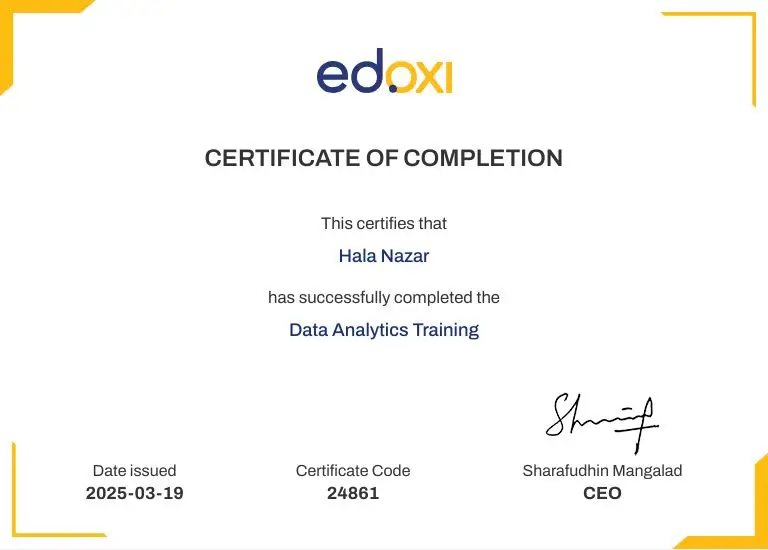
Upon completion, participants receive Edoxi’s course completion certification, validating their HR analytics expertise. This training supports career growth in HR analytics, people analytics, and strategic HR roles across Qatar.

To learn more about the HR Analytics course fees, schedules, syllabus, or customised corporate training, contact our team at Edoxi Training Center in Qatar.

Key Features of Edoxi's HR Analytics Course in Qatar

Advanced Analytical Tools Training

Gain proficiency in data analysis and visualisation using Power BI, Microsoft Excel, and Google Sheets to enhance HR decision-making.

Hands-On Data Workshops

Participate in interactive sessions with real HR datasets to strengthen your analytical skills through practical exercises and group activities.

Real-World Case Studies

Apply HR analytics techniques to scenarios in recruitment, training, and performance management to build strong problem-solving abilities.

HR Metrics & Performance Analysis

Learn to analyse key HR metrics and performance indicators using advanced data visualisation techniques on sample datasets.

Collaborative Learning Approach

Engage in team-based assignments and group presentations to exchange insights and develop strategic thinking.

Strategic Project Implementation

Work on real-world HR challenges using analytical tools to deliver impactful, data-driven solutions.

Who Can Join Our HR Analytics Course in Qatar?

HR Professionals & HR Executives

HR managers, generalists, and executives looking to enhance their skills in workforce analytics and data-driven HR decision-making.

HR Analysts & People Analytics Specialists

Professionals focused on analysing HR data, building dashboards, and generating insights to improve organisational performance.

Recruitment & Talent Acquisition Specialists

Recruiters aiming to optimise hiring strategies using data analytics and improve candidate selection and retention.

Learning & Development Professionals

L&D specialists who want to measure training effectiveness and use analytics to support employee growth and development.

Business Managers & Team Leaders

Professionals managing teams who need data-driven insights to improve workforce productivity and engagement.

Corporate HR Teams

Organisations looking to upskill HR teams in analytics, reporting, and strategic workforce planning.

HR Analytics Course Modules

Module 1: Introduction to Strategic HR Analytics
  • Chapter 1.1: Foundations of HR Analytics

    • Lesson 1.1.1: Defining HR Analytics and its Strategic Value
    • Lesson 1.1.2: Role of HR Analytics in Business Alignment
    • Lesson 1.1.3: Applications Across the Employee Lifecycle
  • Chapter 1.2: Frameworks and Implementation

    • Lesson 1.2.1: Overview of the Data Science Framework in HR
    • Lesson 1.2.2: Setting Up the HR Analytics Function and Culture
  • Chapter 1.3: Risks and Ethics

    • Lesson 1.3.1: Pitfalls in HR Data Projects
    • Lesson 1.3.2: Ethical Challenges in HR Analytics
Module 2: HR Metrics and Data Preparation
  • Chapter 2.1: Data Preparation

    • Lesson 2.1.1: Cleaning and Structuring HR Data
  • Chapter 2.2: Workforce Metrics Development

    • Lesson 2.2.1: Employees per Manager
    • Lesson 2.2.2: Career Progression Metrics
    • Lesson 2.2.3: Clearance Time Analysis
    • Lesson 2.2.4: Workforce Profiling (Age, Service, Tenure, Attrition Index)
  • Chapter 2.3: Strategic Alignment

    • Lesson 2.3.1: Linking HR Metrics to Organisational Strategy
Module 3: Data Visualisation Fundamentals in HR
  • Chapter 3.1: Basics of Data Visualisation

    • Lesson 3.1.1: Introduction to HR Data Visualisation
    • Lesson 3.1.2: Principles of Data Storytelling and Visual Design
  • Chapter 3.2: Tools and Techniques

    • Lesson 3.2.1: Overview of Power BI and Excel
    • Lesson 3.2.2: Visualisation of HR Metrics
  • Chapter 3.3: Best Practices

    • Lesson 3.3.1: Common Pitfalls in HR Dashboards and Charts
    • Lesson 3.3.2: Visualisation in Practice (Strategic Examples)
Module 4: Recruitment and Talent Acquisition Analytics
  • Chapter 4.1: Recruitment Process Overview

    • Lesson 4.1.1: Steps of the Recruitment Process
  • Chapter 4.2: Recruitment Metrics

    • Lesson 4.2.1: Fill Rate, Time to Hire, Hiring Cost
    • Lesson 4.2.2: Early Turnover and Probation Termination
    • Lesson 4.2.3: Recruitment Channel Effectiveness
    • Lesson 4.2.4: Offer Declines and Reneges
    • Lesson 4.2.5: Fulfilment Ratios and Quality of Hire
  • Chapter 4.3: Analysis and Challenges

    • Lesson 4.3.1: Managerial Challenges in Recruitment
    • Lesson 4.3.2: Visual Analysis of Recruitment Metrics
Module 5: Selection and Retention Analytics
  • Chapter 5.1: Selection Process

    • Lesson 5.1.1: Stages of the Employee Selection Process
    • Lesson 5.1.2: Selection Analytics (Fit Assessment & Hiring Trends)
  • Chapter 5.2: Retention Analytics

    • Lesson 5.2.1: Turnover Analysis (Voluntary & Involuntary)
    • Lesson 5.2.2: Retention by Grade, Department, and Performance
    • Lesson 5.2.3: Internal Mobility and Hire Index
  • Chapter 5.3: Insights and Visualisation

    • Lesson 5.3.1: Managerial Challenges in Selection Lifecycle
    • Lesson 5.3.2: Visualisation of Retention Trends
Module 6: Training and Learning Analytics
  • Chapter 6.1: Training Lifecycle

    • Lesson 6.1.1: Steps in the Training Lifecycle
  • Chapter 6.2: Training Metrics

    • Lesson 6.2.1: Training Hours and Cost per Employee
    • Lesson 6.2.2: Training Distribution and Participation
    • Lesson 6.2.3: ROI/ROE and Pre-Post Assessments
  • Chapter 6.3: Impact and Visualisation

    • Lesson 6.3.1: Measuring Training Impact
    • Lesson 6.3.2: Managerial Challenges in Training
    • Lesson 6.3.3: Visualisation of Training KPIs
Module 7: Employee Development and Career Growth Analytics
  • Chapter 7.1: Development Planning

    • Lesson 7.1.1: Steps of Employee Development Planning
  • Chapter 7.2: Development Metrics

    • Lesson 7.2.1: Readiness Index and Capability Scores
    • Lesson 7.2.2: Mobility and Career Pathing Metrics
    • Lesson 7.2.3: Succession Planning Metrics
  • Chapter 7.3: Insights and Visualisation

    • Lesson 7.3.1: Addressing Development Challenges
    • Lesson 7.3.2: Visualisation of Development Metrics
Module 8: Performance and Compensation Analytics
  • Chapter 8.1: Performance Management

    • Lesson 8.1.1: Steps in Performance Management
    • Lesson 8.1.2: Performance Indexing and Scorecards
    • Lesson 8.1.3: KPI Creation and Goal Alignment
  • Chapter 8.2: Compensation Analytics

    • Lesson 8.2.1: Pay Equity and Pay Bands
    • Lesson 8.2.2: Variable Pay and Rewards Benchmarking
  • Chapter 8.3: Insights and Visualisation

    • Lesson 8.3.1: Managerial Challenges in Compensation
    • Lesson 8.3.2: Visualisation of Performance and Pay Distribution
Module 9: Diversity, Equity, and Inclusion (DEI) Analytics
  • Chapter 9.1: DEI Strategy

    • Lesson 9.1.1: DEI Strategy and Benchmarks
  • Chapter 9.2: DEI Metrics

    • Lesson 9.2.1: Workforce Diversity Metrics
    • Lesson 9.2.2: Inclusion and Belonging Index
  • Chapter 9.3: Implementation and Visualisation

    • Lesson 9.3.1: DEI Barriers and Success Metrics
    • Lesson 9.3.2: DEI Analytics Across HR Functions
    • Lesson 9.3.3: Visualisation of DEI Insights
Module 10: Technology, Social Media, and Gamification in HR
  • Chapter 10.1: Digital HR Trends

    • Lesson 10.1.1: AI, Automation, Big Data, AR in HR
    • Lesson 10.1.2: Competencies for Digital HR Professionals
  • Chapter 10.2: Social Media and Gamification

    • Lesson 10.2.1: Social Media Metrics in Talent Branding
    • Lesson 10.2.2: Gamification in HR (Engagement & Attraction)
Module 11: Advanced Data Visualisation Tools for HR
  • Chapter 11.1: Power BI for HR

    • Lesson 11.1.1: Advanced Dashboard Techniques
    • Lesson 11.1.2: Filters, Drill-Downs, Interactive Reports
  • Chapter 11.2: Excel and Tableau

    • Lesson 11.2.1: Excel Dashboards and Pivot Charts
    • Lesson 11.2.2: Tableau for HR Storytelling
  • Chapter 11.3: Practical Applications

    • Lesson 11.3.1: 9-Box Grid Dashboard
    • Lesson 11.3.2: Multi-Dimensional Visual Reporting
Module 12: Participant Presentations and Analytics Showcase
  • Chapter 12.1: Project Work

    • Lesson 12.1.1: Recruitment Analytics Project
    • Lesson 12.1.2: Learning & Development Analytics Project
    • Lesson 12.1.3: Performance Analytics Project
    • Lesson 12.1.4: Diversity Analytics Project
  • Chapter 12.2: Final Evaluation

    • Lesson 12.2.1: Final Presentations
    • Lesson 12.2.2: Peer Review and Instructor Feedback
    • Lesson 12.2.3: Group Reflection and Real-World Alignment

Real-World Projects in HR Analytics Training

Edoxi’s HR Analytics Course in Qatar includes practical, hands-on projects that help participants apply data-driven HR strategies in real-world scenarios.

Projects

  • Training Effectiveness Project

    Evaluate training outcomes using data visualisation tools to measure learning effectiveness and create insightful dashboards and reports.

  • Talent Acquisition Analytics Project

    Analyse recruitment challenges using real-world datasets and develop strategies to optimise hiring processes and improve talent acquisition outcomes.

  • Performance Data Modelling

    Work with employee performance data to build analytical models and visualisations that support effective performance management.

  • Workforce Insights Dashboard

    Create interactive dashboards using Power BI, Excel, and Google Sheets to track key HR metrics and generate actionable organisational insights.

HR Analytics Course Outcome and Career Opportunities in Qatar

Edoxi’s HR Analytics Course in Qatar prepares you for data-driven HR roles that require strong analytical thinking and strategic decision-making. Here are some of the possible outcomes you can expect from this training:

Course Outcome Image
Enhance career advancement opportunities by qualifying for specialised HR analytics roles with higher compensation and greater organisational influence.
Develop data visualisation expertise to create impactful dashboards that transform complex workforce data into actionable insights.
Strengthen strategic decision-making by making evidence-based HR recommendations that improve organisational performance and efficiency.
Improve cross-functional collaboration by working effectively with finance, operations, and IT teams using analytical insights.
Gain a competitive edge in the job market with in-demand HR analytics and technical skills.
Measure business impact effectively by evaluating HR initiatives, calculating ROI, and demonstrating their value to the organisation.

Job Opportunities after Completing HR Analytics Training in Qatar

  • HR Analyst
  • People Analytics Specialist
  • HR Data Analyst
  • Talent Acquisition Analyst
  • Compensation & Benefits Analyst
  • Learning & Development Analyst
  • Workforce Planning Analyst
  • HR Business Partner (Analytics-Focused)
  • HR Reporting Specialist
  • People Operations Analyst

Top Companies Hiring HR Analytics professionals in Qatar

  • QatarEnergy
  • Ooredoo
  • Qatar National Bank
  • Hamad Medical Corporation
  • Sidra Medicine
  • Qatar Airways
  • Deloitte
  • PwC
  • KPMG
  • EY

HR Analytics Training Options

Classroom Training

  • 24-hour Interactive Instructor-Led Sessions

  • Hands-On MS Power BI Exercises

  • Peer Learning Through Group Activities

  • Real-Time Problem-Solving Opportunities

Live Online Training

  • 24-hour Virtual Interactive Live Classes

  • Flexible Scheduling Options

  • Digital Collaboration Tools

  • Recorded Sessions for Review

Corporate Training

  • 3-day Customised Curriculum for Organisational Needs

  • Team-Based Learning Activities

  • Company-Specific Case Studies

  • Flexible Delivery Formats (On-site/ Hotels / Time Office)

How to Get an HR Analytics Certification in Qatar?

Here’s a four-step guide to becoming a certified HR Analytics professional.
students-image

Edoxi is Recommended by 95% of our Students

Meet Our Mentor

Our mentors are leaders and experts in their fields. They can challenge and guide you on your road to success!

mentor-image

Sudhir Yadav

Sudhir Yadav is a seasoned HR Analytics Trainer at Edoxi Training Institute, with over 14 years of specialized training experience. As the former Global Head of Learning & Development at BLS International, he has successfully trained more than 50,000 professionals. His expertise in learning and organizational development equips participants with essential theoretical knowledge and practical skills for effective real-world application. Sudhir's unique blend of skills in data analytics, operational excellence, and organizational learning strategies bridges advanced analytical methodologies with practical HR applications, providing students with valuable insights for implementing data-driven strategies. A passionate traveler, Sudhir brings a global perspective to his teaching, enhancing the understanding of HR analytics across diverse contexts. His extensive experience in managing training programs for large groups allows him to distill complex analytical concepts into clear, accessible lessons that resonate with professionals at all levels, empowering them to thrive in the dynamic field of HR analytics.