Leave your message to get our quick response
edoxi automated message icon

Microsoft SQL Server Certification Course in Qatar

A man in a data center holding a laptop, wearing a white shirt and lanyard, smiling confidently.
Edoxi’s 24-hour SQL Server Course in Qatar helps you master SQL queries, database administration, backup and recovery, performance tuning, and database security through hands-on training. Gain practical experience with Microsoft SQL Server, SSMS, real-world projects, and expert-led sessions. Designed for IT professionals, developers, and beginners seeking career opportunities in database management and analytics. Enrol now.
Course Duration
24 Hours
Corporate Days
5 days
Learners Enrolled
200+
Module
11
star-rating-icon1
star-rating-icon2
star-rating-icon3
Course Rating
4.9
star-rating-4.9
Mode of Delivery
Online
Classroom
Certification by

What Do You Learn from Edoxi's SQL Server Training

Comprehensive T-SQL Development Skills
Master Transact-SQL (T-SQL) programming, including DDL, DML, DQL, DCL, and TCL commands.
Advanced Database Design and RDBMS Concepts
Understand database normalisation, table relationships, and constraints. Master tools like SQL Server Management Studio (SSMS).
Query Optimisation and Performance Tuning
Learn to analyse execution plans and use Dynamic Management Views (DMVs). Apply SQL Profiler.
Database Security and Access Control
Implement Row-Level Security, Transparent Data Encryption, and manage user permissions.
Enterprise Database Solutions
Create Views, Design Indexes (Clustered and Non-Clustered), and implement Full-Text Search.
Automated Database Operations
Develop Stored Procedures, Triggers, and Functions, while mastering integration with SQL Server Reporting Services (SSRS) and Azure SQL Database.

About Our Microsoft SQL Server Certification Course in Qatar

Edoxi offers a 24-hour comprehensive SQL Server training in Qatar, focusing on practical database management and development skills. Our program is designed for IT professionals, developers, and data enthusiasts seeking to master database administration and query optimisation. SQL Server corporate training is also available to organisations that want to upskill their teams. 

The course provides hands-on experience with SQL Server Management Studio (SSMS), covering essential aspects from basic query writing to advanced database administration. The curriculum aligns with current industry demands, ensuring you develop skills valued by leading organisations in Qatar. Students work on real-world projects including e-commerce systems, library management, and inventory databases.

By the end of our SQL Server program, you will be prepared for roles in database administration and development across finance, healthcare, and IT sectors. 

For detailed information about SQL Server course fees, upcoming batch schedules, or corporate training solutions, contact Edoxi in Qatar.

Key Features of Edoxi's SQL Server Training

Hands-on learning

Real-time learning through enterprise-level database tasks.

Project Portfolio

Develop a portfolio with projects on diverse databases.

Comprehensive Study Materials

Resources on SQL queries and advanced database administration.

Personalised Learning

Personalised 1:1 session for mastering complex database concepts.


Who can join Edoxi’s SQL Server Training in Qatar?

IT professionals

IT professionals who want to develop skills in integrating SQL Servers into applications and IT infrastructure.

Non-IT Professionals

Non-IT Professionals who want to switch their career to Database Administration.

Data Engineers

Data Engineers who want to enhance their skills in handling large datasets.

Freshers & Graduates

Freshers and Graduates in the IT field who want to specialise in Big Data.

SQL Server Modules

Module 1: Introduction to Databases and SQL
  • Chapter 1.1: Introduction to Database

    • Lesson 1.1.1: Introduction to Database Concepts
    • Lesson 1.1.2: Relational Database Management Systems (RDBMS)
    • Lesson 1.1.3: What is SQL?
    • Lesson 1.1.4: Top 5 RDBMS
    • Lesson 1.1.5: Introduction to MS SQL Server
    • Lesson 1.1.6: Different Editions of MS SQL Server
Module 2: Setting Up the Environment
  • Chapter 2.1: Download, Install, and Configure Windows

    • Lesson 2.1.1: MS SQL Server Prerequisites
    • Lesson 2.1.2: Lab Setup Overview
    • Lesson 2.1.3: Introduction to Virtualization
    • Lesson 2.1.4: Download and Install VMWare Workstation Player
    • Lesson 2.1.5: Optional: Download and Install Oracle VirtualBox
    • Lesson 2.1.6: Creating a Virtual Machine
    • Lesson 2.1.7: Download and Install Windows Server
    • Lesson 2.1.8: Virtual Machine Management
  • Chapter 2.2: Download, Install, and Configure MS SQL Server

    • Lesson 2.2.1: Prerequisites for MSSQL Installation
    • Lesson 2.2.2: Download MSSQL and SQL Server Management Studio
    • Lesson 2.2.3: Installing and Configuring MSSQL
    • Lesson 2.2.4: Install SQL Server Management Studio
    • Lesson 2.2.5: Download and Install AdventureWorks Database
Module 3: Database Fundamentals and Design
  • Chapter 3.1: Understanding Database Fundamentals

    • Lesson 3.1.1: What is Data and Database?
    • Lesson 3.1.2: How Data is Stored
    • Lesson 3.1.3: Understanding Tables, Columns, and Rows
    • Lesson 3.1.4: Keys: Primary, Foreign, Unique Keys, etc.
    • Lesson 3.1.5: Relational Database and RDBMS Overview
    • Lesson 3.1.6: Transactions and ACID Properties
  • Chapter 3.2: Database Normalization and Design

    • Lesson 3.2.1: Introduction to Database Normalization
    • Lesson 3.2.2: Different Forms of Database Normalization
    • Lesson 3.2.3: Create Your First Database, Table, and Populate Data
Module 4: Introduction to SQL Commands
  • Chapter 4.1: Getting Started with SQL Commands

    • Lesson 4.1.1: Welcome to Basic SQL Commands
    • Lesson 4.1.2: Overview of SQL Statements and Their Types
    • Lesson 4.1.3: DML Statements with Examples
    • Lesson 6.4: DDL Statements with Examples
    • Lesson 4.1.5: DCL Statements with Examples
    • Lesson 4.1.6: TCL Statements with Examples
Module 5: Querying and Manipulating Data
  • Chapter 5.1: Querying Data Using SQL

    • Lesson 5.1.1: Creating Tables and Temporary Tables
    • Lesson 5.1.2: Understanding Views
    • Lesson 5.1.3: SELECT Statement in Detail
    • Lesson 5.1.4: Operators, Expressions, and Conditions
    • Lesson 5.1.5: WHERE Clause, ORDER BY, HAVING, and GROUP BY Clauses
    • Lesson 5.1.6: Selecting from Two Tables – JOINS
    • Lesson 5.1.7: Different Types of JOINS
    • Lesson 5.1.8: Subqueries and Their Uses
  • Chapter 5.2: Manipulating Data Using SQL

    • Lesson 5.2.1: INSERT, UPDATE, DELETE, and TRUNCATE Statements
    • Lesson 5.2.2: Stored Procedures and Their Applications
    • Lesson 5.2.3: Functions, Triggers, and INDEX
    • Lesson 5.2.4: Clustered and Non-Clustered Indexes
    • Lesson 5.2.5: Index Design Considerations and Fragmentation
    • Lesson 5.2.6: Lab: Index Design and Management
Module 6: Microsoft SQL Database Administration
  • Chapter 6.1: MSSQL Management Tools

    • Lesson 6.1.1: Overview of MSSQL Management Tools
    • Lesson 6.1.2: Exploring SQL Server Management Studio (SSMS)
    • Lesson 6.1.3: Exploring SQL Server Configuration Manager
    • Lesson 6.1.4: MSSQL System Databases
    • Lesson 6.1.5: Understanding Master, Tempdb, MSDB, and Other System Databases
Module 7: Advanced MSSQL Concepts
  • Chapter 7.1: Deep Dive into MSSQL Architecture

    • Lesson 7.1.1: Pages, Extents, and Page Architecture
    • Lesson 7.1.2: MSSQL Architecture Overview
    • Lesson 7.1.3: MSSQL Database Architecture
    • Lesson 7.1.4: Transaction Log Operations and Working
    • Lesson 7.1.5: Configuring User Databases
    • Lesson 7.1.6: Best Practices for Creating User Databases
Module 8: MSSQL Backup and Restore
  • Chapter 8.1: Backup and Restore Fundamentals

    • Lesson 8.1.1: Importance of Database Backups for DBAs
    • Lesson 8.1.2: Recovery Models and Their Impact on Backups
    • Lesson 8.1.3: Full and Differential Backups
    • Lesson 8.1.4: Transaction Log Backups and Log Backup Chains
    • Lesson 8.1.5: Tail-Log Backups and Their Usage
    • Lesson 8.1.6: Lab: Full, Differential, and Transaction Log Backups
  • Chapter 8.2: Restoring Databases

    • Lesson 8.2.1: Restore and Recovery Overview
    • Lesson 8.2.2: Full, Differential, and Transaction Log Restores
    • Lesson 8.2.3: Point-in-Time Restore of Databases
    • Lesson 8.2.4: Lab: Complete Backup and Restore in Time
    • Lesson 8.2.5: Using the DBCC CHECKDB Command
    • Lesson 8.2.6: Page-Level Restore and Recovery Using Full Backups
    • Lesson 8.2.7: Creating Maintenance Plans for Backups and Reindexing
Module 9: MSSQL User Management
  • Chapter 9.1: Managing Users and Security

    • Lesson 9.1.1: MSSQL Security Model Overview
    • Lesson 9.1.2: MSSQL Server Authentication Modes
    • Lesson 9.1.3: Managing Server Logins
    • Lesson 9.1.4: Server Roles and Their Usage
    • Lesson 9.1.5: Understanding Database Users
    • Lesson 9.1.6: Database Roles and Their Configuration
    • Lesson 9.1.7: Managing Permissions (GRANT, DENY, and REVOKE)
Module 10: MSSQL Server Agent Management
  • Chapter 10.1: Automating Tasks with SQL Server Agent

    • Lesson 10.1.1: Introduction to SQL Server Agent
    • Lesson 10.1.2: Creating and Managing SQL Server Agent Jobs and Schedules
    • Lesson 10.1.3: Configuring Agent Alerts
    • Lesson 10.1.4: Operators and Their Configuration
    • Lesson 10.1.5: Setting Up Database Mail
    • Lesson 10.1.6: Monitoring SQL Server with Activity Monitor
Module 11: Advanced SQL Server Administration Topics
  • Chapter 11.1: High Availability and Replication

    • Lesson 11.1.1: Understanding High Availability and Its Types
    • Lesson 11.1.2: Introduction to Replication and Transactional Replication
    • Lesson 11.1.3: Transactional Replication Setup (Lab)
    • Lesson 11.1.4: Log Shipping and Configuring Log Shipping
  • Chapter 11.2: Encryption and Security Enhancements

    • Lesson 11.2.1: Overview of SQL Server Encryption and Encryption Types
    • Lesson 11.2.2: Transparent Data Encryption (TDE) and Configuration

Download MS SQL Server Course Brochure

Real-World Projects in SQL Server Course

The SQL Server course integrates intensive hands-on training. Here are the major practical projects.

Projects

  • E-Commerce Database System

    Design tables for products, orders, and customers. Implement queries for inventory management and customer analysis.

  • Library Management System

    Create tables for books, members, and borrowing records. Develop queries for tracking circulation and generating analytics.

  • Student Database System

    Build tables for student records, course enrollments, and performance tracking. Implement queries for course and progress management.

  • Sales and Inventory System

    Design a database for sales, suppliers, and inventory. Use advanced queries for sales insights and stock control.

SQL Server Course Outcomes and Career Opportunities in Qatar

Edoxi’s SQL Server training serves as a robust foundation for a successful career in database administration and development.  The following are the outcomes of joining the SQL Server Course in Qatar,

Course Outcome Image
Prepare for advanced-level certifications in Database Administration and SQL Server technologies.
Implement effective data recovery and disaster recovery strategies to ensure database continuity and business resilience.
Optimise database performance, strengthen data security, and protect critical organisational information from potential threats.
Create insightful, data-driven dashboards and reports for enhanced business intelligence and decision-making.
Develop the analytical skills required to support strategic and operational business decisions using database insights.
Manage, organise, and analyse large-scale datasets efficiently to support modern business and enterprise applications.

Job Opportunities After Completing SQL Server Training

  • SQL Developer
  • Database Administrator
  • Software Developer
  • Data Analyst
  • Senior SQL Developer
  • Database Administrator
  • Data Scientist
  • Lead Database Administrator
  • Database Architect
  • Data Engineering Manager

Companies Hiring SQL Server Professionals in Qatar

  • QatarEnergy
  • Qatar National Bank
  • Oracle
  • VAM Systems
  • McKinsey & Company
  • Egis Group
  • Qatar Development Bank
  • INTALEQ
  • Metamorf Group
  • Avanceon

SQL Server Training Options

Classroom Training

  • 24 hours of SQL Server training

  • Exclusive lab

  • Benefit from direct instructor interaction

  • Receive personalised 1:1 guidance

  • Practice hands-on coding with immediate support

Live Online Training

  • 24 hours of online SQL Server training

  • Join live interactive sessions from any location

  • Experience the same curriculum as classroom training

  • Get individual attention through a 1:1 virtual format

Corporate Training

  • 5 days of SQL Server corporate training

  • Customised training programs

  • Content adapted to business requirements

  • Choice of online or classroom delivery

  • Venue arrangement at Hotel, Client Premises

  • Food and Refreshments included

Do You Want a Customised Training for MS SQL Server Course?

Get expert assistance in getting your MS SQL Server Course customised!

How to Get Certified in SQL Server in Qatar?

Here’s a four-step guide to becoming a certified SQL Server professional.
Do You Want to be a Certified Professional in MS SQL?

Join Edoxi’s Microsoft SQL Server Course

Why Choose Edoxi for the SQL Server Training in Qatar?

Edoxi, a leading SQL Server Training Institute in Qatar, delivers industry-aligned training programmes. The following are the reasons why students and professionals choose Edoxi for SQL Server Training in Qatar, 

Customised Learning Pathway

We provide tailored guidance and customised training based on your level of knowledge.

One-to-One Training

Our one-to-one training helps the participants to understand the SQL concepts thoroughly.

Comprehensive Practical Training

Participants engage in real-world activities and projects that strengthen their practical knowledge.

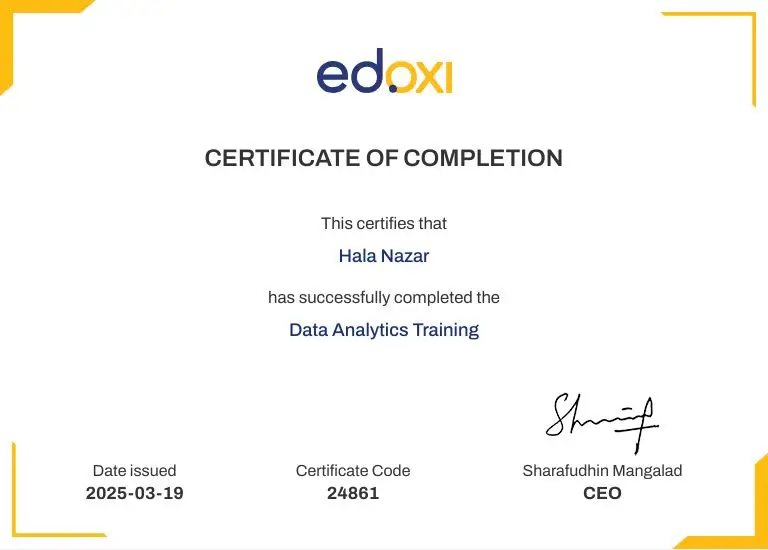
Course Completion Certification

You receive Edoxi’s course completion certification after finishing the SQL Server Training.

students-image

Edoxi is Recommended by 95% of our Students

Meet Our Mentor

Our mentors are leaders and experts in their fields. They can challenge and guide you on your road to success!

mentor-image

Afreen M

Afreen, with four years of dedicated teaching experience, has successfully trained over 100 students in programming languages like Python, SQL, and Java. She combines her technical expertise with a passion for education, tailoring her instruction to suit the unique needs of young learners. Her interests in reading and working on coding projects help her design engaging and practical learning experiences for her students.

Afreen’s teaching philosophy emphasizes hands-on learning, guiding children through projects like game development and calculator applications. Her balanced approach helps students build confidence in technology while mastering essential programming skills. By staying actively engaged with personal coding projects, she ensures her teaching remains current, practical, and effective, creating an encouraging environment where children can explore and understand coding concepts with ease.

Locations Where Edoxi Offers MS SQL Certification Course

Here is the list of other major locations where Edoxi offers MS SQL Certification Course

FAQ

What are the prerequisites for joining Edoxi’s SQL Server Course in Qatar?

To join Edoxi’s SQL Server course, you only need basic computer knowledge and a simple understanding of databases or data tables. Beginners can easily follow the training because Edoxi provides step-by-step guidance and practical exercises throughout the course.

What is the duration of the SQL Server Training in Qatar?

Edoxi’s SQL Server Training in Qatar includes 24 hours of instructor-led training. Corporate training batches are also available in an intensive 5-day format. Learners can choose classroom training or live online sessions based on their schedule.

Is Edoxi’s SQL Server Course in Qatar suitable for beginners?

Yes. Edoxi’s SQL Server Course in Qatar is beginner-friendly. Trainers explain SQL concepts from the fundamentals, including database creation, queries, tables, joins, and reporting.

What career opportunities are available after completing the SQL Server Certification in Qatar?

After completing the SQL Server Certification in Qatar, you can apply for roles such as:

  • SQL Developer
  • Database Administrator
  • Data Analyst
  • BI Developer
  • Software Developer
  • Database Support Engineer
  • ETL Developer

These roles are highly demanded across Qatar’s IT, banking, healthcare, retail, and telecom sectors.

What is the average salary for SQL Server professionals in Qatar?

The average salary for entry-level SQL Server professionals in Qatar ranges between QAR 5,000 and QAR 8,000 per month. Experienced SQL Server DBAs, Data Engineers, and Database Developers can earn between QAR 12,000 and QAR 20,000+, depending on experience, certifications, and technical expertise.

Which industries in Qatar hire SQL Server professionals?

SQL Server professionals are actively hired in industries such as:

  • Banking and Finance
  • Healthcare
  • Information Technology
  • Retail and E-commerce
  • Education
  • Telecommunications
  • Oil and Gas
  • Government Organisations

These sectors depend on database professionals to manage business-critical data and reporting systems.

What projects are included in Edoxi’s SQL Server Training?

During the SQL Server Training, learners work on real-time database projects such as:

  • Student Management Systems
  • Inventory Management Systems
  • E-commerce Databases
  • Sales Reporting Dashboards
  • Employee Record Systems

These projects help learners gain hands-on SQL Server experience.

Who can join the SQL Server Course in Qatar?

Edoxi’s SQL Server Course in Qatar is ideal for:

    • Fresh graduates
    • IT professionals
    • Software Developers
    • Business Analysts
    • Data Analysts
    • Database Administrators
Professionals planning a career in data management
Does Edoxi provide a certificate after the SQL Server Training in Qatar?
Yes. Edoxi provides an industry-recognised SQL Server Certification after successful course completion.
Why choose Edoxi for SQL Server Training in Qatar?

Edoxi offers practical SQL Server Training with experienced trainers, hands-on projects, flexible schedules, and real-world database scenarios. The training focuses on job-oriented skills that match Qatar’s current industry requirements.

What skills do you learn in Edoxi’s SQL Server Course?

The course helps you learn:

  • SQL Queries
  • Database Design
  • Joins and Stored Procedures
  • Data Management
  • SQL Reporting
  • Performance Optimisation
  • Backup and Recovery
  • Database Security
Does Edoxi provide online SQL Server Training in Qatar?

Yes. Edoxi offers both classroom and live online SQL Server Training in Qatar. Online learners receive live instructor support, practical sessions, and project-based training.

How does SQL Server Certification help your career in Qatar?

SQL Server Certification helps improve your database management skills and increases your chances of getting IT and data-related jobs in Qatar. Many companies prefer certified professionals for database administration and reporting roles.

What tools are covered in Edoxi’s SQL Server Course in Qatar?

The course covers important SQL Server tools and technologies, including:

  • Microsoft SQL Server
  • SQL Server Management Studio (SSMS)
  • SQL Queries
  • Stored Procedures
  • Functions and Triggers
  • Reporting and Database Optimisation
Is SQL Server a good career option in Qatar?

Yes. SQL Server professionals are in high demand in Qatar because companies rely heavily on databases, analytics, reporting systems, and business applications. SQL Server skills also create opportunities in data analytics and business intelligence careers.