Request a Callback

+44 7497 303637
 Aug 10, 2026
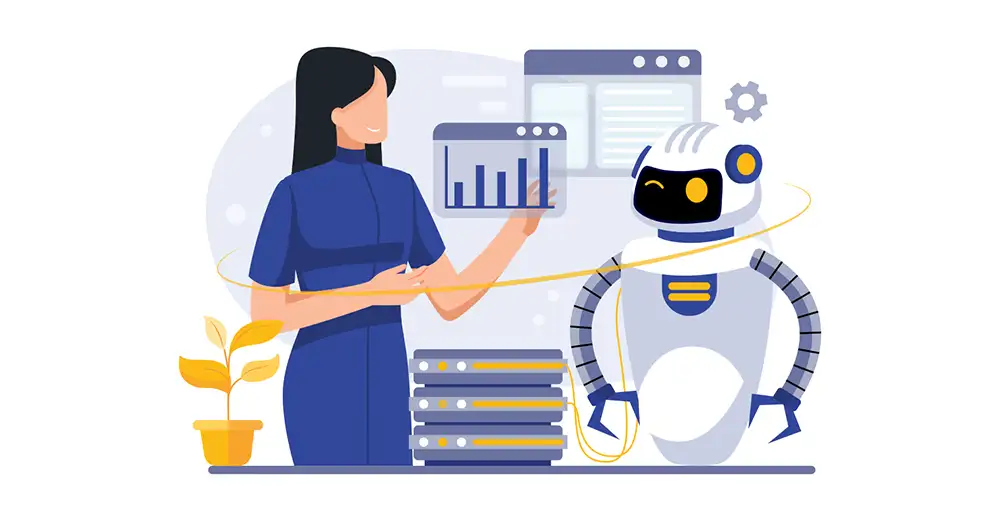
Artificial Intelligence (AI) in advertising is the use of advanced algorithms and machine learning models to automate, optimise, and personalise advertising campaigns. Unlike traditional marketing approaches, AI can process massive datasets, uncover patterns, and deliver insights in real time, enabling advertisers to reach the right audience with the right message, every time.
AI in advertising is helping companies connect with the right people at the right time, making everything run smoothly and work much better than before. According to Google, Performance Max campaigns, powered by AI, are achieving an average of over 18% more conversions at a similar cost per action. This reflects the AI role in reshaping advertising and maximising the impact.
Marketers believe that AI is influencing and will continue to strongly influence advertising in the coming years, but many still don’t fully understand how it works. This guide will cover everything you need to know about AI in advertising, how it helps, how it’s used, its challenges, and what the future looks like for AI-driven advertising.
Artificial Intelligence (AI) in advertising uses machine learning and intelligent systems to automate, optimise, and personalise campaigns in real-time, going far beyond traditional manual methods. By leveraging vast amounts of data, AI enables marketers to deliver highly relevant ads, improve efficiency, and maximise ROI across multiple channels. The following are the 7 key applications of AI in advertising:
AI analyses user behaviour, interests, demographics, and past purchases to identify high-value audience segments. This allows marketers to create hyper-targeted campaigns tailored to individual preferences.
Example: E-commerce platforms like Amazon use AI to recommend products based on browsing and purchase history, increasing engagement and sales.
AI automates repetitive and data-intensive tasks such as bidding strategies, ad creation, and budget allocation, saving marketers time and effort.
Example: Google Performance Max campaigns use AI-powered keywordless technology to analyse landing pages, product feeds, and assets to auto-generate ads, select audiences, and adjust bids for maximum conversions.
AI courses can help professionals develop the practical skills required to use AI-powered advertising tools effectively.
AI powers real-time bidding (RTB) and programmatic ad placement, ensuring ads reach the right audience at the optimal time and cost.
Example: An electronics store running multiple product ads lets AI automatically allocate budgets to top-performing devices or time slots, like boosting headphone ads on mobile in the evenings, improving sales without increasing spend.
Generative AI tools can create ad copy, images, and videos at scale, allowing marketers to test and optimise hundreds of variations quickly.
Example: Tools such as Persado and Pattern89 analyse audience sentiment and craft headlines and content that resonate emotionally, improving engagement and conversions.
AI constantly monitors campaign metrics like click-through rates and conversion rates, making real-time adjustments to bids, budgets, and placements. This ensures campaigns run efficiently around the clock.
Example: AI detects which products, platforms, or time slots are performing best and automatically reallocates resources to maximise ROI.
AI forecasts future campaign outcomes and consumer behaviour by analysing historical data and trends. This data-driven foresight helps marketers plan strategies, allocate budgets, and reduce risk.
Example: Retailers can predict which products are likely to trend in the next season and adjust ad spend accordingly.
AI tools monitor social media, reviews, and customer feedback to gauge public opinion and emotional responses. This allows marketers to adapt messaging and protect brand reputation.
Example: If negative sentiment spikes for a product launch, AI alerts marketers to adjust ad creatives or messaging promptly.
AI corporate training can help advertising organisations build these capabilities across their teams, enabling employees to apply AI tools to audience analysis, content creation, campaign optimisation, and data-driven marketing decisions.
Also Read: Everyday Examples and Applications of Artificial Intelligence (AI)
As mentioned, AI makes advertising smarter, faster, and more effective by enabling hyper-personalisation, precise targeting, real-time optimisation, automation, predictive insights, and scalable content creation, enhancing ROI, engagement, and efficiency. The following are the key benefits:
You can also refer to “How Can Artificial Intelligence Be Used in Creative Jobs” to help begin your creative career.
Although AI is strong, marketers should be aware of the second party, that is, the Challenges and Considerations.
The future of AI in advertising will be towards increased personalisation, increased automation, and increased optimisation in real-time. AI will provide highly personal ads, automatically generate copy and graphics and change placements immediately in accordance with audience behaviour. Predictive analytics will enable brands to better understand the consumer and thereby predict trends and make wiser planning decisions to run campaigns.
AI will also be used to automate the budget, improve fraud detection, and allow an immersive experience with AR/VR, which will make advertising more attractive and less intrusive. With the introduction of AI into repetitive and analytical work, humans will find themselves with less to do than just strategy, creativity, and storytelling.
In general, AI will enhance the relevance, efficiency, and ROI-based approaches to advertising by changing the links that brands have with their consumers.
Also Read: How AI Will Impact The Future Of Work And Life
AI corporate training can help advertising teams develop the practical skills needed to use AI for campaign optimisation, audience analysis, content creation, personalisation, and marketing automation. By upskilling employees, organisations can improve creative workflows, make faster data-driven decisions, and maximise campaign performance.
Edoxi operates as a KHDA-permitted training institute in Dubai and holds ISO 9001:2015 certification. Its accreditation and certification portfolio includes recognised organisations such as CPD, PMI, CompTIA, EC-Council, PECB, Autodesk, and Qualifi, depending on the programme.
Edoxi has also received an Outstanding Organisation Award at the Education 2.0 Conference, while its cybersecurity division received the EC-Council ATC Circle of Excellence Award for 2023 and 2024.
Edoxi’s AI Training in Dubai helps advertising professionals build capabilities in machine learning, predictive analytics, generative AI, data analysis, and AI automation. This enables teams to apply AI to audience segmentation, ad performance analysis, content personalisation, customer behaviour insights, and campaign automation, helping advertising organisations improve productivity, creativity, and marketing ROI.
|
How to Start with AI in Advertising
|
AI is no longer a futuristic concept; it’s transforming how brands reach and engage audiences today. From hyper-personalised targeting to real-time campaign optimisation, AI enhances efficiency, ROI, and creativity in ways that were impossible manually.
Marketers who embrace AI, balance it with human insight, and continuously adapt to new tools will be best positioned to thrive in the evolving advertising landscape.
AI is not replacing human creativity; it’s amplifying it. The future of advertising lies in smart collaboration between intelligent machines and human strategy.
The concept of AI in advertising involves optimising, personalising, and controlling ad campaigns with the use of machine learning, algorithms, and automation. It assists in the analysis of huge volumes of information, reaching the correct audience, enhancing performance, and automatically creating creative content.
AI enhances the performance of adverts by examining customer behaviour, bid adjustments in real time, creating more valuable audiences, developing superior ad creatives and redistributing resources to high-performing segments. This leads to an increase in conversions and ROI.
Examples are Google Performance Max campaigns, Meta Advantage + campaigns, Amazon product recommendations, programmatic ad buying and generative artificial intelligence tools that generate ad copy, images and video variations.
No. Automation of AI is done on heavy tasks of data, but creativity, planning, narration, and brand handling are all necessary to be in the hands of human beings. There is collaboration between AI and humans; the former performs optimisation, and the latter concentrates on ideas, strategy, and overall decisions.
The main concerns are the privacy of the data, bias in the algorithms, the absence of transparency in artificial intelligence decision-making, the reliance on the quality of data, and the necessity of human control to ensure the brand tone and ethical use.