Request a Callback

+44 7497 303637
 Aug 10, 2026
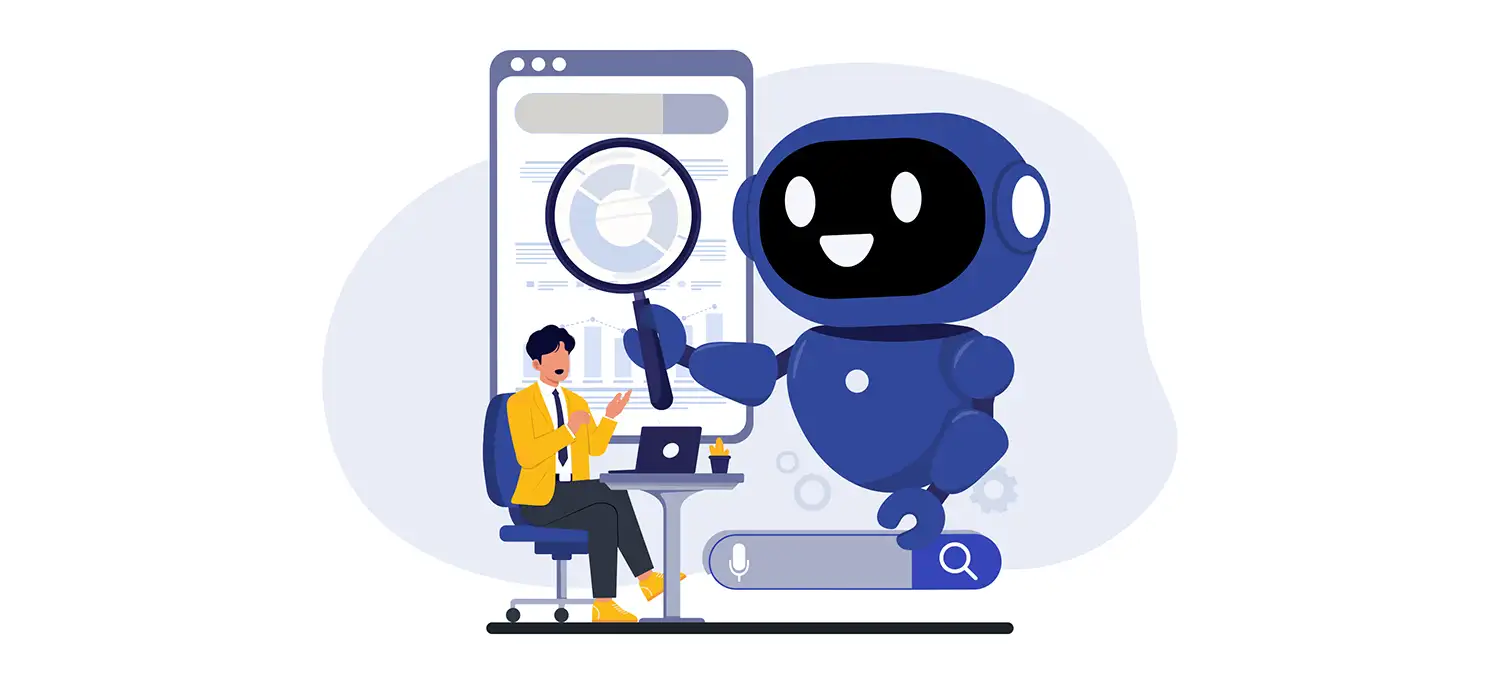
Artificial Intelligence (AI) in business is a great tool that employs data, automation, and smart algorithms to bring about a positive change in different sectors worldwide. Creating such a huge impact on the globe multi-industry level, AI is a major factor that effectively influences performance. As a result of AI, companies like Google, Microsoft, Amazon, and IBM are able to reduce expenses, increase the speed of their activities, and make more efficient decisions. More than 75% of businesses worldwide are currently using AI tools, and the rate of adoption is expected to increase as more operations become automated and the use of predictive analytics becomes a standard practice in digital operations.
Career opportunities in AI are also very attractive. The number of AI-related roles that will be available in the future, as compared to other tech jobs, is going to be much higher. On the other hand, companies are facing problems such as a lack of Artificial Intelligence skills within their workforce, data quality issues, and difficulties in integration. Knowing how AI works in business is very beneficial to you when large corporations worldwide decide to invest more in intelligent systems.
In order to figure out how AI can be the result driver of your business, you need to consider its operations through three fundamental layers: data collection and management, training models to understand the data, and utilising the insights to carry out automated actions.
AI powers a number of business functions that have a major positive impact on the business- they become more efficient, save money, and can grow further. These are the most common applications that you can put into practice right away:
Each of these AI applications plays a critical role in transforming business operations, and the following sections explain how they drive efficiency, accuracy, and strategic growth.
AI-enabled conversational agents and digital helpers resort to NLP for understanding customers' routine questions, complaints, or requests. Gartner (2024) predicts that the share of AI-powered customer service interactions is at present 20% worldwide and will reach 40% by 2026.
AI provides the ability to customise your campaigns, assign scores to leads, forecast churn, and make marketing expenses more efficient. According to Salesforce (2025), AI-driven suggestions, on average, increase lead conversion by 25%.
Examples:AI uses both historical and real-time data to not only forecast demand but also to anticipate market changes and identify operational risks. According to a Deloitte study (2025), companies that deploy predictive analytics are able to increase the accuracy of their decisions by 37%.
RPA is a technology that takes over the most boring, monotonous parts of a business, such as data entry, invoicing, reporting, and compliance, and automates them. According to UiPath 2025, RPA is capable of reducing manual work by as much as 60%.
Thus, So, when you use AI to power your business processes, you are essentially making fewer mistakes, getting work done faster, and your team members can concentrate on more important and strategic tasks.
AI predicts stock levels, estimates shipping times, and optimises routes. DHL (2024) reports AI reduces logistics costs by 15% through improved planning.
Consequently, companies are enabled to function in a more efficient manner, cut down on waste, and raise the level of customer satisfaction.
AI detects fraud, does automated auditing, assesses loans, and analyses spending. According to the World Economic Forum, AI is responsible for a 25-30% reduction in fraud losses for financial institutions.
AI in finance guarantees safer operations and better risk management, but without additional manual workload.
Read More: How AI is Transforming Jobs and Industries in the UAE by 2031
AI assists with the applicant screening process, CV analysis, onboarding automation and employee turnover prediction. According to LinkedIn (2024), the hiring process is made 45% faster through the use of AI.
Using AI for recruiting improves the efficiency of recruitment processes, increases the quality of candidates entering the workforce, and helps save the Human Resource department’s time.
Also Read: How to Start a Career in Artificial Intelligence in Qatar
The following key areas highlight how AI directly contributes to stronger business performance and measurable operational gains.
The sections below provide a detailed explanation of how each of these benefits strengthens organisational performance and drives long-term value.
Artificial Intelligence enables you to become a leading economic driver. In fact, according to PricewaterhouseCoopers (PwC), AI will add $15.7 trillion to world GDP by 2030 due to increased labour productivity and increased consumer demand. By incorporating AI into your Strategic Plan now, you can take advantage of the larger market available through increased economic growth.
You are going to be working 'smarter' instead of simply 'harder'. Goldman Sachs indicates that Generative Artificial Intelligence (GAI) could generate a 7% increase ($6.9T) in Global Gross Domestic Product (GDP) with a productivity increase of 1.5 percentage points (from 2.9% to 4.4%) over the next ten years. By leveraging GAI, your organisation has the ability to use automation technologies to automate the monotonous work of data entry, scheduling, and reporting, allowing your team members to spend more time on innovative problem-solving and customer relationship-building activities, creating a more productive workforce.
You will eliminate expensive mistakes. Even minute errors in healthcare or finance can be disastrous. AI systems operate in a consistent manner, so they don’t experience frustration, fatigue, or distractions. By utilising RPA, your organisation produces 100% accurate results in compliance reporting and financial auditing, protecting your company's brand identity and eliminating potential legal liabilities.
You stop depending on gut feeling. Instead, you decide based on evidence. SAP AI and Oracle give you the dashboards that forecast the results. According to a Bain & Company study, companies that use advanced analytics are twice as likely to be in the top quartile of financial performance within their industries. You deal with uncertainty without fear because your data shows the safest way forward.
You operate a business that is never off. While you sleep, your AI systems keep an eye on your IT infrastructure, handle customer service, and optimise your servers. This "always-on" capability allows you to scale globally without hiring three shifts of workers for every department. You deliver a seamless experience to a customer in Tokyo while your headquarters in New York is closed. This is the ultimate efficiency of modern business automation.
Read Also: Everyday Examples and Applications of Artificial Intelligence (AI)
AI is transforming how companies function, make choices, and retain a competitive advantage, so understanding this is essential. The ones who will lead tomorrow are those who will use AI in their work in an ethical and confident manner. If you want to keep your competitive edge and make a positive contribution to the future of your career, mastering these skills is of utmost importance. AI certification program can provide you with the core scientific knowledge to understand the technologies, concepts, and business cases that are required by modern businesses.
Read More: What Is Artificial Intelligence
AI corporate training equips teams with the practical knowledge and skills required to adopt and implement AI technologies effectively. It helps organisations address skills gaps, improve data-driven decision-making, and accelerate the responsible adoption of AI across departments. By providing structured, role-relevant training, businesses can help employees build the confidence and capabilities needed to work effectively with AI-powered tools and systems.
Edoxi operates as a KHDA-permitted training institute in Dubai. Its accreditation and certification portfolio includes recognised organisations such as CPD, PMI, CompTIA, EC-Council, PECB, Autodesk, and Qualifi, depending on the specific programme. Edoxi also holds ISO 9001:2015 certification, reflecting its commitment to a formal quality-management framework across its organisational processes.
Edoxi has also received external recognition for its training services. According to its official records, the institute received an Outstanding Organisation Award at the Education 2.0 Conference. In addition, its cybersecurity division received the EC-Council ATC Circle of Excellence Award for 2023 and 2024. These recognitions reflect Edoxi's broader training performance and should be considered separately from the specific accreditation, certification, or recognition associated with an individual course.
Edoxi’s AI Training in Dubai helps your organisation by delivering industry-aligned AI certification programs designed for real business impact. Through structured corporate training, the institute enables companies to upskill existing employees, reduce dependency on external hires, and build internal capability in areas such as machine learning, predictive analytics, automation, and AI-driven strategy. This targeted approach supports smoother AI integration, higher productivity, and a stronger competitive position in an increasingly intelligent marketplace.
Here is the list of other major locations where Edoxi offers AI Course
Artificial Intelligence Course in Dubai | Artificial Intelligence Course in Qatar | Artificial Intelligence Course in London