Leave your message to get our quick response
edoxi automated message icon

Python Course in Kuwait

A professional Python illustration showing a software developer coding on a desktop computer with Python scripts displayed on the screen in a modern development workspace, representing programming, automation, and data-driven applications.
Edoxi's 40-hour Python Programming Course in Kuwait takes you from beginner to advanced Python with a structured 20+20 learning path. You build strong skills in Python syntax, data structures, automation, OOP, GUI development and database handling through hands-on Python training and practical exercises. We guide you with expert trainers and personalised support to strengthen your career outcomes. Join now and start your Python journey.
Course Duration
40 Hours
Corporate Days
5 Days
Learners Enrolled
50+
Modules
25
star-rating-icon1
star-rating-icon2
star-rating-icon3
Course Rating
4.9
star-rating-4.9
Mode of Delivery
Online
Classroom
Certification by

What Do You Learn from Edoxi's Python Training

Python Programming Fundamentals
You learn to understand Python syntax, data types, control structures and functions, helping you build a strong foundation with guidance from our expert trainers.
Object-Oriented Programming Skills
You learn to apply object-oriented concepts such as classes, inheritance and polymorphism, enabling you to create efficient and reusable Python code for real-world use.
Python Data Structures
You learn to work confidently with lists, tuples and dictionaries, then advance to structured data handling techniques that improve program performance and clarity.
Database and GUI Development
You learn to manage file handling, integrate Python with MySQL and design graphical user interfaces using TKinter, helping you build interactive applications.
Advanced Python Applications
You learn to develop robust Python programs using multithreading, decorators and advanced libraries, strengthening your ability to handle complex programming tasks.
Professional Development Practices
You learn to utilise industry-standard tools, such as PyCharm and Visual Studio Code, while adhering to best practices that align with professional software development environments.

About Our Python Course in Kuwait

Edoxi's 40-hour Python Programming Course in Kuwait provides you with a structured learning path that takes you from beginner to advanced Python programming skills. You gain practical exposure through a 20-hour Python Beginner module and a 20-hour Python Advanced module, allowing you to build confidence step by step. We design this Python course in Kuwait to support learners at different skill levels, helping you progress without feeling overwhelmed while staying focused on real career outcomes.

In the beginner phase, you learn Python syntax, data structures, control flow, functions, file handling and exception handling. As you advance, you work with object-oriented programming, GUI development using TKinter, database integration, multithreading and advanced Python libraries. Our Python training in Kuwait focuses on hands-on learning, so you practise concepts through guided exercises that strengthen your problem-solving ability and coding accuracy.

Course Details Python Beginner Python Advanced
Duration 20 hours 20 hours
Course Focus Programming basics, IDEs, file handling, functions, exception handling, control flow statements and Python data structures. OOP concepts, GUI development, database handling, multithreading, TKinter and advanced Python libraries.
Ideal for Complete beginners starting their programming journey Programmers with Python fundamentals knowledge

This Python programming course in Kuwait aligns with industry requirements across software development, data analytics, automation, finance and engineering sectors. You gain experience using professional tools such as PyCharm, Visual Studio Code and MySQL Workbench, helping you adapt smoothly to real workplace environments. Given below are the key industry sectors in Kuwait where Python can be applied. 

Application of Python in Kuwait’s Key Sectors

Industry Core Python Applications Advanced Python Solutions
Technology & Software Development Web development fundamentals, basic automation scripts Enterprise applications, full-stack web solutions
Data Science & Analytics Data cleaning and preprocessing, basic Pandas operations Advanced data manipulation with NumPy, complex analytics pipelines
Finance & Accounting Financial calculations, report automation Quantitative analysis models, advanced financial modelling
Education & Professional Training Programming exercises, learning modules Curriculum development tools, educational platforms
Research & Development Data collection scripts, scientific calculations Scientific computing, research automation systems
Artificial Intelligence & Machine Learning Data preprocessing, simple machine learning models Advanced AI algorithms, neural network implementations
Civil & Structural Engineering Design calculations, data visualisation Design optimisation systems, advanced modelling solutions

We support your learning with personalised guidance, ensuring you understand how Python skills apply directly to your career goals.

By completing our Python classes and Python certification pathway, you build job-ready skills that improve your employability in Kuwait’s growing tech market. Whether you aim to enter programming, transition into data-driven roles or enhance automation skills in your current job, we help you gain practical expertise that adds measurable value to your profile. 

Key Features of Edoxi's Python Training

Personalised One-to-One Training

You can learn through focused one-to-one sessions where we adapt the pace to your skill level. It ensures you gain confidence and clarity at every stage of your Python learning journey.

Professional Development Environment

You can practise Python programming using industry-standard tools such as PyCharm, Visual Studio Code and MySQL Workbench. This helps you work comfortably in professional IT environments across Kuwait.

Dual-Level Learning Path

You can progress through beginner and advanced Python modules that build your knowledge step by step. This allows you to strengthen core concepts before moving to complex applications.

Practical Project Portfolio

You can work on hands-on projects such as ATM systems at the beginner level and employee management systems at the advanced level. It helps you demonstrate real-world Python skills to employers.

Hands-On Database Integration

You can learn to manage file operations and integrate Python with MySQL. This gives you practical experience in handling real business data used by organisations in Kuwait.

Complete Development Support

You can get structured study materials, guided practice exercises and continuous trainer support. It can help you stay focused and achieve consistent progress throughout the course.

Who Can Join the Python Course in Kuwait

University Students and Fresh Graduates

If you are a student or recent graduate, you can learn Python programming from the ground up with our structured training that supports your academic knowledge and career preparation.

Complete Programming Beginners

If you are new to coding, you learn Python step by step through beginner-friendly Python classes that help you understand concepts clearly and build confidence.

Career Transition Professionals

If you are planning a career shift into technology, you learn practical Python skills that support roles in data analysis, automation and software development across Kuwait.

Python Basics Practitioners

If you already understand basic Python concepts, you can learn to strengthen your skills through advanced topics that improve your coding efficiency and problem-solving ability.

IT Professionals

If you work in IT, you learn to apply Python for automation, data handling and system integration, helping you add more value to your current role.

Software Developers

If you are a developer, you learn advanced Python techniques such as OOP, database integration and multithreading, helping you work on scalable and professional applications.

Python Course Modules


Python Beginner

Module 1: Getting Started with Python
  • Chapter 1.1: Introduction to Python

    • Lesson 1.1.1: History & Need of Python
    • Lesson 1.1.2: Applications of Python
    • Lesson 1.1.3: Advantages and Disadvantages of Python
  • Chapter 1.2: Setting Up Python

    • Lesson 1.2.1: Installing Python
    • Lesson 1.2.2: Program Structure in Python
    • Lesson 1.2.3: Interactive Shell and Script Files
    • Lesson 1.2.4: User Interface or IDEs for Python
Module 2: Python Fundamentals
  • Chapter 2.1: Modes of Python

    • Lesson 2.1.1: Working with Interactive Mode
    • Lesson 2.1.2: Working with Script Mode
  • Chapter 2.2: Basics of Python Syntax

    • Lesson 2.2.1: Python Character Set and Tokens
    • Lesson 2.2.2: Keywords, Identifiers, and Literals
    • Lesson 2.2.3: Operators and Variables
    • Lesson 2.2.4: Input and Output in Python
Module 3: Data Handling in Python
  • Chapter 3.1: Python Data Types

    • Lesson 3.1.1: Numbers and Strings
    • Lesson 3.1.2: Lists, Tuples, and Dictionaries
    • Lesson 3.1.3: Set, FrozenSet, and Bool Types
    • Lesson 3.1.4: Mutable and Immutable Data Types
Module 4: List Manipulation
  • Chapter 4.1: Working with Lists

    • Lesson 4.1.1: Introduction to Python Lists
    • Lesson 4.1.2: Creating and Accessing Lists
    • Lesson 4.1.3: Joining and Replicating Lists
    • Lesson 4.1.4: List Slicing Techniques
Module 5: String Manipulation
  • Chapter 5.1: String Handling in Python

    • Lesson 5.1.1: Introduction to Python Strings
    • Lesson 5.1.2: Accessing Individual Elements
    • Lesson 5.1.3: String Operators and Slicing
    • Lesson 5.1.4: String Functions and Methods
Module 6: Tuples and Dictionaries
  • Chapter 6.1: Working with Tuples

    • Lesson 6.1.1: Introduction to Tuples
    • Lesson 6.1.2: Creating and Accessing Tuples
    • Lesson 6.1.3: Joining, Replicating, and Slicing Tuples
  • Chapter 6.2: Working with Dictionaries

    • Lesson 6.2.1: Introduction to Dictionaries
    • Lesson 6.2.2: Accessing Values and Working with Dictionaries
    • Lesson 6.2.3: Dictionary Properties
Module 7: Sets and Frozensets
  • Chapter 7.1: Introduction to Sets

    • Lesson 7.1.1: Creating and Accessing Sets
    • Lesson 7.1.2: Joining, Replicating, and Slicing Sets
    • Lesson 7.1.3: Overview of Frozensets
Module 8: Operators in Python
  • Chapter 8.1: Types of Operators

    • Lesson 8.1.1: Arithmetic and Relational Operators
    • Lesson 8.1.2: Logical and Membership Operators
    • Lesson 8.1.3: Identity and Bitwise Operators
    • Lesson 8.1.4: Assignment Operators and Precedence
  • Chapter 8.2: Expressions and Type Casting

    • Lesson 8.2.1: Evaluating Expressions
    • Lesson 8.2.2: Type Casting in Python
Module 9: Program Control Flow
  • Chapter 9.1: Conditional Statements

    • Lesson 9.1.1: The If Statement
    • Lesson 9.1.2: The If-Else and if-elif Statements
    • Lesson 9.1.3: Nested if Statements and Python Indentation
  • Chapter 9.2: Looping and Iteration

    • Lesson 9.2.1: The For Loop
    • Lesson 9.2.2: The While Loop
    • Lesson 9.2.3: Loop Else and Nested Loops
    • Lesson 9.2.4: Break and Continue
  • Chapter 9.3: The Range Function

    • Lesson 9.3.1: Introduction to range()
    • Lesson 9.3.2: Types and Uses of range() Function
Module 10: User-Defined Functions
  • Chapter 10.1: Function Basics

    • Lesson 10.1.1: Structure of Python Programs with UDF
    • Lesson 10.1.2: Invoking UDF and Flow of Execution
    • Lesson 10.1.3: Arguments and Parameters in Functions
  • Chapter 10.2: Advanced Functions

    • Lesson 10.2.1: Default and Named Arguments
    • Lesson 10.2.2: Scope of Variables and Lambda Functions
    • Lesson 10.2.3: Recursion in Python
Module 11: Modules and Packages
  • Chapter 11.1: Working with Modules

    • Lesson 11.1.1: Importing Built-in Modules
    • Lesson 11.1.2: Examples: builtins, os, time, datetime, etc.
  • Chapter 11.2: User-Defined Modules

    • Lesson 11.2.1: Structure of Python Modules
Module 12: File Operations
  • Chapter 12.1: Handling Files in Python

    • Lesson 12.1.1: Text and Byte Files
    • Lesson 12.1.2: Reading and Writing Files
    • Lesson 12.1.3: Other File Tools
Module 13: Classes and Objects
  • Chapter 13.1: Object-Oriented Programming Basics

    • Lesson 13.1.1: Classes as User-Defined Data Types
    • Lesson 13.1.2: Creating and Using Classes and Objects
  • Chapter 13.2: Advanced OOP Concepts

    • Lesson 13.2.1: Encapsulation, Inheritance, and Polymorphism
Module 14: Projects
  • Chapter 14.1: Console Project

    • Lesson 14.1.1: Implementing Learned Concepts in a Project

Python Advanced

Module 1: Exception Handling
  • Chapter 1.1: Understanding Exceptions

    • Lesson 1.1.1: Default Exceptions and Errors
    • Lesson 1.1.2: Catching Exceptions
    • Lesson 1.1.3: Raising Exceptions
  • Chapter 1.2: Advanced Exception Handling

    • Lesson 1.2.1: Try-Except Statement
    • Lesson 1.2.2: Raise, Assert, and Finally Blocks
    • Lesson 1.2.3: User-Defined Exceptions
Module 2: Detailed OOP Concepts
  • Chapter 2.1: Programming Paradigms

    • Lesson 2.1.1: Procedural vs Modular Programming
    • Lesson 2.1.2: Introduction to Object-Oriented Programming
  • Chapter 2.2: Core OOP Principles

    • Lesson 2.2.1: Data Abstraction and Data Hiding
    • Lesson 2.2.2: Encapsulation and Modularity
    • Lesson 2.2.3: Inheritance and Polymorphism
Module 3: Database Integration with Python
  • Chapter 3.1: Working with MySQL

    • Lesson 3.1.1: Introduction to MySQL
    • Lesson 3.1.2: Installing and Setting up Workbench
  • Chapter 3.2: PyMySQL Integration

    • Lesson 3.2.1: Establishing Connections
    • Lesson 3.2.2: Executing Queries and Transactions
    • Lesson 3.2.3: Error Handling in Databases
Module 4: GUI Programming with Tkinter
  • Chapter 4.1: Introduction to GUI Programming

    • Lesson 4.1.1: Basics of Tkinter Programming
  • Chapter 4.2: Tkinter Widgets

    • Lesson 4.2.1: Frame and Button Widgets
    • Lesson 4.2.2: Label and Entry Widgets
    • Lesson 4.2.3: Notebook Widgets
Module 5: Turtle Programming
  • Chapter 5.1: Getting Started with Turtle

    • Lesson 5.1.1: Introduction to Turtle
    • Lesson 5.1.2: Controlling the Turtle
  • Chapter 5.2: Advanced Turtle Features

    • Lesson 5.2.1: Animation Programming with Turtle
Module 6: Multithreading in Python
  • Chapter 6.1: Introduction to Multithreading

    • Lesson 6.1.1: Threads and Processes
    • Lesson 6.1.2: Starting Threads and the Threading Module
  • Chapter 6.2: Advanced Thread Management

    • Lesson 6.2.1: Synchronizing Threads
    • Lesson 6.2.2: Multithreaded Priority Queue
Module 7: Networking in Python
  • Chapter 7.1: Socket Programming

    • Lesson 7.1.1: Understanding the Socket Module
    • Lesson 7.1.2: Server-Client-Socket Communication
  • Chapter 7.2: Networking Applications

    • Lesson 7.2.1: Connecting Client and Server
    • Lesson 7.2.2: Creating a Client-Server Chatting Program
Module 8: Regular Expressions
  • Chapter 8.1: Basics of Regular Expressions

    • Lesson 8.1.1: Match and Search Functions
    • Lesson 8.1.2: Grouping and Matching at the Beginning or End
  • Chapter 8.2: Advanced Regular Expressions

    • Lesson 8.2.1: Match Objects and Flags
Module 9: Advanced Python Concepts
  • Chapter 9.1: Iterators and Generators

    • Lesson 9.1.1: Working with Generators
    • Lesson 9.1.2: Understanding Iterators
  • Chapter 9.2: Additional Advanced Concepts

    • Lesson 9.2.1: Decorators
    • Lesson 9.2.2: Coroutines
Module 10: CGI (Common Gateway Interface)
  • Chapter 10.1: Basics of CGI

    • Lesson 10.1.1: CGI Architecture and Environment Variables
    • Lesson 10.1.2: GET and POST Methods
  • Chapter 10.2: Advanced CGI Features

    • Lesson 10.2.1: Handling Cookies
    • Lesson 10.2.2: File Uploads in CGI
Module 11: Projects
  • Chapter 11.1: Practical Applications

    • Lesson 11.1.1: Console-Based Project
    • Lesson 11.1.2: GUI-Based Project

Download Python Course Brochure

Hands-On Activities and Projects in the Python Course in Kuwait

Practical learning sits at the core of our Python training in Kuwait. You practise real-world programming tasks that help you apply concepts confidently and build job-ready skills through guided activities and projects. Here are the projects and activities involved:

Projects

  • BMI Calculator

    You learn to calculate Body Mass Index and interpret results using conditional logic, helping you practise core calculations and decision-making.

  • Voting Eligibility Checker

    You learn to check eligibility based on age, strengthening your understanding of conditions and user input handling.

  • Multiplication Table and Dice Roll Game

    You learn to generate multiplication tables and simulate dice rolls, helping you practise loops and basic logic building.

  • Number Guessing Game

    You learn to create a guessing game using loops and conditions, improving your logical thinking and program flow control.

  • Console-Based Calculator

    You learn to perform arithmetic operations using functions, helping you understand modular programming and code reuse.

  • Division with Exception Handling

    You learn to manage errors such as division by zero, improving code reliability and error-handling skills.

  • ATM Banking System

    You learn to simulate ATM transactions using global and local variables, applying Python concepts to a real-world banking scenario.

  • Employee Management System

    You learn to add, update and delete employee records, gaining experience in structured data handling and program logic.

  • Student Grades File Management System

    You learn to read and write student data using files, strengthening your file handling and data organisation skills.

  • OOP Vehicle Class Design

    You learn to apply inheritance concepts by designing a Vehicle class, improving object-oriented programming skills.

  • Bank Account Polymorphism System

    You learn to use operator overloading and method overriding, helping you design flexible account operations.

  • ATM Encapsulation Model

    You learn to encapsulate deposit and withdrawal functions within a class, reinforcing secure and structured coding practices.

  • Payment System Using Abstraction

    You learn to design abstract methods for different payment options, applying Python to business-focused scenarios.

  • Tkinter GUI Form Design

    You learn to design interactive user forms using Tkinter, building practical GUI development skills.

  • Library Management System with Database Integration

    You learn to manage books and users through Python and MySQL integration, gaining experience relevant to enterprise systems.

  • Multithreaded Flight Ticket Booking System

    You learn to implement synchronised booking operations using multithreading, strengthening concurrent programming skills.

Python Course Outcome and Career Opportunities in Kuwait

Our Python Programming Course in Kuwait equips you with practical, job-ready skills that align with Kuwait’s evolving digital economy. Here are the major course outcomes and career opportunities:

Course Outcome Image
You build strong Python fundamentals that help you write clean, structured and efficient code with confidence.
You gain practical experience in data handling, automation and scripting through guided online exercises and projects.
You strengthen your problem-solving skills by applying Python to real-world business and technical scenarios.
You learn to work with object-oriented programming concepts that support scalable and maintainable applications.
You develop database integration and file handling skills used in enterprise and analytics environments.
You gain exposure to advanced Python concepts such as multithreading, GUI development and modern libraries.

Career Opportunities After the Python Course in Kuwait

  • Python Developer
  • Junior Software Engineer (Python)
  • Backend Developer (Python)
  • Data Analyst
  • Automation Engineer
  • Junior Data Scientist
  • Application Support Engineer
  • QA Automation Engineer
  • Research and Development Assistant
  • Technical Analyst

Companies Hiring Python-Certified Professionals in Kuwait

  • Zain Kuwait
  • Ooredoo Kuwait
  • Kuwait Petroleum Corporation (KPC)
  • Agility Logistics
  • STC Kuwait
  • KPMG Kuwait
  • PwC Kuwait
  • Ernst & Young (EY) Kuwait
  • Gulf Bank Kuwait
  • Boubyan Bank

Python Training Options

Classroom Training

  • 40 hours of structured Python training

  • Practise coding in a fully equipped programming lab

  • Benefit from direct interaction with expert trainers

  • Receive focused one-to-one guidance

  • Code with real-time feedback and support

Corporate Training

  • Flexible training days based on organisational needs

  • Programmes tailored to business goals

  • Training available in classroom or online format

  • Venue arranged at hotels or client premises

  • Food and refreshments included for participants

Online Training

  • 40 hours of live instructor-led sessions

  • Join interactive sessions from any location

  • Follow the same curriculum as classroom training

  • Receive individual support through virtual sessions

Do You Want a Customised Training for Python?

Get expert assistance in getting you Python Course customised!

How to Get a Python Course Certified in Kuwait

Here’s a four-step guide to becoming a certified Python professional.
Do You Want to be a Certified Professional in Python?

Join Edoxi’s Python Course

Why Choose Edoxi for the Python Course in Kuwait

Edoxi’s Python Programming Course in Kuwait helps you gain practical, job-ready skills through hands-on learning and expert guidance. You experience a structured and flexible training path designed for learners and professionals in Kuwait’s growing tech industry. Here’s why you should choose us:

Flexible Online and Classroom Options

You can access the course either online or in-class, making learning convenient for your schedule.

Personalised One-to-One Training

You receive focused guidance at your own learning pace, ensuring you understand every concept clearly.

Customised Learning Pathway

You can choose to take Beginner and Advanced courses together or separately, shaping your learning according to your skill level.

Real-World Hands-On Projects

You can build practical applications and solutions using Python, gaining experience that applies directly to workplace scenarios.

Specialised Lab Facility

You can practise in a dedicated, fully equipped lab designed to support coding and experimentation.

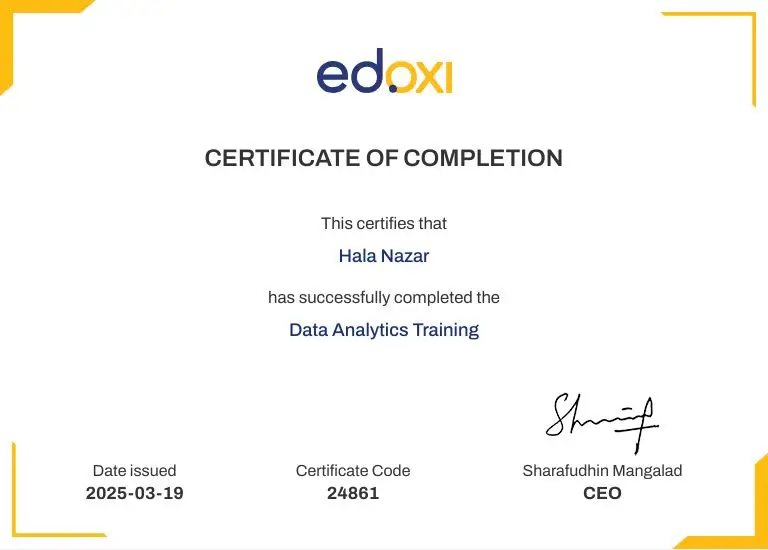
Course Completion Certification

By the end of the training, you can earn a recognised certificate from Edoxi that validates your Python skills and enhances your professional profile in Kuwait.

students-image

Edoxi is Recommended by 95% of our Students

Meet Our Mentor

Our mentors are leaders and experts in their fields. They can challenge and guide you on your road to success!

mentor-image

Afreen M

Afreen, with four years of dedicated teaching experience, has successfully trained over 100 students in programming languages like Python, SQL, and Java. She combines her technical expertise with a passion for education, tailoring her instruction to suit the unique needs of young learners. Her interests in reading and working on coding projects help her design engaging and practical learning experiences for her students.

Afreen’s teaching philosophy emphasizes hands-on learning, guiding children through projects like game development and calculator applications. Her balanced approach helps students build confidence in technology while mastering essential programming skills. By staying actively engaged with personal coding projects, she ensures her teaching remains current, practical, and effective, creating an encouraging environment where children can explore and understand coding concepts with ease.

Locations Where Edoxi Offers Python Course

Here is the list of other major locations where Edoxi offers Python Course

FAQ

Do I need prior programming experience to join the Python Beginner course?
No programming experience is required for our Python Beginner course. You only need basic computer knowledge, and we guide you step by step so you can build a strong foundation in Python programming.
Can I join the Python Advanced course directly?
Yes, you can join the Python Advanced course if you have prior Python knowledge. You can either complete our Python Beginner course or demonstrate equivalent Python skills to get started.
What are the prerequisites to join Edoxi’s Python Programming Course in Kuwait?
You need a basic understanding of computers and a keen interest in coding. No prior Python knowledge is required for beginners, and we provide all necessary learning support throughout the course.
Can I develop websites after completing Edoxi’s Python training?
You can build basic websites using Python, but for full web development, knowledge of frameworks like Django or Flask and front-end skills like HTML, CSS, and JavaScript is helpful. We guide you through Python fundamentals so you can expand your skills further.
Can I develop games after completing the Python programming course in Kuwait?
You can start creating simple games using Python basics taught in the course. For advanced game development, additional libraries like Pygame are recommended, and our training prepares you to take that next step confidently.
Can I work on robotics or AI projects after learning Python?
You can build foundational robotics and AI programs with the skills learned in our Python course. For advanced robotics or AI development, you may need additional libraries and tools, and we provide guidance on how to extend your learning.
What career opportunities can I pursue after completing the Python certification in Kuwait?
After Edoxi’s Python training, you can explore roles like Python Developer, Backend Developer, Data Analyst, Automation Engineer, Junior Data Scientist, Application Support Engineer, QA Automation Engineer, and Software Engineer (Python).
What industries hire Python professionals in Kuwait?
Python skills are highly sought after across IT, finance, telecommunications, healthcare, oil and gas, education, and research sectors. Kuwaiti companies and multinational firms in the region look for certified Python programmers.
What is the average salary for Python-certified professionals in Kuwait?
Entry-level Python professionals can earn between KWD 900 – 1,800 per month, mid-level developers earn around KWD 1,800 – 2,800, and senior Python developers or leads can earn KWD 3,000 – 6,000, depending on experience and technical expertise.
Are Edoxi’s Python classes in Kuwait offered online?
Yes, our Python training in Kuwait is available both online and in-classroom. You get the same structured curriculum, hands-on activities, and personalised guidance in our live online sessions.
How long is Edoxi’s Python programming course in Kuwait?
Our Python course is a comprehensive 40-hour programme, divided into Beginner and Advanced levels. You can choose to take both levels or focus on one according to your current skills and career goals.
Do I get a certificate after completing the Python training in Kuwait?
Yes, you receive Edoxi’s Python course completion certificate, which validates your skills and strengthens your profile for employers in Kuwait and the wider region.
Are the Python classes hands-on?
Absolutely. Our Python training focuses on practical coding exercises, real-world projects, and interactive sessions so you gain confidence in applying your skills immediately.