Leave your message to get our quick response
edoxi automated message icon

Java Course in Kuwait

A professional Java course setup showing a developer writing Java code with object-oriented programming concepts, classes, and application logic on a computer screen in a modern development workspace.
Edoxi’s 24-hour Java Course in Kuwait equips object-oriented programming skills and Java development fundamentals. Master Java core concepts and practical applications. The training is available in the classroom, online and corporate for individuals and corporates. Course features real-world projects such as banking systems, calculators, and currency converters. Participants work with tools like Eclipse, IntelliJ IDEA, NetBeans, and build systems like Apache Maven and Gradle. Enrol now and prepare for promising careers in software development and enterprise applications in Kuwait. 
Course Duration
24 Hours
Corporate Days
5 Days
Learners Enrolled
200+
Modules
8
star-rating-icon1
star-rating-icon2
star-rating-icon3
Course Rating
4.9
star-rating-4.9
Mode of Delivery
Online
Classroom
Certification by

What Do You Learn from Edoxi's Java Course in Kuwait

Fundamentals of Java Programming
Explore Java syntax, data types, variables, operators, and control statements to establish a strong foundation in programming basics and logical thinking.
Mastery of Object-Oriented Programming
Understand OOP concepts like classes, objects, inheritance, polymorphism, encapsulation, and abstraction to create scalable and maintainable Java applications.
Advanced Features of Java
Learn exception handling, file I/O operations, and multithreading to effectively control program flow and handle errors.
Building Real-World Applications
Develop practical Java projects, ranging from basic calculators to advanced systems like banking applications, using IDEs such as Eclipse and IntelliJ IDEA.
Control Structures and Functions
Implement flow controls, looping statements, arrays, and functions while learning package organisation for efficient code management.
Hands-On with Development Tools
Work with tools like Eclipse, IntelliJ IDEA, NetBeans, and build systems like Apache Maven and Gradle to enhance your development skills.

About Our Core Java Course in Kuwait

Edoxi provides a 24-hour Core Java certification in Kuwait for professionals and corporates. The program equips learners with the skills to create robust, secure, and scalable Java applications. The Java course curriculum is conducted in a fully equipped lab environment with professional IDEs such as Eclipse and IntelliJ IDEA. Students gain practical experience through live coding sessions, debugging exercises, and collaborative problem-solving tasks. 

Projects include real-world applications such as banking systems, calculators, and currency converters, enabling students to apply theoretical concepts effectively. Comprehensive study resources, including textbooks, e-books, Java guides, code snippets, and sample projects, further enhance the learning experience. These tools, combined with practical exercises, ensure a deep understanding and proficiency in Core Java.

The course is offered in flexible training modes, including classroom and online. For organisations, we offer corporate training that can be customised according to customer needs and goals.  Enrol now in our Java Course and start preparing for careers in IT, e-commerce, finance and enterprise software development.

Key Features of Edoxi's Java Course in Kuwait

Industry-Standard Learning Environment

Train in fully equipped labs using advanced IDEs like Eclipse, IntelliJ IDEA, and NetBeans, alongside tools such as Apache Maven and Gradle for real-world application development.

Extensive Learning Resources

Gain access to an array of materials, including textbooks, e-books, Java guides, code snippets, and sample projects to reinforce your understanding of Java concepts.

Engaging Learning Sessions

Participate in live coding exercises, collaborative activities, and interactive Q&A sessions designed to address technical challenges and enhance problem-solving abilities.

Practical Application Development

Work on real-world projects such as banking systems, calculators, and currency converters, applying object-oriented programming principles in realistic scenarios.

Who Can Join Our Java Course in Kuwait?

Aspiring Developers

Beginners looking to launch a career in software development will gain essential knowledge and hands-on experience in Java programming.

Seasoned Software Professionals

Experienced developers seeking to advance their expertise in Java and create scalable, robust applications will greatly benefit from this program.

Students and Recent Graduates

Those pursuing or completing degrees in computer science or engineering will find the course directly aligned with their academic and career aspirations.

IT Specialists Transitioning to Development

IT professionals moving into software development roles can acquire foundational programming skills essential for their new career path.

Enterprise and Android Developers

Developers working on enterprise systems or Android applications can expand their knowledge of Java frameworks and tools to enhance their projects.

Candidates Preparing for Certifications

Participants aiming to achieve certifications like Oracle Certified Java Programmer (OCJP) can use this course to build a strong preparatory foundation.

Java Course Modules

Module 1: Introduction to Java
  • Chapter 1.1: Java Fundamentals

    • Lesson 1.1.1 Java - What, Where, and Why?
    • Lesson 1.1.2 History and Features of Java
    • Lesson 1.1.3 Internals of a Java Program
    • Lesson 1.1.4 Difference between JDK, JRE, and JVM
    • Lesson 1.1.5 Internal Details of JVM
  • Chapter 1.2: Java Basics

    • Lesson 1.2.1 Variable and Data Type
    • Lesson 1.2.2 Unicode System
    • Lesson 1.2.3 Naming Convention
Module 2: Object-Oriented Programming Concepts
  • Chapter 2.1: Introduction to OOPs

    • Lesson 2.1.1 Advantages of OOPs
    • Lesson 2.1.2 Object and Class
    • Lesson 2.1.3 Method Overloading
    • Lesson 2.1.4 Constructor
  • Chapter 2.2: Advanced OOPs Concepts

    • Lesson 2.2.1 Static Variables, Methods, and Blocks
    • Lesson 2.2.2 This Keyword
    • Lesson 2.2.3 Inheritance (IS-A)
    • Lesson 2.2.4 Aggregation and Composition (HAS-A)
    • Lesson 2.2.5 Method Overriding
    • Lesson 2.2.6 Covariant Return Type
    • Lesson 2.2.7 Super Keyword
    • Lesson 2.2.8 Instance Initialiser Block
    • Lesson 2.2.9 Final Keyword
    • Lesson 2.2.10 Runtime Polymorphism
    • Lesson 2.2.11 Static and Dynamic Binding
    • Lesson 2.2.12 Abstract Class and Interface
    • Lesson 2.2.13 Downcasting with Instance Operator
    • Lesson 2.2.14 Package and Access Modifiers
    • Lesson 2.2.15 Encapsulation
  • Chapter 2.3: Object Class and Cloning

    • Lesson 2.3.1 Object Class
    • Lesson 2.3.2 Object Cloning
Module 3: Java Arrays and Strings
  • Chapter 3.1: Java Arrays

    • Lesson 3.1.1 Java Array
    • Lesson 3.1.2 Call by Value and Call by Reference
    • Lesson 3.1.3 strictfp Keyword
    • Lesson 3.1.4 Creating API Documents
  • Chapter 3.2: String Handling

    • Lesson 3.2.1 String: What and Why?
    • Lesson 3.2.2 Immutable String
    • Lesson 3.2.3 String Comparison
    • Lesson 3.2.4 String Concatenation
    • Lesson 3.2.5 Substring
    • Lesson 3.2.6 Methods of String Class
    • Lesson 3.2.7 StringBuffer Class
    • Lesson 3.2.8 StringBuilder Class
    • Lesson 3.2.9 Creating an Immutable Class
    • Lesson 3.2.10 toString Method
    • Lesson 3.2.11 StringTokenizer Class
Module 4: Exception Handling
  • Chapter 4.1: Basics of Exception Handling

    • Lesson 4.1.1 Exception Handling: What and Why?
    • Lesson 4.1.2 Try and catch Block
    • Lesson 4.1.3 Multiple Catch Blocks
    • Lesson 4.1.4 Nested Try Blocks
    • Lesson 4.1.5 Finally Block
  • Chapter 4.2: Advanced Exception Handling

    • Lesson 4.2.1 Throw Keyword
    • Lesson 4.2.2 Exception Propagation
    • Lesson 4.2.3 throws Keyword
    • Lesson 4.2.4 Exception Handling with Method Overriding
    • Lesson 4.2.5 Custom Exceptions
Module 5: Nested Classes
  • Chapter 5.1: Introduction to Nested Classes

    • Lesson 5.1.1 Nested Class: What and Why?
    • Lesson 5.1.2 Member Inner Class
    • Lesson 5.1.3 Anonymous Inner Class
    • Lesson 5.1.4 Local Inner Class
    • Lesson 5.1.5 static Nested Class
    • Lesson 5.1.6 Nested Interface
Module 6: Multithreading
  • Chapter 6.1: Basics of Multithreading

    • Lesson 6.1.1 Multithreading: What and Why?
    • Lesson 6.1.2 Life Cycle of a Thread
    • Lesson 6.1.3 Creating Threads
    • Lesson 6.1.4 Thread Scheduler
  • Chapter 6.2: Thread Management

    • Lesson 6.2.1 Sleeping a thread
    • Lesson 6.2.2 Joining a Thread
    • Lesson 6.2.3 Thread Priority
    • Lesson 6.2.4 Daemon Thread
    • Lesson 6.2.5 Thread Pooling
    • Lesson 6.2.6 Thread Group
    • Lesson 6.2.7 Shutdown Hook
    • Lesson 6.2.8 Performing Multiple Tasks by Multiple Threads
    • Lesson 6.2.9 Garbage Collection
    • Lesson 6.2.10 Runnable Class
Module 7: Synchronisation
  • Chapter 7.1: Synchronisation Basics

    • Lesson 7.1.1 Synchronisation: What and Why?
    • Lesson 7.1.2 Synchronised Methods
    • Lesson 7.1.3 Synchronised Blocks
    • Lesson 7.1.4 Static Synchronisation
  • Chapter 7.2: Advanced Synchronisation

    • Lesson 7.2.1 Deadlock
    • Lesson 7.2.2 Inter-thread Communication
    • Lesson 7.2.3 Interrupting Threads
Module 8: Input and Output Operations
  • Chapter 8.1: File I/O Operations

    • Lesson 8.1.1 FileOutputStream & FileInputStream
    • Lesson 8.1.2 ByteArrayOutputStream
    • Lesson 8.1.3 SequenceInputStream
    • Lesson 8.1.4 BufferedOutputStream & BufferedInputStream
    • Lesson 8.1.5 File Writer & File Reader
    • Lesson 8.1.6 CharArrayWriter
  • Chapter 8.2: Keyboard and Data Input

    • Lesson 8.2.1 Input from Keyboard using InputStreamReader
    • Lesson 8.2.2 Input from Keyboard using Console
    • Lesson 8.2.3 Input from Keyboard using Scanner
    • Lesson 8.2.4 PrintStream Class
    • Lesson 8.2.5 PrintWriter Class
  • Chapter 8.3: Advanced I/O Operations

    • Lesson 8.3.1 Compressing and Decompressing Files
    • Lesson 8.3.2 Reading and Writing Data Simultaneously
    • Lesson 8.3.3 DataInputStream and DataOutputStream
    • Lesson 8.3.4 StreamTokenizer Class

Download Java Course Brochure

Interactive Classroom Exercises and Hands-On Projects in Core Java Course

The Java Course in Kuwait features labs equipped with industry-leading tools like Eclipse, IntelliJ IDEA, NetBeans, Apache Maven, and Gradle. Students gain hands-on experience in coding, debugging, and application development within a professional setting that replicates real-world software development environments. Our engaging and collaborative classroom activities include:

Case Studies

  • Real-Time Coding Practice

    Solve programming tasks by coding and testing solutions live, with direct guidance from experienced instructors.

  • Collaborative Debugging Sessions

    Work with peers to identify and correct coding errors, improving analytical and teamwork skills.

  • Problem-Solving Challenges

    Tackle real-world scenarios with Java-based solutions, enhancing logical thinking and application skills.

  • In-Depth Q&A Discussions

    Resolve technical queries through interactive discussions, strengthening understanding of complex concepts.

  • Project Feedback Reviews

    Share and critique project work with peers, fostering a collaborative and growth-focused learning atmosphere

  • Banking System Development

    Create programs to manage accounts, transactions, and balances while implementing object-oriented programming principles like encapsulation and inheritance.

  • Custom Calculator Development

    Build calculators for both basic and advanced operations, effectively utilising control structures and loops.

  • Currency Conversion Tools

    Design converters to handle multiple currencies, incorporating features like file handling and user-friendly interfaces.

  • Temperature Unit Converters

    Develop applications for temperature conversions (e.g., Celsius to Fahrenheit), focusing on input validation and error handling.

Java Course Outcomes and Career Opportunities in Kuwait

The Core Java certification equips professionals with the skills to excel in Kuwait’s thriving technology sector. Our comprehensive training enables graduates to secure roles across various experience levels and salary ranges. After completing this course, participants will be able to:

Course Outcome Image
Build robust and scalable applications using Java.
Develop enterprise-level software solutions.
Pursue advanced certifications, such as Oracle Certified Java Programmer (OCJP).
Contribute to backend development projects.
Work effectively in enterprise development environments.
Pursue career opportunities in Kuwait’s IT and enterprise software sectors.

Career Opportunities After Java Course in Kuwait

  • Junior Java Developer
  • Java Programmer
  • Application Support Engineer
  • Software Developer
  • Java Developer
  • Systems Analyst
  • Senior Software Engineer
  • Technical Lead
  • Solutions Architect

Top Companies Hiring Java Experts in Kuwait

  • Sakhr Software Company
  • Ubuy
  • Cadena Solutions LLC
  • Dawrat
  • Mahatat
  • Apptunix
  • KuwaitNet
  • Design Master
  • Future Communications Company (FCC)
  • Gulf IT Innovations

Core Java Training Options

Classroom Training

  • 24-hour Java Course in Kuwait

  • Direct guidance from expert instructors.

  • Fully equipped labs with industry-leading IDEs such as Eclipse and IntelliJ IDEA.

  • Enjoy personalised attention through one-on-one training sessions.

  • Emphasis is placed on practical learning to ensure improved outcomes.

Live Online Training

  • 24-hour Java Online Course

  • Access a curriculum identical to our classroom sessions

  • Learn from the comfort of your location.

  • Perfect for remote learners and working professionals seeking flexibility.

  • Engage in live coding, interactive discussions, and problem-solving activities.

  • Practice using virtual labs and development tools for hands-on experience.

Corporate Training

  • Specialised five-day programs tailored to meet organisational goals.

  • Sessions can be delivered on-site at your premises or at our facility.

  • The curriculum aligns with your team’s expertise and project needs.

  • Real-world applications and scenarios relevant to your industry.

Do You Want a Customised Training for Java?

Get expert assistance in getting your Java Course customised!

How To Get Certified in The Java Training in Kuwait?

Here’s a four-step guide to becoming a certified Java professional.
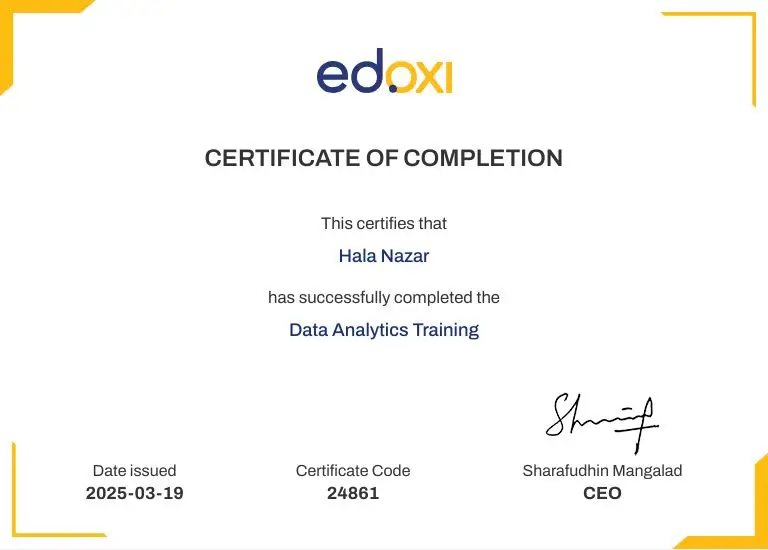
Do You Want to be a Certified Professional in Java?

Join Edoxi’s Java Course

Why Choose Edoxi for Java Training in Kuwait?

Edoxi is a premier training institute offering professional courses in Dubai. Here are some reasons why you should choose Edoxi for the Java Course; 

One-on-One Training for Personalised Attention

Our one-on-one training model ensures individual guidance. Instructors adapt their teaching methods to match each student’s learning pace for a better understanding of Core Java.

Industry-Standard Tools for Practical Training

Students work with tools like Eclipse and IntelliJ IDEA, gaining hands-on experience in coding and debugging, preparing them for real-world development environments.

Extensive Study Resources and Materials

We provide Java guides, e-books, code snippets, and comprehensive learning materials to support classroom instruction and independent study.

Real-World Project Experience

Our curriculum includes real-world projects, such as banking applications and utility tools, allowing students to build a practical portfolio while learning Java.

Flexible Learning Options for Busy Schedules

We offer both classroom and online training with flexible timings, ensuring students and professionals can pursue education without disrupting their commitments.

Seven Days a Week Availability

Our training sessions are available throughout the week, offering convenience for learners with diverse schedules and commitments.

Trusted Destination for Technology Education

Our institute is widely recognised for its effective Core Java training programs, which deliver consistently excellent outcomes for learners in Kuwait.

students-image

Edoxi is Recommended by 95% of our Students

Meet Our Mentor

Our mentors are leaders and experts in their fields. They can challenge and guide you on your road to success!

mentor-image

Jothi Kumar

Jothi is a Microsoft-certified technology specialist with more than 12 years of experience in software development for a broad range of industry applications. She has incomparable prowess in a vast grouping of software development tools like Microsoft Visual Basic, C#, .NET, SQL, XML, HTML, Core Java and Python.

Jothi has a keen eye for UNIX/LINUX-based technologies which form the backbone of all the free and open-source software movement. As a Big data expert, Jothi has experience using several components of the Hadoop ecosystem, including Hadoop Map Reduce, HDFS, HIVE, PIG, and HBase. She is well-versed in the latest technologies of information technology such as Data Analytics, Data Science and Machine Learning.

Locations Where Edoxi Offers Java Course

Here is the list of other major locations where Edoxi offers Java Course

FAQ

What prerequisites do I need to start learning Java in Kuwait?
  • No prior programming experience is required. However, knowledge of C or C++ can be helpful. A basic understanding of programming concepts will support quicker progress.

What is the duration and schedule of the Core Java Training in Kuwait?
  • The course includes 24 hours of instruction. Classes are available every day from 9 AM to 6 PM, offering flexible timings to suit your schedule.

What development tools and technologies will I learn during the Java course?
  • You will use IDEs like Eclipse and IntelliJ IDEA, along with tools like Apache Maven and Gradle. These prepare you for professional development environments.

How is the Java course structured for practical learning?
  • The course integrates theory with hands-on practice. Activities include live coding sessions, real-world projects like banking applications, and interactive debugging exercises.

What career opportunities are available after completing the Java course in Kuwait?
Graduates can pursue roles such as Junior Java Developer, Application Support Engineer, or Java Programmer. With experience, they can advance to Senior Engineer or Technical Lead positions.
What is the average salary range for Java developers in Kuwait?

For Java Developers in Kuwait, expect a wide range, with averages around 18,000 - 21,000 KWD annually. However, salary can vary depending on experience (1-4 years vs 9+ years), skills (Spring, Microservices, Cloud), and company, with Payscale showing higher KD figures for Engineers and Jobicy offering USD ranges

What study materials are provided during the Java course in Kuwait?
  • We provide textbooks, e-books, Java guides, code snippets, and sample projects to enhance your learning experience.

Do you offer corporate training programs?
  • Yes, we provide customised five-day corporate training programs. These can be conducted at your premises or our facility and tailored to organisational requirements.