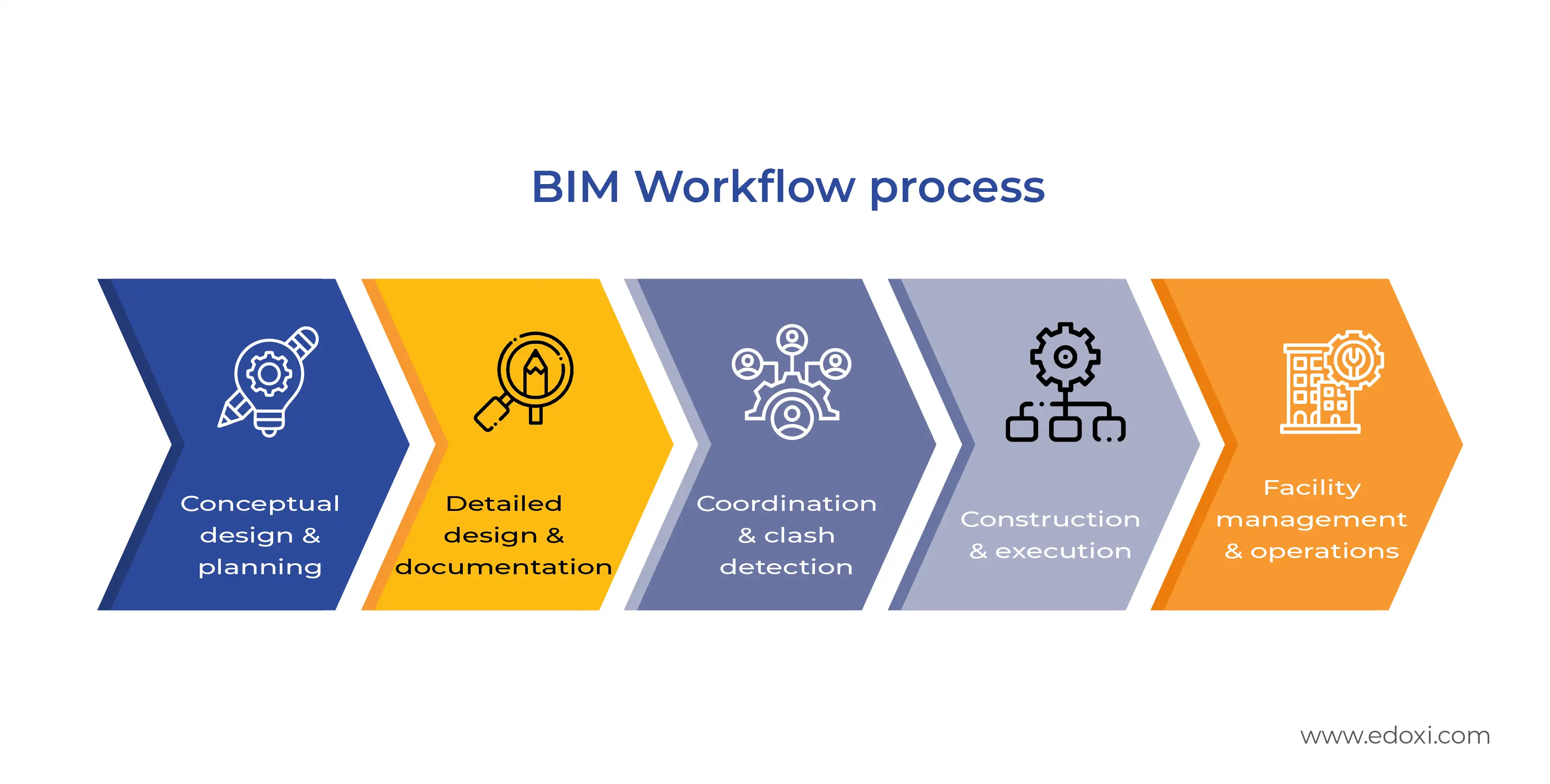
Leave your message to get our quick response
edoxi automated message icon

Building Information Modelling (BIM) Course in Riyadh

A hand pointing at a futuristic holographic cityscape emerging from a laptop screen
Edoxi offers a 40-hour BIM Training in Riyadh for architecture, engineering, and construction professionals. Gain hands-on experience with Autodesk tools like Revit, Navisworks, and BIM 360. Learn 3D modelling, project collaboration, and lifecycle management to enhance efficiency and team coordination. Delivered with practical exercises to prepare you for rewarding BIM roles. Enrol now!
Course Duration
40 Hours
Corporate Days
6 Days
Learners Enrolled
100+
Modules
7
star-rating-icon1
star-rating-icon2
star-rating-icon3
Course Rating
5
star-rating-5
Mode of Delivery
Online
Classroom
Certification by

What Do You Learn from Edoxi's BIM Training

Advanced 3D Modelling and Visualisation
You learn to develop detailed digital building models with precision using industry-preferred tools like Autodesk Revit and Navisworks.
Collaborative Project Coordination
You master collaborative workflows to streamline communication between architects, engineers, and contractors through BIM platforms.
Design Conflict Management
You learn to utilise advanced clash detection tools to identify and mitigate design conflicts before construction.
Efficient Building Lifecycle Management
You learn to optimise operations, maintenance, and renovation planning with BIM-driven lifecycle strategies.
Sustainable Design and Environmental Analysis
You learn to perform energy efficiency assessments and environmental evaluations using specialised BIM sustainability tools.
Interior Space Design and Optimisation
You learn to apply BIM techniques to create functional, client-aligned interior spaces that meet architectural standards.

About Our Building Information Modelling (BIM) Course in Riyadh

Edoxi’s 40-hour BIM course in Riyadh is designed for architecture, engineering, and construction professionals who want to gain hands-on expertise in BIM training, 3D digital modelling, project integration, and building lifecycle management. As an Autodesk-Authorised Training Centre, Edoxi delivers a structured, practice-driven programme aligned with industry standards and authorised certification. This BIM certification course equips you with the skills to manage architectural and engineering workflows efficiently while minimising design conflicts and optimising operational performance.

The BIM training in Riyadh follows a hands-on approach using industry-leading Autodesk tools, including Revit, Navisworks, and BIM 360. You can work on collaborative projects in a controlled environment, gaining practical experience in clash detection, sustainability assessments, facility management, and workflow optimisation. Guided exercises reflect real-world construction scenarios, ensuring you are ready to apply BIM methodologies in professional projects.

By completing this BIM training course in Riyadh, you can be fully prepared to implement intelligent building strategies, streamline project timelines, reduce costs, and earn a recognised BIM certification, while leveraging Autodesk tools for industry-ready project execution.

Key Features of Edoxi's BIM Training

Practical Training with Industry BIM Tools

You can master Autodesk Revit, Navisworks, and BIM 360, gaining real-world expertise in advanced construction technologies.

Efficient Design Optimisation Projects

You can refine building designs with cost-effective and energy-efficient solutions using cutting-edge BIM software.

Advanced 4D BIM Construction Sequencing

You can create 4D models integrating schedules and timelines to enhance construction planning and project execution.

Digital Twin Lifecycle Management

You can develop digital twins for analysing building lifecycles, focusing on operations, maintenance, and resource optimisation.

Sustainable Renovation Strategies

You can plan renovation projects emphasising sustainability and real-world implementation techniques for effective resource utilisation.

Interdisciplinary Coordination Workflows

You can collaborate with architects, engineers, and contractors to resolve design conflicts and streamline project workflows.

Who Can Join Our BIM Course in Riyadh?

Architectural and Interior Design Experts

If you are an architect or designer looking to enhance digital construction workflows with advanced BIM tools and methodologies.

Civil and MEP Engineering Specialists

If you are an engineer integrating BIM into planning and execution for streamlined structural, mechanical, and electrical project processes.

Construction Project Managers

If you are a manager, contractor, or supervisor, consider leveraging BIM for efficient coordination and project oversight.

BIM Coordination Professionals

If you are a BIM coordinator or specialist, advancing your expertise in industry-leading tools and collaborative design workflows.

Engineering and Architecture Graduates

If you are a fresh graduate, building foundational BIM skills to enter the architecture, engineering, and construction industries.

Drafting and Modelling Teams

If you are a craftsman, modeller, or technical designer transitioning to BIM-based workflows for enhanced project coordination.

BIM Course Modules

Module 1: Introduction to Building Information Modelling (BIM)
  • Chapter 1.1: Understanding BIM Fundamentals

    • Lesson 1.1.1: Definition and Principles of BIM
    • Lesson 1.1.2: Benefits of BIM in Architecture, Engineering, and Construction (AEC)
  • Chapter 1.2: BIM Standards and Guidelines

    • Lesson 1.2.1: Overview of International BIM Standards (ISO 19650, PAS 1192)
    • Lesson 1.2.2: Understanding Levels of BIM Maturity
  • Chapter 1.3: Strategy for BIM – Start with the End in Mind

    • Lesson 1.3.1: Importance of Setting Clear Objectives for BIM Implementation
    • Lesson 1.3.2: Case Studies of Successful BIM Strategies
Module 2: Revit Architecture
  • Chapter 2.1: Introduction to Revit Architecture

    • Lesson 2.1.1: Navigating the Revit Interface
    • Lesson 2.1.2: Project Setup and Templates
  • Chapter 2.2: Building Modelling Fundamentals

    • Lesson 2.2.1: Creating Walls, Floors, Roofs, and Ceilings
    • Lesson 2.2.2: Adding Doors, Windows, and Other Components
  • Chapter 2.3: Documentation and Annotation

    • Lesson 2.3.1: Creating Schedules, Views, and Sheets
    • Lesson 2.3.2: Annotating Models and Generating Construction Documents
  • Chapter 2.4: Advanced Modelling and Collaboration

    • Lesson 2.4.1: Creating Custom Families
    • Lesson 2.4.2: Collaboration Using Worksharing and Cloud Integration
Module 3: Revit Structure
  • Chapter 3.1: Introduction to Revit Structure

    • Lesson 3.1.1: Understanding Structural Elements in Revit
    • Lesson 3.1.2: Setting Up Structural Projects
  • Chapter 3.2: Structural Modelling Techniques

    • Lesson 3.2.1: Modelling Beams, Columns, Foundations, and Reinforcement
    • Lesson 3.2.2: Analytical Models and Structural Analysis Tools
  • Chapter 3.3: Documentation for Structural Projects

    • Lesson 3.3.1: Generating Structural Documentation
    • Lesson 3.3.2: Exporting and Sharing Structural Models
Module 4: Revit MEP (Mechanical, Electrical, Plumbing)
  • Chapter 4.1: Overview of Revit MEP

    • Lesson 4.1.1: Setting Up MEP Projects
    • Lesson 4.1.2: Interface Navigation and Tools
  • Chapter 4.2: Mechanical Systems Design

    • Lesson 4.2.1: HVAC Systems Modelling and Analysis
    • Lesson 4.2.2: Duct and Pipe Routing
  • Chapter 4.3: Electrical and Plumbing Design

    • Lesson 4.3.1: Electrical Circuit Modelling and Equipment Placement
    • Lesson 4.3.2: Plumbing Systems Design and Layout
  • Chapter 4.4: Coordination and Clash Detection

    • Lesson 4.4.1: Identifying and Resolving Clashes in MEP Systems
    • Lesson 4.4.2: Best Practices for Interdisciplinary Collaboration
Module 5: Navisworks
  • Chapter 5.1: Introduction to Navisworks

    • Lesson 5.1.1: Navigating the Navisworks Interface
    • Lesson 5.1.2: Importing and Viewing BIM Models
  • Chapter 5.2: Model Coordination and Clash Detection

    • Lesson 5.2.1: Performing Clash Detection and Reporting
    • Lesson 5.2.2: Merging Multiple Models for Coordination
  • Chapter 5.3: 4D Simulation and Scheduling

    • Lesson 5.3.1: Linking Models to Schedules
    • Lesson 5.3.2: Simulating Construction Sequences
  • Chapter 5.4: Quantity Takeoff and Analysis

    • Lesson 5.4.1: Performing Quantity Takeoff
    • Lesson 5.4.2: Generating Reports and Analysis
Module 6: BIM360
  • Chapter 6.1: Overview of BIM360 Platform

    • Lesson 6.1.1: Features and Capabilities of BIM360
    • Lesson 6.1.2: Cloud Collaboration in BIM
  • Chapter 6.2: Document Management

    • Lesson 6.2.1: Managing Project Documentation and Data
    • Lesson 6.2.2: Version Control and Access Management
  • Chapter 6.3: Design Collaboration

    • Lesson 6.3.1: Sharing and Reviewing Models in Real Time
    • Lesson 6.3.2: Managing Design Issues and Approvals
  • Chapter 6.4: Construction Management

    • Lesson 6.4.1: Tracking Progress and Performance in BIM360
    • Lesson 6.4.2: Integrating Field Data with Models
Module 7: BIM Strategy and Implementation
  • Chapter 7.1: The Employer’s Information Requirements (EIR)

    • Lesson 7.1.1: Understanding and Defining EIR
    • Lesson 7.1.2: Aligning BIM Deliverables with Project Goals
  • Chapter 7.2: Choosing the Right Team

    • Lesson 7.2.1: Assembling a BIM-Competent Team
    • Lesson 7.2.2: Roles and Responsibilities in BIM Projects
  • Chapter 7.3: Team Mobilisation

    • Lesson 7.3.1: Training and Onboarding for BIM Projects
    • Lesson 7.3.2: Ensuring Collaboration and Communication
  • Chapter 7.4: BIM-Enabled Design

    • Lesson 7.4.1: Integrating BIM into the Design Phase
    • Lesson 7.4.2: Optimising Workflows for Design Efficiency
  • Chapter 7.5: BIM-Enabled Construction, Handover, and Closeout

    • Lesson 7.5.1: Using BIM for Construction Planning and Execution
    • Lesson 7.5.2: Delivering a Digital Twin for Handover and Closeout
  • Chapter 7.6: BIM for Operations

    • Lesson 7.6.1: Leveraging BIM Data for Facility Management
    • Lesson 7.6.2: Long-Term Benefits of BIM in Operations and Maintenance

Download Building Information Modelling (BIM) Course Brochure

Hands-On Labs and Practical Training in the BIM Course in Riyadh

Edoxi’s 40-hour BIM training offers hands-on learning to master real-world building information modelling skills. Learn through interactive sessions, practical exercises, and industry-relevant projects given below.

Building Design Enhancement

In this activity, you can optimise architectural designs using BIM technologies. You can also perform cost-efficiency analyses, evaluate energy performance, and apply advanced methodologies in building planning.

Integrated 4D Construction Sequencing

In this exercise, you develop BIM models that align 3D designs with construction schedules. You can also showcase advanced integration of spatial and temporal project planning for real-world construction projects.

Digital Twin Development for Lifecycle Management

In this activity, you can create digital twin models for lifecycle analysis. You can also focus on operations, maintenance, and implementing BIM-driven facility management strategies.

Sustainable Renovation Strategies

In this exercise, you plan and execute renovation projects using BIM tools. You can also incorporate sustainability frameworks to ensure environmental efficiency and project viability.

Interdisciplinary Workflow Coordination

In this activity, you simulate collaborative workflows among architects, engineers, and contractors. You can also address real-world project coordination challenges through practical BIM applications.

Clash Detection and Project Coordination

In this exercise, you can identify and resolve design and construction conflicts using BIM tools like Navisworks. You can also enhance team collaboration by coordinating models across disciplines to ensure accurate, clash-free project execution.

BIM Course Outcome and Career Opportunities in Riyadh

Edoxi’s 40-hour BIM training in Riyadh opens diverse career opportunities in architecture, engineering, and construction, equipping you with practical skills and expertise demanded by today’s digital-first projects. These include

Course Outcome Image
You gain access to career opportunities across sectors such as architecture, construction, engineering, infrastructure, and government projects in Riyadh and globally.
You build in-demand BIM and digital modelling skills that qualify you for roles like BIM Coordinator, BIM Manager, Design Engineer, Project Engineer, and Construction Technologist.
You enhance your employability with hands-on expertise in 3D/4D modelling, clash detection, project coordination, digital twin development, and sustainable building design.
You position yourself for long-term career growth with strong demand for BIM professionals, competitive salary potential, and opportunities to work on large-scale or international projects.
You gain proficiency in industry-standard BIM tools and platforms such as Autodesk Revit, Navisworks, BIM 360, and advanced facility management software.
You develop critical problem-solving and collaborative skills, enabling you to manage interdisciplinary workflows and optimise project delivery efficiently.

Career Opportunities After BIM Certification in Riyadh

  • BIM Modeler
  • BIM Coordinator
  • BIM Manager
  • Senior BIM Manager
  • Structural BIM Engineer
  • BIM Architect
  • MEP BIM Modeller
  • BIM Consultant
  • BIM 4D/5D Specialist
  • BIM Trainer

Companies Hiring BIM Professionals in Riyadh

  • El Seif Engineering Contracting
  • Al Arrab Contracting Company
  • Al Bawani
  • Mohammed Al-Rashid Contracting Company (MARCO)
  • Dar Al Riyadh Consultants
  • Omrania & Associates
  • Saudi Consult (Engineering Consultants Group)
  • Al Ayuni Investment & Contracting
  • Alfanar Engineering Services
  • Tatweer Buildings Company

BIM Training Options

Classroom Training

  • 40 hours of classroom training

  • Professional hands-on learning environment

  • Direct interaction with BIM software tools

  • Real-time project implementation guidance

  • Personalised attention with 2 to 4 students in a batch

Live Online Training

  • 40 hours of live online training

  • Interactive remote learning sessions

  • Access to the same comprehensive curriculum

  • Real-time instructor support

  • Flexible scheduling options

Corporate Training

  • Customised 5–6-day intensive programs

  • Focused group learning environment

  • Tailored content delivery

  • Team-based practical implementation

Do You Want a Customised Training for Building Information Modelling (BIM)?

Get expert assistance in getting you Building Information Modelling (BIM) Course customised!

How To Get BIM Certified in Riyadh?

Here’s a four-step guide to becoming a certified BIM professional.
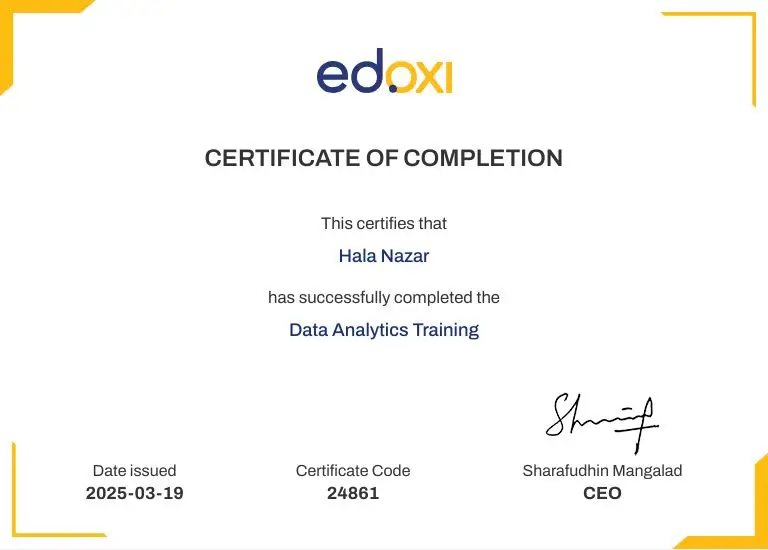
Do You Want to be a Certified Professional in Building Information Modelling (BIM)?

Join Edoxi’s Building Information Modelling (BIM) Course

Why Choose Edoxi BIM Course in Riyadh?

Edoxi’s 40-hour BIM Training in Riyadh equips you with practical BIM skills that match real industry demands. Here are the major reasons to choose us.

Expert-Led Industry Instruction

At Edoxi, you learn directly from experienced BIM professionals. We guide you through 3D modelling, architectural drafting, and advanced visualisation techniques using real industry workflows.

Cutting-Edge Training Environment

We train you using industry-leading tools such as Autodesk Revit, Navisworks, and BIM 360. You gain access to professional-grade software, structured labs, and comprehensive learning resources throughout the course.

Real-World Project Experience

At Edoxi, you work on practical BIM projects, including construction sequencing and facility management. We help you master clash detection, sustainability analysis, and coordinated project delivery.

Collaborative Learning Framework

We encourage you to collaborate through team-based exercises and live design challenges. Our approach strengthens your technical expertise, communication skills, and problem-solving abilities.

Industry-Aligned Curriculum

Our curriculum focuses on real-world BIM applications such as renovation planning and interdisciplinary coordination, ensuring you are job-ready as soon as you complete the training.

Expertise in Data-Driven Decision-Making

At Edoxi, we teach you how to leverage BIM data effectively. You learn to use metadata like material specifications, cost information, and performance metrics to support informed decisions across every project phase.

students-image

Edoxi is Recommended by 95% of our Students

Meet Our Mentor

Our mentors are leaders and experts in their fields. They can challenge and guide you on your road to success!

mentor-image

Shaheen M

Shaheen is an expert Corporate Trainer in BIM, Architecture and CAD with over 8+ years of experience. His expertise includes advanced 3D BIM Modeling, Architectural Drafting and Detailing, and Interior & Visualization Design. Additionally, he offers tailored training programs specific to various industry needs. He has trained over 5,000 professionals in advanced modeling and design techniques.

Shaheen’s training expertise spans HVAC Design, Electrical Design, Tekla, Lumion, STAAD.Pro, AutoCAD 2D & 3D and Civil 3D. Through his hands-on teaching approach, Shaheen ensures that students engage with real-world architectural projects. His corporate training portfolio includes some of the top architectural companies in Dubai. He has trained professionals from universities, including Sharjah University, Ajman University and Canadian University, and companies such as KhanSaheb, HCTS, Silver Pool Technologies and many more. His practical industry experience enriches the training program's real-world value.

FAQ

What is BIM, and why is it important in the AEC industry?
The BIM Course introduces Building Information Modelling (BIM) as a digital process that combines 3D modelling, data management, and collaborative workflows. BIM is essential in the AEC industry as it improves project accuracy, coordination, cost control, and overall efficiency throughout the building lifecycle.
Do I need prior experience with BIM tools to join Edoxi’s BIM training course in Riyadh?
No prior experience is required. This BIM training course is beginner-friendly and starts with core BIM concepts before progressing to advanced applications using industry-standard tools.
Does Edoxi’s BIM certification course in Riyadh help me get certified?
Yes. The BIM certification course is aligned with Autodesk standards and prepares learners with the skills and knowledge required to pursue official BIM certification in tools such as Revit and Navisworks.
How can I apply BIM training to real-world projects?
This BIM training focuses heavily on practical implementation. You will learn to manage real-world scenarios such as clash detection, project coordination, and lifecycle management through hands-on project simulations.
What career opportunities are available after completing the BIM course in Riyadh?
After completing the BIM course in Riyadh, learners can pursue roles such as BIM Modeller, BIM Coordinator, BIM Engineer, or BIM Manager across the architecture, engineering, and construction sectors.
Will I gain hands-on experience with BIM software during training?
Yes. The BIM training in Riyadh provides extensive hands-on experience with industry-standard software, including Autodesk Revit, Navisworks, and BIM 360, through guided exercises and simulations.
Are there any prerequisites for enrolling in the BIM training course?
Basic computer literacy is the only requirement. While prior knowledge of CAD or 3D modelling tools is helpful, it is not mandatory for this BIM training course.
Is the BIM certification course based on real projects?
Absolutely. The BIM certification course includes real-world project simulations that give you practical exposure to industry challenges, workflows, and best practices used in live construction environments.
What is the expected salary after completing a BIM certification course?
After completing the BIM certification course, professionals can earn competitive salaries depending on role, experience, and project scale. Entry-level BIM Modellers typically earn SAR 6,000–9,000 per month, while experienced BIM Coordinators and BIM Engineers can earn SAR 10,000–15,000 per month. Senior roles such as BIM Managers may earn SAR 18,000 or more per month in large AEC organisations, especially after completing advanced BIM training in Riyadh.