Leave your message to get our quick response
edoxi automated message icon

Computer Hacking Forensic Investigator (CHFI) Course in Riyadh

A cybersecurity analyst working on a laptop in a high-tech environment, monitoring digital threats and forensic data on multiple virtual screens.
Edoxi’s 35-hour Computer Hacking Forensic Investigator Course in Riyadh equips you with practical skills in digital forensics, cybercrime investigation, and evidence analysis through hands-on training with professional forensic tools. Learn forensic imaging, malware analysis, network investigation, and data recovery aligned with the EC-Council CHFI syllabus. Train with expert instructors and build specialised digital investigation skills for cybersecurity and law enforcement roles. Enrol now.
Course Duration
35 Hours
Corporate Days
5 Days
Learners Enrolled
50+
Modules
15
star-rating-icon1
star-rating-icon2
star-rating-icon3
Course Rating
4.9
star-rating-4.9
Mode of Delivery
Online
Classroom
Accredited by

What You Learn from Edoxi's CHFI Training

Computer Forensics Methodologies and Tools
Master investigative procedures, evidence collection, and forensic tools for conducting professional digital investigations.
Digital Evidence Handling and Preservation
Learn proper evidence collection, chain of custody protocols, and preservation techniques to ensure legal admissibility.
Incident Response and Cybercrime Investigation
Develop skills to handle security incidents, identify attack vectors, and investigate digital crimes using forensic methods.
Malware and Network Forensics
Analyse malicious code, network traffic, and system logs to trace cybercriminal activities and attack strategies.
Cloud, Mobile, and IoT Forensics
Explore techniques for investigating digital evidence across cloud platforms, mobile devices, and IoT environments.
Anti-forensics Detection and Countermeasures
Detect and counter techniques used by cybercriminals to hide evidence, tamper with logs, and evade forensic analysis.

About Our CHFI Certification Course in Riyadh

Edoxi delivers the 35-hour EC-Council CHFI certification course in Riyadh, focusing on computer forensics methodologies and cybercrime investigation techniques. Designed for cybersecurity professionals and law enforcement officers, this program provides comprehensive training in digital evidence collection and forensic analysis. CHFI corporate training is also available for organisations to upskill cybersecurity teams in digital forensic investigation and cyber incident response.

The course includes hands-on lab exercises using professional forensic tools such as Autopsy, FTK Imager, and Redline. Participants engage in practical scenarios investigating Windows, Linux, and Mac systems, developing skills in data recovery, forensic imaging, and malware analysis that are directly applicable to real-world investigations.

This course also prepares you to easily pass the EC-Council’s Computer Hacking Forensic Investigator (CHFI) exam. A mock test is included to help you assess your readiness and strengthen your exam performance.

CHFI Exam Details

Exam Criteria Details
Exam Code 312-49
Exam Name
Computer Hacking Forensic Investigator
Duration 4 hours
Passing Score 60%
Certification Validity 3 years
Recertification
Retake the exam before expiration
Exam Administration Authority EC-Council
 

Upon completion, learners are equipped to conduct thorough forensic examinations, prepare court-admissible reports, and testify effectively. This specialised skill set enhances career prospects in cybersecurity teams, law enforcement agencies, and corporate security departments where digital forensics expertise is increasingly valuable.
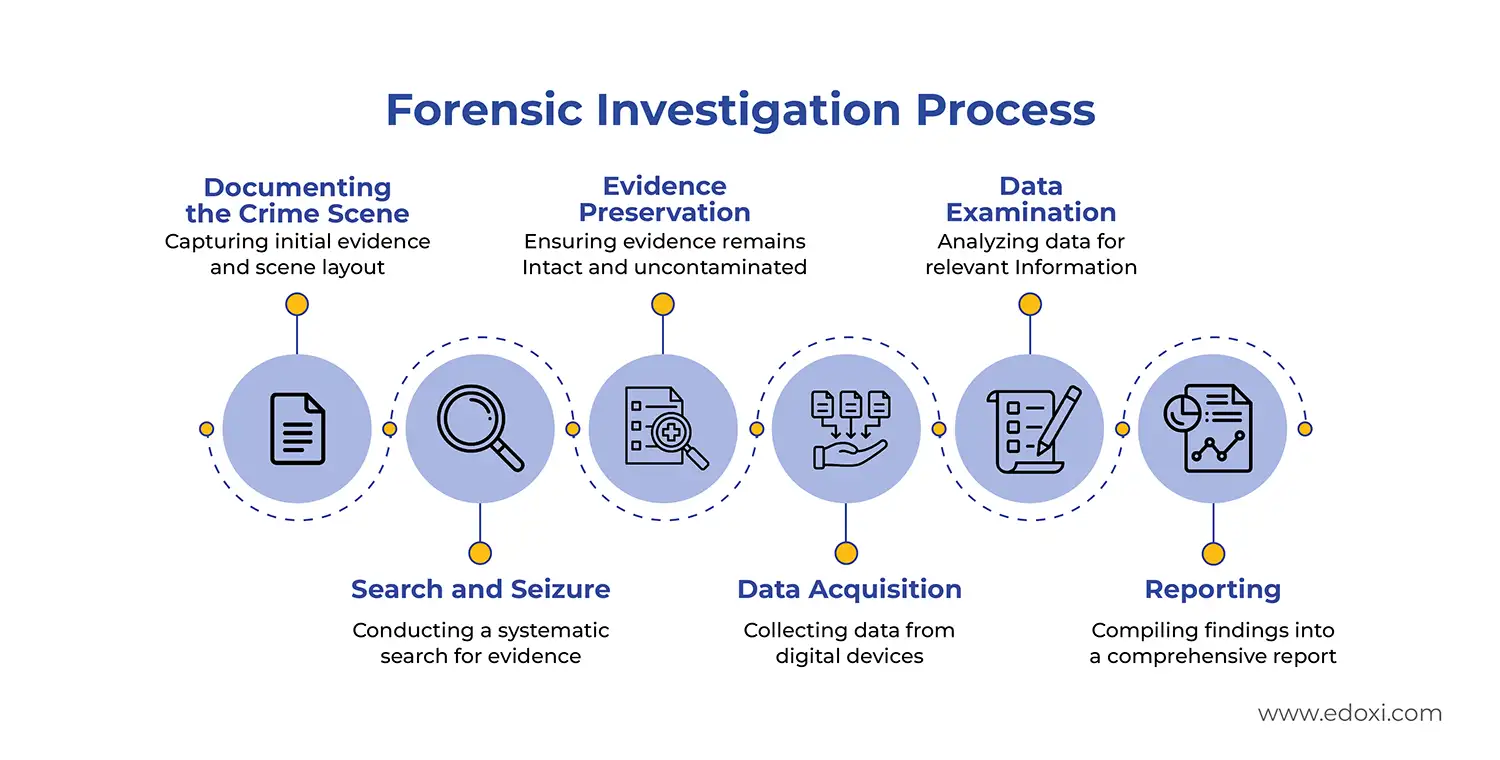
The image above illustrates the forensic investigation process.

CHFI - Computer Hacking Forensic Investigator Course Applications Across Industries

Domains Practical Applications
Cybersecurity
Analyse cyber threats using forensic techniques, and strengthen security incident response frameworks
Law Enforcement
Conduct cybercrime investigations, preserve and analyse digital evidence for legal cases
Legal Compliance
Ensure adherence to data protection laws (GDPR, CCPA), and investigate regulatory non-compliance issues
Digital Forensics
Recover and analyse forensic evidence from compromised systems, detect and neutralise malware threats
IT Security
Investigate internal and external security breaches, and strengthen IT security policies with forensic insights
Corporate Risk Management
Identify cybersecurity risks affecting corporate operations, and implement forensic-based risk mitigation strategies.

For more information regarding the CHFI course fee and enrollment, contact us.

Key Features of Edoxi's CHFI Training

Professional Forensic Tool Training

Gain hands-on experience with industry-standard tools, including Autopsy, FTK Imager, and Redline, for professional investigations.

Multi-Platform Forensic Analysis

Conduct forensic examinations across Windows, Linux, and Mac operating systems to expand your investigation capabilities.

Data Recovery and Analysis Labs

Practice recovering deleted data, analysing file systems, and extracting crucial digital evidence using specialised techniques.

Hex Analysis and Data Conversion

Master hex editing with the HxD tool and perform advanced binary, decimal, and hexadecimal conversions for data examination.

Evidence Documentation Training

Learn to properly document findings, maintain the chain of custody, and prepare court-admissible forensic reports.

CHFI Mock Test

Take the Computer Hacking Forensic Investigator (CHFI) mock test to ensure a smooth and confident exam experience.

Who Can Join Our CHFI Course in Riyadh?

Cybersecurity Professionals

IT security specialists and analysts seeking to expand their expertise into the specialised field of digital forensics and evidence collection.

Law Enforcement Personnel

Police officers, detectives, and investigators responsible for handling digital evidence and investigating cybercrimes.

IT Security Analysts

Network and security professionals looking to enhance their incident response capabilities with forensic investigation skills.

Legal Professionals

Attorneys, legal consultants, and paralegals who handle cybercrime cases and need to understand digital evidence procedures.

IT Auditors and Compliance Officers

Professionals responsible for ensuring regulatory compliance and investigating security breaches within organisations.

Corporate Security Teams

Enterprise security staff seeking to build internal capabilities for responding to and investigating security incidents.

CHFI Course Modules

Module 1: Computer Forensics in Today’s World
  • Chapter 1.1: Introduction to Computer Forensics

    • Lesson 1.1.1: Fundamentals of Computer Forensics
    • Lesson 1.1.2: Scope of Computer Forensics
    • Lesson 1.1.3: Role of Various Processes and Technologies in Computer Forensics
  • Chapter 1.2: Cybercrimes and Investigation Procedures

    • Lesson 1.2.1: Types of Cybercrimes
    • Lesson 1.2.2: Cybercrime Investigation
    • Lesson 1.2.3: Cyber Attribution
  • Chapter 1.3: Digital Evidence and eDiscovery

    • Lesson 1.3.1: Types and Role of Digital Evidence
    • Lesson 1.3.2: Sources of Potential Evidence
    • Lesson 1.3.3: Federal Rules of Evidence (United States)
  • Chapter 1.4: Forensic Readiness and Incident Response

    • Lesson 1.4.1: Forensic Readiness and Business Continuity
    • Lesson 1.4.2: Incident Response Process Flow
  • Chapter 1.5: Challenges and Responsibilities in Computer Forensics

    • Lesson 1.5.1: Roles and Responsibilities of a Forensic Investigator
    • Lesson 1.5.2: Challenges Faced in Investigating Cybercrimes
    • Lesson 1.5.3: Code of Ethics in Computer Forensics
  • Chapter 1.6: Standards and Legal Compliance in Computer Forensics

    • Lesson 1.6.1: Standards and Best Practices Related to Computer Forensics
    • Lesson 1.6.2: ISO Standards in Computer Forensics
    • Lesson 1.6.3: Computer Forensics and Legal Compliance
  • Chapter 1.7: Emerging Trends in Computer Forensics

    • Lesson 1.7.1: Role of Artificial Intelligence in Computer Forensics
    • Lesson 1.7.2: Forensics Automation and Orchestration
Module 2: Computer Forensics Investigation Process
  • Chapter 2.1: Overview of the Forensic Investigation Process

    • Lesson 2.1.1: Importance of the Forensic Investigation Process
    • Lesson 2.1.2: Phases Involved in the Computer Forensics Investigation Process
  • Chapter 2.2: First Response in Computer Forensics

    • Lesson 2.2.1: First Response and Its Significance
    • Lesson 2.2.2: Roles of a First Responder
    • Lesson 2.2.3: First Response in Different Situations
  • Chapter 2.3: Pre-Investigation Phase

    • Lesson 2.3.1: Setting Up a Computer Forensics Lab
    • Lesson 2.3.2: Understanding Hardware and Software Requirements of a Forensics Lab
    • Lesson 2.3.3: Building Security Content for Forensic Investigations
  • Chapter 2.4: Investigation Phase

    • Lesson 2.4.1: Documenting the Electronic Crime Scene
    • Lesson 2.4.2: Search and Seizure Procedures
    • Lesson 2.4.3: Evidence Preservation and Data Acquisition
    • Lesson 2.4.4: Case Analysis and Forensic Examination
  • Chapter 2.5: Post-Investigation Phase

    • Lesson 2.5.1: Reporting Findings and Documentation
    • Lesson 2.5.2: Testifying as an Expert Witness
Module 3: Understanding Hard Disks and File Systems
  • Chapter 3.1: Fundamentals of Storage Devices

    • Lesson 3.1.1: Hard Disk Drive (HDD) and Solid-State Drive (SSD)
    • Lesson 3.1.2: Disk Interfaces and Their Characteristics
  • Chapter 3.2: Disk Structures and Boot Process

    • Lesson 3.2.1: Logical Structure of Disks
    • Lesson 3.2.2: Windows Boot Process
    • Lesson 3.2.3: macOS Boot Process
    • Lesson 3.2.4: Linux Boot Process
  • Chapter 3.3: File Systems of Different Operating Systems

    • Lesson 3.3.1: Windows File Systems (FAT, NTFS)
    • Lesson 3.3.2: Linux File Systems (EXT, XFS, Btrfs)
    • Lesson 3.3.3: macOS File Systems (HFS+, APFS)
  • Chapter 3.4: File System Analysis

    • Lesson 3.4.1: File System Timeline Creation and Analysis
    • Lesson 3.4.2: File System Recovery Techniques
  • Chapter 3.5: Storage and Encoding Standards

    • Lesson 3.5.1: RAID Storage Systems
    • Lesson 3.5.2: Differences Between NAS and SAN
    • Lesson 3.5.3: Character Encoding Standards
  • Chapter 3.6: Analysing File Formats

    • Lesson 3.6.1: Introduction to Hex Editors
    • Lesson 3.6.2: PDF File Analysis
    • Lesson 3.6.3: Word File Analysis
    • Lesson 3.6.4: PowerPoint File Analysis
    • Lesson 3.6.5: Excel File Analysis
Module 4: Data Acquisition and Duplication
  • Chapter 4.1: Introduction to Data Acquisition

    • Lesson 4.1.1: Importance of Data Acquisition in Forensics
    • Lesson 4.1.2: Live Acquisition vs Dead Acquisition
    • Lesson 4.1.3: Data Acquisition Formats
  • Chapter 4.2: eDiscovery and Collection Methodologies

    • Lesson 4.2.1: Overview of eDiscovery
    • Lesson 4.2.2: eDiscovery Collection Methodologies
    • Lesson 4.2.3: eDiscovery Tools
  • Chapter 4.3: Data Acquisition Methodology

    • Lesson 4.3.1: Determining the Data Acquisition Method
    • Lesson 4.3.2: Selecting the Right Data Acquisition Tool
    • Lesson 4.3.3: Sanitising Target Media
  • Chapter 4.4: Data Acquisition Process

    • Lesson 4.4.1: Acquiring Volatile Data
    • Lesson 4.4.2: Enabling Write Protection on Evidence Media
    • Lesson 4.4.3: Acquiring Non-Volatile Data
  • Chapter 4.5: Validating and Preparing Data for Examination

    • Lesson 4.5.1: Planning for Contingencies in Data Acquisition
    • Lesson 4.5.2: Validating Data Acquisition
    • Lesson 4.5.3: Preparing an Image for Examination
  • Chapter 4.6: Digital Forensic Imaging Tools

    • Lesson 4.6.1: Overview of Digital Forensic Imaging Tools
    • Lesson 4.6.2: Best Practices for Data Duplication
Module 5: Defeating Anti-Forensics Techniques
  • Chapter 5.1: Understanding Anti-Forensics

    • Lesson 5.1.1: Challenges to Forensics from Anti-Forensics
    • Lesson 5.1.2: Common Anti-Forensics Techniques
  • Chapter 5.2: Data Deletion and Recovery

    • Lesson 5.2.1: Data/File Deletion Techniques
    • Lesson 5.2.2: Recycle Bin Forensics in Windows
    • Lesson 5.2.3: File Carving Techniques
  • Chapter 5.3: Partition and Password Recovery

    • Lesson 5.3.1: Recovering Deleted Partitions
    • Lesson 5.3.2: Password Cracking Tools and Techniques
    • Lesson 5.3.3: Bypassing Windows User Passwords
  • Chapter 5.4: Hidden Data and Obfuscation Techniques

    • Lesson 5.4.1: Steganography and Hidden Data
    • Lesson 5.4.2: Alternate Data Streams (ADS)
    • Lesson 5.4.3: Trail Obfuscation Techniques
  • Chapter 5.5: Advanced Anti-Forensics Techniques

    • Lesson 5.5.1: Overwriting Data and Metadata
    • Lesson 5.5.2: Encryption and Its Impact on Forensics
    • Lesson 5.5.3: Program Packers and Footprint Minimisation
Module 6: Windows Forensics
  • Chapter 6.1: Windows Forensics Methodology

    • Lesson 6.1.1: Understanding Windows Forensics
    • Lesson 6.1.2: Windows Artefacts and Evidence Collection
  • Chapter 6.2: Collecting Volatile and Non-Volatile Information

    • Lesson 6.2.1: Collecting Volatile Information
    • Lesson 6.2.2: Collecting Non-Volatile Information
    • Lesson 6.2.3: Collecting Windows Domain Information
  • Chapter 6.3: Windows Memory and Registry Analysis

    • Lesson 6.3.1: Windows Memory Analysis Techniques
    • Lesson 6.3.2: Memory Forensics and Its Importance
    • Lesson 6.3.3: Windows Registry Analysis
  • Chapter 6.4: Windows File and Metadata Analysis

    • Lesson 6.4.1: Examining Compressed Files
    • Lesson 6.4.2: Windows ShellBags and User Activity Tracking
    • Lesson 6.4.3: LNK Files and Jump Lists
  • Chapter 6.5: Web Browser and Application Forensics

    • Lesson 6.5.1: Web Browser Forensics
    • Lesson 6.5.2: Carving SQLite Database Files
    • Lesson 6.5.3: Electron Application Forensics
  • Chapter 6.6: Windows Event Logs and Log Analysis

    • Lesson 6.6.1: Windows Event Logs
    • Lesson 6.6.2: Investigating Windows 11 Event Logs
    • Lesson 6.6.3: Windows Forensics Tools
Module 7: Linux and Mac Forensics
  • Chapter 7.1: Linux Forensics Methodology

    • Lesson 7.1.1: Understanding Linux Forensics
    • Lesson 7.1.2: Collecting Volatile Information
    • Lesson 7.1.3: Collecting Non-Volatile Information
  • Chapter 7.2: Linux Memory and File System Forensics

    • Lesson 7.2.1: Linux Memory Forensics
    • Lesson 7.2.2: Linux File System Analysis
    • Lesson 7.2.3: Investigating Linux Log Files
  • Chapter 7.3: Mac Forensics Methodology

    • Lesson 7.3.1: Understanding Mac Forensics
    • Lesson 7.3.2: Collecting Volatile Information
    • Lesson 7.3.3: Collecting Non-Volatile Information
  • Chapter 7.4: Mac Memory and File System Forensics

    • Lesson 7.4.1: Mac Memory Forensics
    • Lesson 7.4.2: Mac File System Analysis
    • Lesson 7.4.3: Parsing Spotlight Metadata
  • Chapter 7.5: Mac Forensic Tools and Log Analysis

    • Lesson 7.5.1: Investigating Mac Log Files
    • Lesson 7.5.2: Mac Directory Structures and Data Recovery
    • Lesson 7.5.3: Mac Forensics Tools
Module 8: Network Forensics
  • Chapter 8.1: Fundamentals of Network Forensics

    • Lesson 8.1.1: Understanding Network Forensics
    • Lesson 8.1.2: Types of Network-Based Evidence
    • Lesson 8.1.3: Postmortem and Real-Time Network Analysis
  • Chapter 8.2: Event Correlation and Indicators of Compromise

    • Lesson 8.2.1: Event Correlation Techniques
    • Lesson 8.2.2: Types of Event Correlation
    • Lesson 8.2.3: Identifying Indicators of Compromise (IoCs)
  • Chapter 8.3: Investigating Network Traffic

    • Lesson 8.3.1: Network Traffic Analysis Methods
    • Lesson 8.3.2: Network Traffic Investigation Tools
    • Lesson 8.3.3: SIEM Solutions
  • Chapter 8.4: Log Analysis for Network Forensics

    • Lesson 8.4.1: Firewall Log Analysis
    • Lesson 8.4.2: IDS/IPS and Honeypot Logs
    • Lesson 8.4.3: Router, DHCP, VPN, DNS Logs
  • Chapter 8.5: Wireless Network Forensics

    • Lesson 8.5.1: Types of Wireless Evidence
    • Lesson 8.5.2: Wireless Forensics Process
    • Lesson 8.5.3: Detecting Rogue Access Points
  • Chapter 8.6: Investigating Network Attacks

    • Lesson 8.6.1: Identifying Network Attacks
    • Lesson 8.6.2: Wireless Packet Analysis
    • Lesson 8.6.3: Wireless Traffic Investigation Tools
Module 9: Malware Forensics
  • Chapter 9.1: Understanding Malware and Its Impact

    • Lesson 9.1.1: Introduction to Malware
    • Lesson 9.1.2: Malware Infection Methods
    • Lesson 9.1.3: Malware Components
  • Chapter 9.2: Malware Forensic Analysis

    • Lesson 9.2.1: Malware Artefacts and Evidence
    • Lesson 9.2.2: Malware Analysis Lab Setup
    • Lesson 9.2.3: Malware Analysis Tools
  • Chapter 9.3: Static Malware Analysis

    • Lesson 9.3.1: Static Analysis Fundamentals
    • Lesson 9.3.2: Analysing Suspicious Documents
    • Lesson 9.3.3: Extracting Malware Code
  • Chapter 9.4: Behavioural Malware Analysis

    • Lesson 9.4.1: System Behaviour Analysis
    • Lesson 9.4.2: Network Behaviour Analysis
    • Lesson 9.4.3: Malware Persistence Mechanisms
  • Chapter 9.5: Ransomware Analysis

    • Lesson 9.5.1: Introduction to Ransomware Forensics
    • Lesson 9.5.2: BlackCat (ALPHV) Ransomware Analysis
    • Lesson 9.5.3: Ransomware Mitigation and Recovery
Module 10: Investigating Web Attacks
  • Chapter 10.1: Web Application Forensics

    • Lesson 10.1.1: Understanding Web Application Forensics
    • Lesson 10.1.2: Indicators of Web Attacks
    • Lesson 10.1.3: OWASP Top 10 Risks
  • Chapter 10.2: Web Server Log Analysis

    • Lesson 10.2.1: IIS Web Server Architecture
    • Lesson 10.2.2: Apache Server Logs
    • Lesson 10.2.3: Log Analysis Tools
  • Chapter 10.3: Investigating Web Attacks

    • Lesson 10.3.1: Cross-Site Scripting (XSS)
    • Lesson 10.3.2: SQL Injection
    • Lesson 10.3.3: Directory Traversal Attacks
  • Chapter 10.4: Advanced Web Attacks

    • Lesson 10.4.1: Command Injection
    • Lesson 10.4.2: XML External Entity (XXE)
    • Lesson 10.4.3: Brute-Force Attacks
Module 11: Dark Web Forensics
  • Chapter 11.1: Introduction to the Dark Web

    • Lesson 11.1.1: Structure of the Dark Web
    • Lesson 11.1.2: Surface Web vs Deep Web vs Dark Web
    • Lesson 11.1.3: Investigation Challenges
  • Chapter 11.2: Tor Browser and Anonymity

    • Lesson 11.2.1: Tor Browser Operations
    • Lesson 11.2.2: Identifying Tor Usage
    • Lesson 11.2.3: Investigating Tor Traffic
  • Chapter 11.3: Dark Web Forensic Techniques

    • Lesson 11.3.1: Identifying Dark Web Artefacts
    • Lesson 11.3.2: Analysing Memory Dumps
    • Lesson 11.3.3: Email Artefact Analysis
Module 12: Cloud Forensics
  • Chapter 12.1: Introduction to Cloud Computing and Forensics

    • Lesson 12.1.1: Cloud Computing Fundamentals
    • Lesson 12.1.2: Importance of Cloud Forensics
    • Lesson 12.1.3: Shared Responsibility Model
  • Chapter 12.2: Cloud Security and Compliance

    • Lesson 12.2.1: OWASP Cloud Risks
    • Lesson 12.2.2: Legal Challenges in Cloud Forensics
    • Lesson 12.2.3: Cloud Encryption Methods
  • Chapter 12.3: AWS Forensics

    • Lesson 12.3.1: AWS Fundamentals
    • Lesson 12.3.2: AWS Logs
    • Lesson 12.3.3: EC2 Evidence Acquisition
  • Chapter 12.4: Azure Forensics

    • Lesson 12.4.1: Azure Fundamentals
    • Lesson 12.4.2: Azure Logs
    • Lesson 12.4.3: Azure VM Forensics
  • Chapter 12.5: Google Cloud Forensics

    • Lesson 12.5.1: GCP Fundamentals
    • Lesson 12.5.2: GCP Logs
    • Lesson 12.5.3: Persistent Disk Acquisition
  • Chapter 12.6: Cloud Incident Investigations

    • Lesson 12.6.1: Investigating Google Cloud Incidents
    • Lesson 12.6.2: Container Security Investigations
    • Lesson 12.6.3: VM Security Investigations
Module 13: Email and Social Media Forensics
  • Chapter 13.1: Introduction to Email Forensics

    • Lesson 13.1.1: Email Communication Fundamentals
    • Lesson 13.1.2: Parts of an Email Message
    • Lesson 13.1.3: Email-Based Threats
  • Chapter 13.2: Investigating Email Crimes

    • Lesson 13.2.1: Email Crime Investigation Steps
    • Lesson 13.2.2: Email Header Analysis
    • Lesson 13.2.3: Email Spoofing Detection
  • Chapter 13.3: Legal Aspects of Email Crimes

    • Lesson 13.3.1: U.S. Email Laws
    • Lesson 13.3.2: International Regulations
    • Lesson 13.3.3: Compliance Standards
  • Chapter 13.4: Social Media Forensics

    • Lesson 13.4.1: Social Media Crimes
    • Lesson 13.4.2: Social Media Artefact Analysis
    • Lesson 13.4.3: Tracking User Activities
  • Chapter 13.5: Social Network Analysis

    • Lesson 13.5.1: Social Network Graph Construction
    • Lesson 13.5.2: Detecting Suspicious Activities
    • Lesson 13.5.3: Social Media Investigation Tools
Module 14: Mobile Forensics
  • Chapter 14.1: Introduction to Mobile Forensics

    • Lesson 14.1.1: Mobile Device Forensics Overview
    • Lesson 14.1.2: OWASP Mobile Security Risks
    • Lesson 14.1.3: Investigation Challenges
  • Chapter 14.2: Mobile Architecture and Boot Process

    • Lesson 14.2.1: Android Architecture
    • Lesson 14.2.2: iOS Architecture
    • Lesson 14.2.3: Mobile File Systems
  • Chapter 14.3: Mobile Forensics Process

    • Lesson 14.3.1: Mobile Data Acquisition
    • Lesson 14.3.2: Cellular Network Investigations
    • Lesson 14.3.3: Rooting and Jailbreaking
  • Chapter 14.4: Data Acquisition Techniques

    • Lesson 14.4.1: Logical Acquisition
    • Lesson 14.4.2: Physical Acquisition
    • Lesson 14.4.3: Cloud Data Acquisition
  • Chapter 14.5: Android and iOS Forensics

    • Lesson 14.5.1: Android Data Recovery
    • Lesson 14.5.2: iOS Keychain Analysis
    • Lesson 14.5.3: WhatsApp and Safari Artefact Analysis
  • Chapter 14.6: Advanced Mobile Forensics

    • Lesson 14.6.1: JTAG Forensics
    • Lesson 14.6.2: APK Static and Dynamic Analysis
    • Lesson 14.6.3: Mobile Forensics Tools
Module 15: IoT Forensics
  • Chapter 15.1: Introduction to IoT Forensics

    • Lesson 15.1.1: IoT Architecture
    • Lesson 15.1.2: IoT Security Challenges
    • Lesson 15.1.3: OWASP IoT Security Threats
  • Chapter 15.2: IoT Forensics Process

    • Lesson 15.2.1: Evidence Collection and Preservation
    • Lesson 15.2.2: IoT Investigation Challenges
    • Lesson 15.2.3: IoT Data Acquisition
  • Chapter 15.3: Investigating IoT Devices

    • Lesson 15.3.1: Wearable Device Forensics
    • Lesson 15.3.2: Smart Speaker Forensics
    • Lesson 15.3.3: Drone/UAV Data Analysis
  • Chapter 15.4: Hardware-Level IoT Forensics

    • Lesson 15.4.1: JTAG and Chip-Off Techniques
    • Lesson 15.4.2: IoT Memory Dump Analysis
    • Lesson 15.4.3: Firmware Reverse Engineering
  • Chapter 15.5: IoT Forensic Tools and Best Practices

    • Lesson 15.5.1: IoT Investigation Tools
    • Lesson 15.5.2: IoT Forensic Frameworks
    • Lesson 15.5.3: Legal and Compliance Issues in IoT Investigations

Download CHFI Course Brochure

Lab Activities and Practical Sessions in the CHFI Course in Riyadh

Edoxi’s CHFI Training includes hands-on activities designed to strengthen practical investigation skills across multiple operating systems and data formats. Below are the key activities covered in the programme:

Windows, Linux, and Mac Forensic Analysis

Perform forensic investigations on these operating systems. Learn techniques to extract and analyse digital evidence from each environment.

Data Formatting in Hex

Use HXD and other forensic tools to edit hexadecimal data. Develop skills for recovering deleted or corrupted files through low-level analysis.

Conversions: Binary, Decimal, and Hex

Convert binary, decimal, and hexadecimal values accurately. Gain expertise in interpreting raw data for forensic investigations.

CHFI Course Outcome and Career Opportunities in Riyadh

Completing our Computer Hacking Forensic Investigator Training in Riyadh equips you with specialised digital forensics skills to investigate cyber incidents and analyse digital evidence across multiple environments. Key outcomes include:

Course Outcome Image
Develop a strong foundation in computer forensics principles, cybercrime investigation methodologies, and digital evidence handling to conduct legally sound forensic investigations.
Gain hands-on expertise in acquiring, preserving, and analysing digital evidence from Windows, Linux, and macOS systems using professional forensic tools such as Autopsy, FTK Imager, and Redline.
Apply advanced techniques to perform disk imaging, file system analysis, and data recovery, enabling the identification of hidden, deleted, or corrupted evidence from storage devices.
Investigate network attacks, malware infections, and web-based threats by analysing system logs, network traffic, and malicious files to trace cybercriminal activities.
Develop practical skills in mobile, cloud, IoT, and dark web forensics to examine digital evidence across modern computing environments and emerging technologies.
Prepare court-admissible forensic reports and documentation, maintain chain of custody procedures, and confidently support cybersecurity investigations and legal proceedings.

Job Roles After the CHFI Certification in Riyadh

  • Digital Forensic Investigator
  • Cybercrime Investigator
  • Incident Response Analyst
  • Malware Analyst
  • Digital Evidence Specialist
  • SOC Analyst
  • Information Security Analyst
  • Cybersecurity Consultant

Companies Hiring CHFI Professionals in Riyadh

  • Deloitte
  • Accenture
  • IBM Security
  • Palo Alto Networks
  • Trend Micro
  • Solutions by STC
  • Cyberani Solutions
  • Giza Systems
  • Elm Company
  • Advanced Electronics Company (AEC)

CHFI Training options

Classroom Training

  • 35 hours of CHFI Training

  • Instructor-led sessions with experienced trainers

  • Practical exercises in EC-Council's iLab environment

  • Small group sessions with 3-5 participants

  • Comprehensive coverage of forensic investigation concepts

  • Direct interaction with trainers for immediate feedback and clarification

Live Online Training

  • 35 hours of CHFI Online Training

  • Real-time virtual learning with certified instructors

  • Access to cloud-based lab infrastructure

  • Interactive tool demonstrations and practical sessions

  • Flexible scheduling options for working professionals

  • Recordings of sessions for future reference

Corporate Training

  • 5-day CHFI Corporate Training

  • Customisable modules and delivery formats (on-site, online, or hybrid)

  • Fly Me A Trainer option for tailored on-site training anywhere in the world

  • Full logistics handled, including venue options (hotel, client premises, or our premises)

  • Food and refreshments

Do You Want a Customised Training for CHFI?

Get expert assistance in getting your CHFI Course customised!

How to Get a CHFI Certification in Riyadh?

Here’s a four-step guide to becoming a certified CHFI professional.
Do You Want to be a Certified Professional in CHFI?

Join Edoxi’s CHFI Course

Why Choose Edoxi for the CHFI Course in Riyadh?

Edoxi, the best CHFI training institute in Riyadh, offers industry-focused training programs designed to help professionals gain practical skills in digital forensics and cybercrime investigation. Here’s why professionals choose Edoxi:

Award-Winning EC-Council Training Centre

Recognised as EC-Council ATC of the Year for 2023 and 2024, showcasing our excellence in cybersecurity education.

Top Corporate Portfolio in Cybersecurity Training

Edoxi has offered cybersecurity training for government entities and leading companies in the MENA region, including the UAE Federal Government, Saudi Aramco, Reserve Bank of Zimbabwe and more.

Substantial Exam Cost Savings

Enjoy discounted CHFI exam vouchers and special rates for the practical certification exam.

Cloud-Based Learning Infrastructure

Practice in advanced cloud labs with real-world scenarios, vulnerabilities, and pre-configured security tools.

Comprehensive Learning Support

Follow EC-Council's official curriculum, practical exercises, and expert instruction.

Proven Track Record

Trained over 10,000 professionals with a consistent record of success in certifications and career advancement.

students-image

Edoxi is Recommended by 95% of our Students

Meet Our Mentor

Our mentors are leaders and experts in their fields. They can challenge and guide you on your road to success!

mentor-image

Maria Mehwish

Maria Mehwish is a forward-thinking and knowledgeable information security leader with a strong background in building, updating, and maintaining digital protections for various organisations. As a certified CEH, CCSP, CCT, and CISSP Trainer, Maria has a proven track record of delivering innovative and immersive coursework, enhancing learning experiences for cyber threats, ethical hacking, security policy, DevSecOps, and cloud security. With excellent verbal and written communication skills, she is also adept at troubleshooting problems and building successful solutions.

Maria is a self-motivated individual with a strong sense of personal responsibility, capable of managing projects from start to finish. Her expertise in Amazon Web Services, Java/Go/Python/C++, DevSecOps, computer security, Linux, penetration testing, and risk analysis, among others, makes her a valuable asset to any organisation. Maria, a British national, is a native English speaker and has intermediate proficiency in Urdu.

Locations Where Edoxi Offers CHFI Course

Here is the list of other major locations where Edoxi offers CHFI Course

FAQ

How is the CHFI Course different from other cybersecurity courses?

The CHFI Course in Riyadh at Edoxi focuses specifically on digital forensics and cybercrime investigation, unlike general cybersecurity courses that focus mainly on defence and protection. The CHFI training in Riyadh teaches evidence identification, forensic imaging, data recovery, and investigation procedures required in legal and cybercrime investigations. This computer hacking forensic investigator Course in Riyadh develops specialised forensic investigation skills used by cybersecurity teams and law enforcement.

What job opportunities does the CHFI certification create in Riyadh?

Professionals completing the CHFI training in Riyadh at Edoxi qualify for roles such as Digital Forensics Analyst, Cybercrime Investigator, Incident Response Analyst, and Digital Evidence Specialist. The computer hacking forensic investigator certification strengthens career opportunities in cybersecurity consulting firms, government agencies, and large enterprises in Saudi Arabia.

What salary range do CHFI-certified professionals earn in Riyadh?

Professionals with a CHFI certification in Riyadh typically earn competitive salaries depending on experience. Entry-level digital forensics roles often range between SAR 7,000–10,000 per month, mid-level specialists earn SAR 12,000–18,000, and senior digital forensic investigators or consultants earn SAR 20,000+. Completing the CHFI Course in Riyadh at Edoxi strengthens earning potential in cybersecurity and digital forensics roles.

Is the CHFI training suitable for law enforcement professionals?

Yes. The computer hacking forensic investigator Training in Riyadh at Edoxi supports law enforcement officers, investigators, and digital evidence analysts. The CHFI classes focus on proper evidence collection, forensic investigation methods, and documentation practices used in cybercrime investigations and legal proceedings.

Does Edoxi offer corporate CHFI training for organisations?

Yes. Edoxi provides corporate CHFI training in Riyadh for cybersecurity teams and IT departments. Organisations receive customised computer hacking forensic investigator Training with flexible scheduling, on-site sessions, or virtual training options for teams across different locations.

What types of investigations does the CHFI certification cover?

The computer hacking forensic investigator Course at Edoxi prepares professionals to investigate data breaches, malware incidents, insider threats, cyber fraud, and unauthorised system access. The CHFI Course in Riyadh also covers forensic investigation of computers, networks, mobile devices, and cloud environments.

How does CHFI certification improve cybersecurity careers?

The computer hacking forensic investigator certification validates specialised digital forensic investigation skills. Professionals completing the CHFI training in Riyadh gain expertise in evidence analysis, forensic reporting, and cybercrime investigation, strengthening opportunities for advanced cybersecurity and digital forensics roles.

Why choose Edoxi for CHFI training in Riyadh?

Edoxi offers industry-recognised CHFI classes in Riyadh delivered by experienced cybersecurity trainers. The CHFI training in Riyadh includes practical labs, real cyber investigation scenarios, and the official EC-Council curriculum. Professionals gain hands-on expertise required for the computer hacking forensic investigator certification.

What are the prerequisites for the CHFI Course?

The CHFI Course in Riyadh at Edoxi requires basic foundational knowledge in IT and cybersecurity, including:

  •  
    • Basic understanding of cybersecurity concepts
    • Fundamentals of networking
    • Basic knowledge of operating systems

These fundamentals help learners understand the concepts taught during the computer hacking forensic investigator Training in Riyadh.

How long does the CHFI training in Riyadh take?

The CHFI training in Riyadh at Edoxi typically takes 5 days of intensive instructor-led training. The CHFI classes include theoretical lessons, hands-on forensic labs, and real-world cyber investigation exercises.

Does the CHFI Course include practical labs?

Yes. The computer hacking forensic investigator Course in Riyadh at Edoxi includes extensive hands-on labs. Participants practise disk imaging, forensic analysis, malware investigation, and digital evidence examination during the CHFI training.

Is the CHFI certification globally recognised?

Yes. The CHFI certification from EC-Council is globally recognised in the cybersecurity and digital forensics industries. Completing the computer hacking forensic investigator Training at Edoxi strengthens credibility for cybersecurity and forensic investigation roles worldwide.

Who should take the CHFI Course in Riyadh?

The CHFI Course in Riyadh suits professionals such as:

  •  
    • Cybersecurity analysts
    • IT security professionals
    • Incident response specialists
    • Law enforcement investigators
    • Digital forensic analysts

The computer hacking forensic investigator Training in Riyadh supports professionals interested in cybercrime investigation and digital evidence analysis.

Does Edoxi provide certification exam preparation for CHFI?

The CHFI Course in Riyadh suits professionals such as:

  •  
    • Cybersecurity analysts
    • IT security professionals
    • Incident response specialists
    • Law enforcement investigators
    • Digital forensic analysts

The computer hacking forensic investigator Training in Riyadh supports professionals interested in cybercrime investigation and digital evidence analysis.

What tools do students learn in CHFI training?

The CHFI classes at Edoxi introduce industry-standard forensic tools used in digital investigations. During the computer hacking forensic investigator Course, participants practise forensic imaging, log analysis, malware investigation, and evidence recovery techniques.

What courses can professionals take after the CHFI certification?

After completing the CHFI certification, professionals often pursue advanced cybersecurity certifications such as:

  • CEH – Certified Ethical Hacker
  • ECSA – EC-Council Certified Security Analyst
  • CCFE – Certified Computer Forensics Examiner
  • CDFE – Certified Digital Forensics Examiner
  • CISM – Certified Information Security Manager
  • CISSP – Certified Information Systems Security Professional

These certifications complement the computer hacking forensic investigator certification and support career growth in advanced cybersecurity roles.