Leave your message to get our quick response
edoxi automated message icon

OET Exam Preparation Course in Qatar

​Edoxi's 30-hour OET Exam Preparation training in Qatar offers specialised instruction for healthcare professionals seeking to excel in the Occupational English Test.​ It develops medical-specific listening, reading, writing, and speaking skills for careers in English-speaking healthcare settings. With flexible options, it prepares you for opportunities in the UK, Australia, New Zealand, and the UAE. Enrol now to boost your OET score and advance your global healthcare career.
Course Duration
30 hours
Corporate Days
4 days
Certification
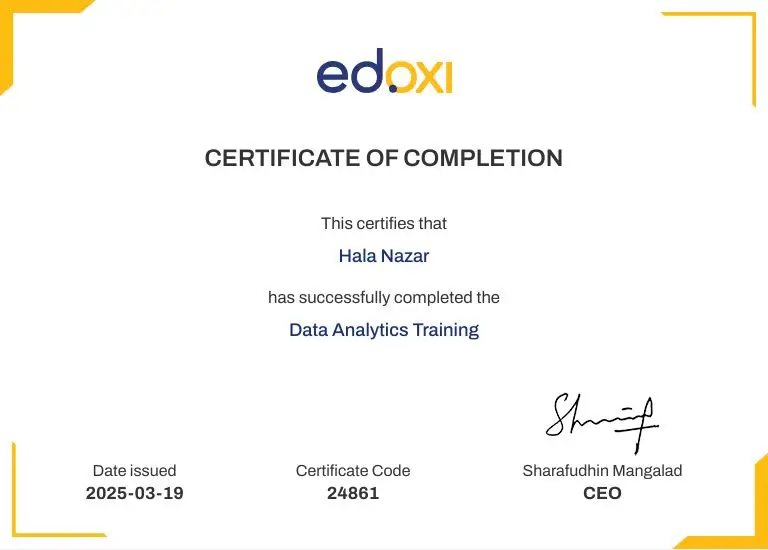
OET Exam Preparation course completion certificate from Edoxi
star-rating-icon1
star-rating-icon2
star-rating-icon3
Course Rating
4.9
star-rating-4.9
Mode of Delivery
Classroom
Online
Certification by

What You’ll Learn from the OET Exam Preparation Course in Qatar

Professional Medical Letter Writing
Practise referral, discharge, and transfer letter formats using case notes. Apply appropriate tone, formal style, and accurate medical terminology.
Clinical Role-Play Communication Skills
Learn to practice patient interactions through simulated healthcare scenarios. Develop active listening, clarification, and patient education techniques for speaking assessments.
Healthcare-Specific Listening Comprehension
Improve skills to understand patient consultations, medical handovers, and healthcare presentations. Learn note-taking techniques for varied accents.
Full Mock Exam Strategies and Preparation
Complete timed practice tests under exam conditions. Receive detailed feedback aligned with OET criteria and develop time management strategies for the test day.
Grammar and Medical Vocabulary Enhancement
Strengthen sentence structure, cohesion, and healthcare-specific collocations. Learn symptom descriptions, medical procedures, and commonly used clinical terminology.
Medical Reading and Analysis Strategies
Understand skimming, scanning, and close reading methods for healthcare policies, case studies, and patient communications. Build vocabulary for complex medical texts.

About Our OET Exam Preparation Training in Qatar

Edoxi’s 30-hour OET preparation course is designed specifically for healthcare professionals to prepare them to succeed in the OET test. This program focuses on enhancing English language proficiency within medical contexts, covering listening, reading, writing, and speaking skills essential for international career opportunities.

The Occupational English Test (OET) preparation training is available in both classroom and online formats, providing flexibility for busy professionals. It focuses on healthcare-specific communication through real exam scenarios, personalised writing feedback, and live role-play simulations. This makes career progression, visa processing, and professional mobility possible.

The OET Exam Preparation training equips you with the skills required to achieve Grade B (350–440) or higher in each OET subtest. Upon completing Edoxi’s OET Exam Preparation course in Qatar, you will receive a course completion certificate. This certificate builds your confidence to attend the official OET exam and supports international registration and employment in English-speaking healthcare systems such as the UK, Australia, New Zealand, and the UAE.

For the details on OET Exam Preparation course fees, a detailed syllabus, or to schedule customised corporate or online training, contact the Edoxi team in Qatar today.

Enrol now to advance your healthcare career globally with an OET Exam Preparation training.

Occupational English Test (OET) Exam Details

The Occupational English Test (OET) evaluates the English language proficiency of healthcare professionals seeking to practice in English-speaking environments. This exam is essential for international registration and employment. Below is a breakdown of the key exam details:

CategoryDetails
Exam Name & CodeOccupational English Test (OET)
Exam DurationApproximately 2 hours and 45 minutes
Exam FeesAUD 587 (approx. AED 1,440 / USD 387); partial retakes available for one or more subtests with proportionate fees.
Number and Type of Questions42
Passing ScoreGrade B (350–440) in each subtest
Certification Validity2 years from the test date.
RecertificationCandidates must retake the OET exam after its validity expiry to maintain proof of English proficiency.
Exam Administration AuthorityCambridge Boxhill Language Assessment (CBLA).
Accreditation / VendorOfficially recognised by healthcare regulatory bodies in 30+ countries, including the UK, Australia, New Zealand, Ireland, UAE, and Canada.

Key Features of Our OET Exam Preparation Course in Qatar

Profession-Specific Practice Materials

Access authentic healthcare scenarios, medical audio recordings, and case studies tailored to your profession for focused OET preparation.

Personalised Writing Task Feedback

Receive expert tutor feedback on four to six writing tasks, with guidance on structure, tone, medical terminology, and language accuracy.

Weekly Live Role-Play Simulations

Take part in recorded speaking role-plays with professional feedback on clinical communication, empathy, and patient interaction skills.

Timed Mock Examination Sessions

Attempt two to three full-length mock exams under real test conditions, with detailed performance analysis aligned to OET assessment criteria.

Diagnostic Assessment and Goal Setting

Start with a baseline skills assessment to identify strengths and gaps, followed by a personalised learning plan for targeted improvement.

Healthcare Vocabulary Development

Learn essential healthcare vocabulary covering symptoms, medical procedures, patient interactions, and commonly misused clinical terms across all OET subtests.

Who Can Join Edoxi’s OET Exam Preparation Training in Qatar?

Registered Healthcare Professionals

Licensed doctors, nurses, dentists, and pharmacists seeking global certification.

Healthcare Graduates

Recent graduates preparing for international registration and employment.

Allied Health Practitioners

Physiotherapists, lab technicians, and other professionals needing English proficiency proof.

Medical Students

Final-year students planning early preparation for OET success.

Working Professionals

Practising clinicians transitioning to English-speaking healthcare systems.

Corporate Healthcare Teams

Hospitals are training multiple staff for overseas assignments.

Previous OET Candidates

Learners aiming to improve scores in specific subtests.

Module 7: Mock Tests and Final Preparation

Module
  • Chapter 1.1: Understanding OET Structure and Requirements Lesson 1.1.1: Four-component test format overview Lesson 1.1.2: Scoring system from 0-500 and letter grades A-E Lesson 1.1.3: Profession-specific nature of writing and speaking subtests Lesson 1.1.4: Examiner expectations and assessment criteria

  • Chapter 1.2: Diagnostic Testing and Learning Plan Development Lesson 1.2.1: Baseline skill assessment across all four components Lesson 1.2.2: Individual strengths and weaknesses analysis Lesson 1.2.3: Goal setting aligned with target country requirements Lesson 1.2.4: Personalised study schedule and milestone tracking

  • Chapter 2.1: Listening Subtest Structure and Format Lesson 2.1.1: Part A consultation extracts and note completion Lesson 2.1.2: Part B workplace scenarios and multiple-choice questions Lesson 2.1.3: Part C healthcare presentations and comprehensive understanding Lesson 2.1.4: Question types and response strategies

  • Chapter 2.2: Active Listening Techniques for Healthcare Contexts Lesson 2.2.1: Gist listening for main ideas in consultations Lesson 2.2.2: Detail-focused listening for specific information Lesson 2.2.3: Inference skills and prediction strategies Lesson 2.2.4: Managing varied English accents in medical settings

  • Chapter 2.3: Note-Taking and Practice Sessions Lesson 2.3.1: Effective note-taking during audio playback Lesson 2.3.2: Timed listening exercises with authentic healthcare audios Lesson 2.3.3: Answer accuracy and spelling requirements Lesson 2.3.4: Guided debriefing and error analysis

  • Chapter 3.1: Reading Subtest Components and Strategy Lesson 3.1.1: Part A expedited reading and matching tasks Lesson 3.1.2: Part B workplace communications analysis Lesson 3.1.3: Part C long healthcare texts and critical comprehension Lesson 3.1.4: Time management for sixty-minute reading assessment

  • Chapter 3.2: Reading Techniques for Medical Texts Lesson 3.2.1: Skimming for general understanding Lesson 3.2.2: Scanning for specific details and data Lesson 3.2.3: Close reading for inference and implication Lesson 3.2.4: Understanding healthcare policies and protocols

  • Chapter 3.3: Vocabulary and Daily Practice Drills Lesson 3.3.1: Medical terminology for reading comprehension Lesson 3.3.2: Context clues and word relationships Lesson 3.3.3: Timed reading tasks with strategy application Lesson 3.3.4: Comprehension accuracy improvement techniques

  • Chapter 4.1: Writing Subtest Overview and Assessment Lesson 4.1.1: Forty-five-minute letter-writing format Lesson 4.1.2: Profession-specific letter types Lesson 4.1.3: Assessment criteria for content, clarity, and language Lesson 4.1.4: Common errors and how to avoid them

  • Chapter 4.2: Case Note Analysis and Content Selection Lesson 4.2.1: Reading and interpreting patient case notes Lesson 4.2.2: Identifying relevant information for a letter purpose Lesson 4.2.3: Organising content logically and coherently Lesson 4.2.4: Prioritising information based on letter type

  • Chapter 4.3: Letter Structure and Professional Style Lesson 4.3.1: Opening statements and patient identification Lesson 4.3.2: Body paragraphs with organised medical information Lesson 4.3.3: Closing recommendations and follow-up requirements Lesson 4.3.4: Formal tone and appropriate register maintenance

  • Chapter 4.4: Language Accuracy and Medical Terminology Lesson 4.4.1: Grammar accuracy in medical correspondence Lesson 4.4.2: Sentence structure and cohesive devices Lesson 4.4.3: Medical vocabulary and collocations Lesson 4.4.4: Avoiding informal expressions and maintaining professionalism

  • Chapter 4.5: Writing Practice and Feedback Sessions Lesson 4.5.1: Individual writing tasks with case notes Lesson 4.5.2: Model letter analysis and comparison Lesson 4.5.3: Peer review exercises and collaborative learning Lesson 4.5.4: Personalised tutor feedback on multiple drafts

  • Chapter 5.1: Speaking Subtest Format and Requirements Lesson 5.1.1: Two role-play structures and timing Lesson 5.1.2: Interlocutor role and candidate expectations Lesson 5.1.3: Assessment criteria for linguistic and clinical communication Lesson 5.1.4: Scoring breakdown and grade requirements

  • Chapter 5.2: Essential Communication Skills for Healthcare Lesson 5.2.1: Active listening and responding appropriately Lesson 5.2.2: Demonstrating empathy and building rapport Lesson 5.2.3: Clarification techniques and confirming understanding Lesson 5.2.4: Patient education and information delivery

  • Chapter 5.3: Functional Language for Clinical Settings Lesson 5.3.1: Reassurance and emotional support phrases Lesson 5.3.2: Giving instructions and explaining procedures Lesson 5.3.3: Warning patients about risks and side effects Lesson 5.3.4: Negotiating and reaching an agreement with patients

  • Chapter 5.4: Role-Play Practice and Performance Evaluation Lesson 5.4.1: Weekly live simulations with varied scenarios Lesson 5.4.2: Recorded practice sessions for self-assessment Lesson 5.4.3: Individual feedback on communication effectiveness Lesson 5.4.4: Mock speaking test with formal evaluation

  • Chapter 6.1: Grammar Review for Medical Communication Lesson 6.1.1: Tense usage in healthcare contexts Lesson 6.1.2: Passive structures and formal constructions Lesson 6.1.3: Articles, prepositions, and common error patterns Lesson 6.1.4: Sentence structure for clarity and cohesion

  • Chapter 6.2: Medical Vocabulary Building Lesson 6.2.1: Symptom descriptions and patient complaints Lesson 6.2.2: Medical procedures and treatment terminology Lesson 6.2.3: Diagnostic terms and clinical observations Lesson 6.2.4: Patient query responses and explanations

  • Chapter 6.3: Collocations and Commonly Misused Terms Lesson 6.3.1: Medical collocations and word partnerships Lesson 6.3.2: Frequently Confused Medical Terminology Lesson 6.3.3: Formal versus informal healthcare expressions Lesson 6.3.4: Professional vocabulary for all subtests

  • Chapter 7.1: Full Mock Examinations Under Test Conditions Lesson 7.1.1: Complete listening and reading assessments Lesson 7.1.2: Timed writing task with case notes Lesson 7.1.3: Speaking role-plays with formal assessment Lesson 7.1.4: Simulated test day experience

  • Chapter 7.2: Performance Analysis and Feedback Lesson 7.2.1: Individual results review aligned with OET criteria Lesson 7.2.2: Identifying remaining areas for improvement Lesson 7.2.3: Comparing performance across multiple mock tests Lesson 7.2.4: Tracking progress toward target grades

  • Chapter 7.3: Final Review and Exam Strategy Lesson 7.3.1: Common errors analysis and correction strategies Lesson 7.3.2: Time management techniques for each subtest Lesson 7.3.3: Stress management and test day confidence building Lesson 7.3.4: Last-minute tips and test-day checklist preparation

Download Brochure

OET Course Outcomes and Career Opportunities in Qatar

Our OET Exam Preparation Course combines expert-led training with practice based on real clinical communication scenarios. Key outcomes include:

Course Outcome Image
Develop healthcare-specific English communication skills required for safe and effective patient interactions.
Achieve the required OET test scores for professional registration in English-speaking countries.
Improve proficiency in speaking, listening, reading, and writing using real clinical scenarios.
Build confidence in patient consultations, referrals, and professional documentation.
Enhance eligibility for international employment, licensing, and visa processing in global healthcare systems.
Support long-term career progression and professional mobility across the UK, Australia, New Zealand, and the UAE.
Job Roles After Completing the OET Course in Qatar
Pharmacist
Registered Nurse
Radiographer / Medical Imaging Technologist
Dentist
Staff Nurse (Hospital / Clinic)
Occupational Therapist
Specialist Doctor
Physiotherapist
Allied & Support Healthcare Roles
General Practitioner (GP)

OET Exam Preparation Training Options

Classroom Training

  • 30 hours of OET Exam Preparation classroom training

  • Practice tests with instant feedback

  • Interactive group discussions and role-plays

  • Access to modern training facilities

  • Small, focused batch sizes

Online Training

  • 30 hours of OET Exam Preparation online training course

  • Flexible schedules for professionals

  • Real-time trainer interaction

  • Access to virtual tools and materials

  • Convenient learning from any location

Corporate Training

  • 4 days of OET Exam Preparation corporate training

  • Flexible Delivery Options (On-Site / Edoxi Office / Hotel)

  • Fly-Me-a-Trainer Option

  • Customised programmes for teams

  • Progress tracking via dashboards

  • How to Get an OET Exam Preparation Certification?

  • Join Edoxi’s OET Exam Preparation Certification Course in Qatar.

  • Attend our Expert-led OET Exam Preparation Training.

  • Complete the OET Exam Preparation Classes.

  • Earn your OET Exam Preparation Certification.

  • Why Choose Edoxi for the OET Exam Preparation Course in Qatar?

  • Among numerous options available in Qatar, Edoxi is one of the best OET Exam Preparation training centers in Qatar. Here’s why Edoxi’s OET Exam Preparation training in Qatar is the perfect fit for your needs:

  • Expert OET-Certified Trainers: Learn from experienced OET instructors with proven success in helping doctors, nurses, and allied health professionals achieve required OET grades.

  • Authentic OET Exam Practice: Prepare using official OET practice materials, mock tests, and simulations that replicate real exam conditions across all four subtests.

  • Flexible Study Options: Choose from classroom or live online training with weekday, weekend, or fast-track schedules designed for busy healthcare professionals.

  • Global Training Presence: Edoxi operates in Dubai, Qatar, London, and Kuwait, providing internationally relevant training that meets global healthcare communication standards.

  • Corporate Training for Healthcare Teams: We offer customised OET preparation for hospitals and medical organisations preparing staff for international registration and overseas assignments.

  • OET Exam Preparation Course Certificate: Upon completing the course, you will receive an Edoxi course completion certificate to build your confidence for taking the official OET exam.

Do You Want a Customised Training for ?

Get expert assistance in customising your training!

Learn Now Pay Later with tabby-icon

Pay your course fees in four easy installments with Tabby.

Do You Want to be a Certified Professional in ?

Join Edoxi's Course

students-image

Edoxi is Recommended by 95% of our Students

FAQ

What minimum OET score do I need for registration in English-speaking countries?
Most regulators require Grade B (350–440) across all subtests. UK nurses need a B in Listening, Reading, Speaking, and C+ in Writing; doctors usually require a B in all parts. Requirements vary by country—verify with the relevant authority before taking the exam.
How long should I prepare before taking the OET exam?
Preparation depends on your English level and healthcare communication experience. Professionals with intermediate proficiency typically need 4–8 weeks of structured training. A diagnostic test at the start helps create a personalised study plan.
Can I retake individual OET subtests if I don't achieve the required scores?
Yes. You can retake only the subtests needing improvement. Scores from different dates can be combined if within the validity period accepted by your target country’s regulator.
What is the difference between OET and IELTS for healthcare registration?
OET targets healthcare-specific English used in clinical settings, patient consultations, and professional communication. IELTS assesses general academic English. Many professionals prefer OET as it aligns directly with daily workplace situations.
How soon can I receive my OET results after the exam?
Results are available via your OET account, where you can download the official Statement of Results.
Computer-based / OET at Home: within 10 business days
Paper-based: 12–16 business days
Does Edoxi Training Institute administer the actual OET exam?
No. Edoxi provides expert OET Exam Preparation training in Qatar, but the official exam must be booked separately via the OET website. Our course focuses on building the skills, strategies, and confidence needed to achieve target scores.
Can our hospital arrange a customised OET preparation course for multiple staff members?
Yes. Edoxi offers corporate OET Exam Preparation training in Qatar for hospitals and healthcare groups, either on-site or online. Group diagnostics identify shared learning needs, and sessions can target specific subtests or workplace communication skills.
What healthcare professions does the OET examination cover?
OET serves 12 professions: Medicine, Nursing, Dentistry, Pharmacy, Physiotherapy, Occupational Therapy, Optometry, Dietetics, Podiatry, Radiography, Speech Pathology, and Veterinary Science. Listening and Reading are common to all; Writing and speaking are profession-specific.
How does the speaking assessment work in the OET exam?
The Speaking test has two 5-minute role-plays where you act as the professional and the interlocutor plays a patient or relative. You get 3 minutes to prepare each scenario. Assessment focuses on accuracy, fluency, empathy, and clarity in healthcare communication.
What if I need to extend my preparation beyond four weeks?
The OET Exam Preparation course in Qatar can be extended from 4 to 8 weeks for extra practice. Extensions are based on mock test results, progress reviews, and individual learning goals to strengthen weaker subtests.