Request a Callback

+971 4380 1666
 Jul 28, 2026
Choosing the Advanced Accounting course depends on five key factors. These are curriculum, practical training, certification, industry relevance and career goals. A good programme should teach accounting principles. It should provide hands-on accounting software training. It should prepare learners for recognised certification. It should develop workplace skills.
Organisations are strengthening reporting, tax compliance, auditing and financial decision-making. According to the World Economic Forum's Future of Jobs Report 2025, analytical thinking, financial literacy and technology skills remain among the valuable capabilities employers seek. The International Federation of Accountants (IFAC) states that accountants are expected to have a combination of expertise, digital skills and business acumen.
This guide covers the key factors to consider before enrolling in an Advanced Accounting course, including the curriculum and practical training, accounting software covered, instructor expertise, certification value, and the learning outcomes and career support offered by the program.
The UAE finance and accounting job market continues to expand in 2026, driven by digital transformation, corporate tax implementation, VAT compliance, IFRS reporting, ESG reporting, AI-powered finance, and increasing foreign investment. Professionals with globally recognized certifications such as ACCA, CMA (USA), CPA, CFA, CIMA, CIA, FRM, and SAP FICO typically command significantly higher salaries than non-certified candidates. Finance professionals who combine ERP (SAP), Power BI, AI, and financial analytics skills are among the highest-paid in Dubai and Abu Dhabi. Employers increasingly seek professionals who can automate reporting, interpret business data, manage compliance, and support strategic decision-making.
The Advanced Accounting courses builds upon the basic accounting knowledge and prepares the students for professional positions in finance and accounting. It discusses financial reporting, taxation, auditing, corporate accounting, budgeting, and accounting software used in today’s businesses.
An instructor-led advanced accounting training programme, as opposed to an introductory accounting class, emphasises the application of accounting standards to real-world business scenarios. It prepares learners for finance and accounting roles. It covers reporting, taxation, auditing, corporate accounting, budgeting and accounting software used in today's businesses.
These accounting professional courses are suitable for individuals who want to progress into accounting or finance positions. They are not for entry-level bookkeeping roles.
Advanced Accounting training is ideal for learners at various phases of their careers.
Before you enter the workforce, get practical accounting knowledge. They are also introduced to industry-standard software and financial reporting practices.
To improve their employability skills with advanced technical & analytical skills. The course also trains them for specialised finance roles.
Bring their knowledge of modern accounting standards and digital accounting tools up to date. This helps them remain competitive in an evolving industry.
Improve their knowledge of compliance, taxation and financial regulation. These skills can be applied in more complex client engagements.
Get structured learning without starting their education from scratch. The course is a stepping stone into accounting and finance careers.
Practical accounting for better financial management in organisations. Employers also benefit from better compliance and reporting.
The Advanced Accounting Course Syllabus combines accounting theory with real-world applications in the workplace.
| Module | Topics Covered |
|---|---|
| Advanced Financial Accounting | Financial statements, consolidation, accounting standards |
| Corporate Accounting | Company accounts, mergers, acquisitions, share capital |
| Cost & Management Accounting | Cost analysis, budgeting, performance measurement |
| Taxation | VAT, corporate tax, income tax principles |
| Auditing | Internal controls, audit procedures, compliance |
| Financial Reporting | IFRS principles, financial analysis, disclosures |
| Accounting Software Training | Tally, QuickBooks, SAP, Microsoft Excel |
| Business Finance | Cash flow, financial planning, investment basics |
Advanced Accounting Course Fees will vary depending on the training provider, course length, certification, and delivery method.
| Course Type | Typical Fee Range (USD)* |
|---|---|
| Classroom Training | US$500 – US$2,000 |
| Live Online Training | US$300 – US$1,500 |
| Self-Paced Online Course |
US$100 – US$800 |
| Certification-Focused Programme | US$800 – US$3,000+ |
Note: *Fees vary by country, provider, certification, and course content.
Pricing depends on several factors:
Different learners have preferences. The right learning mode depends on your schedule, experience and learning style.
Edoxi offers advanced accounting classes that are instructor-led, either in the classroom or live online, so you can get hands-on training with the guidance of an expert.
Depending on your career aspirations, an Advanced Accounting course can set you up for recognised accounting certifications.
| Certification Pathway | Suitable For |
|---|---|
| IFRS Certification | Financial reporting professionals |
| CMA | Management accounting careers |
| ACCA | Global accounting and finance careers |
| CPA (country-specific) | Public accounting and auditing |
| Corporate Accounting Certifications | Industry accounting roles |
No single certification is universally the best. Your choice must depend on your career goals, location and the type of accounting you'd like to specialise in. Many advanced accounting certification programmes offer basic knowledge which helps in the preparation of these professional qualifications.
In addition to accounting, many other industries offer you an opportunity to utilise your advanced accounting training, such as banking, consulting, manufacturing, healthcare, retail, logistics and government.
| Job Role | Primary Responsibility |
|---|---|
| Senior Accountant | Financial reporting and compliance |
| Financial Analyst | Financial planning and business analysis |
| Tax Consultant | Tax planning and compliance |
| Internal Auditor | Risk assessment and internal controls |
| Corporate Accountant | Company accounts and reporting |
| Finance Executive | Financial operations and budgeting |
Today's employers want accounting professionals with a combination of technical knowledge and business and digital skills.
The most valuable accounting skills are
Choosing the right finance and accounting course is not something to rush into.
Think about these before you sign up:
Edoxi’s instructor-led Advanced Accounting training helps learners gain practical accounting knowledge, software application, and certification preparation with industry-relevant skills.
UAE finance sector continues to expand as businesses invest in digital finance, corporate tax compliance, and advanced financial reporting. This steady growth is creating more opportunities for skilled finance and accounting professionals across multiple industries.
| Market Indicator | 2026 Estimate |
|---|---|
| Finance & Accounting jobs available monthly | 7,000–12,000+ |
| Employers preferring professional certification | 75–90% |
| Companies using ERP (SAP/Oracle/MS Dynamics) | 70%+ |
| Finance roles requiring Power BI/Excel | 60–75% |
| Hiring growth for Financial Analysts | 12–18% YoY |
| Corporate Tax & VAT specialists demand | Very High |
| ESG Reporting demand growth | 20–30% |
| AI & Finance Automation adoption | 40–55% |
Industry estimates synthesized from UAE recruitment trends and employer demand.
The finance profession is rapidly evolving with the adoption of AI, automation, ESG reporting, and advanced analytics. Professionals who develop these skills are expected to have stronger career prospects in the coming years.
| Skill | Employer Demand | Career Impact |
|---|---|---|
| Financial Reporting (IFRS) | 95% | Essential |
| Corporate Tax | 93% | Very High |
| VAT Compliance | 91% | Very High |
| SAP FICO | 89% | High Salary |
| Financial Planning & Analysis | 88% | High Growth |
| Power BI | 86% | High Demand |
| Budgeting & Forecasting | 84% | Strong Career |
| Internal Audit | 80% | Stable Growth |
| Risk Management | 82% | Premium Roles |
| ESG Reporting | 75% | Emerging Skill |
Senior finance and strategic management positions offer the highest earning potential in the UAE. These roles require strong financial expertise, business decision-making skills, and extensive industry experience.
| Rank | Job Role | Monthly Salary (AED) |
|---|---|---|
| 1 | Chief Financial Officer | 70,000–120,000+ |
| 2 | Finance Director | 45,000–80,000 |
| 3 | Finance Controller | 35,000–55,000 |
| 4 | Treasury Manager | 30,000–55,000 |
| 5 | Finance Manager | 20,000–40,000 |
| 6 | Corporate Tax Manager | 25,000–45,000 |
| 7 | Investment Analyst | 18,000–40,000 |
| 8 | SAP FICO Consultant | 18,000–35,000 |
| 9 | Internal Audit Manager | 18,000–35,000 |
| 10 | Financial Analyst | 10,000–20,000 |
Finance professionals are in demand across banking, consulting, healthcare, manufacturing, retail, logistics, and government sectors. Organizations rely on finance experts to support growth, compliance, and business performance.
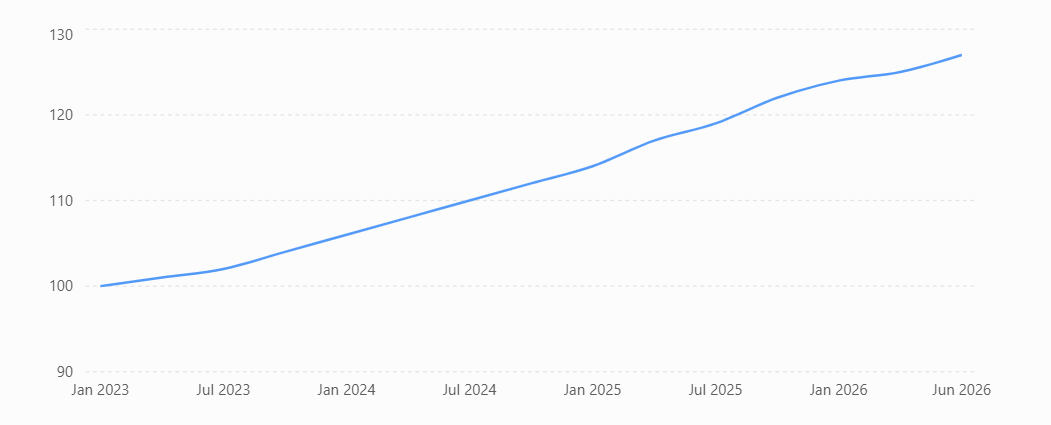
Market Insight: Finance and accounting recruitment in the UAE is shifting from traditional bookkeeping roles to technology-enabled finance positions. Employers increasingly value professionals who combine accounting expertise with ERP systems, business intelligence, and analytical decision-making.
The best accounting career depends on your interests and long-term goals. High-demand accounting careers include Certified Management Accountant (CMA), Certified Public Accountant (CPA), Financial Analyst, Internal Auditor, Tax Consultant, Management Accountant, and Finance Manager. Professionals with globally recognized certifications and strong analytical skills often enjoy better salaries, career growth, and international job opportunities.
The best accounting course depends on your career goals. Popular professional accounting certifications include:
Yes. Accounting remains one of the most stable and rewarding careers in 2026. Every organization needs professionals to manage financial records, budgets, taxes, compliance, audits, and business performance. As businesses increasingly rely on data-driven financial decisions, accountants with digital finance and analytics skills continue to be in high demand.
An accounting qualification can prepare you for various finance and business roles, including:
Career opportunities are available across banking, healthcare, retail, manufacturing, government, consulting, and multinational companies.
The seven major types of accounting are:
Each specialization focuses on different financial functions, from preparing financial statements to investigating fraud and supporting business decision-making.
The highest-paid accounting jobs include Chief Financial Officer (CFO), Finance Director, Financial Controller, Tax Director, and Audit Director. Professionals with certifications like CMA, CPA, or ACCA, combined with leadership and strategic finance experience, typically earn the highest salaries.
To maximize earning potential, accountants should pursue CMA, CPA, ACCA, or CFA certifications and develop in-demand skills in SAP FICO, Power BI, Advanced Excel, Financial Modeling, SQL, and AI-powered financial analytics. Combining professional credentials with digital finance expertise significantly improves career growth and salary prospects.
Yes. Accounting is expected to remain a strong career path in 2026 due to digital transformation, stricter financial regulations, business expansion, and increasing demand for financial planning and analysis. Employers increasingly seek accountants who combine traditional accounting knowledge with technology skills such as ERP systems, Power BI, Excel, financial analytics, automation, and AI-powered reporting.
Professionals with certifications like CMA, CPA, or ACCA are often well-positioned for leadership and strategic finance roles.
A career in accounting offers long-term stability, competitive salaries, and opportunities across nearly every industry. Accountants help organizations manage financial reporting, budgeting, taxation, auditing, compliance, and business strategy. With experience and professional certifications, many accountants progress into leadership positions such as Finance Manager, Financial Controller, or Chief Financial Officer (CFO).
Choosing an advanced accounting course is an investment for successful long-term career growth. An appropriate program should equip students to meet the evolving accounting and finance role. The syllabus should have various modules, practical accounting software training and certification factors that are recognised. Along with the theory and practical training, practical projects should also be included in the syllabus.
With the focus on governance, compliance and the digital transformation in the world of business, advanced accounting skills are in greater demand. Compare the course content and learning modes, certification options, and the possible career outcomes to give you advanced accounting training that best fits your career aspirations and to create a successful career in accounting.
Accounting courses in Dubai equip aspiring and experienced finance professionals with practical knowledge in financial accounting, management accounting, taxation, auditing, IFRS, and financial reporting. Whether you are starting your accounting career or looking to advance into senior finance roles, these courses help you build industry-relevant skills, earn globally recognized certifications, and improve your career prospects in the UAE's competitive job market. From basic accounting principles to advanced financial management, accounting courses provide the expertise employers seek across banking, healthcare, retail, construction, logistics, and multinational organizations.